
By 2050, more than 80 million tons of spent solar panels will accumulate worldwide: landfills or recycling, and what researchers say
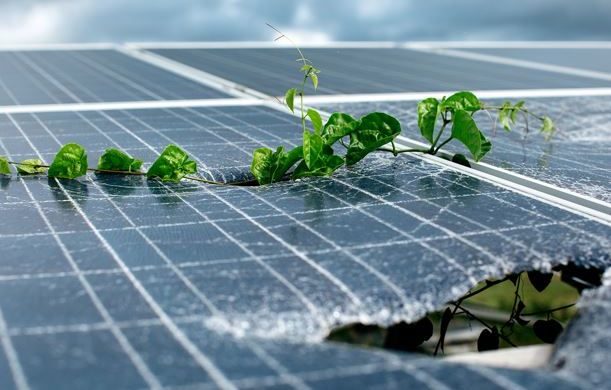
According to a study, solar panel landfills could become a new environmental threat.
According to a study by American scientists, by 2050 more than 80 million tons of spent solar panels will accumulate worldwide, with the US alone exceeding 10 million tons, equivalent to the weight of thirty 102-story Empire State Buildings.
By 2050, the United States will install photovoltaic panels with a total capacity of 500 GW. For comparison, at the end of 2020 the figure was 104 GW. The planned capacity will generate 9.1 million tons of waste, mostly from spent panels.
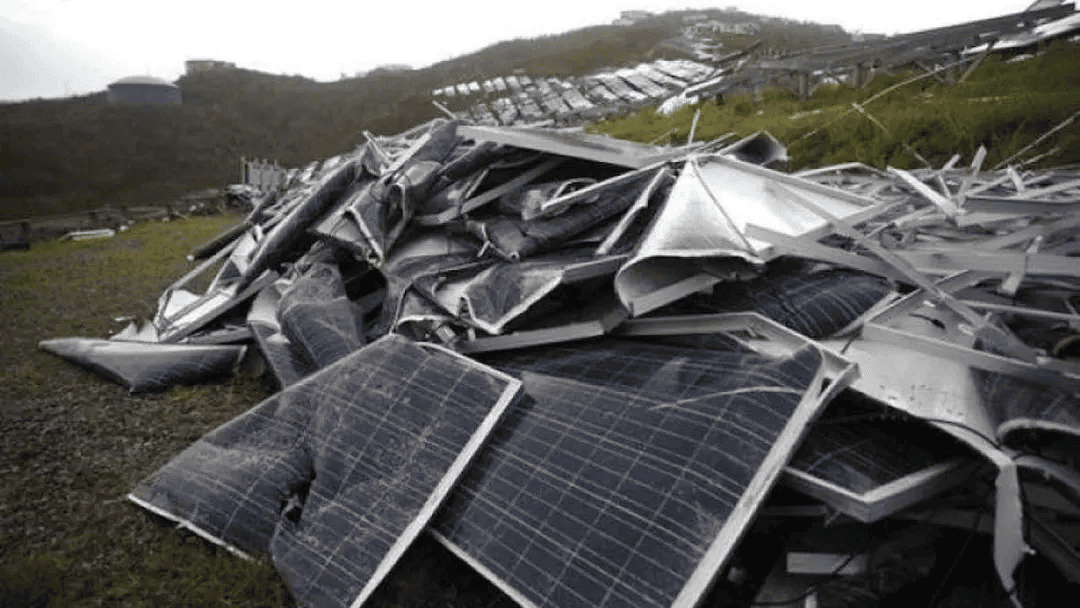
The cheapest method is to bury the spent material in landfills, but there is hope that the panels can be reused after repair and recycled.
From 2020 to 2050, under simulated baseline conditions, about 80% of modules are thrown into landfills, 1% are reused, and 10% are recycled. This could lead to a serious waste problem by 2050.
The report by analysts at the National Renewable Energy Laboratory (NREL), commissioned by the US Department of Energy, took into account the current state of affairs with repair, recycling, reuse of photovoltaic panels and disposal.
These data formed the baseline scenario, which gives an idea of what awaits us if nothing changes. However, the report for the first time introduces social factors: the awareness of consumers, manufacturers and recyclers, which could significantly change the overall statistics.
Julien Walzberg
lead author of the studyWith today's technology, photovoltaic modules are difficult to separate, and the recycling process extracts mostly low-value materials from them. As a result, recycling revenues currently do not cover high costs, so very little mass is recycled. Our model shows that this could lead to a serious waste problem by 2050
The problem with solar panels is that after 25-30 years of operation under normal conditions, they lose a significant amount of efficiency, and as a result generate much less solar energy.
Thus, over time, the number of solar panels taken out of service due to the end of their service life, manufacturing defects or damage from extreme weather events is growing rapidly.
Subsidies for recycling, new materials and technologies that will be easier to recycle and more useful will help reduce the volume of landfill disposal.
The study authors also demonstrated with models that awareness among all participants in the process, from manufacturing to installation and operation of photovoltaic panels, would increase the rate of repair and reuse of solar panels, which could significantly reduce the volume of panels sent to landfill by tens of percent.

Russian Attacks in Dnipropetrovsk Region: Two Killed, Seven Injured

Defense Forces Strike Four Russian Drone Control Points in Past Day, Including in Berdiansk

Britain Threatens Sanctions on Kremlin-Linked People; Poland Ready to Hand Ukraine Ammunition

Russia says it has completed "planned exercises" in the Black Sea

MVD: Fake Riots With Prop Blood Were Being Prepared Near Presidential Office

Law Enforcers Name Another Klitschko Deputy as Suspect

Berlin Holds Protest Against War in Ukraine; EU Prepares for Possible Russian Halt of Gas Supplies
North Korea Fires Ballistic Missile Over Record Distance in Five Years
Irish Fishermen Force Russia to Postpone Naval Drills

US sanctions in case of invasion of Ukraine could completely destroy Russia's economy, NYT reports
