
WADA Accuses Ukraine's Anti-Doping Center of Manipulating Doping Samples
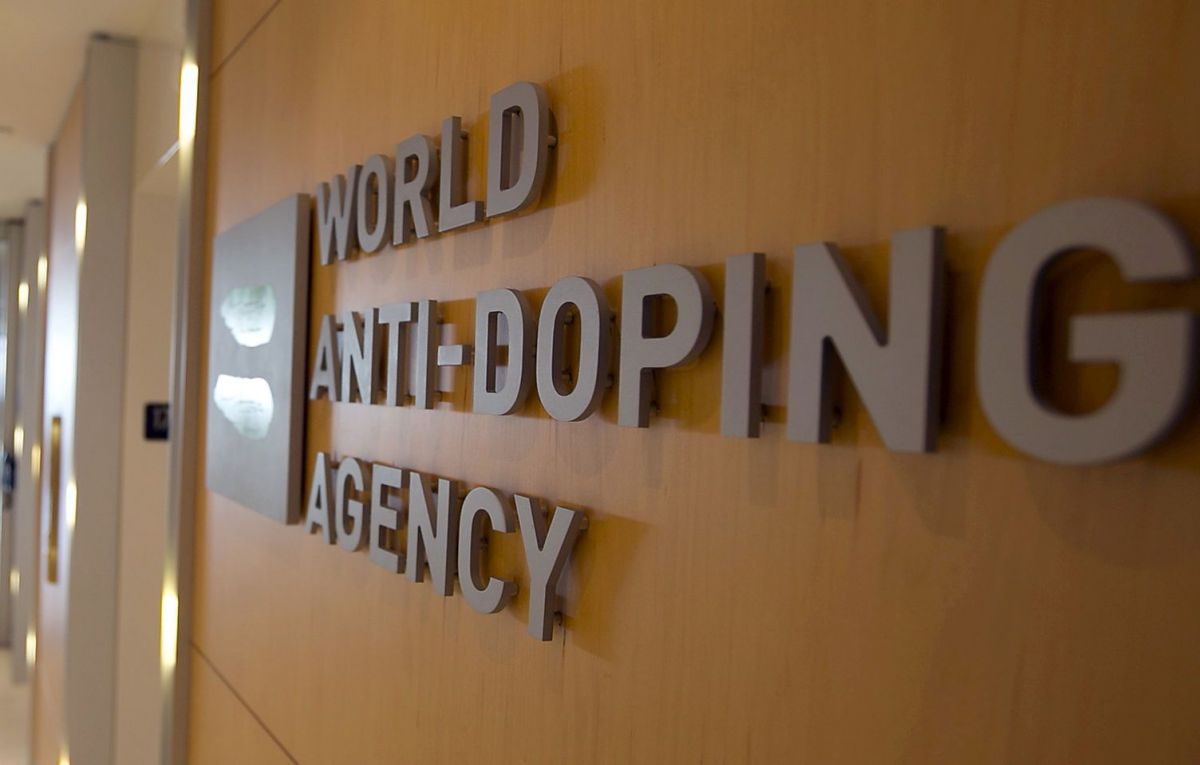
After a report on manipulation was published, the heads of the Ukrainian center resigned.
The World Anti-Doping Agency (WADA) conducted Operation Hercules to investigate allegations that Ukraine's anti-doping center and the Ukrainian athletics federation were involved in “practices contrary to international testing standards,” reports Suspilne.
Operation Hercules began in 2019 and lasted two years. On the evening of October 26, WADA published a report on the investigation's findings, which states that evidence was found of violations of anti-doping controls by Ukraine's National Anti-Doping Center.
Reasons for the investigation
The Ukrainian anti-doping center was accused of informing athletes in advance that doping control officers would soon arrive to collect samples during the out-of-competition period. WADA therefore considers these doping samples not indicative.
At the same time, no evidence of guilt on the part of the Athletics Federation of Ukraine (AFLU) was found during the operation. This WADA report is not final, and the investigation will continue.
During the investigation, WADA obtained evidence that over nine years (starting in 2012), Ukraine's National Anti-Doping Center collected doping samples in advance, arranging tests of athletes by prior appointment.
Under international testing standards, collecting doping samples by appointment is permitted only in exceptional circumstances. The accepted practice is for officers to collect samples without warning athletes, which ensures the effectiveness of the current program.
WADA said that Ukraine's National Anti-Doping Center contacted athletes through their coaches and demanded they arrive the next day for testing. Evidence obtained by the agency indicated that the center timed this practice to the dates of major international competitions.
Günter Younger
WADA DirectorThe evidence suggests that the National Anti-Doping Center often adapted this practice ahead of major international events. There were even times when an entire national team in a particular discipline was at the anti-doping center waiting to be tested.
In addition, during Operation Hercules, evidence was found that in 2021 the National Anti-Doping Center knowingly recorded at least six doping samples taken from track and field athletes during the competition period as having been taken out of competition.
This is confirmed by the doping control forms: in each case the sample was recorded as taken during the out-of-competition period, and each of them tested negative.
Active athletes provide doping samples during the competition period. Under international rules, during the qualifying period and before competitions, each track and field athlete must provide the appropriate number of in-competition and out-of-competition doping samples: three tests within a period of up to ten months.
Günter Younger
WADA DirectorFailure to correctly register a doping sample as either in-competition or out-of-competition affects the laboratory analysis, since some substances are banned only during the competition period. As a result, a positive test may be wrongly classified as negative, and the athlete could avoid an anti-doping rule violation.
What happened next?
The WADA report states that, given the seriousness of the evidence uncovered during the investigation and the risk that Ukraine's National Anti-Doping Center will continue failing to comply with international testing standards, Operation Hercules representatives took all necessary steps and provided the information from the full investigation report to the relevant organizations.
As for Ukraine's National Anti-Doping Center, a compliance process was initiated under the provisions of the international standard signed by the parties.
In addition, during Operation Hercules, investigators identified a person linked to the Athletics Federation of Ukraine (AFLU) who may have been involved in trafficking erythropoietin, a substance on WADA's list of prohibited substances.
The agency's statement says the AFLU representative in question denies these allegations, and as a result the World Anti-Doping Agency reported the matter to the Athletics Integrity Unit, an independent anti-doping body in athletics.
At the same time, the operation did not find evidence supporting allegations of doping schemes within the Athletics Federation of Ukraine.
The WADA report also cites the response of Ukraine's National Anti-Doping Center to these allegations.
The center's leaders stated that they had no information about “planned” testing of athletes, or about cases in which doping samples taken during the competition period were labeled as out-of-competition.
Ukraine's Minister of Youth and Sports Vadym Hutsait said that after WADA published the investigation report, the director of the National Anti-Doping Center, Ivan Kurlishchuk, and his deputy, Yaroslav Kruchek, resigned.
Vadym Hutsait
Minister of Youth and Sports of UkraineThe ministry stated: We hold a clear position in the fight against doping and will not allow anyone to violate anti-doping rules. The response to any violation will be swift and tough.
However, before their removal, the leaders of the Ukrainian anti-doping center had stated their intention to conduct an internal investigation into the allegations and their readiness to cooperate with WADA.
Ahead of the Olympic Games, several athletes were suspended in a doping-related case. In particular, athletes Mykhailo Havryliuk, Nazar Kovalenko and Natalia Pyrozhenko-Chornomaz were suspended for failing to provide a sufficient number of out-of-competition doping samples.
The Olympic ban also applied to triathlete Yulia Elistratova. She was suspected of using erythropoietin, the substance featured in the WADA report.

Russian Attacks in Dnipropetrovsk Region: Two Killed, Seven Injured

Defense Forces Strike Four Russian Drone Control Points in Past Day, Including in Berdiansk

Britain Threatens Sanctions on Kremlin-Linked People; Poland Ready to Hand Ukraine Ammunition

Russia says it has completed "planned exercises" in the Black Sea

MVD: Fake Riots With Prop Blood Were Being Prepared Near Presidential Office

Law Enforcers Name Another Klitschko Deputy as Suspect

Berlin Holds Protest Against War in Ukraine; EU Prepares for Possible Russian Halt of Gas Supplies
North Korea Fires Ballistic Missile Over Record Distance in Five Years
Irish Fishermen Force Russia to Postpone Naval Drills

US sanctions in case of invasion of Ukraine could completely destroy Russia's economy, NYT reports
