
War with Ukraine is unlikely to boost Putin's ratings, voters are thinking about prices, The Times says
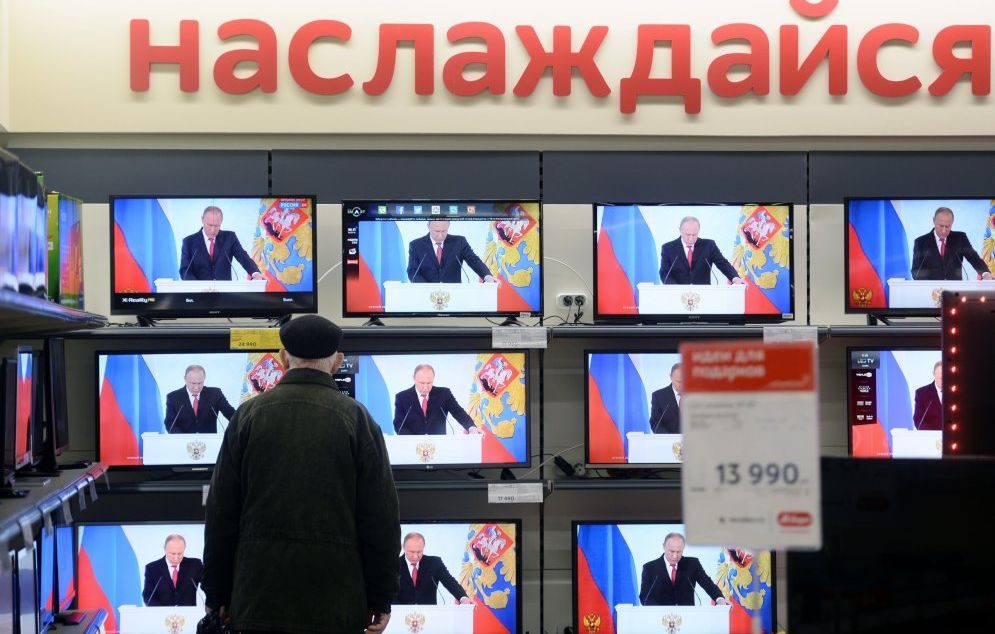
Russians are no longer as interested in the theme of "bad Ukrainian authorities" as in internal catastrophic problems such as hunger, poverty and stagnation in Russian regions.
The West suspects that Russian President Putin is creating tension on the border with Ukraine in order to boost his rating, writes The Times.
However, there are few signs that Russians are ready to rally around their president again, as they did in 2014, the newspaper adds.
Now pensioners who previously complained about the Ukrainian authorities, whom they called a "junta", are more concerned about food prices.
Putin's rating has dropped to 32%, partly due to Western sanctions, the newspaper writes.
State television is fanning the flames of war, but the rhetoric is more restrained than eight years ago, when Russian media falsely accused Ukrainian soldiers of crucifying a three-year-old boy.
The Russian opposition, whose leaders are in prison, in exile or simply dead, is also barely speaking out on the matter, the newspaper notes.
"Moscow's intelligentsia is now saying little about Ukraine," say journalists Andrei Soldatov and Irina Borogan.
However, the drums of war are getting louder, the newspaper adds. Talks between the US, NATO and Russia stalled last week at a deadlock, "bringing closer the likelihood of war".
Many analysts believe that Putin wants to accomplish what he sees as his historic mission, namely to push NATO away from his country's borders.
"I think he is serious, he is not bluffing," the newspaper quotes Dmitri Trenin, head of the Carnegie Moscow Center.
"Phoney War"
"If President Putin hoped that a patriotic surge would distract attention from discontent over food prices and strengthen his falling popularity, then he has not seen such a response," writes The Times in an editorial.
"There is none of the triumphant nationalism that greeted the annexation of Crimea in 2014."
"There is no panic in Kyiv either. Right now it seems like a phoney war," the newspaper adds.
Western democracies hope that the longer this relative calm persists, the clearer Moscow will see the price of a possible invasion of Ukraine, the newspaper writes.
The Times also calls Russia's detention of a group of REvil hackers, after receiving information about them from the US, an "encouraging sign".
"This is the first time in many years that Russia and the US have cooperated on a cybercrime operation," the newspaper writes.

Russian Attacks in Dnipropetrovsk Region: Two Killed, Seven Injured

Defense Forces Strike Four Russian Drone Control Points in Past Day, Including in Berdiansk

Britain Threatens Sanctions on Kremlin-Linked People; Poland Ready to Hand Ukraine Ammunition

Russia says it has completed "planned exercises" in the Black Sea

MVD: Fake Riots With Prop Blood Were Being Prepared Near Presidential Office

Law Enforcers Name Another Klitschko Deputy as Suspect

Berlin Holds Protest Against War in Ukraine; EU Prepares for Possible Russian Halt of Gas Supplies
North Korea Fires Ballistic Missile Over Record Distance in Five Years
Irish Fishermen Force Russia to Postpone Naval Drills

US sanctions in case of invasion of Ukraine could completely destroy Russia's economy, NYT reports
