
Scientists Discover Previously Unknown Organ in the Human Body
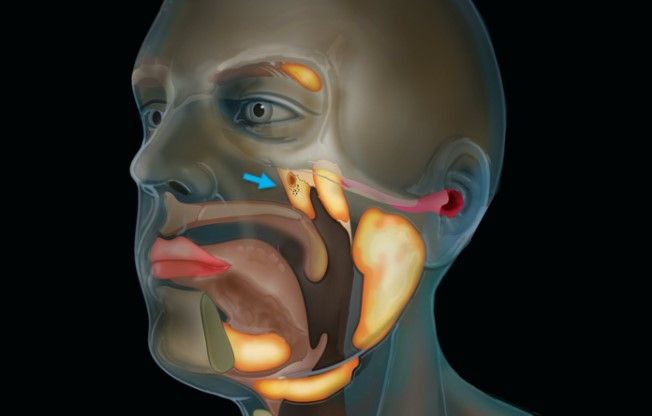
It happened completely by chance.
Scientists have discovered an organ in the human body that, for some reason, has never been noticed in the entire history of medicine. This is reported in a study by Science Alert.
The discovery was made by Dutch scientists Matthijs Valstar and Wouter Vogel from the Netherlands Cancer Institute in Amsterdam. In their study, published in the scientific journal Radiotherapy and Oncology, dental surgeon Valstar and radiation oncologist Vogel described how they made this unusual find.
This "unknown entity" was accidentally found by doctors while examining prostate cancer patients using an advanced type of scan. Combined with injections of radioactive glucose, this diagnostic tool detects tumors in the body. In this case, however, it revealed something completely different, located at the back of the nasopharynx.
Humans have three major pairs of salivary glands, and there are also about 1,000 minor salivary glands located throughout the oral cavity and digestive tract, but they are generally too small to be seen without a microscope.
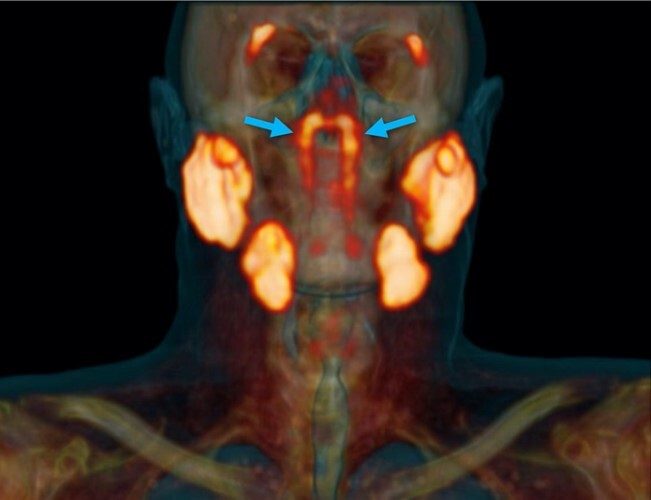
The new discovery made by Vogel's team revealed what is a previously overlooked pair of glands—something like a fourth set of major salivary glands, located behind the nose and above the palate, close to the center of the human head. "As far as we know, this structure did not correspond to previous anatomical descriptions," the researchers explain in their paper.
As for why the glands had not been identified earlier, the researchers suggest that these structures are located in a hard-to-reach anatomical area beneath the base of the skull, which makes them difficult to distinguish endoscopically.
Previously, researchers in Blood Advances made a new discovery related to the coronavirus: they found new evidence of a link between blood type and the course of coronavirus disease. According to them, people with blood type A in the AB0 system, unlike those with type B and AB, may have a lower risk of infection with the coronavirus, and their symptoms may be milder.

Zelensky: Russia Used 115 Missiles, Nearly 1,900 Guided Bombs and Over 3,000 Drones in a Week
Attack on Major DTEK Energy Facility in Northern Odesa Region Leaves Some Families Without Power

Britain Threatens Sanctions on Kremlin-Linked People; Poland Ready to Hand Ukraine Ammunition

Russia says it has completed "planned exercises" in the Black Sea

MVD: Fake Riots With Prop Blood Were Being Prepared Near Presidential Office

Law Enforcers Name Another Klitschko Deputy as Suspect

Berlin Holds Protest Against War in Ukraine; EU Prepares for Possible Russian Halt of Gas Supplies
North Korea Fires Ballistic Missile Over Record Distance in Five Years
Irish Fishermen Force Russia to Postpone Naval Drills

US sanctions in case of invasion of Ukraine could completely destroy Russia's economy, NYT reports
