
Activists for Hire
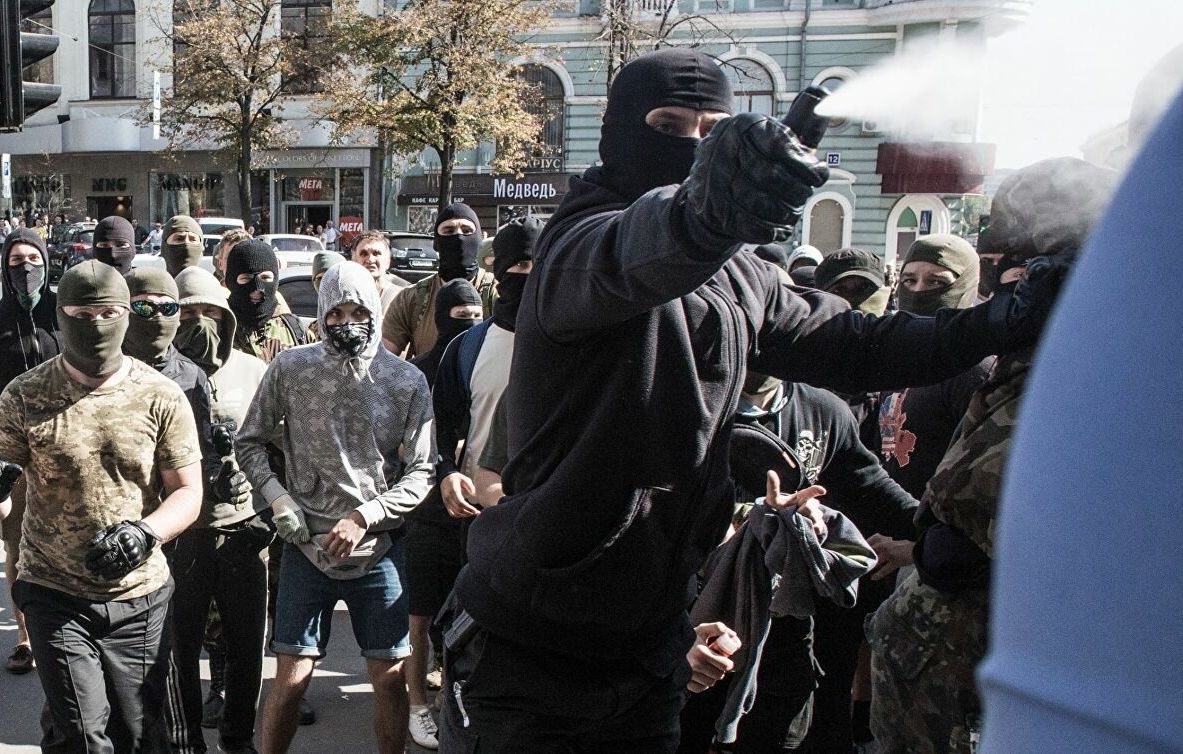
Journalist Serhiy Ivanov uses real-life examples to explain how genuine civic activism differs from fake activism.
Civic activism is a perfectly normal and healthy phenomenon, but only for as long as no one starts making money from it or electoral points. The problem is not the fact of earning, but that the commercialization of civic activity contradicts its very idea and compromises other healthy initiatives.
If you compile a subjective rating of organizations that have reliably put activism on a business track, the top three look like this: “Stop Corruption” by Roman Bochkala, “Tverdynia – Stop Svavillia” by Fedorenko-Severyn, and the group of former “Svoboda” member Ihor Miroshnychenko.
Bochkala’s group is, in fact, a media group built around a project of journalistic “investigations”. “Tverdynia – Stop Svavillia”, as well as Miroshnychenko’s fighters, are more like direct action organizations with their own militants and activists.
The most lucrative orders these activists receive come from the construction market. First, this market can afford lengthy and expensive wars; second, it is here that they can deliver maximum effectiveness in a purely applied context, for example, breaking fences or blocking developments. The customers of such actions are usually either competitors or “watchmen” of the market whom the developer forgot or did not want to pay kickbacks to.
NGO “Tverdynia” and “Stop Svavillia”
Two related NGOs, “Tverdynia” and “Stop Svavillia”, were founded in 2016–2017. They fight Kyiv developers and, at the same time, the enemies of Kyiv developers. For example, once “Tverdynia” protected Kyivans from illegal construction on Michurina Street, 44, using imported animators disguised as “outraged local residents” who looked nothing like residents of Tsarske Selo.
At the start of their activity, both “Tverdynia” and “Stop Svavillia” cooperated with former SBU head Valentyn Nalyvaichenko and dealt with issues within the Service’s competence, in particular the problem of trade with occupiers. But since 2019 both NGOs have focused on construction, systematically persecuting one of the major developers and blocking all of his projects with the help of staff grandmothers with “stands” for posters and banners. After that a miracle happened: the head of the NGO, Fedorenko, was nominated as a Kyiv City Council deputy, as were two of his colleagues, Serhiy Severyn and Inna Hissa.

This is a separate interesting point, precisely in the context of the rise of Ms. Hissa, a well-known PR person for show business stars. It turns out that Hissa worked with Santa Dimopulos, wife of businessman Ihor Kucherenko (known in the 90s as “Gonzik”), and Kucherenko himself is a partner of one of the “watchmen” over DABI, Yuriy Horovyi, about whom I wrote earlier, who works with another not-unknown “watchman”, Vadym Stolar. One can draw the obvious conclusion that Stolar and Horovyi simply bought places on party lists for their subordinates, so that they could crush competitors no longer as street activists but with deputy “cards”.
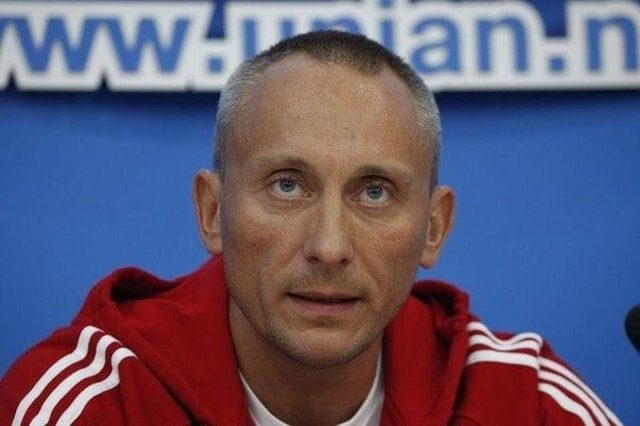
A few more interesting facts. Yuriy Fedorenko has a partner in the “Tverdynia” NGO, Yevhen Fenko. Yevhen owns the car service company “Kyivavtoservis Plus”, which is connected to “Tverdynia” not only through the founder’s person, but also through a shared contact phone +380632125488.
The company “Kyivavtoservis Plus” is registered in the same office as the company “Polinex”, and, according to registry data, only these two companies are registered in this office room, both linked to scandalous developers.
“Stop Svavillia” is linked to the NGO “Kyiv City Union of Motorists”. In March 2018 a scandal broke out over the fact that this NGO registered ownership of a non-residential building on Kudriashova Street, 16, using the services of the scandalous fake registrar, the municipal enterprise “Putrivske”, one of the main figures in the Bihus.Info investigation into Andriy Vavrish. Also, Severyn and his guys once earned money as titushky.
Ihor Miroshnychenko’s group
Former Kyiv City Council deputy Ihor Miroshnychenko is the teacher and inspiration of Fedorenko, Severyn and other passionate public figures. As an experienced politician, he has not created a structure that could be unambiguously linked to him, and he works situationally with different groups of activists.
Ihor is quite inventive and brings certain artistic notes to business activism depending on the case. Somewhere grandmothers with posters are enough for him, and somewhere several dozen athletes arrive. Despite the fact that Miroshnychenko has repeatedly failed in elections, since no one wanted to buy him a place on a list, knowing that he works only for himself, Ihor has stable patrons in the form of the Horovyi brothers, who always need someone to run around the capital’s construction sites.
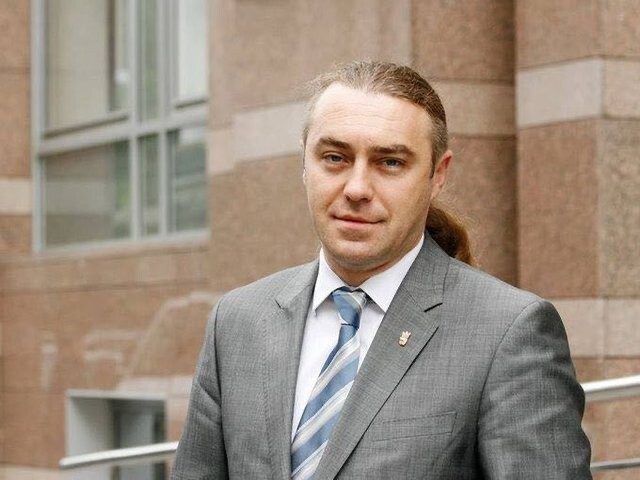
Despite his creative approach, Ihor constantly gets into scandals. In July 2018 the owner of the development company “ZIM Capital Group”, Zaholiuk, publicly accused Miroshnychenko of extorting first 200 and then 400 square meters in the Parkland residential complex in exchange for “a calm atmosphere at the construction site”. Interestingly, after this statement, Ihor Miroshnychenko abruptly stopped commenting on “Parkland”; his last mention of this residential complex on his page is dated July 2018.
In 2015 fellow party member Volodymyr Tyshchenko accused Miroshnychenko in court of taking money from a developer in Osokorky and lobbying for the construction of Valerii Khoroshkovskyi’s project in Pecherskyi district. Miroshnychenko even tried to sue “Slidstvo.Info” over a story in which these accusations were quoted, but unsuccessfully. This year deputy Kucherenko, as well as the developer “Intergal-Bud”, accused Miroshnychenko of extortion.
Miroshnychenko’s declaration cannot but cause joy at his well-being. In 2015 the Kyiv City Council deputy bought a BMW X5, and his sister Tetiana opened the company “La Terrasse”, which runs the restaurant of the same name in Podil.
You know that the most successful business ladies in Ukraine are the wives, sisters, mothers and grandmothers of deputies and officials. Tetiana is no exception: her company’s affairs are going so well that she hired her brother as advertising manager and, within the first 2 years of work, bought (and gave to her brother) yet another brand-new BMW.
Ihor’s ex-wife Halyna also prospered in business: in 2015 she was the owner of the “Nyvky Plaza” hotel. Some claim that the hotel actually belongs not to her but to her former husband, since the hotel of the former wife and the restaurant of the sister are located at the same address, Ivana Vyhovskoho Street, 5.
NGO “Stop Corruption”
This organization positions itself as a project of journalists fighting corruption in general and illegal construction in particular. The organization was founded in 2015 by Roman Bochkala, Taras Lylyk and Bohdan Khmelnytskyi.
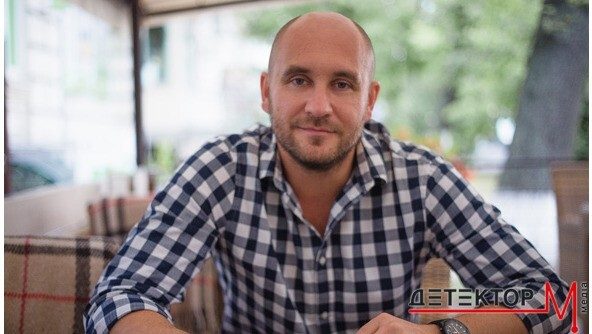
The guys work in the most diverse fields. The service package includes actions by a small group of “activists” (up to 10 people), requests to various bodies, and stories on the organization’s website. The price of a standard package is $5–10 thousand.
The real effect of “StopKor” services is small due to its specific reputation and low citation rate, but Bochkala’s firm has value, since he optimizes the process and offers comprehensive solutions: there is no need to separately hire activists and journalists or place publications in the media.
The organization “fights” corruption very selectively. For example, they actively attack construction on Reduthnia Street or the “Kompot” restaurant on Poshtova Square, but the scandalous “Patriotika on the Lakes”, 43 high-rise buildings in a green zone belonging to the bank “Arkada”, they actively defended for at least two years, from 2017 to 2019.
In total, “stopkorivtsi” shot about 30 laudatory stories about “Patriotika”, while simultaneously smearing “Ecopark Osokorky”. The funniest thing is that “Ecopark” is a project of Ihor Miroshnychenko, a direct competitor of Bochkala, who torpedoed “Arkada”. In principle, it could all have been the other way around, but here it is a matter of who hired whom first.
Journalist Vasyl Krutchak showed what cars the fighters against corruption drive. According to him, members of the organization “Stop Corruption” gather on the territory of Kyiv school No. 37 to play mini-football.
Roman Bochkala arrives there in a Range Rover, or more precisely, his driver brings him there. Another leader of “Stop Corruption”, Bohdan Maidaniuk (Khmelnytskyi), arrives in a Mercedes-Benz G-Class. The “StopKor” office on Predslavynska Street in central Kyiv also looks decent, but if you recall that among the clients of “StopKor” is Volodymyr Muntian, founder of the “Vidrodzhennia Spiritual Center”, then everything looks logical. At least 5 detailed stories on the “StopKor” portal are devoted to the activities of Muntian and his sect. The international organization “Global Investigative Journalism Network” expelled “StopKor” from its ranks.
Bochkala’s organization has a number of satellites, each performing its own function. For example, “People Against Corruption” writes letters, distributes leaflets near the offices and homes of the NGO’s situational enemies, and films videos (for example, in support of the developer of Chkalovskyi Square), while resources such as “Aktualna Pravda” provide informational support.
Fake news is not the only area of activity of “StopKor”. They also do not shy away from specific actionism. For example, they brought a coffin containing a dummy human body to former director of the Kyiv crematorium Dashukov and then symbolically burned it.
At the beginning I mentioned three groups, but these are, so to speak, the main players in the market. Young structures are already breathing down their necks, such as the Levchenko-Kutniak tandem. Against the backdrop of the above-mentioned organized groups, former MP Yuriy Levchenko and his partners in the party “Narodovladdia”, former Kyiv City Council deputies Sviatoslav Kutniak and Prokhor Antonenko, look quite modest: no expensive cars, no elite real estate.
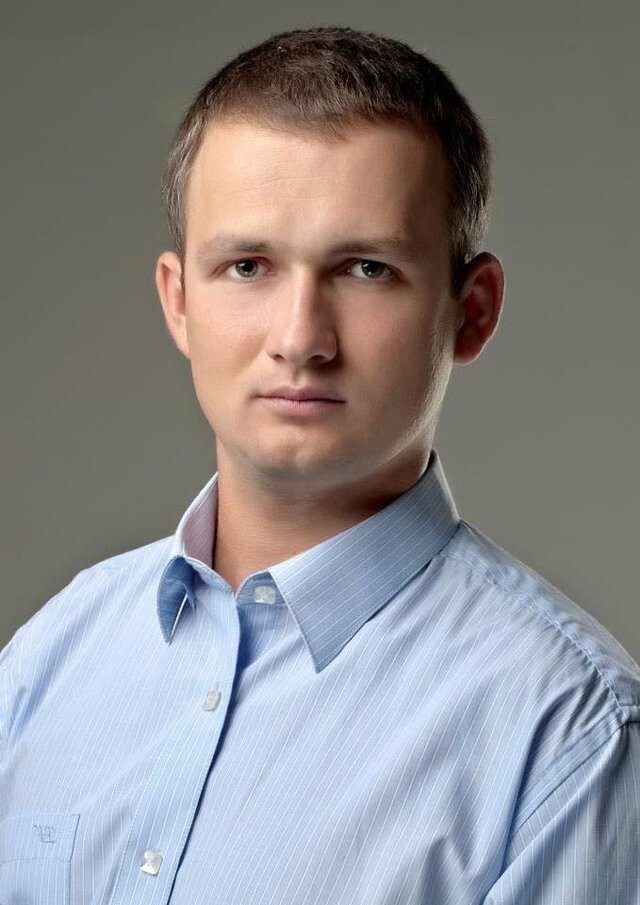
However, they cannot be called true activists either, since, while declaring the protection of society’s interests, they are in fact engaged exclusively in political self-promotion. This year alone they got into two scandals because of it.
First, Yuriy Levchenko, together with “expert” Heorhiy Mohylnyi, became involved (Levchenko later deleted the post) in the well-known Kyiv protest on Honchar Street, 17–23, which by that time had lasted 12 years and was close to a successful conclusion, namely the removal of two excess floors by the developer at its own expense.
Levchenko and Mohylnyi recorded a video in which they explained in detail to viewers that the activists had been acting wrongly all these 12 years and that the building must be demolished entirely. At the same time, Yuriy did not say how exactly this could be done and did not explain why, in 12 years of protest and court wrangling, he never once took an interest in this site.
The true activists of the protest were extremely outraged, as were local residents. As a result, Yuriy deleted the post and, judging by the absence of mentions or court claims, forgot about this building after the elections.
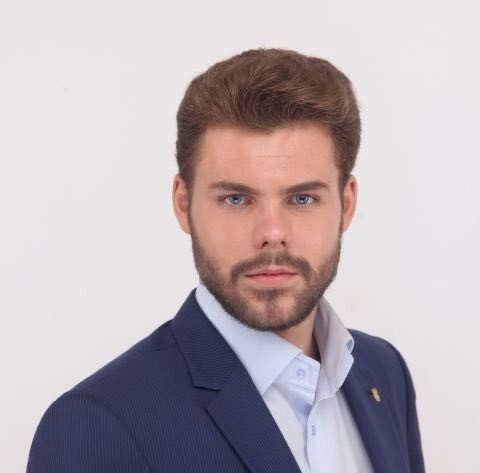
Another unpleasant story happened with protest activist Olha Chaban at Makarivska–Romodanova. Olha represents a group of local residents living in emergency buildings with disconnected utilities. This group decided to agree to the developer’s offer to relocate them to a new complex being built next to their houses. This did not please Levchenko and his subordinates, and the activist began to be intimidated. However, Levchenko’s interest in this construction will probably soon disappear, since the elections are now behind him.
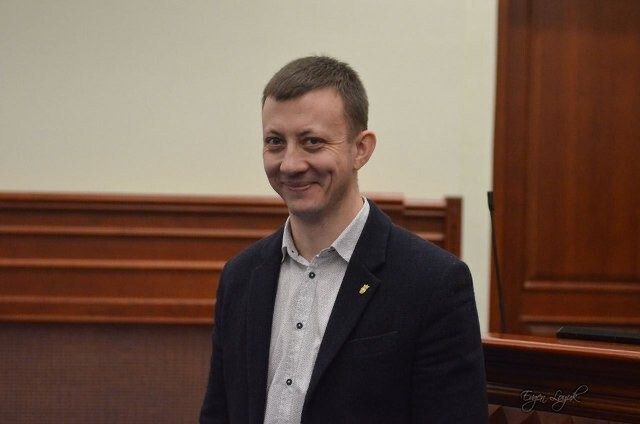
And finally, let us sum up what civic activism means in the interpretation of the characters named above, and what specific features it has.
- Illogical choice of objects and their number. A true systemic activist, as a rule, deals with one topic. Cycling activists deal with bicycle infrastructure, urbanists with transport flows and public spaces, heritage keepers with architectural monuments, anti-corruption campaigners with corruption. A fake activist deals with everything and always has time for rallies and actions. And money too.
- Connection with representatives of the industry they are “fighting”, while their expenses do not even roughly match their income. The collective image of a true activist is a conditional teacher or student who sincerely worries about preserving the historic center of the city, writes about it on social networks, helps paint banners and goes to rallies. The collective image of a fake activist is a former assistant to an MP who zealously wars with twenty construction projects across the city, while for some reason supporting certain constructions, formally works nowhere, has no business, and then suddenly buys himself a hotel.
- Commissioned news. Publications appear on small websites, where information is always presented in a maximally evaluative form and often later, if necessary, disappears from the sites.
- Friendship with law enforcement structures, more precisely with certain representatives of them. That is why, unlike real activists, our heroes as a rule do not touch the security forces.
Thanks to such characters, the word “activist” itself has acquired an openly negative connotation, associated with crafty and noisy neo-Komsomol members who exert various pressure on people within their sphere of interest, and this leads to total disillusionment with civil society.

Russian Attacks in Dnipropetrovsk Region: Two Killed, Seven Injured

Defense Forces Strike Four Russian Drone Control Points in Past Day, Including in Berdiansk

Britain Threatens Sanctions on Kremlin-Linked People; Poland Ready to Hand Ukraine Ammunition

Russia says it has completed "planned exercises" in the Black Sea

MVD: Fake Riots With Prop Blood Were Being Prepared Near Presidential Office

Law Enforcers Name Another Klitschko Deputy as Suspect

Berlin Holds Protest Against War in Ukraine; EU Prepares for Possible Russian Halt of Gas Supplies
North Korea Fires Ballistic Missile Over Record Distance in Five Years
Irish Fishermen Force Russia to Postpone Naval Drills

US sanctions in case of invasion of Ukraine could completely destroy Russia's economy, NYT reports
