
'Ad Astra': Will Pitt Make It to the Oscars?
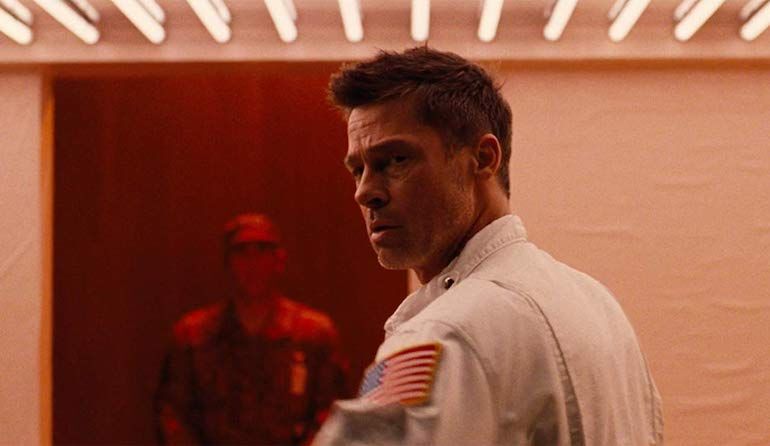
Yuri Shevchenko on Brad Pitt's space journey.
A month ago, Brad Pitt hit cinemas to trip out on acid and rewrite the history of American cinema. Experts predict the actor an Oscar nomination for a supporting role in Quentin Tarantino's Once Upon a Time in Hollywood, but some suggest that Brad's ticket to the Academy Awards ceremony could be a collaboration with James Gray. The indie director, who preferred to tell stories about people's relationships in intimate settings (The Yards, We Own the Night), this time broke away from Earth and sent Brad to the edge of the Solar System in his most ambitious project, the drama Ad Astra.
In a recent interview with Entertainment Weekly, Pitt said he is not interested in the Oscar. Having appeared in some forty films, he has been nominated only three times, for his roles in The Curious Case of Benjamin Button, Moneyball and 12 Monkeys. The statuettes went to Kevin Spacey, Sean Penn and Jean Dujardin, but Pitt says he is not bothered by this. “Oscar in 2020? Oh, I'll try to stay away from it. Of course, you never can guess with nominations. It's nice when you're recognized. But my goal is to act in films that can be meaningful to someone, now or ten years from now. I love stories about what matters,” Brad says. Ad Astra is exactly one of those.
In the near future, Earth is under threat. Flares from the depths of space are causing electricity problems, and this is only the beginning; everything promises to end in catastrophe. The government believes the cause may be a research ship that set off many years ago to search for alien life and vanished somewhere near Neptune. The son of the American hero who led the mission is asked to make contact; in memory of his father, he has devoted his life to space exploration.
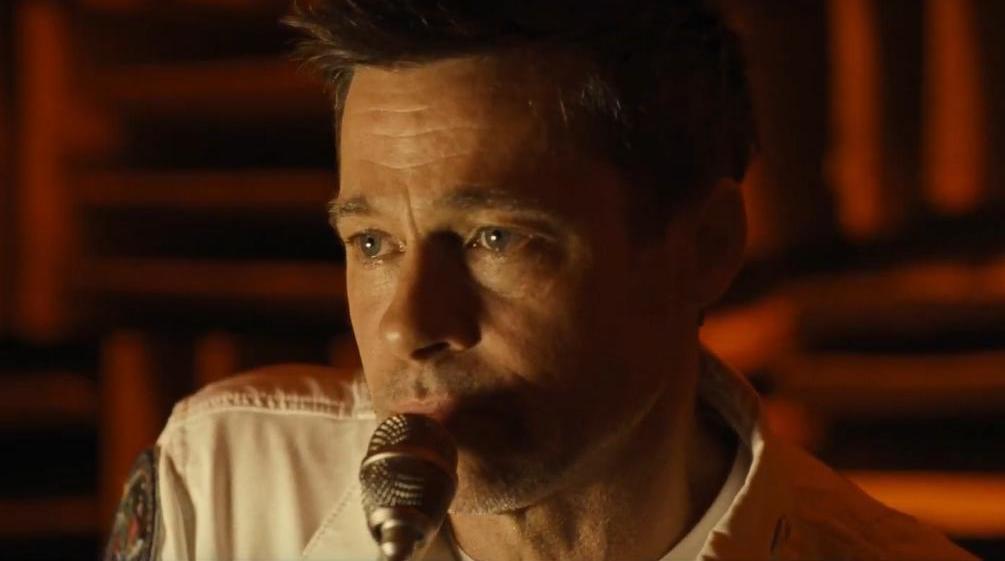
Taking on a sci-fi blockbuster (at least that is how Ad Astra seems at first glance), Gray promised to show space as no one had yet managed on the big screen. The director entrusted the camera to Hoyte van Hoytema, cinematographer of Interstellar and Dunkirk, and at the very least this ensures the film a place among award contenders. For the visuals created by van Hoytema, Ad Astra can be forgiven a great deal: the picture turned out incredibly beautiful, with unobvious and memorable camera solutions. In a film about space it is hard to avoid repetition (in Hoytema's case it is even a matter of self-repetition), but the cinematographer managed to create truly memorable shots. Ad Astra is an original, impressive work, not a copy of a copy.
The future according to Gray, however, looks ascetic; sparse sets emphasize that the director is more interested in the inner world. Roy McBride (Pitt's character) does not regularly undergo tests for psychological stability for nothing. Ad Astra is a two-hour psychoanalysis session with rare pauses for action scenes. And here lies one of the catches: those who love action in films will find it hard. Practically nothing happens in Ad Astra; the character moves from point A to point B and, for the most part, engages in internal dialogue. The intrigue, namely whether his father is alive and what or who stands behind the flares, gradually fades into the background, and it becomes clear that Gray is telling an incredibly banal parable about the relationship between parents and children, wrapped in the grand packaging of a cosmic saga.
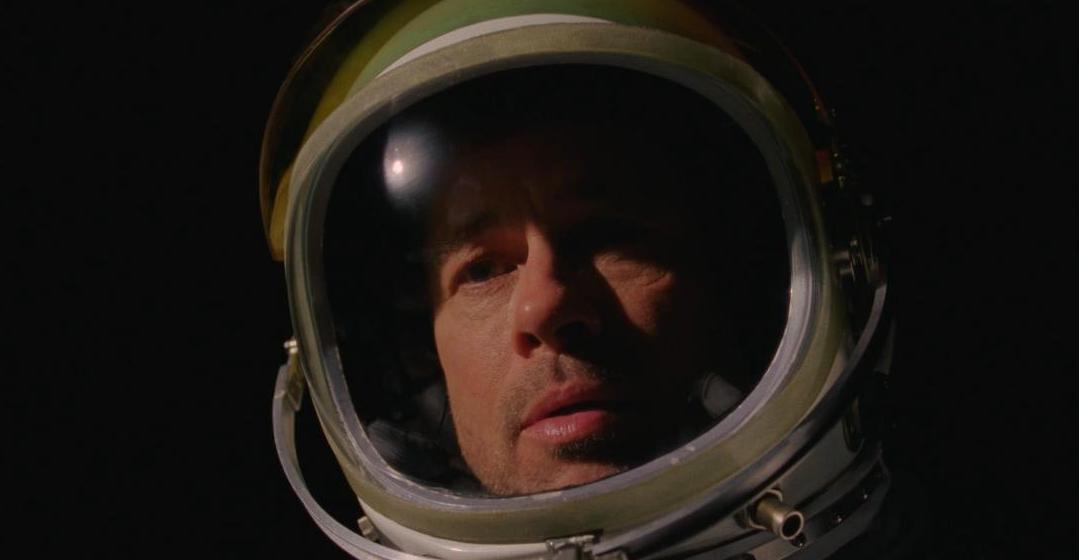
Ad Astra has absolutely no double meanings; everything is spelled out and explained, and the symbolism is maximally naive and simple. The ideas the film voices are important, but they desperately lack freshness. You have surely already heard that happiness can be found close to home, work should not turn into an obsession, and experiencing feelings is what it means to be human. To grasp simple truths, McBride has to fly billions of kilometers from home and discover that home is, after all, better.
All this could look almost trite, but, fortunately, Gray has Pitt. Ad Astra is a one-man show with Brad in the lead, and this is a case where the actor's charisma is the foundation of the entire project. Perhaps for the first time in his career he carries the whole film on his shoulders, and this is Ad Astra's main trump card. Unlikely to win an Oscar, but at the very least it is a reminder of Pitt as a powerful character actor.
Ad Astra is projected to make a modest debut in the US, with 20 million dollars in its opening weekend. Gray says that while working on the film he drew inspiration from Apocalypse Now and 2001: A Space Odyssey. These are worthy benchmarks that have stood the test of time and are considered classics decades later. Ad Astra, sadly, will be forgotten quickly; it is not mass cinema and not a film that will become cult. For connoisseurs, it is strong work from the actor and cinematographer. For the crowd, it is the film where Pitt fought a baboon.

Russian Attacks in Dnipropetrovsk Region: Two Killed, Seven Injured

Defense Forces Strike Four Russian Drone Control Points in Past Day, Including in Berdiansk

Britain Threatens Sanctions on Kremlin-Linked People; Poland Ready to Hand Ukraine Ammunition

Russia says it has completed "planned exercises" in the Black Sea

MVD: Fake Riots With Prop Blood Were Being Prepared Near Presidential Office

Law Enforcers Name Another Klitschko Deputy as Suspect

Berlin Holds Protest Against War in Ukraine; EU Prepares for Possible Russian Halt of Gas Supplies
North Korea Fires Ballistic Missile Over Record Distance in Five Years
Irish Fishermen Force Russia to Postpone Naval Drills

US sanctions in case of invasion of Ukraine could completely destroy Russia's economy, NYT reports
