
Elon Musk's Satellite Internet: Pigeons, Outages, High Price and a Crowded Sky
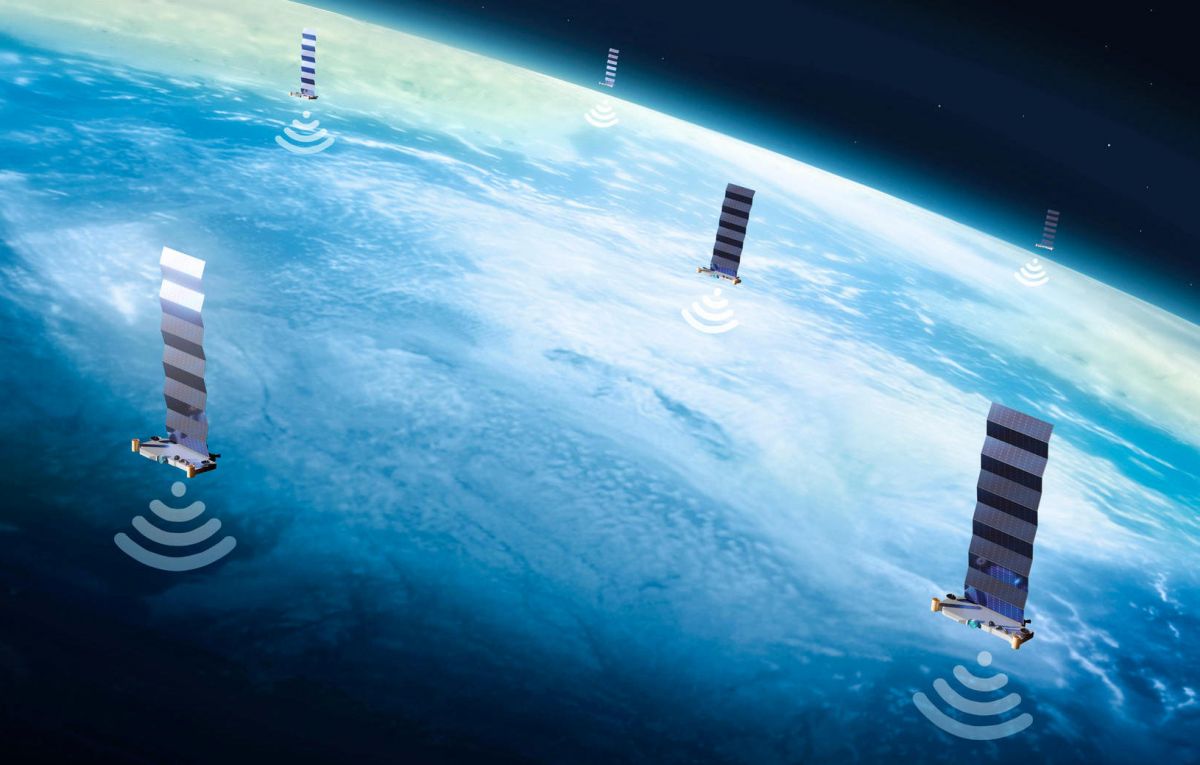
Astronomers already complain that satellites interfere with their observations.
A cybersecurity expert from the University of Surrey told BBC about his new satellite internet access from Elon Musk's company Starlink. He believes outages may be caused by “pesky pigeons” that “like to sit on the dish.”
User Experience
A small gray dish the man placed on the kitchen roof. Curious pigeons decided it looked more like a modern birdbath that lacked water. In fact, it is the ground part of the Starlink satellite internet system.
Professor Alan Woodward lives where he can “only dream” of fiber broadband. He is happy to be one of the beta testers of the low-orbit satellite broadband system. Musk recently said he had shipped 100,000 such terminals.
The small dish sends and receives signals to satellites, of which about 1,700 orbit at an altitude of roughly 550 km. They move quickly and circle the Earth every 90 minutes. The company plans to launch tens of thousands more satellites, but new launches are being delayed due to a shortage of microchips and scarce oxygen fuel.
Treatment of coronavirus patients has increased demand for commercial oxygen, so there is now not enough of it for fuel.
Service Outage
The professor is still investigating the root cause of the outages, but he has already said that “a pigeon sitting on the Starlink antenna certainly reduces its productivity.” Pigeons are not the only problem, as last week Starlink users around the world experienced an outage.
The internet “just completely disappeared.” For about an hour the service was unavailable for many users, but the company did not explain what had happened.
Starlink is one of several firms hoping to provide satellite internet services. There is also OneWeb, partly owned by British taxpayers. It also has hardware in space.
Just last week the company launched 34 satellites, so it already has 288 objects in space weighing 150 kg each. OneWeb's priority is providing internet for businesses, users at sea and government. The company may also offer broadband to users in rural areas.
Many people living in remote areas will finally be able to access the internet via satellite, whether they realize it or not.
Mike Thompson
Technical development director at consultancy Access PartnershipThe technology may be invisible to the end user. A provider could run a satellite link in a town where, for example, fiber is unavailable and use it to feed a local broadband pipe.
High Price
According to Professor Woodward, the price is high: about £500 ($688) to get the equipment as a beta tester and £89 ($122) per month. The equipment price may fall further.
The president of aerospace company SpaceX, which operates Starlink, said last week that by the end of 2021 new dish models would be half the price.
Professor Woodward finds Starlink simple to use: “I put it on the kitchen roof, mainly because it was the only flat roof I could easily reach. Starlink provides an app that shows whether there are obstructions, so you can choose the best spot.”

When he connected the dish to the router, fast internet appeared within a minute. The average download speed is 150–200 Mbps, upload 10–20 Mbps. Back in February, Musk said Starlink hoped to double its maximum speed to 300 Mbps.
A Crowded Sky
Low Earth orbit is becoming increasingly crowded, so astronomers have already complained about satellite trails that interfere with their observations. Some are worried about possible collisions.
Scientists argue that collision warnings for such a number of satellite constellations “may soon exceed what humans or simple algorithms can do.” More advanced technological solutions may be needed to ensure the safety of spacecraft.
The number of satellites orbiting Earth will partly depend on demand for their broadband services. For the professor, Starlink was an expensive purchase that pleasantly surprised him.

Russian Attacks in Dnipropetrovsk Region: Two Killed, Seven Injured

Defense Forces Strike Four Russian Drone Control Points in Past Day, Including in Berdiansk

Britain Threatens Sanctions on Kremlin-Linked People; Poland Ready to Hand Ukraine Ammunition

Russia says it has completed "planned exercises" in the Black Sea

MVD: Fake Riots With Prop Blood Were Being Prepared Near Presidential Office

Law Enforcers Name Another Klitschko Deputy as Suspect

Berlin Holds Protest Against War in Ukraine; EU Prepares for Possible Russian Halt of Gas Supplies
North Korea Fires Ballistic Missile Over Record Distance in Five Years
Irish Fishermen Force Russia to Postpone Naval Drills

US sanctions in case of invasion of Ukraine could completely destroy Russia's economy, NYT reports
