
Gas, Oil and Big Politics: What Is Happening in the Conflict Between Greece and Turkey
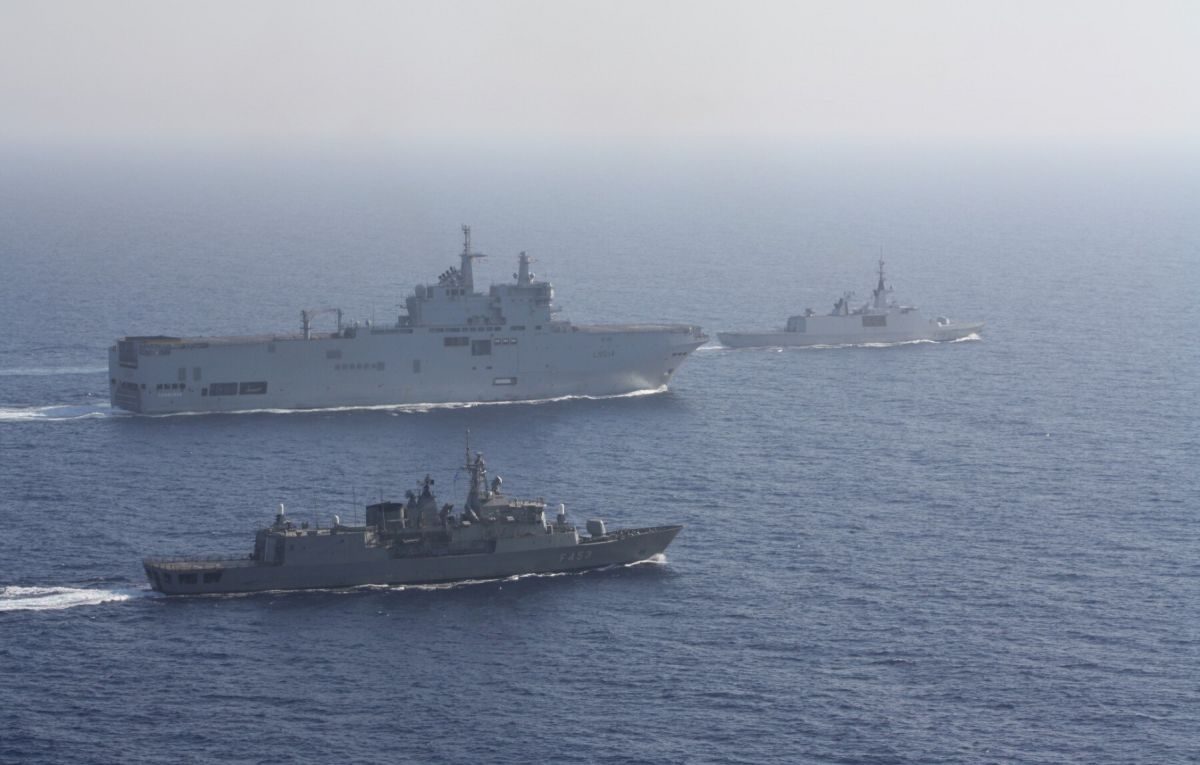
Everything you need to know about the tensions between two NATO countries.
A new stage of confrontation has emerged in the long history of enmity between Greece and Turkey: the main attention of both countries, deprived of millions of tourists due to the coronavirus pandemic, is now focused on disputes with each other. The disputes are so heated that both Greece and Turkey have already announced military exercises in the eastern Mediterranean, and the armed forces of both countries have been put on full combat readiness.
Europe is trying to put out the conflict, but tensions, like the number of warships in the region, are only growing. So much so that German Foreign Minister Heiko Maas has to remind that “one small spark can lead to a catastrophe.” What is the essence of the disagreements between two NATO members?
What led to the escalation in relations between Greece and Turkey?
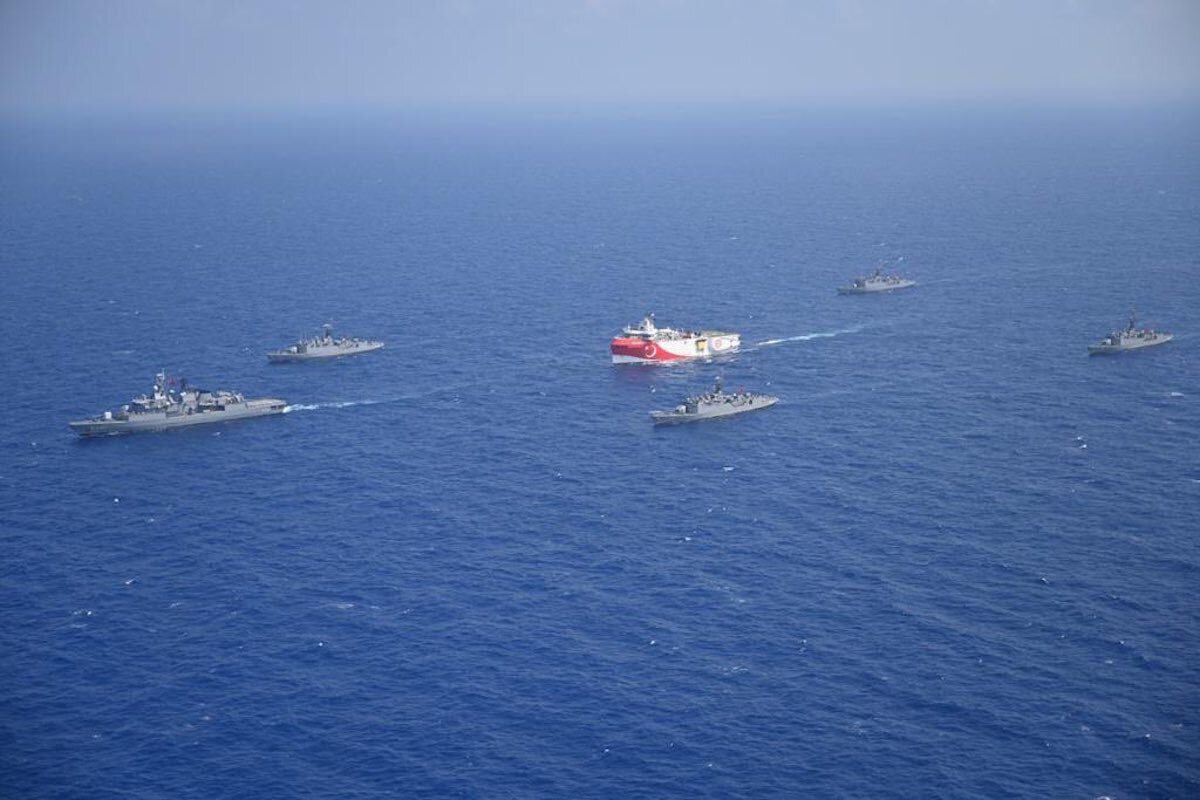
The escalation in the tense situation between the long-feuding countries occurred in early August, when the Turkish geological exploration vessel Oruc Reis, supported by five warships, set off to explore the eastern Mediterranean — into the disputed territorial waters near the Greek island of Kastellorizo.
Greece, which, with the support of the European Union, has repeatedly warned Turkey against exploring these waters, was forced to react, which led to a minor collision at sea and fighter jets chasing each other in the sky. Fire was not opened, but the situation is at the limit. The root of it all is hydrocarbons.
Background
In early 2019, the American company ExxonMobil discovered the largest natural gas deposit in the eastern Mediterranean at the Glaucus-1 well on the Cyprus shelf. The reserves of this deposit are approximately 120 billion cubic meters, estimated at $30-40 billion. After the discovery of the Aphrodite field in 2011, such a find became another confirmation that large gas deposits lie on the Mediterranean shelf.
For small Cyprus, such natural resource volumes are too much, so it immediately joined negotiations with Europe, as a result of which French Total and Italian Eni took up the development of the new deposit. Cyprus also signed an agreement with Greece and Israel on building a pipeline capable of covering 4% of gas demand in the European market. The self-proclaimed Turkish Republic of Northern Cyprus, which counted on a share in the project, was left out, which finally infuriated Ankara and forced it to re-enter the dispute with Athens over territorial water boundaries and to remind of its claims.
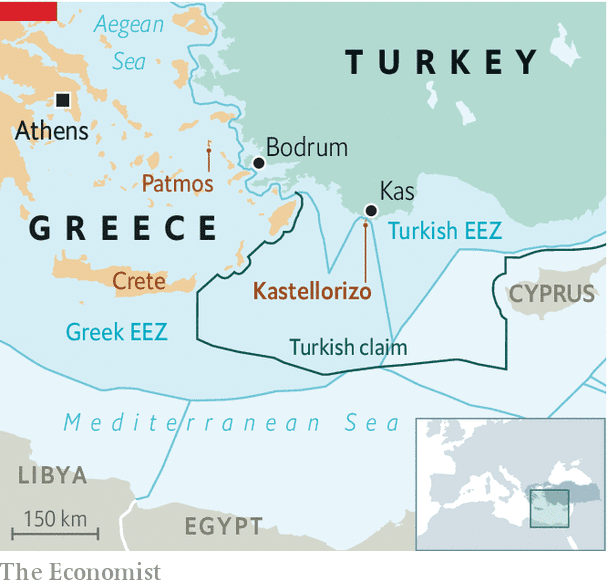
Under the UN Convention on the Law of the Sea, all Greek islands (of which there are thousands, including Kastellorizo) have their own continental shelf with exclusive development rights. Although Kastellorizo is a couple of kilometers from the southern coast of Turkey, Ankara has been repeatedly warned against exploring waters where large gas and oil reserves are potentially also located, and has even been subjected to sanctions.
Turkey, effectively excluded from regional cooperation, in turn signed an agreement on delimiting the maritime border with the Libyan government recognized by the UN, under which it gains rights to a number of territories in the eastern Mediterranean and the waters through which a pipeline to Europe is planned to be laid.
What does Libya have to do with it?
To maintain its positions on the energy front, Turkey “jumped into” the Libyan conflict and deployed troops to confront Khalifa Haftar, supreme commander of the Libyan National Army, who is supported by Russia, France, the UAE and Egypt.
All of them, of course, are now very dissatisfied with Turkish President Recep Tayyip Erdogan: Emmanuel Macron called Turkey's interference in the civil war in Libya “criminal,” Egypt subsequently signed a pact with Greece on developing a joint maritime economic zone, and the UAE sent modern F-16 Block 60 fighters to Crete.
What makes the situation even more complicated?
Strained relations between Turkey and Greece manifest not only at sea but also on land. Turkey, on whose territory about 4 million Syrian refugees are located under the 2016 deal with the European Union, uses migrants as a means of pressure. So, in February Turkey unilaterally opened its border to Greece for them, forcing the neighboring country, among other things, to use force against refugees wishing to get into Europe.
In addition, on July 24, Istanbul's Hagia Sophia, which for almost a millennium was one of the most famous cathedrals of the entire Christian world, again opened its doors to Muslims as a mosque. The reconversion of one of the most famous Byzantine structures was an extremely painful blow for Greece, but at the same time a popular decision among Turkish citizens. Erdogan here, as in the case of claims to resources in the Mediterranean Sea, goes against Europe, but in step with the voter.
Domestic political background
Turkey has so far managed to avoid an economic crisis thanks to a recent $15 billion loan from Qatar, but the budget deficit is growing, and the blow to the tourism industry due to the COVID-19 pandemic has only worsened an already not rosy situation.
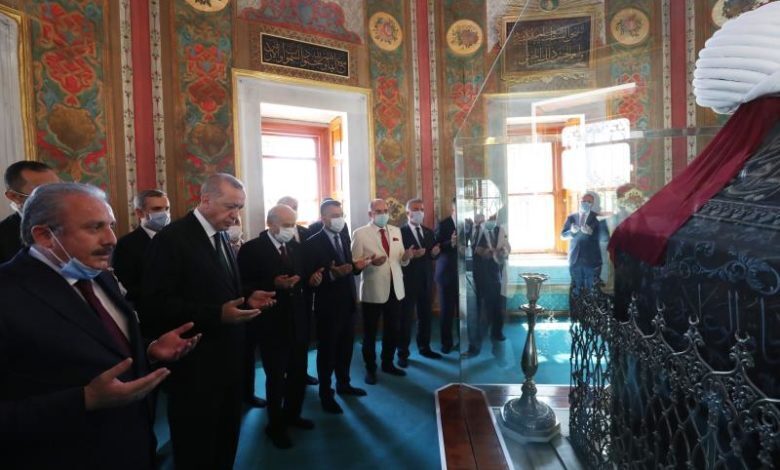
Playing on voters' nationalist sentiments, Erdogan is trying to restore the popularity of the still-ruling Justice and Development Party (AKP), which has lost ratings and control of all major cities in the country.
The main hope — diplomacy
On September 3, NATO Secretary General Jens Stoltenberg said that the governments of Greece and Turkey agreed to hold talks with the participation of other alliance members “to reduce the risk of incidents and accidents in the eastern Mediterranean.” However, talk of a truce is not yet in order — recently only threats and accusations have been heard between them.
Meanwhile, the exercises: Greece with the armed forces of Cyprus, France and Italy, Turkey with the US, which officially does not support Ankara's maritime claims, but... in Libya also back the Tripoli-based Government of National Accord (GNA) headed by Fayez al-Sarraj.
Vasily Obaraz, TK Media

Russian Attacks in Dnipropetrovsk Region: Two Killed, Seven Injured

Defense Forces Strike Four Russian Drone Control Points in Past Day, Including in Berdiansk

Britain Threatens Sanctions on Kremlin-Linked People; Poland Ready to Hand Ukraine Ammunition

Russia says it has completed "planned exercises" in the Black Sea

MVD: Fake Riots With Prop Blood Were Being Prepared Near Presidential Office

Law Enforcers Name Another Klitschko Deputy as Suspect

Berlin Holds Protest Against War in Ukraine; EU Prepares for Possible Russian Halt of Gas Supplies
North Korea Fires Ballistic Missile Over Record Distance in Five Years
Irish Fishermen Force Russia to Postpone Naval Drills

US sanctions in case of invasion of Ukraine could completely destroy Russia's economy, NYT reports
