
“Idiotic” Bay of Pigs Operation: How a Patriotic American Tried to Invade Venezuela and Kidnap Nicolás Maduro
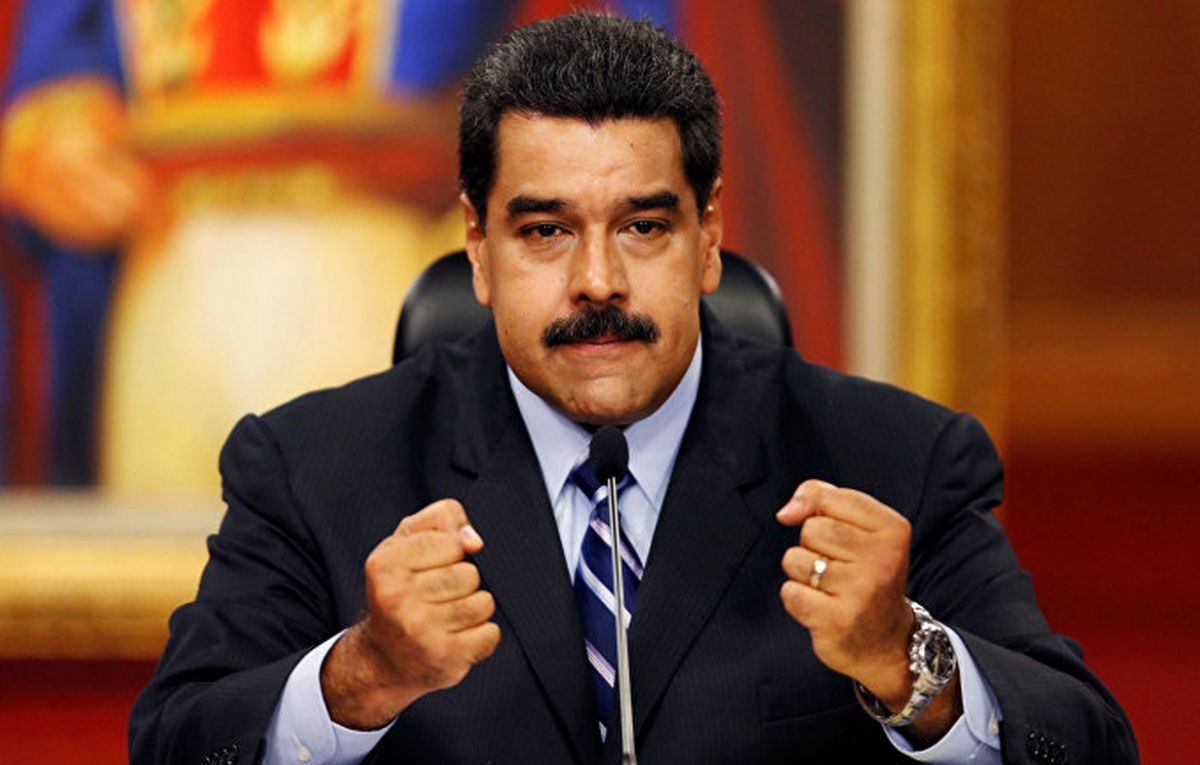
We look at the recent, extremely strange “invasion” of Venezuela.
One of the strangest episodes in the years-long confrontation between the government and the opposition in Venezuela took place in early May. The story clearly deserves to be adapted into some kind of tragicomedy with an absurdist note in the stylish manner of Martin McDonagh or Guy Ritchie.
The story that made many observers, including me, stare at the screen in surprise for several days in a row, watching numerous videos published by Venezuela's official authorities and the mutual accusations thrown between Nicolás Maduro and Juan Guaidó.
Unable to fully grasp what happened and how to react to it at all, I decided to wait for the smoke to clear, in the hope of gaining a clearer understanding of what took place. I can't say I understand everything. This story raises more questions than answers.
Nevertheless, it is extremely interesting in the context of the ongoing crisis in Venezuela and the confrontation between the Maduro government and the United States. In this regard, I think it is important to break this story down into its molecules and outline all the questions that have accumulated for me during my study of the topic.
What happened in Venezuela
According to representatives of Venezuela's Interior Ministry, on May 3-4 several groups of mercenary saboteurs on inflatable motorboats attempted an “invasion from the sea” of the country's territory off the coast of La Guaira, in the town of Macuto north of Caracas.
According to statements by Interior Minister Néstor Reverol, several mercenaries and “Colombian terrorists” were killed by Venezuelan police and military while attempting to land on the coast. Another 8 militants were “neutralized.” Most likely this means detained and/or wounded.
According to the official version of the authorities, there were three mercenary groups:
- The first — 10 people (8 killed, 2 taken prisoner; ran into a military patrol after landing)
- The second — 8 people (seized by local “fishermen-vigilantes” and handed over to the authorities)
- The third — 5 people (surrendered at the same spot, not daring to fight after the first group was killed)
A large number of firearms were found among the attackers, with which they had been equipped, and even equipment. In particular, they seized ten rifles, two Glock pistols, two AFAG machine guns, six pickup trucks, boats with outboard motors, helmets and bulletproof vests with a US flag printed on them.
Among the killed mercenaries in the first group, several members of the Venezuelan Armed Forces were identified, who had defected in 2019, switched to the opposition side, and in April of that year took part in a staged attempt to seize the “La Carlota” military base near Caracas. In addition to them, citizens of neighboring Colombia were also among the dead.
Such a mid-level officer defecting to the opposition was one of the very few such examples that the opponents of the authorities “took pride” in, so many knew about him; he was declared wanted and labeled a “terrorist.” It is no surprise that even the head of the pro-government parliament of Venezuela, Diosdado Cabello, reported his capture on Twitter, proudly posting a video.
Among those captured by Venezuelans were Adolfo Baduel — son of Venezuela's former defense minister, who is currently serving a prison sentence, as well as Captain Antonio Sequea, who deserted in 2019 and fled to Colombia. It was he who was supposed to lead the landing “on the ground.”
Such a mid-level officer's defection to the opposition was one of the very few such examples the opposition “took pride” in, so many knew about him, and he was declared wanted and labeled a “terrorist.” It is no surprise that even the head of the pro-government National Assembly of Venezuela, Diosdado Cabello, reported his capture on Twitter, proudly posting a video.
But of all those arrested, two drew particularly strong interest from Venezuelan authorities, which gave the situation international resonance. These two are US citizens, former American military personnel, and veterans of the wars in Iraq and Afghanistan: Luke Alexander Denman and Airan Berry.
They were shown right away in one of the first videos, when they were brought to Caracas under escort by helicopter along with the other detainees.
Venezuela officially charged all of them with attempting a coup d'état
The United States called the Venezuelans' version “disinformation” meant to divert the population's attention from the socioeconomic crisis and poor management of the country. US President Donald Trump stated that he had no involvement in this and promised to “look into” everything, but has not mentioned the event since.
A day after the “invasion,” Venezuelan military arrested two more people on suspicion of complicity in the operation — this time locals in the city of Puerto Cruz. From them they seized an arsenal of weapons and modern communications equipment which, as official Caracas claims, were intended for the operation: bulletproof vests, communications equipment, radios, satellite phones, ammunition and rifles.
One of the arrested Venezuelans/Colombians, Captain Victor Alejandro Salazar, even named President of the United States Donald Trump on camera as the main client of the operation.
Colombia immediately rejected all the accusations directed at it and said it had nothing to do with it. The operation itself was described in Bogotá as an attempt by Maduro to divert public attention from pressing domestic problems in the country.
Venezuela and Colombia have had no diplomatic relations since February 23, 2019. They were severed after Venezuelan opposition made an attempt to break through the border and enter Venezuela from Colombia as part of a so-called “humanitarian cargo,” which was then set on fire under circumstances that remain unclear to this day. Official Caracas then accused Colombians of interfering in its internal affairs and attempting a coup, and cut diplomatic ties with them.
The US called the Venezuelan version “disinformation” intended to divert the population’s attention from the socio-economic crisis and poor governance of the country. US President Donald Trump said he had nothing to do with this and promised to “look into” everything, but has not mentioned the event since.
A day after the “invasion,” Venezuelan military arrested two more people on suspicion of complicity in the operation — this time locals in the city of Puerto Cruz. They seized an arsenal of weapons and modern communications equipment which, as official Caracas claims, were intended for the operation: bulletproof vests, communication equipment, radios, satellite phones, ammunition and assault rifles.
Another captured American, Airan Berry, said roughly the same thing during his interrogation.
He claimed that Venezuela is ruled by a drug cartel, hinting at Maduro’s alleged ties to organized crime engaged in drug trafficking. It was precisely this that the US recently officially accused Venezuela’s president and his supporters of, issuing arrest warrants against them.
Guaidó called the militants' corpses shown in the videos “victims of the regime,” whose bodies had been specially brought to the scene in order to be filmed and to discredit the opposition and the US standing behind it.
The camp of the Venezuelans was located in northwestern Colombia near the city of Riohacha on the La Guajira Peninsula, where the Americans arrived in January this year. Denman himself admitted that he had been promised from $50,000 to $100,000 for everything.
After infiltrating Venezuela, Denman and his group were to seize the Caracas airport, find an aircraft and return to the US with Maduro on board.
In a second interview, given on May 20, Denman spoke about the role of Venezuelan opposition leader Juan Guaidó, whom he blamed for the operation’s failure, claiming that Guaidó had allegedly misled them.
Another American taken prisoner, Airan Berry, said roughly the same thing during interrogation.
Opposition leader Juan Guaidó himself distanced himself from Denman and the captured soldiers and said he had never heard of them and knows nothing about the operation. He called it “staged,” a show allegedly organized by Maduro himself to make Guaidó look bad in the eyes of the population and the international community, portraying him as a weakling, a coward and an incompetent.
The promises came from none other than the leaders of the Venezuelan opposition headed by Juan Guaidó. Why he never received this money, Goudreau did not say, citing some disagreements between them.
And it might all have been forgotten there, if not for another video that suddenly surfaced on social media, sharply reversing the whole essence of what happened and casting a shadow primarily on Juan Guaidó.
A video address has appeared online by Jordan Goudreau, head of the American private military company SilverCorp, who, sitting somewhere in nature together with former Venezuelan army captain (also a deserter) Javier Nieto Quintero, says that all of this was ACTUALLY a real operation to overthrow the “narco-cartel that has seized Venezuela.”
The video also calls on the country's military to take their side, rise up in mutiny and seize Nicolás Maduro. Goodro even claims that their “cells” across the country have already been activated and will help stir up an uprising against the authorities.
It is unclear whether this video was made after the operation had failed or on the eve of it, so that it could be broadcast during the landing to draw support to the side of the attackers. Either way, the video has once again raised questions about the operation “Gideon”, as Jordan Goodro himself dubbed it.
In 2013 Jordan Goudreau was accused of fraud — misappropriating 62 thousand dollars. But, by his own account, the tribunal ended with nothing and he was acquitted. Goudreau left the US Army in 2016.
Notably, he and his business partners created the company right after the tragic mass shooting at Marjory Stoneman Douglas High School in the city of Parkland. Then 17 people were killed by schoolboy Nikolas Cruz.
The incident became the largest mass school shooting in the world and intensified the debate in American society over gun control. Jordan Goudreau and the company he created profited off this topic by offering private security services to schools and training for teachers so they could protect themselves in such cases.
Now let's take a short break. I want to devote some time separately to the figure of Jordan Goodro, who for several weeks became a true top star of American media, and whom journalists began digging into intensively in an effort to find out who this man is, who carried out a military action that will probably go down in world history as one of the most absurd operations ever.
Jordan Goodro was born in Canada in 1976. In the mid-1990s he joined the Canadian army, where he served for three years. From 2001 to 2016 he served in the US Armed Forces in special forces — “Green Berets”.
His former comrades and sources speaking to journalists from the Associated Press, who investigated Goodro's activities, spoke highly of his professional qualities as a soldier, noting his courage, determination and fanatical devotion to the cause he loved very much. After all, over 15 years of service (Goodro was a Sergeant First Class and a medic), he was awarded the Bronze Star three times.
In 2007 and 2010 he was in Iraq, and in 2011 in Afghanistan. As his old friend, war veteran Drew White, who served with him, told journalists, Jordan Goodro is a true patriot who has always believed in US military superiority, but his character and lifestyle made him a “soldier of fortune” who never passed up a chance to get into some adventure, especially if there was a chance to make “quick money” from it.
It is unclear how Goudreau got to that event, but it was then, according to his friend Drew White, that he got the idea to make a lot of money by offering his services to the Venezuelan opposition, which was suffering under the yoke of dictator-president Nicolás Maduro.
Right after that, Goudreau took a private contract in Puerto Rico to help recover from the consequences of Hurricane Maria. In 2018 he founded his own private military security company, SilverCorp, in his home state of Florida.
Schiller arranged for his new acquaintance a meeting with Lester Toledo — Juan Guaidó's representative in the US, who handled deliveries of “humanitarian aid” to Venezuela and fundraising for the opposition. In April a meeting between Goudreau, Toledo and Schiller took place in Miami.
The incident became the deadliest school shooting in the world and intensified debate in American society over gun control. Jordan Goudreau and the company he founded profited from the issue, offering private security services to schools and training for teachers so they could defend themselves in such cases.
In several videos devoted to mass shootings at American schools, SilverCorp noted that people died supposedly because they could not defend themselves. The company's website said it offered services in 50 countries, and its advisory board included well-known diplomats, politicians and military figures.
However, Goudreau refused to name them, citing confidentiality. Many believed he was simply exaggerating and embellishing the story of his small firm to promote himself.
It should be said that Cliver Alcalá is a very ambiguous and murky character. In 2011 the US imposed sanctions against him, accusing him of supplying surface-to-air missiles to Colombian rebels from the left-wing radical FARC movement in exchange for packs of cocaine. And in April 2020 Alcalá was named, among others, as a participant in an international narco-terrorist network headed by Nicolás Maduro (how true all this is remains unknown; perhaps the general's anti-American sentiments and his closeness to former president Chávez were taken into account).
Jordan Goudreau “got acquainted” with Venezuela in February 2019, when he attended a concert held in support of Juan Guaidó, the opposition leader who had declared himself president of Venezuela a month earlier. The concert-rally took place on the Venezuelan-Colombian border. It was organised and financed by British billionaire Richard Branson.
According to Alcalá, among them were captains and sergeants, and even a former National Guard fighter who had taken part in the 2018 assassination attempt on Maduro, when they tried to kill him with a drone strike during a military parade in Caracas. However, no one knew for certain how accurate all this information about 300 people was. Most likely Alcalá exaggerated in order to raise his value in Goudreau's eyes and create the impression of a man who knew the business better than all the others involved in the negotiations.
A month later, Jordan Goudreau began pitching his idea to various people in the US, trying to reach the leadership of the Venezuelan opposition. In March 2019 he was introduced to Keith Schiller, Donald Trump's longtime bodyguard, who was already working in private security, as Goudreau was.
Moreover, they knew that General Alcalá's brother was still serving the government as Venezuela's ambassador to Iran. For his part, General Alcalá regarded the young opposition members and failed revolutionaries Guaidó and his circle as amateurs, incompetents and arrogant upstarts.
As Schiller later told journalists, Goudreau's idea was too naive, and the veteran himself had “a muddle in his head.” Few people believed in the success of his risky plan to invade Venezuela and overthrow Maduro.
Eventually, Jordan Goudreau did meet a person who believed in his plan and supported the enterprising veteran. In Colombia's capital, Bogotá, Lester Toledo introduced Goudreau to former Venezuelan general Cliver Alcala, a staunch Chavista who had lived in exile in Colombia since 2018, becoming a critic of Nicolás Maduro, whom he despised and did not recognize as the successor to the late Hugo Chávez.
Alcala, after hearing Goudreau's idea, agreed to help him organize a raid across the border and a coup in his home country.
It should be said that Cliver Alcala is a highly ambiguous and shady figure. In 2011 the US imposed sanctions on him, accusing him of supplying surface-to-air missiles to Colombian rebels from the far-left FARC movement in exchange for bundles of cocaine. And in April 2020, Alcala was named, among others, as one of the participants in an international narco-terrorist network headed by Nicolás Maduro (how true all this is remains unknown; the general's anti-American sentiments and his closeness to former president Chávez may have been taken into account).
Mattos was convinced that Jordan Goudreau's plan would not work without direct external support from the US. However, Goudreau told everyone that he had arranged air cover and that he had operational intelligence about the building where Nicolás Maduro would be on the day of the invasion.
One of the most interesting and mysterious points in the whole story is the extent to which official US authorities were informed about this circus. Associated Press journalists write that they found no evidence that the US government had any involvement in this operation or definitively knew about it.
However, they note that Goudreau's initiative was known to Colombians, who helped him somewhat. General Alcalá tried to request direct assistance from Colombia's National Intelligence Service, while recklessly boasting of his acquaintance with Goudreau, presenting him as a “CIA agent.”
The Colombians checked Goudreau out and reported this to the CIA station in Bogotá. So, theoretically, the intelligence community in the States at least knew of the existence of Goudreau and his crazy plans to invade Venezuela. Perhaps they did not attach importance to them, who knows.
Another unanswered question is the financing of the operation. Jordan Goudreau and Cliver Alcalá had financial difficulties. Not only did Goudreau himself, if one believes the comments of his acquaintances, have debts in the US, but Alcalá also had little money.
The fact that Donald Trump hired Jordan Goudreau and his company as private security several times for rallies in Houston and Charlotte in 2018 was used by the veteran as proof of supposedly extensive ties with the White House.
Jordan Goudreau rarely shared all the details of his plan to invade Venezuela with his subordinates. The soldiers knew little about the REAL state of affairs. They were only told that they would enter the country as part of an armored convoy loaded with weapons and money, reach Caracas within 96 hours and spark an uprising by seizing the presidential palace. Supposedly, the demoralized and weak Venezuelan army would scatter in all directions as soon as it realized Maduro had lost power.
One of the former American marines who also took part in training Venezuelans in Colombia, Ephraim Mattos, who spoke with journalists, criticizes Goudreau for very poor organization. He recalled that when he arrived at the training camps in Colombia, he was horrified by the conditions in which the soldiers lived: they sleep on the floor, food and water are scarce, and the training is at a low level.
Alemán tried to persuade Juan Guaidó to support the veteran. It is unclear how it all ended, but, judging by published documents, Guaidó and Goudreau did sign a contract for 213 million dollars. Another question: what happened between them, due to which the whole plan fell apart. Jordan Goudreau blames Juan Guaidó for the failure, while the latter is doing everything he can to conceal his participation in these schemes, getting tangled in his own versions of events.
One of the most interesting and mysterious aspects of the whole story is the extent to which official US authorities were aware of this circus. Journalists at Associated Press write that they found no evidence that the US government had any connection to this operation or definitively knew about it.
He was driving a truck in which automatic rifles, night-vision devices, radios, satellite phones, bulletproof vests and 15 helmets made by the American company High-End Defense Solutions, based in Miami, Florida, were found.
The detention of one of Goudreau's people apparently gave Venezuelan authorities additional information about the preparing operation, so it is no surprise that Nicolás Maduro gleefully remarked that they had known about it from the very start.
Another question left unanswered is the financing of the operation. Jordan Goudreau and Cliver Alcalá had financial difficulties. Not only did Goudreau, according to comments from his acquaintances, have debts in the US, but Alcalá also had little money.
And when the general surrendered to American authorities in early 2020, making a deal with investigators, things went from bad to even worse for Goudreau. He needed at least $1.5 million in cash and additional money to buy weapons, ammunition and equipment.
To this day, it remains unknown who ultimately sponsored this operation and armed the mercenaries. Various publications have mentioned the name of Rowan Kraft, another old acquaintance of Trump whom Goudreau approached for help. However, Kraft categorically denies in interviews with journalists that he gave the veteran any funds for his risky missions.
Finally, the last hope for Jordan Goudreau was contacts with the Venezuelan opposition. His intermediary was a deputy of the opposition Venezuelan parliament, Ernan Alemán, one of the few who sincerely believed in the success of Goudreau and his team.
Aleman tried to persuade Juan Guaidó to support the veteran. It is unclear how everything ended, but, judging by the published documents, Guaidó and Goudreau did sign a $213 million contract after all. The other question is what happened between them that caused the whole plan to fall apart. Jordan Goudreau blames Juan Guaidó for the failure, while the latter is doing everything he can to hide his involvement in these schemes, tangling himself up in his own versions of events.
Many analysts and journalists agree that the “Gideon” operation, conceived by Goudreau, actually failed before it even began, in late March 2020, when on the border between Venezuela and Colombia was detained one of the Venezuelan deserters from Goudreau's team.
He was driving a truck in which automatic rifles, night-vision devices, radios, satellite phones, bulletproof vests, and 15 helmets made by the American company High-End Defense Solutions, based in Miami, Florida, were found.
He also tried to explain it all by saying that between them and Goudreau there had been “preliminary agreements,” and then the parties simply failed to agree on a contract.
The opposition was allegedly alarmed by Goudreau's insistent demands that they pay him an advance, and they suspected that he was some kind of fraud or swindler. And Goudreau himself, offended at being “cheated,” decided to send a group of mercenaries just like that, as they became ready, essentially to the slaughter, just to prove he had fulfilled his part of the deal, or to spite Guaidó, who refused to pay his bills.
It has failed. Part of the group has been killed, and another part has been arrested. For the third day in a row, the Venezuelan government has been publishing video recordings of interrogations of Americans, Colombians and Venezuelan deserters, as well as photographs of the personal belongings of Luke Alexander Denman and Airan Berry that were seized from them during their arrest.
Juan Rendón's interview left Guaidó's supporters on social media reeling. It turned out that while the self-proclaimed president of Venezuela was denying every point regarding his involvement in the operation, his deputy was saying something completely different.
Guaidó faced accusations of lying, and some of the opposition parties in his coalition demanded explanations from him. A day later, Juan Guaidó's press service issued a statement in which it (suddenly) demanded that the rights of those detained during the failed raid be respected. And Guaidó himself suddenly did a complete 180-degree turn and stated that, as it turned out, Maduro's intelligence services had infiltrated these mercenary groups and “leaked” data about the upcoming invasion.
After a video appeared online shortly after the operation failed, in which Jordan Goudreau and Javier Quintero say that the “Gideon” operation exists, the Venezuelan opposition, which had previously insisted to everyone that they knew nothing about these events, was forced to frantically come up with a new version of events, fending off numerous attacks from their supporters demanding “the truth”.
The situation was also fueled by a report in the Washington Post contract signed between Jordan Goudreau’s company and the Venezuelan opposition for $213 million. Notably, the agreement bore the signatures of both Goudreau himself and Juan Guaidó.
Guaidó’s closest aide and deputy, Juan José Rendón (whose signature was also on the agreement), gave an extended interview to the Spanish-language version of CNN, in which he confirmed the authenticity of the contract but claimed that there was no Guaidó signature on it (although there is).
He also tried to explain it all by saying that there had been “preliminary agreements” between them and Goudreau, and then the parties simply failed to agree on the contract.
Of course, following the well-known principle of “Occam's razor,” I do not rule out that there was no conspiracy or overly complicated political maneuvering here.
No one actually knows the true reasons for their disagreement or the circumstances under which the group of mercenaries was sent on the suicidal mission to Venezuela.
And then someone double-crossed someone, and a series of failed and ineffective decisions, combined with poor preparation, low-quality intelligence and internal disagreements among the organizers, led to disaster, sending 23 people on a suicidal mission to Caracas.
Guaidó was hit with accusations of lying, and some of the opposition parties in his coalition demanded explanations from him. A day later, Juan Guaidó’s press service issued a statement in which it (suddenly) demanded that the rights of detainees in the failed raid be respected. Guaidó himself abruptly did a 180-degree turn and claimed that Maduro’s intelligence services had infiltrated these mercenary groups and “leaked” data about the upcoming invasion.
The failure of the operation dealt a crushing blow to Guaidó's reputation. He found himself at the center of a political scandal and was caught lying. This further undermined trust within the opposition platform, where there was already plenty of disagreement over future policy and attitudes toward Maduro.
Attempts to conceal Guaidó's involvement in the arrangements for Operation “Gideon” gave rise to one version of events that some observers subscribe to. Supposedly, it was an attempt by internal forces (part of the opposition) or external forces (the US, Colombia), or all of them together, to undermine Juan Guaidó's authority, delegitimize him and weaken him, in order to find a pretext to replace him with a more loyal and compliant opposition leader.
US President Donald Trump, although he was not drawn into this matter, is forced to answer questions related to the incident. He rightly explained to journalists that if he had wanted to overthrow Maduro, he would not have sent 30-60 wretches from among the deserters there.
It is no coincidence that after the failure of the operation, two moderate Venezuelan opposition parties, Primero Justicia and Voluntad Popular, again called for negotiations with Venezuela's authorities and criticized Guaidó for his dirty dealings behind his colleagues' backs.
Even before the operation, there were disagreements among opposition figures over negotiations with Venezuela. One opposition leader, Henrique Capriles, repeatedly called for talks with Maduro about forming a joint transitional government. Guaidó opposed this.
Moreover, since Trump himself sparked public interest in Venezuela by organizing an attempted coup in the country last winter, any processes around Venezuela are associated with his foreign policy. And the fiasco with Operation “Gideon” will one way or another reflect on Trump.
Therefore, it is no surprise that several days ago American law enforcement agencies opened a criminal case against Jordan Goudreau under the charge of “illegal arms trafficking,” while the head of SilverCorp suddenly disappeared off the radar.
Then someone double-crossed someone else, and a series of failed and ineffective decisions, combined with poor preparation, low-quality intelligence and internal disagreements among the organizers, led to disaster, sending 23 people on a suicide mission to Caracas.
Whatever the truth, Operation Gideon was the stupidest military operation I have ever read about. Spanish media have already dubbed it an “idiotic Bay of Pigs invasion,” alluding to the failed 1961 CIA operation to invade Cuba and overthrow Fidel Castro.
Operation Gideon hit absolutely everyone who was and even who was not involved. Venezuelan opposition leader Juan Guaidó is still forced to fend off accusations against him and explain to everyone whether he planned a forcible seizure of state power with US help, without consulting colleagues and risking civil war.
His political positions are weakening, and the failure of the operation, followed by the capture of two Americans and Venezuelan deserters, gives Nicolás Maduro moral superiority over his opponent and opportunities for endless information and propaganda pressure, seizing the information initiative from his enemies.
US President Donald Trump, although not involved in this affair, is forced to answer questions related to the incident. He rightly explained to journalists that if he had wanted to overthrow Maduro, he would not have sent 30-60 weaklings from among the deserters there.
“I would have sent in the army, I would have called it an invasion”, — said Trump in an interview with Fox News.
Now the US has a headache: two former Green Berets are in Venezuelan captivity. The question is whether to negotiate their release and what Nicolás Maduro will demand in return.
Moreover, since Trump himself stirred public interest in Venezuela by organizing an attempted coup in the country last winter, any developments around Venezuela are associated with his foreign policy. And the fiasco of Operation Gideon will somehow or other rebound on Trump.
That is why it is not surprising that a few days ago US law enforcement agencies opened a criminal case against Jordan Goudreau on charges of “illegal arms smuggling,” and the head of SilverCorp himself suddenly dropped off the radar.
Essentially, the Trump administration is now reaping the fruits of its own excessively aggressive and confrontational rhetoric, largely forged in the halls of the White House by John Bolton, who has since left the administration.
Frequent use of harsh language and constant threats against its enemies — Iran, Venezuela, North Korea, Russia, China, Syria, Cuba — have created the impression among the public that the goal of Trump's foreign policy is to overthrow all regimes that Washington considers hostile.
Accordingly, actions like Operation Gideon are automatically associated with the Trump administration, and many can easily imagine that Trump stood behind the attempted invasion or coup, given his history of statements on this matter.

Russian Attacks in Dnipropetrovsk Region: Two Killed, Seven Injured

Defense Forces Strike Four Russian Drone Control Points in Past Day, Including in Berdiansk

Britain Threatens Sanctions on Kremlin-Linked People; Poland Ready to Hand Ukraine Ammunition

Russia says it has completed "planned exercises" in the Black Sea

MVD: Fake Riots With Prop Blood Were Being Prepared Near Presidential Office

Law Enforcers Name Another Klitschko Deputy as Suspect

Berlin Holds Protest Against War in Ukraine; EU Prepares for Possible Russian Halt of Gas Supplies
North Korea Fires Ballistic Missile Over Record Distance in Five Years
Irish Fishermen Force Russia to Postpone Naval Drills

US sanctions in case of invasion of Ukraine could completely destroy Russia's economy, NYT reports
