
How Ukraine and Poland Could Undermine Gazprom's Monopoly in Europe
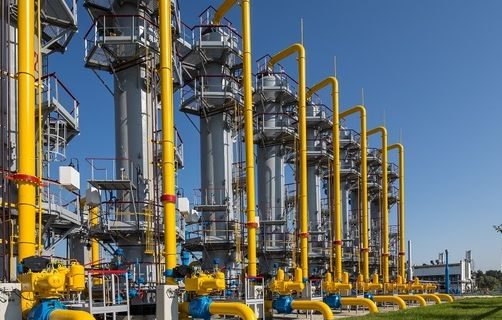
Gazprom is using its monopoly position in the gas market to create an artificial shortage.
In Ukraine and Poland there are several options for using the gas transmission systems of both countries that could undermine Gazprom's dominant position in the European gas market, especially in Eastern Europe. This was stated by Serhiy Makohon, CEO of the Gas Transmission System Operator of Ukraine (GTSOU).
We explain what this will mean for Europe and how Russia uses its dominant position in the European gas market by artificially creating a gas shortage.
Cooperation between Poland and Ukraine
One possibility for Ukrainian-Polish cooperation is storing gas from the LNG terminal on the Baltic Sea coast (Świnoujście) in Ukrainian underground gas storage facilities. This could help Poland balance its energy system during peak loads. However, there are other options as well.
Serhiy Makohon
CEO of Ukraine's GTSOUPoland is building not only an LNG terminal but also the so-called Baltic Pipe, connecting Poland with gas fields in the North Sea. In addition, an interconnector with the Baltic states has already been built, and gas can be received from the LNG terminal in Klaipėda. An interconnector with Slovakia has also been built. Therefore, there is a large number of different options for cooperation between our countries.
As Makohon explained, the compressor station now needs to be reconstructed, and a "not very large" gas pipeline to Poland needs to be completed, so that it will be technically possible to supply gas from northern Poland to the south, up to the border with Ukraine.
According to Serhiy Makohon, the possibility for Poland to receive gas from Norway, the United States, Qatar and other countries will help establish a real market price for blue fuel in Europe.
"This has already been proven by the experience of the Baltic states. When they built their LNG terminal in Klaipėda, Gazprom was forced to significantly lower its gas price," said the head of GTSOU.
According to him, a project of such cooperation between Poland and Ukraine does not require large sums of money, only the political will of both countries, and such will exists today.
Why this matters and how Gazprom affects gas prices in Europe
Gas prices in the EU have been rising gradually since March, with the fastest growth recorded in the summer. Since prices there are set entirely by market mechanisms, this price situation arose, in particular, due to the low level of filling of European underground gas storage facilities.
The gas shortage in the EU arose due to supposed "repairs" on the pipelines of Russia's Gazprom. As a result of these actions, the EU received about 2 billion cubic meters of gas less.
Criticism of Gazprom in this specific case is also fueled by the fact that, despite the current supply situation, the Russian monopolist has refused to increase gas transit to Europe through Ukraine.
As Makohon previously reported, to compensate Europeans for the gas volumes they did not receive, Gazprom is emptying its underground gas storage facilities in Europe, which is why the gas shortage in Europe is largely artificial and therefore not the root cause of rising prices.
Makohon also reported that if Nord Stream 2 is launched and transit through Ukraine is reduced accordingly from 2024, Europe will already depend on Russian gas by 80%.

Russian Attacks in Dnipropetrovsk Region: Two Killed, Seven Injured

Defense Forces Strike Four Russian Drone Control Points in Past Day, Including in Berdiansk

Britain Threatens Sanctions on Kremlin-Linked People; Poland Ready to Hand Ukraine Ammunition

Russia says it has completed "planned exercises" in the Black Sea

MVD: Fake Riots With Prop Blood Were Being Prepared Near Presidential Office

Law Enforcers Name Another Klitschko Deputy as Suspect

Berlin Holds Protest Against War in Ukraine; EU Prepares for Possible Russian Halt of Gas Supplies
North Korea Fires Ballistic Missile Over Record Distance in Five Years
Irish Fishermen Force Russia to Postpone Naval Drills

US sanctions in case of invasion of Ukraine could completely destroy Russia's economy, NYT reports
