
Iceland's Orca Plant Starts Capturing CO2 From the Air: How It Works, How Much It Captures and How the Project Is Funded
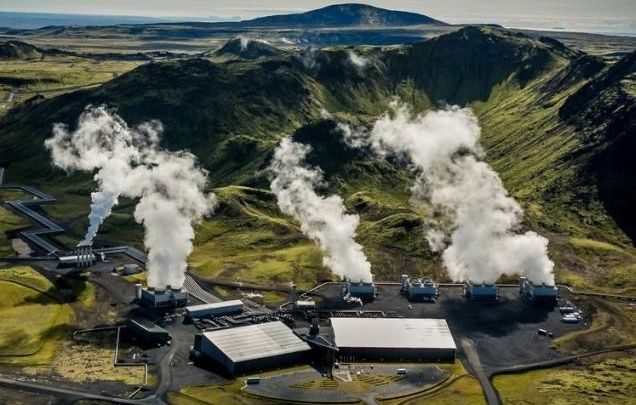
According to the project's creators, the captured carbon dioxide will be turned into solid rock underground.
Orca, the world's largest plant for capturing carbon dioxide from Earth's atmosphere, has started operating in Iceland.
We explain how the technology works, how much carbon dioxide it captures, where the captured material goes and how the development is funded.
New Plant
The plant, named Orca after the Icelandic word 'orka', meaning 'energy', consists of four units, each of which includes two metal boxes resembling shipping containers.
According to the companies, the plant was built by Switzerland's Climeworks and Iceland's Carbfix. At full capacity, the plant will annually extract 4,000 tonnes of carbon dioxide from the air.
According to the US Environmental Protection Agency, this corresponds to the emissions of about 870 cars. The plant's construction cost between $10 million and $15 million.
Meanwhile, global CO2 emissions last year amounted to 31.5 billion tonnes. Thus, the new plant can absorb less than 1% of the annual emissions of a single coal-fired power plant.
To capture carbon dioxide, the installation uses fans to draw air into a collector containing a filtering material.

Once the filtering material is saturated with CO2, the collector is closed and the temperature is raised to release CO2 from the material, after which highly concentrated gas can be collected.
The CO2 is then mixed with water before being injected to a depth of one thousand meters into nearby basalt rock, where it will be mineralized into solid rock.
Supporters of so-called carbon capture and storage believe these technologies could become an important tool in the fight against climate change.
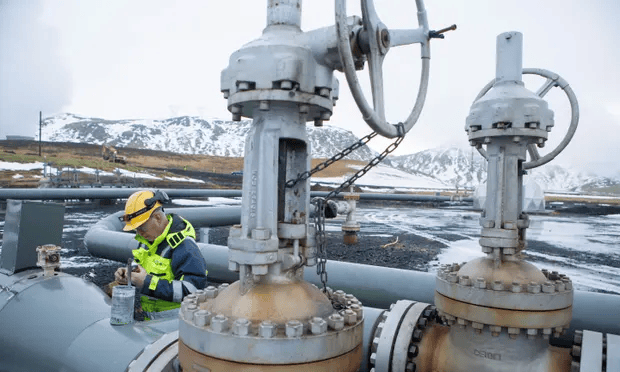
Critics, however, argue that the technology is still prohibitively expensive and that its large-scale use may require decades.
Nevertheless, the plant's appearance significantly increases the world's existing capacity for carbon dioxide removal: according to the International Energy Agency, 15 similar plants are currently operating, with a combined annual capacity of just 9,000 tonnes.
Christoph Gebald
Co-founder of OrcaEvery CO2 molecule that Orca captures from the air and injects into permanent underground storage will never again contribute to global warming. This is a unique opportunity, but its application needs to be expanded very significantly.
Source of Funding
Climeworks funds its project through a contract with the insurance firm Swiss Re, which aims to become a net-zero emissions company by 2030. The startup also offers other clients services to offset their CO2 emissions.
Experts note that governments around the world should subsidize the extraction of carbon dioxide from the atmosphere, just as they do with the installation of solar panels or the purchase of electric vehicles.
However, some environmentalists criticize direct air capture technologies for other reasons: they believe such systems merely divert public attention from the need to reduce harmful emissions.

Russian Attacks in Dnipropetrovsk Region: Two Killed, Seven Injured

Defense Forces Strike Four Russian Drone Control Points in Past Day, Including in Berdiansk

Britain Threatens Sanctions on Kremlin-Linked People; Poland Ready to Hand Ukraine Ammunition

Russia says it has completed "planned exercises" in the Black Sea

MVD: Fake Riots With Prop Blood Were Being Prepared Near Presidential Office

Law Enforcers Name Another Klitschko Deputy as Suspect

Berlin Holds Protest Against War in Ukraine; EU Prepares for Possible Russian Halt of Gas Supplies
North Korea Fires Ballistic Missile Over Record Distance in Five Years
Irish Fishermen Force Russia to Postpone Naval Drills

US sanctions in case of invasion of Ukraine could completely destroy Russia's economy, NYT reports
