
Key to COVID-19: llama blood-based drugs successfully pass testing

Even if coronavirus vaccines succeed, having effective treatment is necessary.
Coronavirus drugs made from the blood of a llama named Fifi have shown "significant potential" in clinical trials. Here is why the llama may hold the key to the disease.
Key to COVID-19
In July 2020, while the llama Fifi was enjoying grass in a pasture in Reading (UK), her immune system provided the basis for a breakthrough in treating coronavirus patients.
Scientists from the Rosalind Franklin Institute in Britain used Fifi's antibodies to develop a therapy that boosts immunity. The "antibody cocktail" obtained thanks to Fifi was to undergo clinical trials.
The scientists' research involves "modifying" the llama's antibodies, which are small enough and have a much simpler structure than antibodies in human blood. However, this size and structure mean they can be "reshaped" in the laboratory.
The institute's director, an experienced researcher, described the method using the example of cutting a key that can open the coronavirus "lock".
James Naismith
Professor, Director of the Rosalind Franklin InstituteWith llama antibodies we have keys that do not quite fit — they will enter the lock, but they cannot fully open it. So we take this key and use molecular biology to refine its parts until we cut a key that fits.
Antibodies are part of the adaptive immune system; they are molecules that are produced in response to an invasion by a virus or bacteria. On re-infection, the body seeks out parts of the virus thanks to antibodies, which destroy them. This type of therapy boosts the immune system of a sick person with antibodies that have already adapted to the virus.
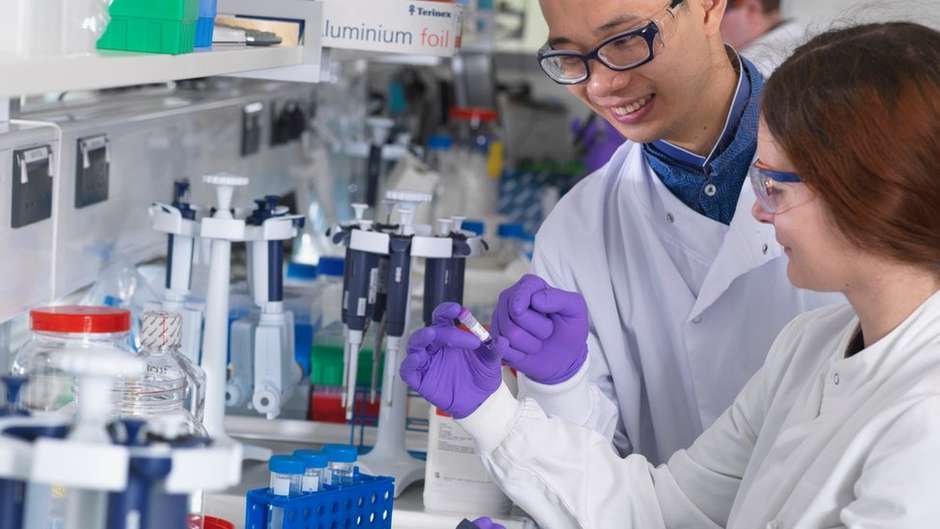
There is evidence that blood enriched with antibodies, obtained from people who have recently recovered from coronavirus, may be used as a treatment. In addition, scientists can make antibodies specific to the coronavirus to order.
Nanobodies
A small reconstructed part of a llama antibody is known as a nanobody. In the laboratory, scientists can produce nanobodies that effectively kill the live virus. They do this by binding or capturing what is on the outer surface of the virus capsule, known as the "spike protein". "Switching off" this spike prevents the virus from accessing human cells.
Thus, coronavirus drugs made thanks to the llama are made from nanobodies. After the therapy is tested on people, the substance could be used as a simple nasal spray to treat and even prevent infection.
According to Professor James Naismith, rodents infected with coronavirus that were treated with the new nasal spray fully recovered within six days. So far the "drug" has only been tested on laboratory animals, but Public Health England has already said it is the "most effective agent for neutralizing SARS-CoV-2" that they have ever tested.
Such effectiveness against coronavirus is linked to the strength with which nanobodies bind to the virus. This binding effectively marks the virus with an immune "red flag", allowing the rest of the immune system to target and destroy it.
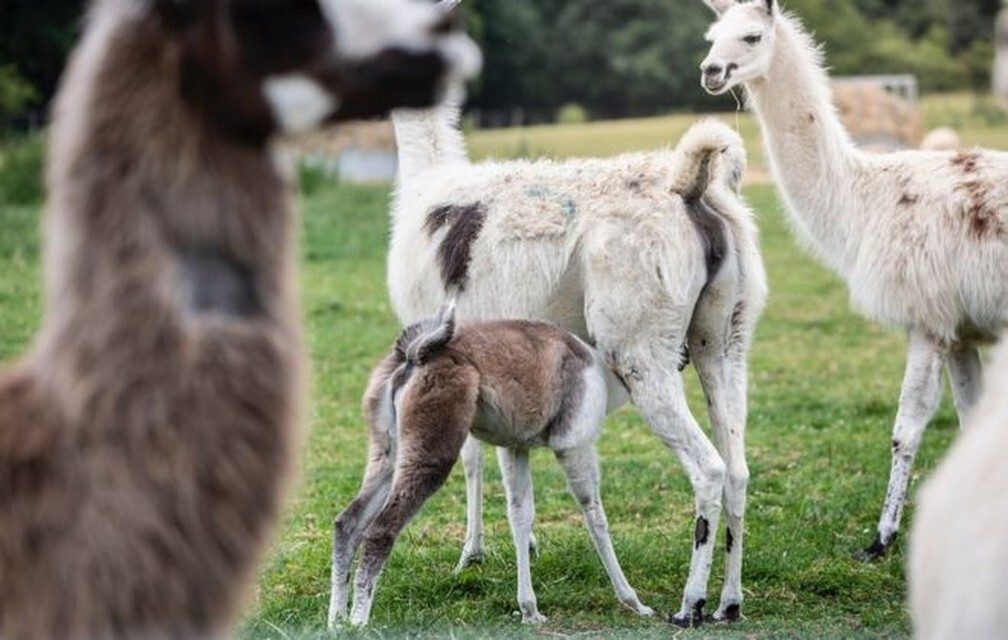
Fifi was vaccinated with a tiny non-infectious piece of viral protein, which stimulated her immune system to produce special molecules. Scientists then carefully selected and purified the strongest nanobodies from Fifi's blood sample — those that matched the viral protein best, like a key fitting a specific lock.
Why a drug is needed
The team of scientists was able to grow a large number of specially selected strong molecules. According to Naismith, the immune system is an amazing thing, since it always works better, and evolution is hard to beat.
Sheena Cruickshank
immunologist at the University of ManchesterWe need to obtain more data on effectiveness and safety before moving on to human trials. The development is very promising, and the fact that it is cheap and easy to use is also a plus. Unfortunately, the coronavirus will be with us for some time yet, so more drugs will be needed.
Scientists are confident that even if coronavirus vaccines succeed, having effective treatment is very important. There is always a risk of new strains emerging that are able to evade immunity.

Russian Attacks in Dnipropetrovsk Region: Two Killed, Seven Injured

Defense Forces Strike Four Russian Drone Control Points in Past Day, Including in Berdiansk

Britain Threatens Sanctions on Kremlin-Linked People; Poland Ready to Hand Ukraine Ammunition

Russia says it has completed "planned exercises" in the Black Sea

MVD: Fake Riots With Prop Blood Were Being Prepared Near Presidential Office

Law Enforcers Name Another Klitschko Deputy as Suspect

Berlin Holds Protest Against War in Ukraine; EU Prepares for Possible Russian Halt of Gas Supplies
North Korea Fires Ballistic Missile Over Record Distance in Five Years
Irish Fishermen Force Russia to Postpone Naval Drills

US sanctions in case of invasion of Ukraine could completely destroy Russia's economy, NYT reports
