
“Normal Men’s Conversation”: How the Zelensky–Biden Meeting Went and What Other Talks Took Place
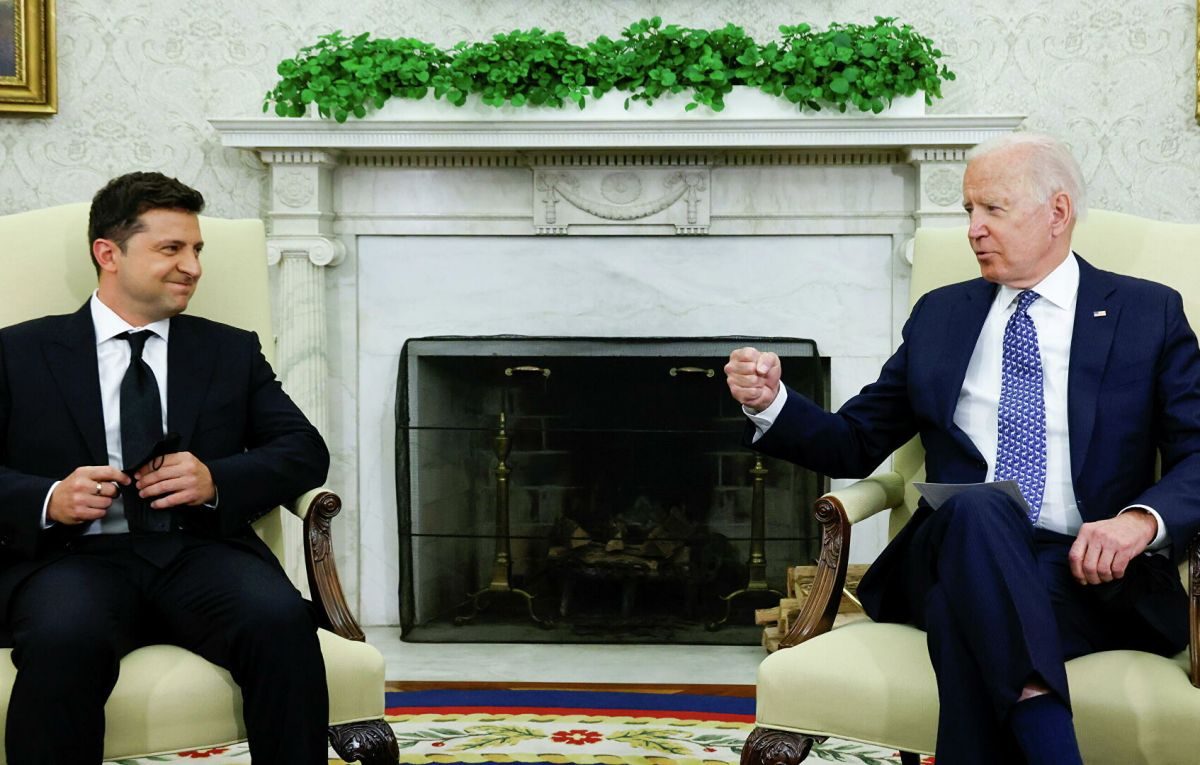
Ukraine reacted with restraint to the presidents’ meeting, but experts do not consider the visit a failure.
On September 1, talks ended between Ukrainian President Volodymyr Zelensky and U.S. President Joe Biden. The meeting lasted more than two hours and, in Zelensky’s own words, “was a normal men’s conversation”.
Later, the sides published a joint statement following the meeting. Basically, it recorded statements the leaders had already made earlier. The United States continues to support Ukraine’s course toward Euro-Atlantic integration, including joining NATO, but the sides did not mention specific timelines.
The same goes for Russia’s Nord Stream 2. The United States pledged to maintain transit through Ukraine and will appoint a special envoy on this issue in the near future. Sanctions against the pipeline were also not mentioned, although the document called it a “threat to European energy security”.
The United States and Ukraine managed to reach understandings on other issues that have received less media attention. For example, the sides agreed to resume work on the strategic partnership in the near future (the foreign ministers are to sign the relevant charter this autumn), finished preparing a strategic defense agreement (they also agreed on joint research into weapons development), and signed a memorandum on cooperation in space (concerning the exchange of information from satellites).
The United States promised to allocate about $12.5 million to Ukraine for combating the coronavirus pandemic and $45 million for humanitarian aid to those affected by the war in Donbas. Another $463 million will be allocated to Kyiv by the end of the year for programs focused on democracy, human rights, decentralization, judicial reform and privatization.
In addition to Biden, Zelensky and other members of his delegation also managed to hold talks with other representatives of American agencies and companies. For example, U.S. Secretary of Defense Lloyd Austin said that Ukraine can count on U.S. support in the face of Russian aggression.
The Pentagon chief announced an additional $60 million in military assistance to Kyiv, including the purchase of Javelin anti-tank missile systems. Ukroboronprom signed agreements with Lockheed Martin, Harris Global Communications Inc. and Global Ordnance worth a total of $2.5 billion. Energoatom and Westinghouse Electric signed a memorandum providing for investments in Ukraine’s nuclear energy sector.
In Ukraine, the Biden–Zelensky meeting was received with restraint, since Bankova had raised expectations too high beforehand. Against the backdrop of events in Afghanistan, Kyiv was confident that U.S. attention, as well as financial flows, would be redirected to it. At the same time, experts do not consider the visit a failure.
“A normal working meeting for a country of our level,” said Ilya Kusa, an expert on international politics at the Ukrainian Institute for the Future, in a comment to TK Media. In his view, Zelensky’s administration “set the bar too high” in hopes of winning the sympathy of voters.
“From the very beginning it was clear that Ukraine would not be showered with money, but Zelensky, like other presidents before him, chose to play on the public’s sympathies instead of pragmatism,” Kusa added. He believes that if this continues, anti-Western sentiment will grow among Ukrainian citizens, since it will seem that “Europe and the States are dumping us.” Despite this, the expert gave a positive assessment of the joint statement, especially the news about resuming the work of the commission on strategic partnership between the two countries. As a reminder, its work was frozen in 2018.
Ilya Kusa
expert on international politicsUkraine practically achieved what it wanted. The document included the topics of NATO and Nord Stream 2, while the issue of Donbas was not raised. Zelensky is returning home with acceptable results.
Also satisfied with the Zelensky–Biden meeting is Mikhail Honchar, president of the Strategy XXI Center for Globalistics . In a comment to TK Media, he said that the memorandum between Energoatom and Westinghouse Electric will help strengthen the positions of Ukraine’s nuclear industry.
Mikhail Honchar
president of the Strategy XXI Center for GlobalisticsAmerican investments will help move away from already outdated Soviet technologies. Within the next 10 years, old reactors will need to be decommissioned, and the same amount of time will be needed to build new ones. Modernized nuclear power plants will be useful, especially against the backdrop of the energy war with Russia and Ukraine’s lag in developing “green energy”.
Also, according to Honchar, there is no need to despair over the absence of any mention of sanctions against Nord Stream 2.
“The body that decides on sanctions in the United States is Congress. Both Democrats and Republicans reacted “with hostility” to the White House’s lifting of restrictions. The position within the European Union itself has also not been formed. So the fate of the project may still change,” the expert noted.
At the same time, former Ukrainian Minister of Economic Development and Trade Pavlo Sheremeta was dissatisfied with the talks. In a comment to TK Media, he explained his position by saying that the joint statement practically does not mention investment in our economy.
Pavlo Sheremeta
former Minister of Economic Development and Trade of UkraineApart from strategic defense and energy, we did not see U.S. interest in developing other sectors of Ukraine’s economy. Also, the tour of California, where Zelensky is due to meet American IT giants, is unlikely to bring results.
He expressed the conviction that the United States is ready to cooperate only with those countries that have already made progress in developing their own economies.

Russian Attacks in Dnipropetrovsk Region: Two Killed, Seven Injured

Defense Forces Strike Four Russian Drone Control Points in Past Day, Including in Berdiansk

Britain Threatens Sanctions on Kremlin-Linked People; Poland Ready to Hand Ukraine Ammunition

Russia says it has completed "planned exercises" in the Black Sea

MVD: Fake Riots With Prop Blood Were Being Prepared Near Presidential Office

Law Enforcers Name Another Klitschko Deputy as Suspect

Berlin Holds Protest Against War in Ukraine; EU Prepares for Possible Russian Halt of Gas Supplies
North Korea Fires Ballistic Missile Over Record Distance in Five Years
Irish Fishermen Force Russia to Postpone Naval Drills

US sanctions in case of invasion of Ukraine could completely destroy Russia's economy, NYT reports
