
Detention of Russian Militants in Belarus: Setback for Lukashenko, Russian and Ukrainian Ambassadors Summoned to Foreign Ministry
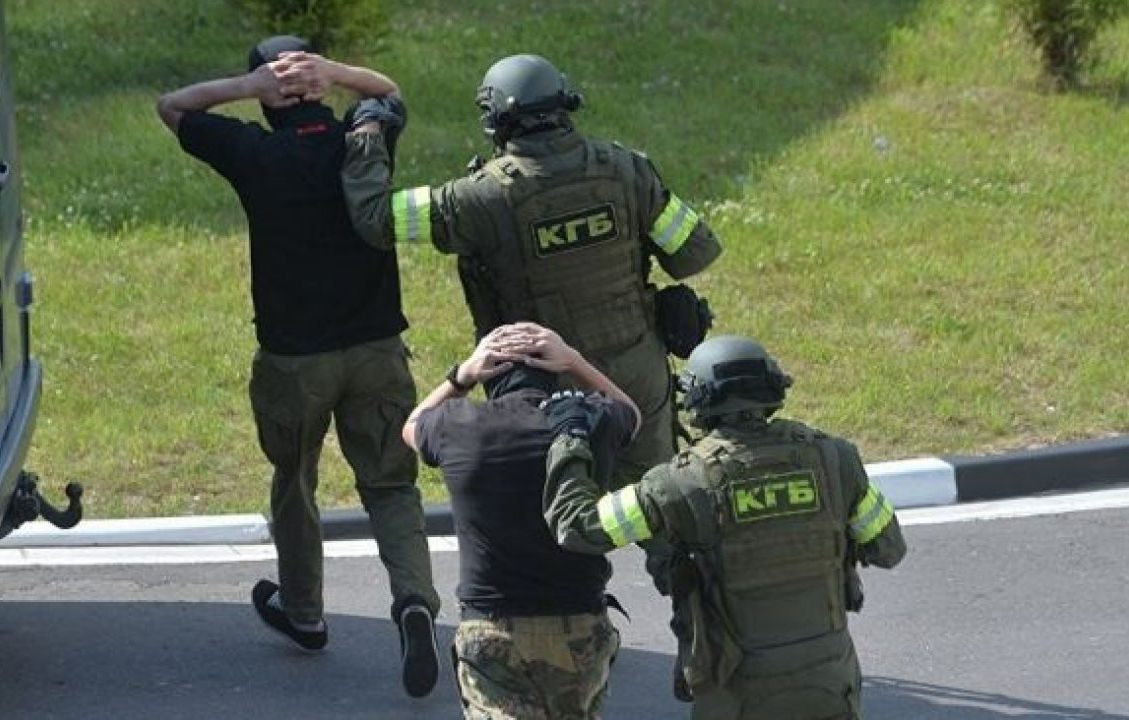
A Russian trace in Belarus.
The day before, Belarusian state media reported that in the night from Tuesday to Wednesday, 33 militants were detained through joint efforts of the KGB and OMON. All of them turned out to be citizens of Russia. In total, according to Belarusian law enforcement, more than 200 militants arrived in the country, and their goal is “destabilizing the situation during the election campaign”.
All those detained in Belarus are being called militants of the Wagner Group, a private military company linked to businessman Yevgeny Prigozhin. Notably, about fifteen of them are listed in the Peacemaker database — some are presented as “freelance employees of the Russian GRU,” while others are simply accused of participating in combat operations in Donbas on the side of the so-called DNR and LNR.
“During the detention, some of the figures invoked Russian citizenship, as well as past service in various Russian security agencies, as grounds for not being subjected to administrative or criminal liability,” — quotes the statements of a KGB officer involved in the detention, tut.by.
The fact of the detention in Belarus of separatists who fought in Donbas was also confirmed by Russian writer Zakhar Prilepin. “There are two or three fighters from my battalion there,” — said Prilepin, who fought on the side of the so-called DNR. — “In fact, if not dozens, then hundreds of people work in private military companies and take part in armed conflicts.”
However, according to Prilepin, the militants came to Belarus not at all to escalate the situation before the presidential election — he leans toward the idea that Belarus was used as a transport hub for further movement to other countries.
“From what I can judge from the outside, it's a typical story: well-trained people are moving in certain directions along their routes, they have their own business, and Belarus is not needed by them at all. That three dozen guys in camouflage were heading somewhere else, and that the Belarusian special services know this perfectly well, I'm sure.”
In Belarus, however, this theory is being questioned. “If a private military company were being transferred somewhere, especially through Belarusian territory, there would probably be certain explanations through some special services channels,” — State Secretary of the Security Council Andrei Ravkov said on the air of STV television channel. — “Because this is a very serious issue. But it turned out that no such information was received either through the FSB, the GRU, or any other structure.”
In Belarus, this detention is indeed taken seriously: a criminal case has been opened against the militants for preparing terrorist attacks in the country, and both operational cover of the state border and security measures during mass events are being strengthened. At the same time, in connection with the detention of the militants, not only the Russian ambassador but also the Ukrainian ambassador Ihar Kizim is being summoned to the Foreign Ministry.
“At present, the head of state has set a number of tasks for elements of the national security system,” — says Ravkov. — “Briefly, if we dwell on these tasks, it will be the Foreign Ministry's work to send requests and invite the ambassadors of the Russian Federation and Ukraine to provide certain explanations and discuss these issues. Because already now, based on available information and the results of interviews with these people, there are within 14 people who went through the people accounting program and who were recorded in Donbas. Therefore, the Ukrainian ambassador is also being invited.”
What about Lukashenko?
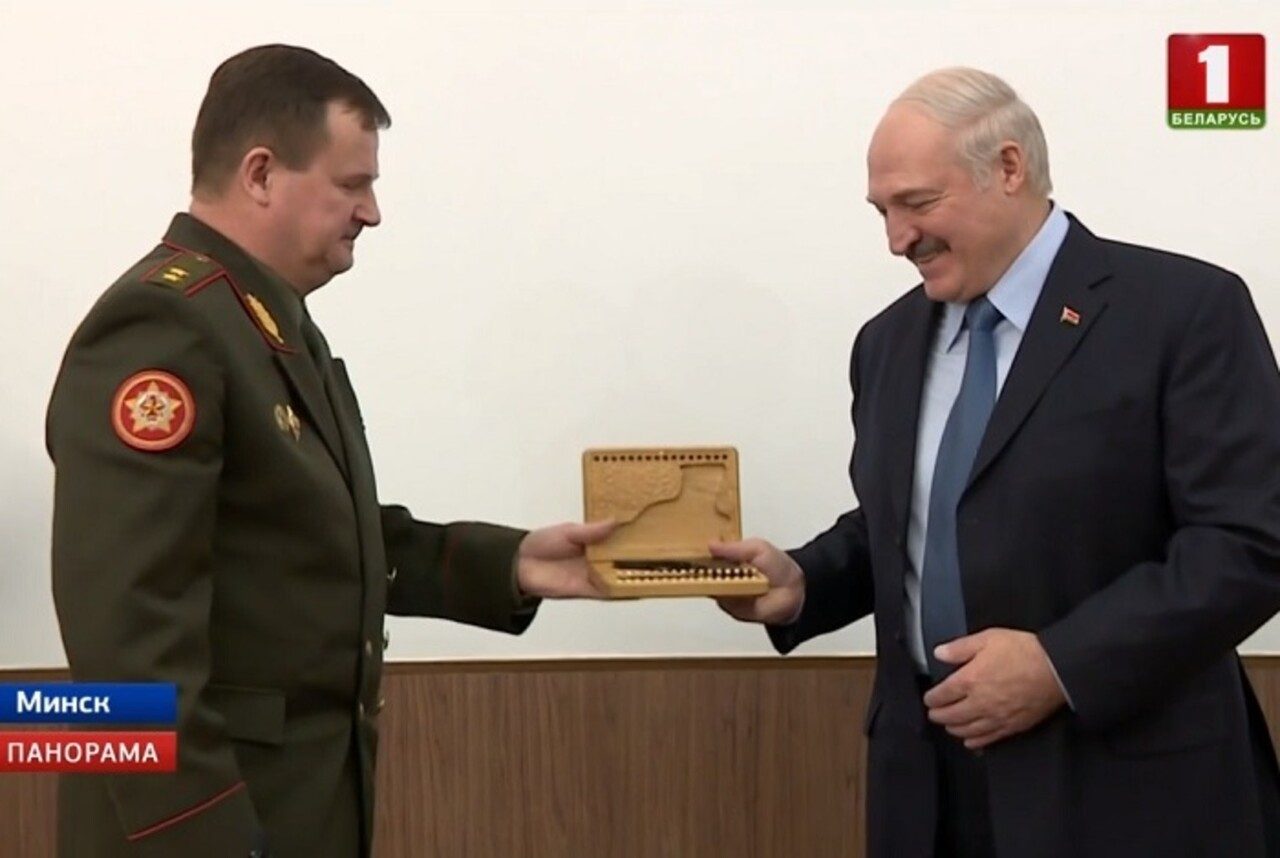
Belarus's president, running in the upcoming elections for his sixth term, is both categorical and cautious in his statements — at an emergency Security Council meeting he called the incident “an extraordinary event” and spoke of the dirty intentions of Russians, but at the same time added that he did not want to discredit “a country close to us.”
“I am watching the reaction of Russians,” — said Lukashenko at the Security Council meeting. — “They are already justifying themselves, saying that we practically brought them here ourselves. Clearly, they have to justify their dirty intentions somehow. Therefore I would very much ask that in this situation and with this fact everything be absolutely frank and honest. If these are Russian citizens (and I understand that they were interrogated), then we need to immediately contact the relevant structures of the Russian Federation so that they explain what is going on.”
It is also important to note that in connection with the detention of the militants, the Belarusian leadership plans to strengthen security measures during mass events related to the election campaign. This will further free the hands of security forces during protest actions that regularly take place in the country due to the non-admission of opposition candidates to the presidential election.
What is the Wagner Group?
The private military company “Wagner” or “Wagner Group” — is an unofficial armed formation, named so because of the call sign of commander Dmitry Utkin. Militants of this group take part in hotspots around the world — from Ukraine to Syria, Libya and Sudan.
In Libya, mercenaries are fighting on the side of Khalifa Haftar, who has been declared a war criminal. Among other things, because of their participation in the Libyan conflict, Russia's relations with Turkey are strained — back in February, Turkish President Recep Tayyip Erdogan, during a visit to Pakistan, spoke with journalists and showed them a photo allegedly showing the head of the Wagner Group standing next to Russian Defense Minister Sergei Shoigu and Chief of the General Staff of Russia Valery Gerasimov.
Despite regular denials, the financing of the Wagner Group is backed by Russian billionaire businessman Yevgeny Prigozhin, known colloquially as “Putin's chef” because his company once provided catering services to Russia's top officials.
The New York Times regularly writes about Wagner militants — including for materials about this armed formation, for which the publication received the Pulitzer Prize.

Russian Attacks in Dnipropetrovsk Region: Two Killed, Seven Injured

Defense Forces Strike Four Russian Drone Control Points in Past Day, Including in Berdiansk

Britain Threatens Sanctions on Kremlin-Linked People; Poland Ready to Hand Ukraine Ammunition

Russia says it has completed "planned exercises" in the Black Sea

MVD: Fake Riots With Prop Blood Were Being Prepared Near Presidential Office

Law Enforcers Name Another Klitschko Deputy as Suspect

Berlin Holds Protest Against War in Ukraine; EU Prepares for Possible Russian Halt of Gas Supplies
North Korea Fires Ballistic Missile Over Record Distance in Five Years
Irish Fishermen Force Russia to Postpone Naval Drills

US sanctions in case of invasion of Ukraine could completely destroy Russia's economy, NYT reports
