
The New York Times Wins Pulitzer Prize for Series on Putin. What Is It About?
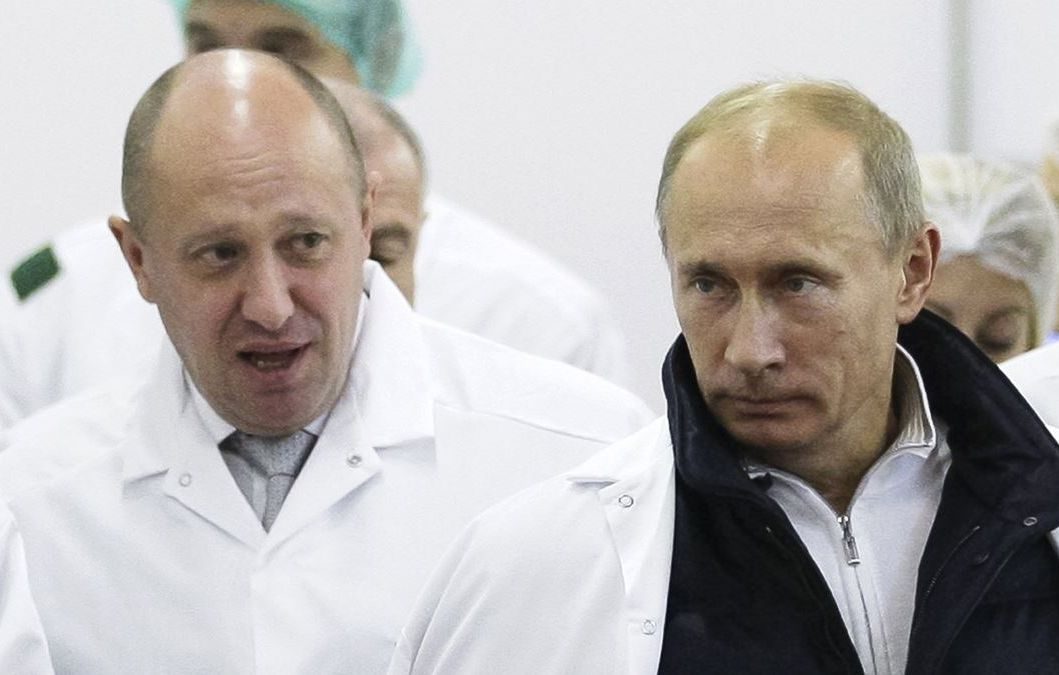
NYT staff received the 2020 Pulitzer Prize “for a series of riveting pieces on Vladimir Putin's predatory regime.”
The Joseph Pulitzer Prize Board will award the NYT $15,000 “for distinguished international reporting using any available journalistic methods” — namely, for a series of eight articles published in the newspaper between March 30 and November 30, 2019.
What did The New York Times write about, and why were they awarded one of the most prestigious prizes in journalism?
March 30. “Russia Ordered a Killing That Made No Sense. Then the Assassin Started Talking” (Russia Ordered a Killing That Made No Sense. Then the Assassin Started Talking)
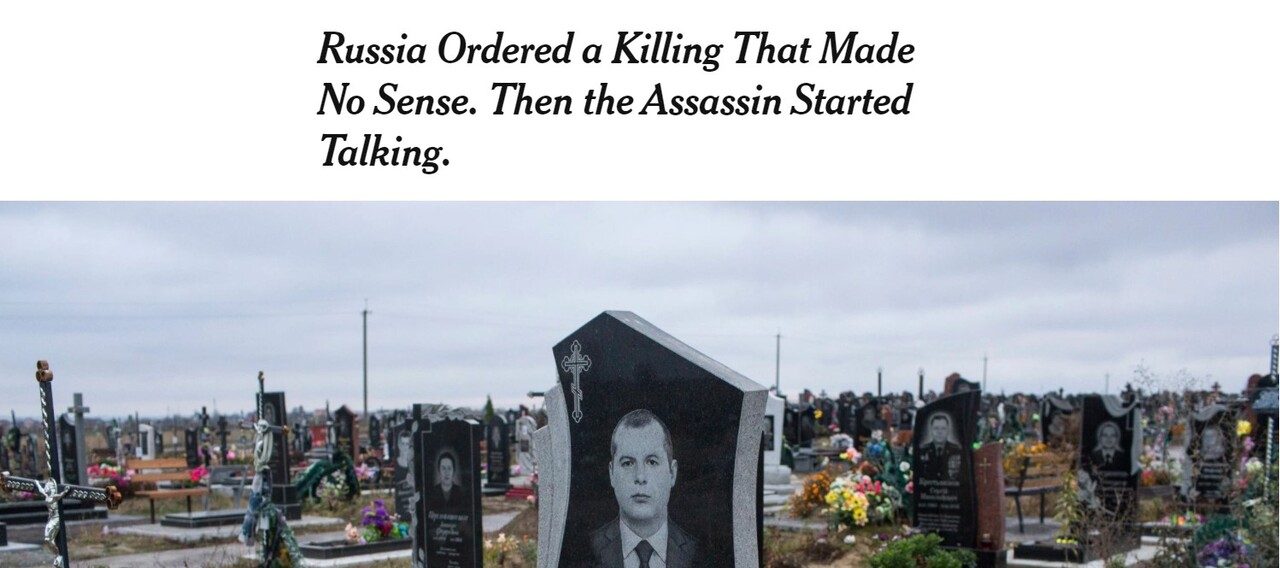
The first of the honored articles is about... Ukraine, more specifically about the contract killing of Ivan Mamchur, which took place in Rivne in September 2016. Journalist Michael Schwirtz investigated the circumstances of this murder and revealed the role the FSB played in it.
Schwirtz managed to conduct several interviews with the killer, who was sentenced to 12 years in prison, and found out that Smorodinov served in the Soviet marines and worked in the police, but spent most of his life involved in organized crime. He was convicted more than once of bribery and extortion and engaged in sex trafficking. After that, he began working for Russia.
After being wounded in the war in Donbas, Smorodinov settled in Moscow. There, at one of the arms exhibitions, he tried to get a job with the Wagner Group, which operates in Syria. But all he was offered was a meeting with certain Maxim and Philip. In turn, they gave him weapons and a list of six people to surveil.
Schwirtz managed to learn the names of all the targets of Russian intelligence services. He notes with surprise that even Ukrainian intelligence did not know these names, and when asked to help them, he refused. But he reveals the connection he found between the targets: all of them were somehow linked to the Russian-Georgian war in South Ossetia in 2008.
October 7. “Top Secret Russian Unit Seeks to Destabilize Europe, Security Officials Say” (Top Secret Russian Unit Seeks to Destabilize Europe, Security Officials Say)
This time Michael Schwirtz writes not just about one operative and his clients, but reveals an entire network of Russian intelligence services operating abroad. His investigation, carried out with insider information from current and former intelligence officers, is linked to Unit 29155 of the GRU, which for more than a decade has actively opposed the liberal West.
Western intelligence services link 4 major operations to this unit, each of which received wide publicity: a destabilization campaign in Moldova, the poisoning of a Bulgarian arms dealer, a failed coup in Montenegro, and the poisoning of a defected Russian spy in Britain.
Schwirtz adds that this unit is one of the integral parts of Putin's hybrid war — in addition to the activities of GRU operatives, the Russian president also actively uses propaganda, hacking attacks and disinformation.
Besides the recent incidents in Europe, Putin is also being reminded of the poisoning of another former Russian spy, Alexander Litvinenko, in London — in the same year the Russian leader signed a law legalizing contract killings abroad.
November 10. “How Russia Stirs Up Trouble Abroad: Cash, Trolls and a Cult Leader” (How Russia Meddles Abroad for Profit: Cash, Trolls and a Cult Leader)
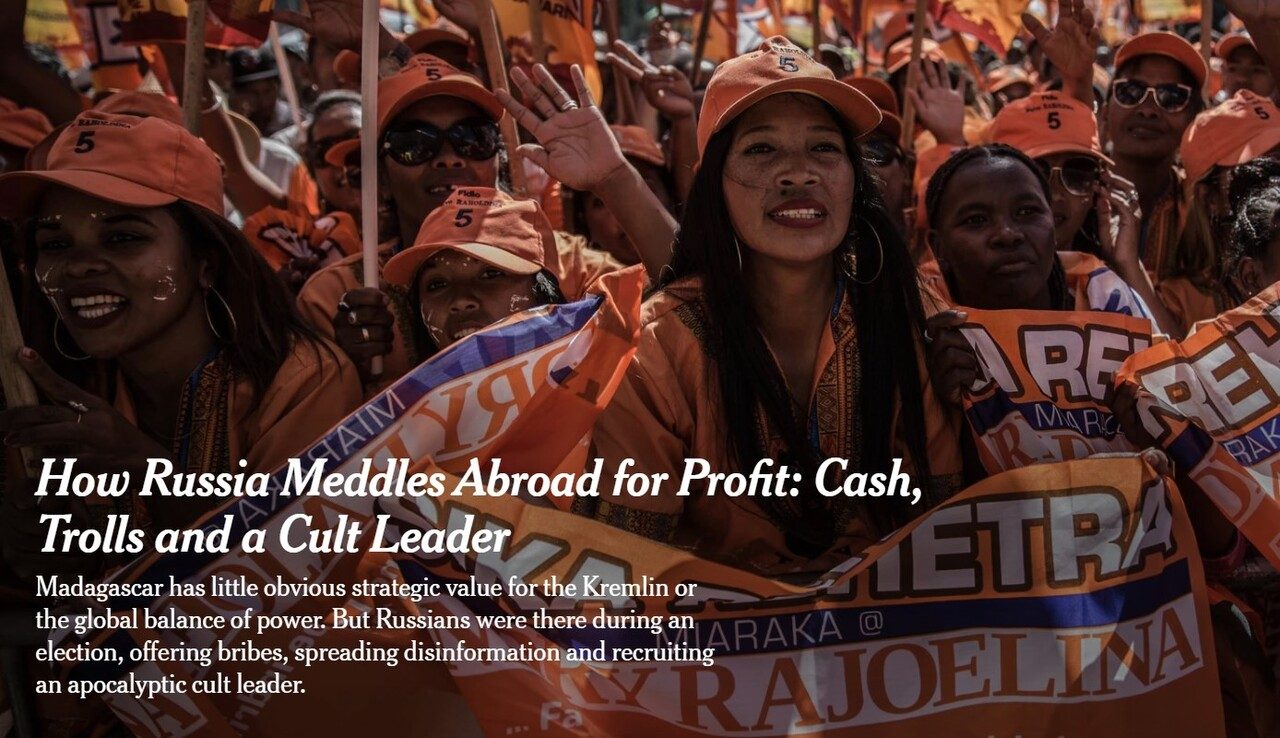
This time the NYT's focus is on Russia's activity not in Europe but in Africa. Michael Schwirtz, together with Gaëlle Borgia, describes how Russia interfered in elections in other countries after the scandal over the 2016 US election. One of the central roles in this investigation is played by the so-called Putin's chef, Yevgeny Prigozhin.
It was Prigozhin who was the third participant in the meeting of the leaders of Madagascar and Russia in Moscow, and it was he who, just a couple of weeks later, supported the incumbent authorities in the elections in the island state off eastern Africa. He did this by all possible means: there was disinformation on social media, support for spoiler candidates, and even a cult leader who was propelled to fame by hype.
The Russian operatives, however, did not work particularly well: they were unfamiliar with local realities, used phone translators, set up schemes for kickbacks, but always promised a lot of money. They did fulfill their promises, though, unevenly, so it is not surprising that the election was lost by Eri Rajaonarimampianina, who was initially backed by Russia.
The activity of the “Prigozhin men” in Africa is not limited to Madagascar alone — he and his operatives are active in more than a dozen countries, including Libya, Sudan, Zimbabwe and the CAR, where Prigozhin is actively engaged in arms trading and also legally and illegally mines diamonds. It was while investigating his activities in the precious metals market that three Russian journalists were killed in 2018.
December 21. “How a Poisoning in Bulgaria Exposed Russian Assassins in Europe” (How a Poisoning in Bulgaria Exposed Russian Assassins in Europe)
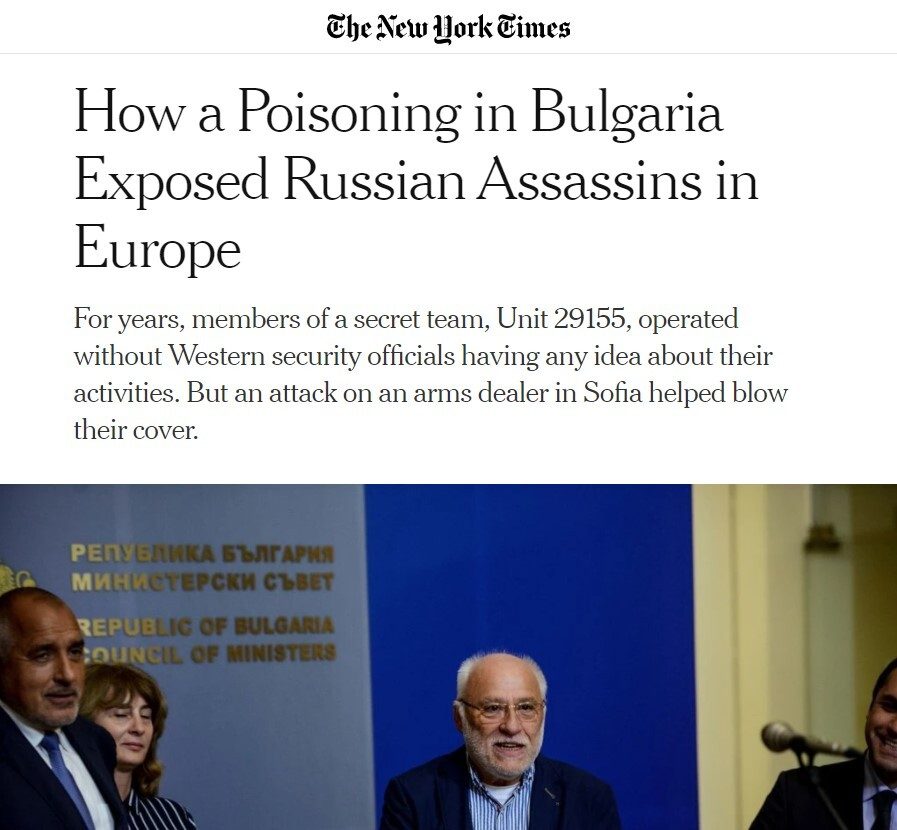
The existence of the aforementioned special unit 29155 was confirmed precisely by the events in Bulgaria in 2015. Although Bulgarian prosecutors initially could not make sense of the case of two assassination attempts on Emilian Gebrev, in 2018 Chief Prosecutor Sotir Tsatsarov was able to reopen the case after receiving new evidence from colleagues in London who were investigating the poisoning of former spy Skripal.
Bulgarian investigators identified Denis Sergeev, who flew into the country three times in 2015 under the alias Sergey Fedorov: in February, in April, when Gebrev was first poisoned, and in late May, when the businessman was poisoned a second time. It was later found that the same “Fedorov” may also have been involved in destabilizing the situation in Catalonia in 2017.
Among the possible reasons for ordering Gebrev's murder is the growth of his business and his capture of markets traditionally dominated by Russians. Thus, Gebrev managed to establish supplies of weapons and ammunition to India and win a series of tenders in which Russian companies were competitors. Moreover, Emco, Gebrev's company, had a contract to supply artillery shells to Ukraine, which is at war with Russia.
September 29. “Gems, Warlords and Mercenaries: the Russian playbook in the Central African Republic” (Gems, Warlords and Mercenaries: Russia's Playbook in Central African Republic)
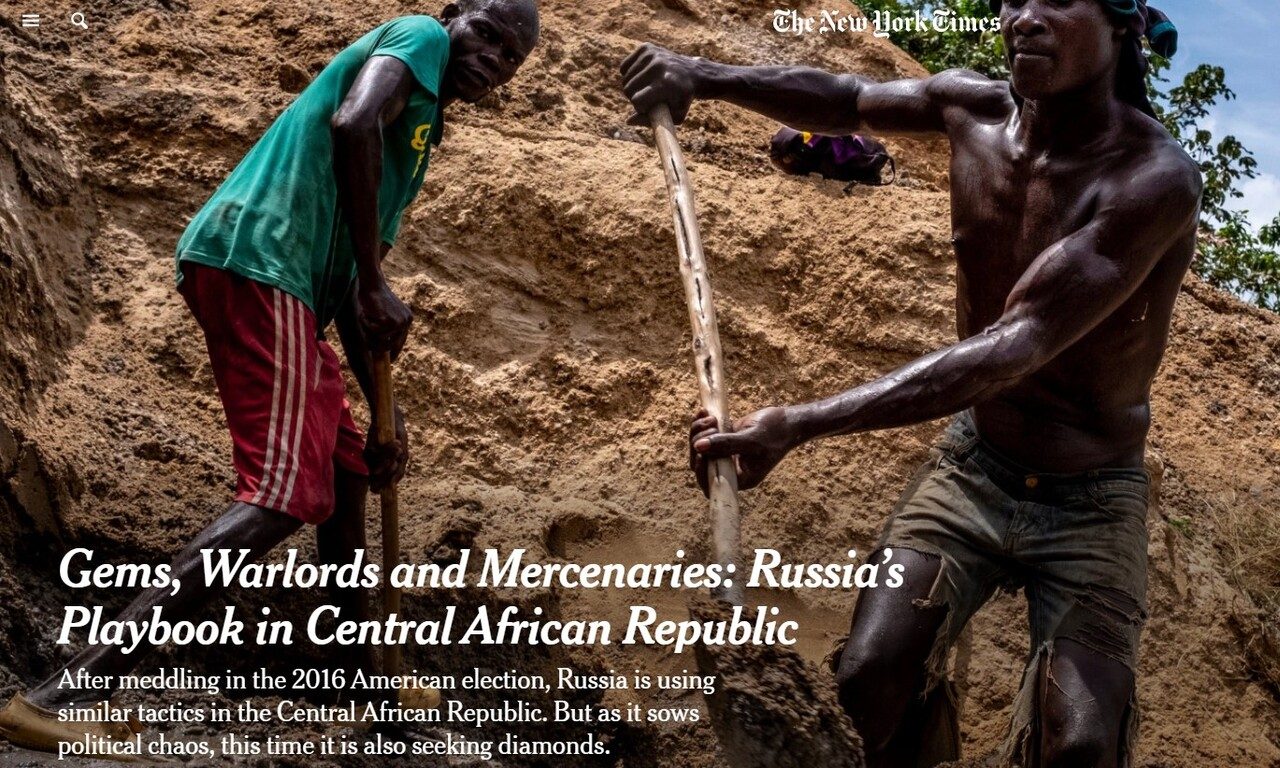
Africa again, Prigozhin again, but this time the article is by Dionne Searcey. Searcey focuses her attention on the activities of a billionaire close to Putin who, according to US intelligence and Western diplomats, has managed to set up a diamond-mining network in the CAR with its own security service, logistics system, and access to the media and politicians.
Against the backdrop of waning US interest in the African continent and after the end of France's peacekeeping operation, the CAR, which is still going through turbulent times, decided to seek help from Russia. Russia gladly took the opportunity and, amid a recent coup and regular armed clashes near diamond deposits, gained the ability not only to become part of the political system (former intelligence officer Valery Zakharov was appointed chief security adviser to President Faustin-Archange Touadéra), but also to acquire its own armed forces on the territory of the republic.
Russia secured contracts for arms sales in the country and opened training military bases headed by its own instructors. It is said that there are currently at least 400 Russian mercenaries in the country, whose main focus is not on stabilizing the situation but on mining “blood diamonds.” When help was needed in resolving conflicts with Muslim rebels, the Russians did not hesitate to resort to mass purges and torture.
November 4, 2019. “Russian Snipers, Missiles and Warplanes Try to Stir Up War in Libya” (Russian Snipers, Missiles and Warplanes Try to Tilt Libyan War)
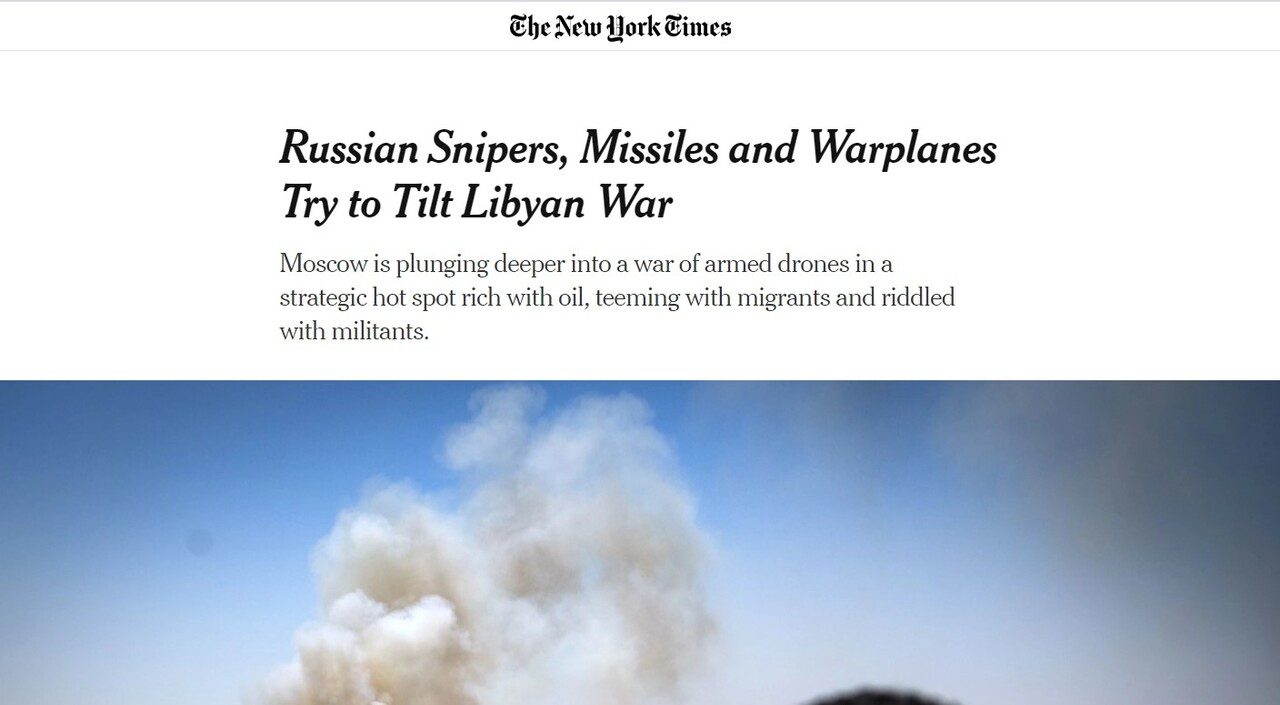
The NYT writes about the Russian footprint in Libya, namely how Putin's policy of restoring influence in the Middle East and Africa is sustaining the civil war in Libya, despite all UN attempts to stop it.
David Kirkpatrick draws parallels with the activity of Russian forces in Syria: to support the commander-in-chief of the Libyan National Army, Khalifa Haftar, in his fight against the official authorities based in Tripoli, modified Sukhoi aircraft were transferred, coordinated missile strikes and extremely precise artillery work are carried out, and snipers from the Wagner group are actively operating.
Last April, the civil war in the oil-rich country was close to ending. But Russia prevented this — just one day after UN Secretary-General Antonio Guterres arrived in Tripoli, wishing to help broker peace, Haftar's forces, supported by Russian military, launched an unexpected attack on the capital, resuming the war.
October 12. “Video: Russia Bombed 4 Syrian Hospitals. We Have Proof” (Video: Russia Bombed Four Syrian Hospitals. We Have Proof)
“The NYT managed to obtain thousands of air force records that for the first time show how Russia repeatedly drops bombs on hospitals in Syria,” — says the caption to the video.
The 8-minute clip shows Sukhoi aircraft deliberately dropping bombs on four hospitals, according to the coordinates voiced in the audio recordings.
November 30. “Video: ‘Sent Candy’: Cockpit Tapes Show Russian Pilots Bombing Syrian Civilians” (Video: “Sent Candy”: Cockpit Tapes Show Russian Pilots Bombing Syrian Civilians)
A similar investigation, also based on comparing the times of bombings with audio recordings of pilots' communications, in which they repeatedly “send packages.”

Russian Attacks in Dnipropetrovsk Region: Two Killed, Seven Injured

Defense Forces Strike Four Russian Drone Control Points in Past Day, Including in Berdiansk

Britain Threatens Sanctions on Kremlin-Linked People; Poland Ready to Hand Ukraine Ammunition

Russia says it has completed "planned exercises" in the Black Sea

MVD: Fake Riots With Prop Blood Were Being Prepared Near Presidential Office

Law Enforcers Name Another Klitschko Deputy as Suspect

Berlin Holds Protest Against War in Ukraine; EU Prepares for Possible Russian Halt of Gas Supplies
North Korea Fires Ballistic Missile Over Record Distance in Five Years
Irish Fishermen Force Russia to Postpone Naval Drills

US sanctions in case of invasion of Ukraine could completely destroy Russia's economy, NYT reports
