
State Department Details First US-Russia Talks in Geneva
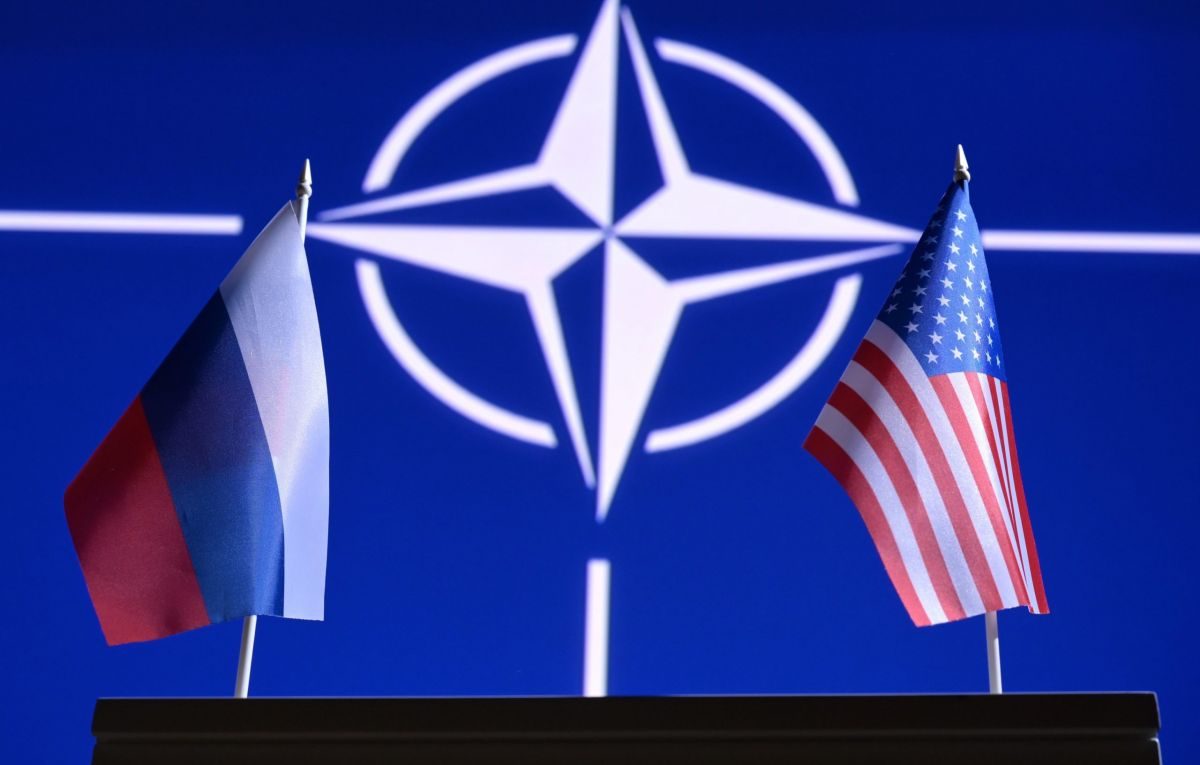
Russian Deputy Foreign Minister said NATO should “pack its bags” and return to its 1997 borders.
The US State Department reported on the first round of US-Russia talks.
US Deputy Secretary of State Wendy Sherman met with Russian Deputy Foreign Minister Sergei Ryabkov in Geneva. The sides preliminarily discussed topics to be placed on the agenda of the extraordinary session of the Strategic Stability Dialogue (SSD) on January 10.
Sherman noted the US commitment to the international principles of sovereignty, territorial integrity and the freedom of sovereign states to choose their alliances. She confirmed that “the United States will welcome genuine progress achieved through diplomacy.”
The State Department statement says: “The United States will discuss individual bilateral issues with Russia, but will not discuss European security without our European allies and partners.”
Earlier, Secretary of State Antony Blinken said that the US is open to discussing restrictions on missile deployments and military exercises in Europe during talks with Russia, but not the size of NATO troop numbers.
“There are confidence-building measures, there are risk-reduction measures, and all of them, if implemented on a reciprocal basis, I think can really reduce tensions and resolve problems,” Blinken said.
According to him, “there may be grounds for extending” the Intermediate-Range Nuclear Forces Treaty with Russia, which the Trump administration withdrew from and over whose violation the US accuses Russia.
Antony Blinken
US Secretary of StateThere are also agreements on the deployment of conventional weapons in Europe and on the scale of exercises which, if observed on a reciprocal basis, that is, if Russia fulfills its obligations, which it has repeatedly violated, could provide grounds for reducing tensions.
He noted that the US is not considering the issue of troop numbers: “On the contrary, if Russia commits new aggression against Ukraine, I think the prospect is entirely fair that NATO will strengthen its positions on its eastern flank, in countries bordering Russia.”
Asked whether he believes Putin has already decided to take Ukraine under his control, Blinken replied that he is not yet sure: “We have offered him two paths. One through diplomacy and dialogue. The other through deterrence and massive consequences for Russia if it resumes its aggression against Ukraine. And we are going to test which path President Putin wants to choose this week.”
At the same time, the NATO Secretary General believes that a series of meetings will be needed for productive talks with Russia.
Jens Stoltenberg
NATO Secretary GeneralWe have already proven that we are capable of compromise and finding solutions with Russia. Together we can find a path, a political path forward, and also address Russia's concerns. But the risk of conflict remains.
According to him, NATO must “hope and work hard for the best, but be ready for the worst.”
Russia's demands include a ban on Ukraine and other countries joining NATO and the Kremlin vetoing the alliance's activities in member states that joined after the collapse of the Soviet Union. The Secretary General stated that both are unacceptable because they violate NATO's “fundamental principles.”
Russian Deputy Foreign Minister Sergei Ryabkov said that NATO “should pack its bags” and return to its 1997 borders.
Sergei Ryabkov
Russian Deputy Foreign MinisterEven a non-specialist understands that it is no longer possible to demand concessions from Russia in a situation where NATO itself has, over all the last decades, sought, so to speak, to “push aside” our country and relegate it, if not to a subordinate role, then in any case to secondary roles in European and international politics, and to do so with direct damage to our security. So NATO should pack its bags and head back to its 1997 borders.
According to him, expecting progress on “security guarantees” in the upcoming talks between Russia and the US and NATO is “naive,” judging by the public position of Western partners ahead of the meeting.
“I would like above all to hear something more coherent in the upcoming contacts on non-expansion of NATO, on withdrawing the decision of the 2008 Bucharest summit, on the inadmissibility for the US and NATO countries to continue the geopolitical development of, essentially, the entire space controlled by this group of states, to the west, northwest and southwest of our borders. And that is the main thing for us, and not at all the aspects on which the American side is now focusing,” Ryabkov said.
The Deputy Minister said that the positive outcome of contacts on “security guarantees” would be confirmation of readiness to work on Russian follow-up proposals. Moscow proceeds from the premise that the West must unilaterally renounce NATO expansion and eliminate the military infrastructure it has created.
Ryabkov added: “Therefore, promises, political guarantees, any words mean nothing. Just now it was stated that the US has no intention of deploying offensive weapons in Ukraine. Today there isn't, but what will there be tomorrow or the day after? And are the US ready to put this on paper and ratify it?”
He noted that Russia's agreements with the US and NATO on security guarantees must be legally binding, and that the difficulties of ratifying agreements within the alliance do not concern Russia.

Russian Attacks in Dnipropetrovsk Region: Two Killed, Seven Injured

Defense Forces Strike Four Russian Drone Control Points in Past Day, Including in Berdiansk

Britain Threatens Sanctions on Kremlin-Linked People; Poland Ready to Hand Ukraine Ammunition

Russia says it has completed "planned exercises" in the Black Sea

MVD: Fake Riots With Prop Blood Were Being Prepared Near Presidential Office

Law Enforcers Name Another Klitschko Deputy as Suspect

Berlin Holds Protest Against War in Ukraine; EU Prepares for Possible Russian Halt of Gas Supplies
North Korea Fires Ballistic Missile Over Record Distance in Five Years
Irish Fishermen Force Russia to Postpone Naval Drills

US sanctions in case of invasion of Ukraine could completely destroy Russia's economy, NYT reports
