
UK-Ukraine-Poland Trilateral Alliance: How It Will Work and What It Will Bring
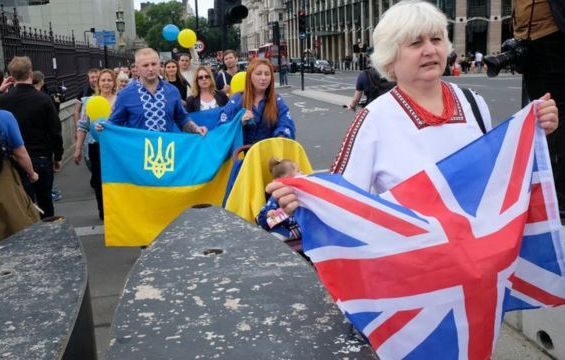
Experts are already comparing the new defense alliance to the Little Entente of the 20th century.
Next week, a new political and security alliance involving the United Kingdom, Ukraine and Poland is expected to appear on the world political map.
According to BBC News Ukraine, the parties are finalizing the details of the agreement.
Initially, it was planned that the agreement would be announced on January 31 during a visit to Ukraine by British Foreign Secretary Liz Truss. But the situation is changing, and a different format for the announcement is possible.
Sources at the publication within Ukrainian authorities say that next week UK Prime Minister Boris Johnson and Polish Prime Minister Mateusz Morawiecki may visit Kyiv; Warsaw had earlier officially announced the visit.
It is possible that this is related to the announcement of the creation of this alliance.
"This option is being seriously worked out, but negotiations are ongoing, and we are clarifying the details," said a source in the Office of the President.
The main tasks of the regional alliance should be both countering the Russian threat and working together for the future of European security.
The creation of a new London-Warsaw-Kyiv axis is taking place against the backdrop of a sharp escalation of the security situation on Ukraine's borders and active British arms supplies to Ukraine.
We talk firsthand about how the future alliance will work and what all participants can expect from it.
A union of three
It was Liz Truss who first publicly spoke about the new alliance back on January 21 in Australia.
Truss announced the composition of the participants, and British analysts immediately drew a very telling political map of the future entity, very similar to the "air bridge" of British arms deliveries of recent weeks.
Ukraine's Ambassador to the United Kingdom, Vadym Prystaiko, has already commented on the future alliance.
In response to a direct BBC question about how the future union would work, Prystaiko advised waiting until January 31, but said it is "not quite NATO for three."
"But this is indeed an attempt to find friends, partners and help at this critical moment," the ambassador said.
According to Prystaiko, Ukraine should base its actions on the readiness of individual NATO members to help already now.
He recalled that Britain is becoming an increasingly serious ally of Ukraine: this includes the strategic partnership agreement, agreements worth two billion dollars, and supplies of anti-tank weapons, shipbuilding and naval bases.
Sources in diplomatic circles indicate that Ukraine initiated the new trilateral format of cooperation between London, Warsaw and Kyiv not long ago, in early December.
This is supposed to become part of a broader Ukrainian strategy of creating small alliances: the "Lublin Triangle" (Ukraine-Poland-Lithuania), the "Associated Trio" (Ukraine, Georgia, Moldova) and the "Quadriga" (Ukraine-Turkey).
What it can offer
As Prystaiko explains, Britain has its own interests in this part of Europe.
Vadym Prystaiko
Ambassador of Ukraine to the United KingdomAfter leaving the EU, they adopted the concept of "Global Britain." They see their interest, and they need a friend like Ukraine. A typical analogy is the serious relationship between Poland and Britain. In the eyes of the British, Ukraine is a powerful state on the other side of the European continent.
As noted by Deputy Director of the New Europe Center Serhiy Solodkyi, this union looks logical. Britain provides Ukraine with one of the largest aid packages in the military and security sector, while Poland has a natural interest in Ukraine strengthening its defense potential.
Serhiy Solodkyi
Deputy Director of the New Europe CenterDeepening cooperation within this triangle looks natural, since we are talking about two countries that take the threat from Russia seriously and have felt it to different degrees.
He considers the transition from bilateral relations with Warsaw and London to a triangular format a serious step forward.
Expert Oleksandr Kraev notes that such an alliance is part of Britain's strategy to restore its influence in the world and the region after Brexit.
"Of course, these are Britain's political ambitions," he believes. In addition, the three countries are actively countering the Russian threat.
On the other hand, says Kraev, the three countries "have questions" and certain grievances toward Brussels, that is, toward the EU.
Not all countries in NATO are ready to firmly counter the Russian threat, so Britain continues the tactic of small alliances for more effective work in Eastern Europe.
"Therefore, such a union of three may serve as a kind of Little Entente, as existed in the early 20th century, when Central and Eastern Europe formed a small bloc and shared the goals of the Great Entente," Kraev believes.
Oleksandr Kraev also predicts that such cooperation will be more effective than bilateral relations.
Oleksandr Kraev
expertIn addition, Poland has announced its readiness to support Ukraine with equipment and weapons, and Britain is already doing so. If the two countries create synergy, arms supplies to Kyiv will be more effective, and political agreements at the trilateral level will be possible.
Why Poland needs this
Deputy Director of the Ukrainian Prism foreign policy council Serhiy Herasymchuk explains what benefit Poland gains from the alliance.
"This puts them on a par with the British, strengthens their position within the European Union and demonstrates that Poland is involving Britain in security tasks in which the entire EU has an interest," Herasymchuk believes.
He recalls that in recent years Warsaw has had conflicts with Brussels. And the recent resolution of the conflict over migrants, "инспирированного Россией" and assistance with the escalation in Ukraine will become additional arguments for Poland in debates with the EU leadership.
Also, despite complex historical disputes with Kyiv, Poland is interested in Ukrainian security.
"Ukraine needs them so that there is no large border with the Russian Federation if it is occupied or if Kyiv goes into Russia's embrace," Herasymchuk believes.
He predicts that Poland will help Ukraine with everything — weapons, resources and equipment — except for the direct dispatch of its own military.
"Overall, in this alliance the Poles indirectly represent the EU, which is also becoming a security actor in its own way," Herasymchuk added.
Experts expect the official announcement of the union of three countries and the details of the agreement in order to better understand the format of future cooperation.
But already now they predict that bringing London into the regional alliance is only the first step toward strengthening Britain in the region. And Ukraine should derive great benefit and assistance from this to reduce the threat from Moscow.
Oleksandr Kraev
expertMore countries of the eastern flank may be brought into the alliance. For Britain, in the long term, this will mean positioning itself as the main sponsor of protecting NATO's eastern flank, a new geopolitical position.
And the map of the new union, reflecting the logistics of British arms supplies to Ukraine, is the first and obvious consequence of its functioning.

Russian Attacks in Dnipropetrovsk Region: Two Killed, Seven Injured

Defense Forces Strike Four Russian Drone Control Points in Past Day, Including in Berdiansk

Britain Threatens Sanctions on Kremlin-Linked People; Poland Ready to Hand Ukraine Ammunition

Russia says it has completed "planned exercises" in the Black Sea

MVD: Fake Riots With Prop Blood Were Being Prepared Near Presidential Office

Law Enforcers Name Another Klitschko Deputy as Suspect

Berlin Holds Protest Against War in Ukraine; EU Prepares for Possible Russian Halt of Gas Supplies
North Korea Fires Ballistic Missile Over Record Distance in Five Years
Irish Fishermen Force Russia to Postpone Naval Drills

US sanctions in case of invasion of Ukraine could completely destroy Russia's economy, NYT reports
