
Bohdan Yaremenko, Dmytro Raimov and Oleksandr Danyliuk. 10 Biggest Losers of Ukrainian Politics in 2019
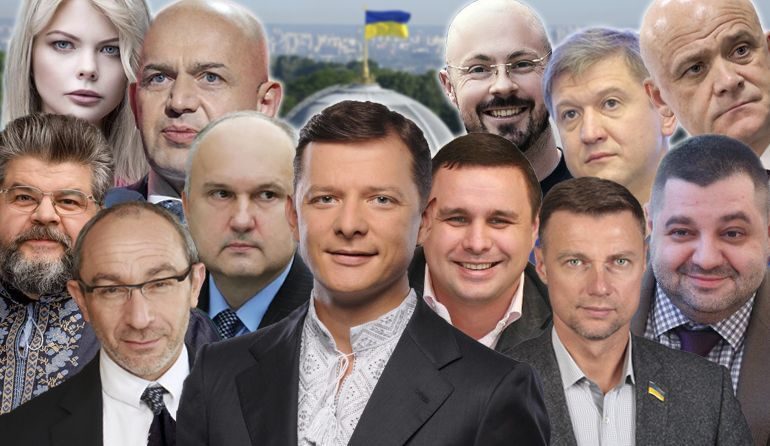
A subjective review of the outgoing year.
2019 was a busy year for Ukrainian politics. Petro Poroshenko lost the presidential election to Volodymyr Zelensky, the Servant of the People party won a single-party majority in the Ukrainian parliament, dinosaurs of Ukrainian politics faded into oblivion, while new stars were born (and burned out). Pranksters and anonymous Telegram channels seized the information agenda, becoming, in some cases, more influential than traditional media.
New Year’s Eve is the best time to sum up the year. As part of a series of articles on the outgoing year, the TK Media editorial team has selected 10 biggest losers of 2019.
Bohdan Yaremenko
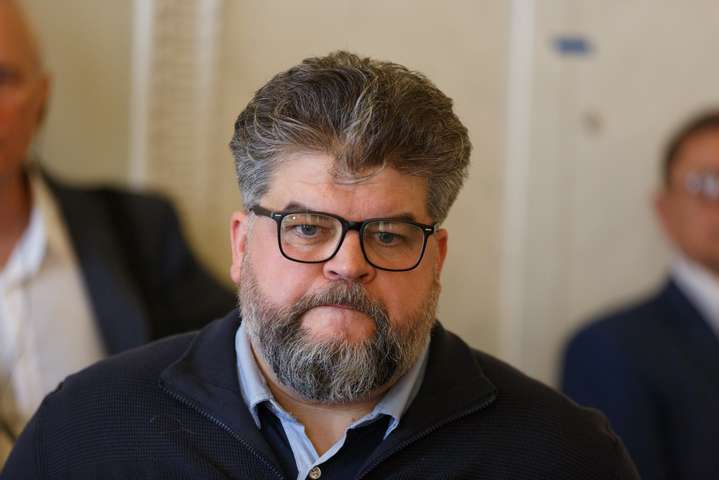
The career of Bohdan Yaremenko, a Ukrainian diplomat, former consul general in Istanbul, People’s Deputy from Servant of the People and head of the parliamentary committee on international policy, was shaken by a single photograph taken from the press gallery of the Verkhovna Rada. Journalists captured Yaremenko texting a young woman during one of the sessions. The context of the messages indicated that she offered escort services: the deputy was discussing rates for intimate services.
At first Yaremenko said he had deliberately provoked the journalists, but later apologized. However, according to Strana, the deputy may have done this on the advice of “Joker”: the prankster had been texting with the deputy under the name of Prosecutor General Ruslan Ryaboshapka. Yaremenko himself did not confirm the correspondence.
Later Yaremenko apologized again and said he would submit his resignation as head of the foreign affairs committee. However, the deputy’s resignation has not yet been approved by lawmakers.
Dmytro Raimov
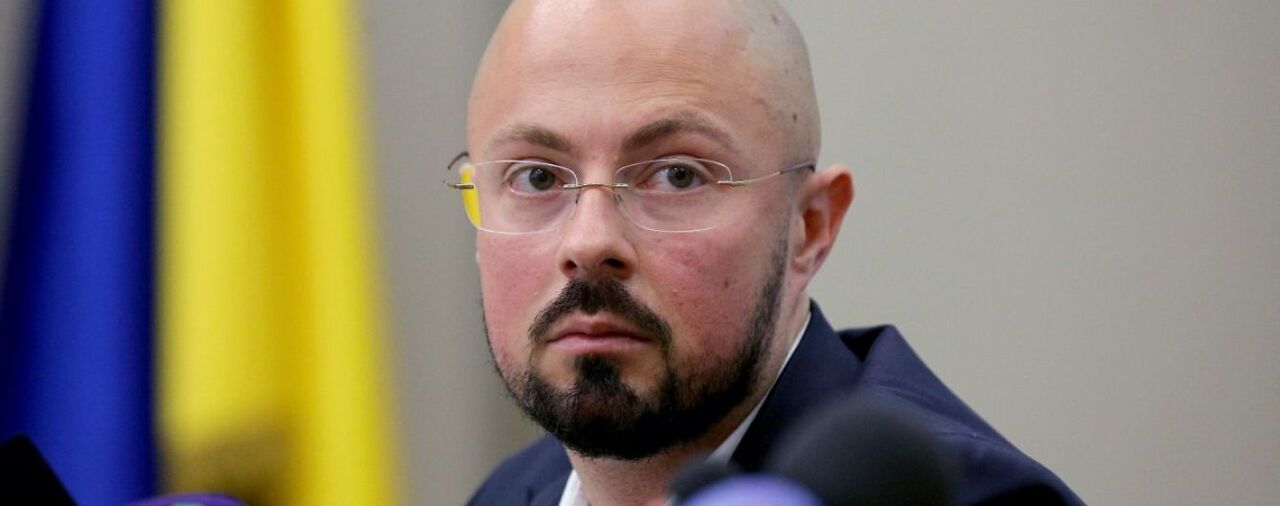
On August 29, the first day of work for the Verkhovna Rada of the 9th convocation, lawmakers approved a new cabinet. Zoryana Skaletska replaced Ulyana Suprun as health minister. On September 2, it was announced that political consultant Dmytro Raimov had become Skaletska’s adviser.
Raimov may have been recommended for the post of minister’s adviser by Mykhailo Radutskyi, People’s Deputy from Servant of the People and head of the parliamentary committee on health. Skaletska was called Radutskyi’s creature. This label stuck to the minister largely because on the first day of the Rada’s work, journalists photographed a message exchange in which the deputy called Skaletska his protégé. Raimov positions himself as a political technologist and crisis communications specialist. He calls himself a friend of Radutskyi’s son and a client of his father.
“I still can’t quite grasp how I became an adviser. It’s a leap up. They invited me. I really liked the minister. She’s the real deal. And a sharp mind. She’s very smart. They gave me an office next to the minister. I’m thinking about how to fit a cot in there. Sleep is out of the question for all of us now. There will be a ton of work. My schools and agency continue to operate. I’m not a bureaucrat. But damn, so much responsibility and new challenges. Exciting,” wrote Raimov on his Facebook page.
Raimov actively covered his work as an adviser, commenting on rumors that the adviser was being called the “gray cardinal of the ministry” and “Andriy Bohdan”. TK Media journalists were unable to find any mentions online of who had called the technologist that, apart from his own page.
However, already on October 17, Dmytro Raimov announced that he was leaving the Ministry of Health. He explained his departure by saying that his team had accomplished the assigned tasks, but that he would continue to help the ministry while remaining “smart heads”.
Skaletska herself explained Raimov’s departure by the decision that communication should be handled differently.
“I was active every day: 5 to 6 meetings and events. But media coverage did not reflect the intensity of this work or the breadth of topics that were launched for people. And so at some point I decided that communication should be handled by other specialists in a different way,” Skaletska said about Raimov’s departure.
“Communication Should Be Handled Differently.” Skaletska Explained Why She Fired Dmytro Raimov
On November 1, Zoryana Skaletska went further and in principle eliminated the institution of advisers in the ministry, dismissing everyone who held that status. Zoryana Skaletska stated that the Ministry of Health would no longer engage in such practice, since society has a distorted perception of the institution of advisers, and it is unacceptable for an adviser’s personal opinion to be perceived as the official position of the ministry.
Ihor Kononenko and Oleksandr Granovskyi
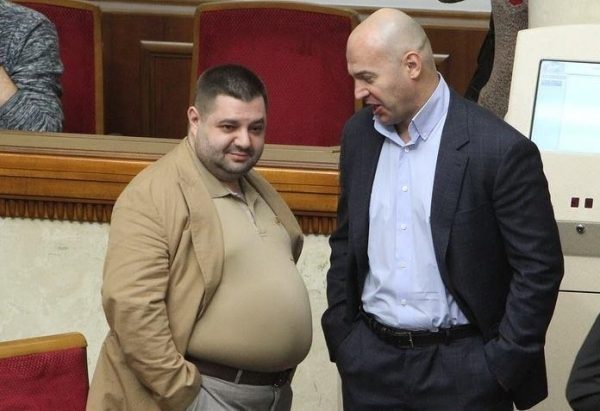
People’s Deputies of the 8th convocation from the BPP party, Ihor Kononenko and Oleksandr Granovskyi, were called among the most influential politicians of President Poroshenko’s time. Ihor Kononenko was a business partner and friend of Poroshenko from army days; Oleksandr Granovskyi was considered the overseer of the judicial and law enforcement system.
They ended up on this list as symbols of old politicians who tried their luck at being re-elected to the Verkhovna Rada through the majoritarian system, as “self-nominees,” and who were defeated by “servants of the people.” The majoritarian electoral system itself also went into oblivion along with them: on December 19, parliament adopted a new electoral code that abolished the majoritarian system.
After Petro Poroshenko lost the presidential election, Kononenko and Granovskyi left the BPP party. In an interview with Natalia Vlashchenko, Granovskyi stated that he did not share many of the party’s views.
In the early parliamentary elections, Oleksandr Granovskyi ran as a self-nominee in the 169th single-member constituency in Kharkiv. The People’s Deputy launched his election campaign back in 2018, plastering Kharkiv with billboards in which he declared his love for the city and called himself the “advocate of Kharkiv”. Oleksandr Granovskyi enjoyed the support of Kharkiv city mayor Gennadiy Kernes and city TV channels, and budget sector workers, teachers and medics, campaigned for him. In addition, the Oleksandr Granovskyi Foundation operated in the city: the Foundation organized extracurricular classes in schools, lectures for students, and sent free medicines to pensioners.
In the 2019 elections, Granovskyi lost to the Servant of the People candidate, blogger Oleksandr Kunitskyi. Shortly before the elections, the CEC revoked Kunitskyi’s registration as a candidate for People’s Deputy. Journalists pointed out that Tetiana Slipachuk, who headed the CEC, is the common-law wife of Oleksandr Granovskyi, and also published a correspondence in which she personally coordinated the lawyers’ actions during the court case over Kunitskyi’s complaint. However, the Supreme Court reinstated Kunitskyi as a candidate for People’s Deputy. Oleksandr Kunitskyi won 48% of the vote and became People’s Deputy from the 169th constituency. Oleksandr Granovskyi and Oleksandr Kirsh each received 15% of the vote.
In August, media reported that the politician had caught the attention of the SBI and NABU. Oleksandr Granovskyi is being questioned as a witness in cases of illegal criminal prosecution of Gennadiy Korban, the escape from investigation of Judge Chaus, and obstruction of Oleksandr Kunitskyi’s electoral rights.
On August 18, shortly before losing parliamentary immunity, Granovskyi left Ukraine. Media reported that the politician may have received an immigration visa to Israel. Other sources claimed that Granovskyi lives in London.
Ihor Kononenko ran in the 94th electoral district and lost to journalist Oleksandr Dubinskyi. Although Kononenko headed the regional branch of the BPP party and had been campaigning since 2017, 40% of voters supported Oleksandr Dubinskyi, who was nominated by the Servant of the People party. Kononenko received the votes of 12% of voters.
On October 17, former People’s Deputy Serhiy Leshchenko stated that Kononenko had been detained at the airport on a NABU request when he was trying to leave Ukraine, but was quickly released. Kononenko himself denied this information, saying that no one had detained him. The former deputy said he was heading to China. No new posts have appeared on Kononenko’s page since October 18. There is no information in the media that the politician has returned to Ukraine.
Kernes, Trukhanov and the “Opposition Bloc”
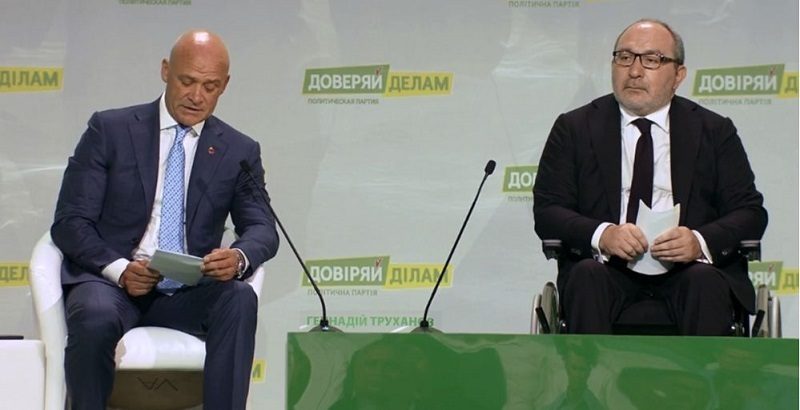
After the announcement of the dissolution of parliament and the scheduling of early elections, the mayors of Kharkiv and Odesa announced the creation of a new political force, “Trust in Deeds.” The “party of mayors” was supposed to include 20 mayors of Ukrainian cities with populations over 100,000 and 50 majoritarian deputies. Kernes and Trukhanov, although they ran on the party list, did not plan to become deputies and were ready to give up their seats to fellow party members. The stated goal of the project was to bring “lobbyists for cities and decentralization of power” into parliament.
In its campaigning, the mayors’ party of Kernes and Trukhanov used green coloring, reminiscent of the style of the presidential political force. At the same time, the Kernes and Trukhanov project enjoyed the support of the 1+1 TV channel and of Ihor Kolomoisky personally: in his interviews, the oligarch highly praised the project’s prospects.
However, already on June 10, the “Party of Mayors” held a unification congress with the “Opposition Bloc.” The teams announced they would run in the elections on a single list. Alexander Vilkul, Yevhen Muraiev and Mykhailo Dobkin were also included on the party list.
The “Opposition Bloc” failed to clear the 5% threshold, receiving 3%, unlike its younger sibling—the “Opposition Platform—For Life,” which took second place with 13% of voters’ support. Candidates of the Levochkin-Medvedchuk party pushed out the Opposition Bloc members in majoritarian districts too, and where they could not win, they prevented Opposition Bloc candidates from winning, giving an advantage to Servant of the People candidates, as, for example, in the 181st district, where Valeriya Muraieva ran for the Opposition Bloc.
As a result, neither Gennadiy Kernes nor Gennadiy Trukhanov managed to get their people into parliament. Most of the candidates they supported lost. In addition, the Kharkiv mayor’s disagreements with the country’s leadership continue to grow: Kernes had a public conflict with the new Kharkiv Oblast governor, Oleksiy Kucher. Now the Kharkiv mayor faces a new serious battle and an attempt to keep the mayor’s seat in local elections: Kernes has already announced that he will take part in them and will compete with the presidential party’s candidate.
“Ready to Win the Election Against Zelensky’s ‘Puppet’”. Highlights from Gennadiy Kernes’s Interview
Maksym Mykytas
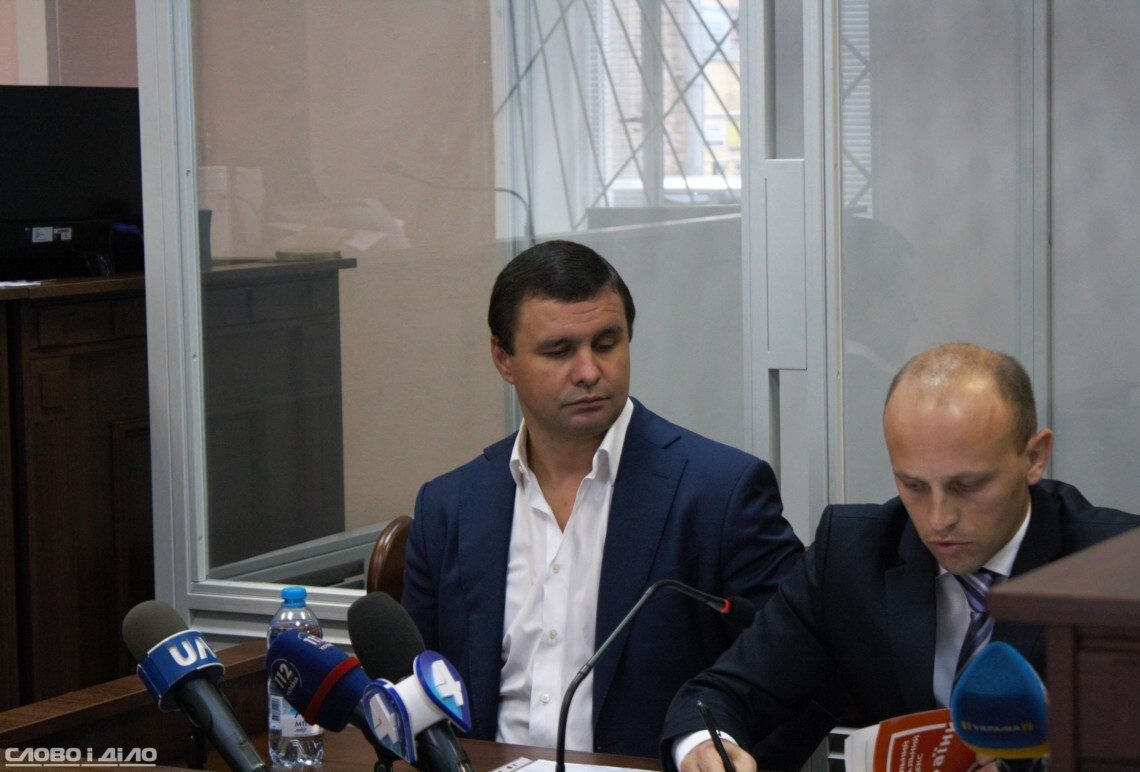
For former Ukrbud president Maksym Mykytas, 2019 was not a good year. Just a year ago, Mykytas was a People’s Deputy enjoying the support of the Presidential Administration and friendship with Kyiv city authorities, and Ukrbud was among the ten largest developers in the capital.
Today Mykytas is the subject of numerous criminal cases, Ukrbud is on the verge of bankruptcy, and it accuses its former owner of embezzling the company’s working capital for luxury goods and political campaigns. Mykytas tried to get re-elected to parliament in the 206th majoritarian district but lost to a Servant of the People candidate.
Recently, the SBI completed its investigation and announced readiness to send a case of hooliganism against Mykytas to court. On July 5, 2019, during the election campaign in the 206th district in Liubechi, a conflict took place in the village council building between Mykytas and the head of the amalgamated community Serhiy Pinchuk. During the altercation, Mykytas threatened to “put” Pinchuk in jail, and then took Pinchuk’s mobile phone and threw it against the wall.
Mykytas is also a suspect in a case of seizing National Guard property, which is being handled by NABU detectives. On October 22, the Appeals Chamber of the High Anti-Corruption Court granted the prosecutor’s appeal and sent Mykytas to pretrial detention, setting bail at 80 million hryvnias. Mykytas was released from pretrial detention after posting bail and wears an electronic bracelet.
On December 21, the SBI reported the seizure of Maksym Mykytas’s car fleet worth 200 million hryvnias. Searches were conducted at Mykytas’s home as part of another investigation into the former deputy: the legalization of funds obtained by criminal means.
Oleh Liashko
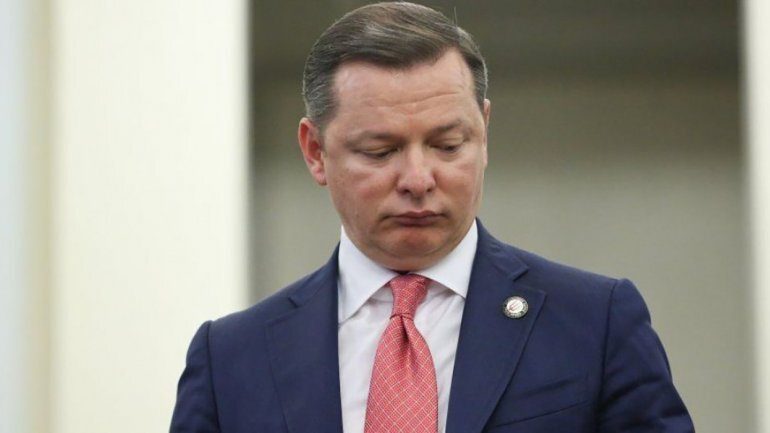
The early parliamentary elections caught Oleh Liashko off guard: in any case, deputies from the Radical Party called the dissolution of parliament unconstitutional and fought to overturn this decision, presenting their arguments to the Constitutional Court. The party insisted on holding regular elections in the autumn: this would have increased the time for preparing the election campaign and given an opportunity to wait until Volodymyr Zelensky’s rating started to fall.
Oleh Liashko ran in the parliamentary elections as the first number on his party’s list, although many politicians chose to increase their chances by nominating candidates in districts. Liashko included longtime allies Andriy Lozovyi and Dmytro Linko on the party list, while former People’s Deputy Ihor Mosiychuk left the party project.
The Radical Party of Oleh Liashko received 4% of the vote and did not enter the 9th convocation of parliament.
In addition to losing the election, this year Liashko also became a party to criminal cases. On November 6, in the official delegations hall of Boryspil airport, a conflict took place between him and MP Andriy Herus. Liashko accused Herus of importing electricity from the Russian Federation and filmed the deputy’s “interrogation” on camera. The verbal altercation escalated into a physical confrontation, during which Liashko tore Herus’s shirt.
Soon after, police opened a criminal case, and the prosecutor’s office notified Liashko of suspicion of violence against a public official. The prosecution petitioned for a preventive measure in the form of detention without the option of bail. The politician called the prosecutors’ actions repression.
The court released Oleh Liashko into the custody of People’s Deputies Viktoriya Siumar (“European Solidarity”) and Mykhailo Volynets (“Batkivshchyna”).
Vitaliy Kupriy
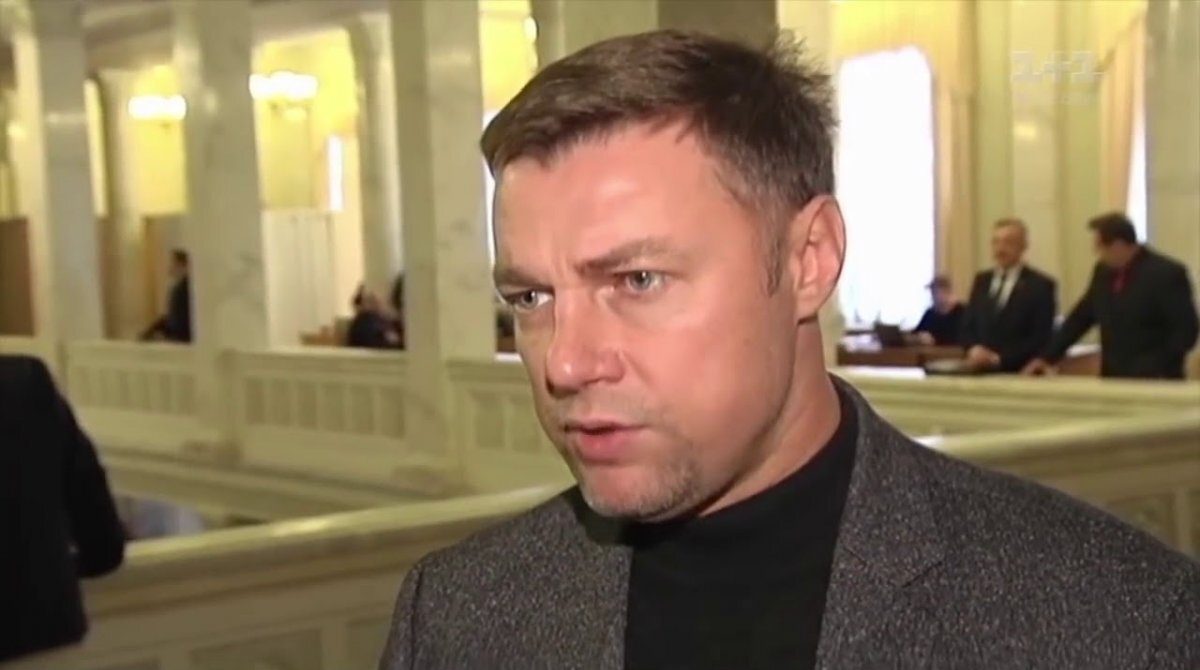
Vitaliy Kupriy became the first deputy of the 8th convocation of the Verkhovna Rada to declare himself a supporter of Volodymyr Zelensky. The People’s Deputy created the inter-factional association “For Zelensky,” although only he joined it. The deputy also demanded that the inauguration of the new president be accelerated and registered a corresponding bill. Nevertheless, Kupriy’s initiative was not supported by the president’s team. Kupriy was not placed on the Servant of the People party list: the party decided not to get involved with deputies from the previous convocation.
Interception Plan in Kyiv Oblast: Deputy Kupriy Attacked
In August, in Kyiv Oblast, Kupriy was attacked: he was doused with an unknown liquid resembling feces. Vitaliy Kupriy named former Chief Military Prosecutor Anatoliy Matios as the person who ordered the attack on him.
Ihor Smeshko
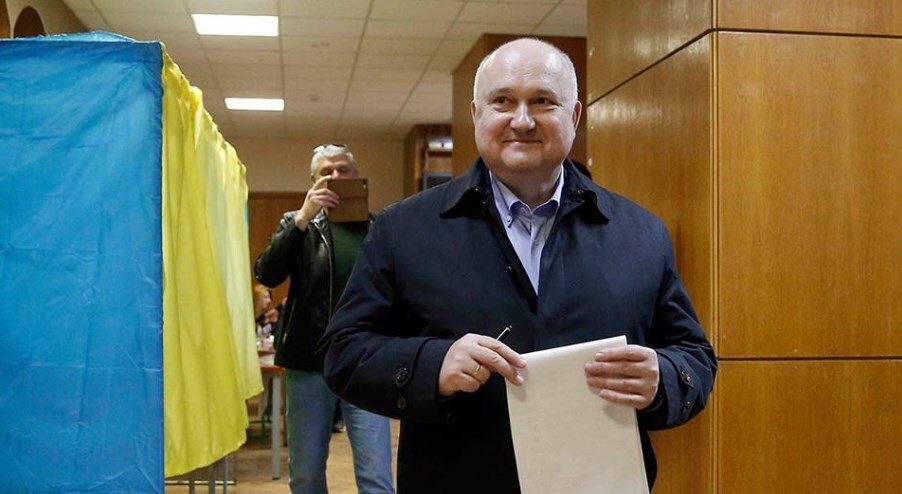
On January 14, former SBU head Ihor Smeshko announced that he would run for president and immediately became a discovery of Ukrainian politics. The head of Smeshko’s campaign headquarters and his main campaigner became well-known journalist Dmytro Gordon. Smeshko managed to take fifth place in the presidential election, receiving 6% of the vote. More than one million voters cast their ballots for him.
Between the first and second rounds of the presidential election, rumors appeared that Volodymyr Zelensky had offered Smeshko the post of SBU head if he joined his team. Smeshko dispelled the rumors, saying that he would support neither Poroshenko nor Zelensky, and also said he would lead his own party into the parliamentary elections. Journalist Dmytro Gordon promoted the idea that Ihor Smeshko should become prime minister.
Smeshko’s party list included former deputy head of the SBU Volodymyr Tymoshenko, People’s Deputies of the 8th convocation Ivan Miroshnychenko and Iryna Sysoyenko, former chief of the Ukrainian Armed Forces General Staff Volodymyr Zamana, and former head of the State Customs Service Anatoliy Makarenko. In the parliamentary elections, Ihor Smeshko’s party “Sila i Chest” (Strength and Honor) received 3.8% of the vote and failed to clear the required 5% threshold.
Oleksandr Danyliuk
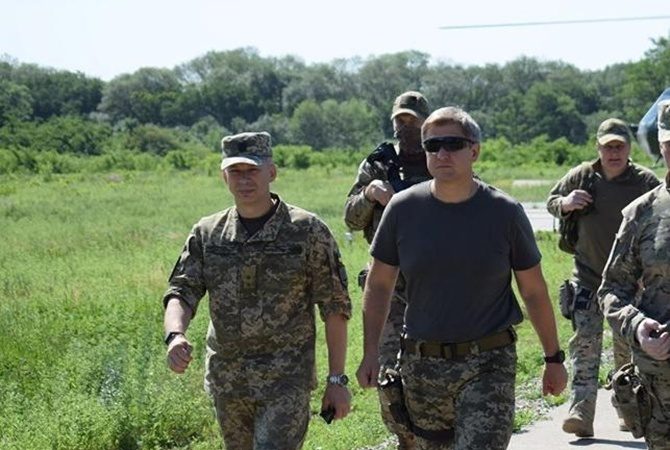
Former Minister of Finance of Ukraine (2016–18) Oleksandr Danyliuk joined the president’s team at an early stage of the election campaign and became one of the main spokespeople for Volodymyr Zelensky’s campaign headquarters. Danyliuk traveled with Zelensky to meet French President Emmanuel Macron, took part in phone calls with Donald Trump, and was part of the inner circle of the president-elect. Oleksandr Danyliuk was tipped for prime minister, foreign minister, and ambassador of Ukraine to the United States.
On May 28, Volodymyr Zelensky appointed Oleksandr Danyliuk head of the National Security and Defense Council, but on October 3, 2019, he granted the resignation request. Oleksandr Danyliuk left the president’s team. According to one version, the reason for Danyliuk’s departure was a conflict with Andriy Bohdan, who had brought him into the president’s team. According to another, Danyliuk may have tried to “blackmail with resignation,” that is, to submit a resignation letter without planning to leave, but the president accepted his resignation request. The former NSDC head stated that he “did not want to play backroom games.”
Zelensky Adviser on Danyliuk’s Resignation: “It Is Very Interesting Where He Will Be Employed Next”
Oleksandra Klitina

Former deputy minister of transport and infrastructure Oleksandra Klitina became known to the general public after the publication of recordings of a conversation in which, allegedly, People’s Deputies Yuriy Koryavchenko (“Yuzik”), Volodymyr Zakharchenko and Viacheslav Medianyk discussed Klitina’s appointment as deputy minister. In particular, the deputies suggested that Klitina may have obtained her post “through the bed.”
Klitina responded to the publication of the recordings by posting a photo of her son and husband, writing that she loves her family and asking journalists not to draw conclusions from unproven rumors.
As it turned out, Klitina made this post on the advice of the prankster “Joker,” who had messaged her, introducing himself as a high-ranking official from the Office of the President.
“Your servant spoke with the deputy minister of infrastructure—the heroine of the Kryvyi Rih gathering sex scandal. Not bad. Obedient,” a message appeared in the Telegram channel “Joker” with screenshots of the correspondence.
In the correspondence, Klitina was offered a meeting with Volodymyr Zelensky and asked to prepare a piece about possible corrupt actions by Infrastructure Minister Vladyslav Kryklii. Klitina first said it would be unseemly of her, but later agreed. The interlocutor suggested she consider being appointed to Kryklii’s post and asked whether she “could handle the ministry.”
On November 22, Infrastructure Minister Vladyslav Kryklii announced the dismissal of Oleksandra Klitina. The minister explained this by saying that Klitina “did not behave quite normally as a team member.” Klitina herself called the correspondence with “Joker” merely a pretext for her dismissal. As the former deputy minister claims, she was interfering with the corruption schemes of Yevhen Kravtsov, head of Ukrzaliznytsia.
On November 27, the Cabinet of Ministers dismissed Oleksandra Klitina from the post of deputy minister of infrastructure for European integration.

Russian Attacks in Dnipropetrovsk Region: Two Killed, Seven Injured

Defense Forces Strike Four Russian Drone Control Points in Past Day, Including in Berdiansk

Britain Threatens Sanctions on Kremlin-Linked People; Poland Ready to Hand Ukraine Ammunition

Russia says it has completed "planned exercises" in the Black Sea

MVD: Fake Riots With Prop Blood Were Being Prepared Near Presidential Office

Law Enforcers Name Another Klitschko Deputy as Suspect

Berlin Holds Protest Against War in Ukraine; EU Prepares for Possible Russian Halt of Gas Supplies
North Korea Fires Ballistic Missile Over Record Distance in Five Years
Irish Fishermen Force Russia to Postpone Naval Drills

US sanctions in case of invasion of Ukraine could completely destroy Russia's economy, NYT reports
