
Study: Arctic Ocean Began Warming Decades Before Global Warming Took Hold
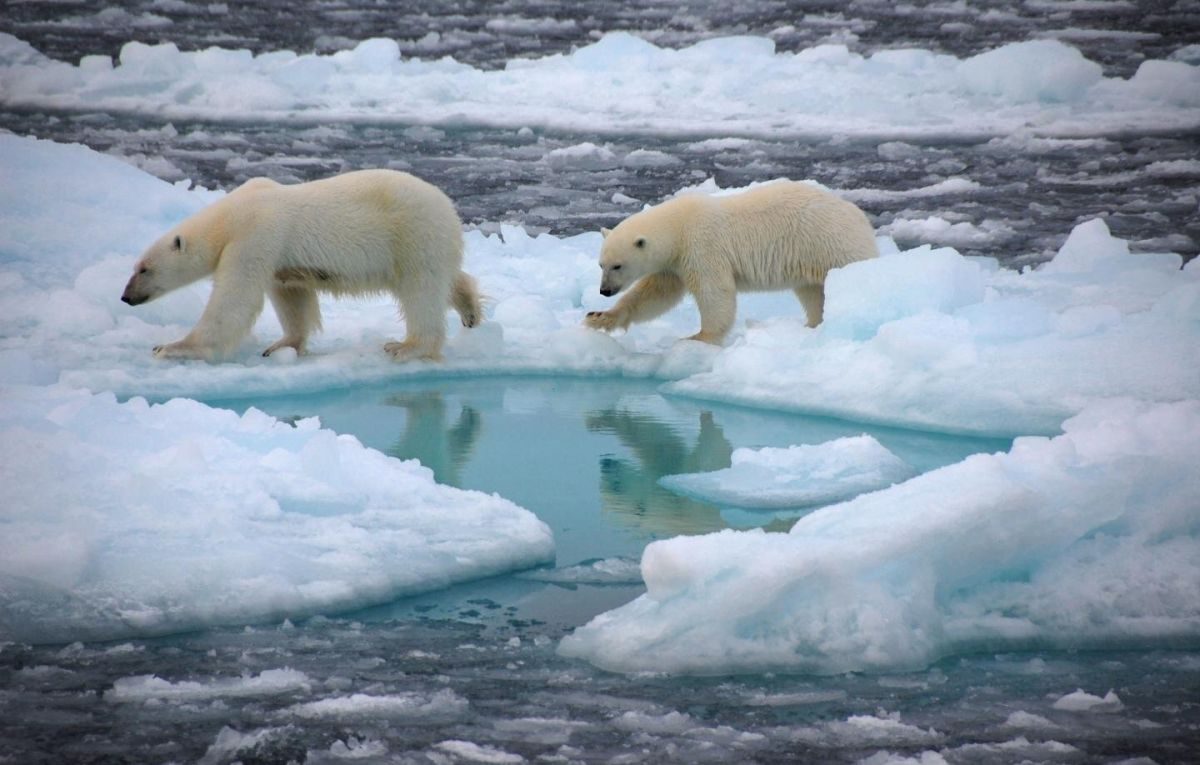
An international team of scientists has shown that the Arctic Ocean began warming as early as the start of the 20th century.
An international team of researchers has shown that the Arctic Ocean began warming from the early 20th century — this happened decades earlier than previously believed, the scientists noted.
This is due to warmer water flowing into the fragile polar ecosystem from the Atlantic Ocean.
The international team reconstructed the recent history of ocean warming at the "entrance" to the Arctic Ocean, in an area known as the Fram Strait, between Greenland and Svalbard.
Using chemical signatures found in marine microorganisms, the researchers identified a phenomenon called Atlantification: the Arctic Ocean began to warm rapidly in the early last century, when warmer and saltier waters poured in from the Atlantic.
This change, which likely preceded the warming, is documented by modern instrumental measurements. Since 1900, the ocean temperature has risen by about 2 degrees Celsius, while sea ice has retreated and salinity has increased.
The results show a link with the North Atlantic that is much stronger than previously thought. This link can shape Arctic climate variability, which may have important consequences for sea ice retreat and global sea level rise as polar ice sheets continue to melt.
"The rate of warming in the Arctic is more than twice the global average due to feedback mechanisms," said lead author Dr. Francesco Muscitello of the Department of Geography at Cambridge.
As the Arctic Ocean becomes warmer, it causes ice to melt in the polar region, which in turn affects global sea level.
As the ice melts, it exposes much of the ocean surface to sunlight, releasing heat and raising air temperatures. As the Arctic continues to warm, permafrost, which holds huge amounts of methane — a far more dangerous greenhouse gas than carbon dioxide — begins to thaw actively.
The researchers used geochemical and ecological data from ocean sediments to reconstruct changes in the properties of the water column over the past 800 years. They precisely dated the sediments using a combination of methods and looked for diagnostic signs of Atlantification, such as changes in temperature and salinity.
Tesi Tommaso
PhD, Institute of Polar Sciences, National Research Council in BolognaWhen we looked at the entire 800-year timeline, our temperature and salinity records appear fairly constant. But suddenly, in the early 20th century, you get this marked change in temperature and salinity — it is really noticeable.
The researchers say their results also reveal a possible flaw in climate models, as they do not account for the early Atlantification of the early 20th century.

Russian Attacks in Dnipropetrovsk Region: Two Killed, Seven Injured

Defense Forces Strike Four Russian Drone Control Points in Past Day, Including in Berdiansk

Britain Threatens Sanctions on Kremlin-Linked People; Poland Ready to Hand Ukraine Ammunition

Russia says it has completed "planned exercises" in the Black Sea

MVD: Fake Riots With Prop Blood Were Being Prepared Near Presidential Office

Law Enforcers Name Another Klitschko Deputy as Suspect

Berlin Holds Protest Against War in Ukraine; EU Prepares for Possible Russian Halt of Gas Supplies
North Korea Fires Ballistic Missile Over Record Distance in Five Years
Irish Fishermen Force Russia to Postpone Naval Drills

US sanctions in case of invasion of Ukraine could completely destroy Russia's economy, NYT reports
