
Bloomberg: US Demands Ukrainian Polyakov Sell Half of Firefly Aerospace Stake, Calls It "National Security Threat"
Polyakov suggested this is linked to the escalation of Russia's aggression against Ukraine.
The US government demanded that Ukrainian technology entrepreneur Max Polyakov sell his stake in rocket company Firefly Aerospace Inc., citing considerations of "national security." This is reported by Bloomberg.
Firefly, a private rocket maker based near Austin, Texas, had enjoyed Polyakov's support for several years.
US government and aerospace industry representatives objected to Polyakov's control over the company amid concerns that valuable technologies could end up in Ukraine, Russia or other countries seeking to develop missile programs.
Although he invested more than $200 million of his fortune in Firefly, Polyakov agreed to leave the board and step back from Firefly's day-to-day operations in late 2020 to help the company win US government and military contracts.
However, in late November Polyakov received a letter from the Committee on Foreign Investment in the United States (CFIUS) that expressed national security concerns and required Polyakov and his investment firm Noosphere Venture Partners to sell approximately 50% of Firefly's shares.
According to his representatives, Polyakov agreed to this requirement, but stated that his ownership of Firefly poses no threat to national security.
"Today Noosphere Ventures announced that it intends to retain an investment banking firm to help sell Noosphere Ventures' stake in Firefly Aerospace," said a statement from Polyakov's company.
According to two people familiar with the situation, the US government has suspended current rocket launch operations by Firefly at Vandenberg, as the ownership problem with Polyakov escalates. Polyakov's clashes with the US had not been reported previously.
Trained as an obstetrician-gynecologist, Polyakov made his fortune developing software for businesses, online games, dating sites and marketing.
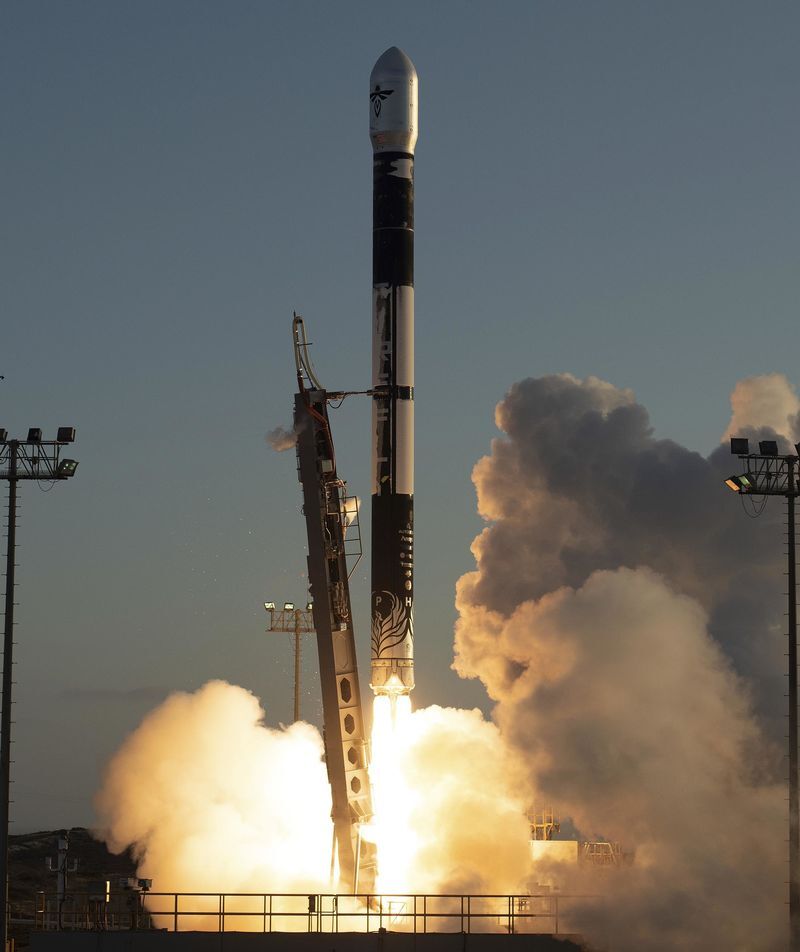
He rescued Firefly from bankruptcy in 2017 and invested money in the company to revive it. In September, Firefly carried out its first rocket launch from Vandenberg Space Force Base in Southern California. The rocket did not reach orbit, but showed good results on its first launch, and the company was quick to launch a second one.
Polyakov said he dreamed of turning Firefly into a major aerospace company that could benefit both the US and Ukraine. In Soviet times, Ukraine produced some of the world's best rocket technologies and engines, but in recent years many of these developments have gone unused due to lack of investment.
The American outlet notes that there had been hope Firefly could bring together its best engineers from the US and Ukraine to build a fleet of large rockets capable of putting many satellites into orbit and then carrying out missions to the Moon. According to him, Polyakov wanted the US to gain access to Ukrainian expertise and find a way to improve the prospects of Ukrainian aerospace engineers.
Over the past couple of years, Firefly has made steady progress. The company has won contracts with NASA, the Defense Advanced Research Projects Agency and the US Air Force to carry out various missions.
The company also obtained a technology-sharing agreement between Ukraine and the US. The company has a large rocket manufacturing and testing laboratory in Central Texas and has a subsidiary in Ukraine that helps develop technologies.
In November 2020, Polyakov left Firefly's board of directors, and then in May 2021 he sold a significant part of his stake in Firefly, as the company raised $75 million and received a valuation of more than $1 billion.
These steps, along with the appointment of former government officials to Firefly's board of directors, were meant to pave the way for new government contracts. Polyakov stepped away from working at the company and said he was handing all business and technology decisions to Firefly's chief executive Tom Marcusik, who previously worked at NASA and Elon Musk's SpaceX.
"Polyakov and his companies have undergone a thorough review, and no security issues were identified," said a statement from Noosphere Ventures. "Noosphere Ventures and Polyakov understand that CFIUS's actions are taking place against the backdrop of growing tensions between Ukraine and Russia. Noosphere Ventures is making every effort to resolve CFIUS's concerns in the most effective and appropriate way."
A representative of the US Treasury Department, which chairs CFIUS, declined to comment.
Polyakov is among people like Elon Musk and Jeff Bezos who have risked huge portions of their personal fortunes to commercialize space. Firefly builds what is considered a medium-sized rocket capable of putting dozens of satellites into orbit with each launch. The company also has plans to build a lunar lander and then a spaceplane.
Polyakov moved with his family to Silicon Valley and, in many interviews over the years, described his large investments in Firefly as a patriotic gesture for the US.
He expressed concerns, shared by other aerospace industry representatives, that Ukrainian technologies could leak to North Korea, Iran or other US adversaries without an influx of money and interest in the local aerospace industry.

Russian Attacks in Dnipropetrovsk Region: Two Killed, Seven Injured

Defense Forces Strike Four Russian Drone Control Points in Past Day, Including in Berdiansk

Britain Threatens Sanctions on Kremlin-Linked People; Poland Ready to Hand Ukraine Ammunition

Russia says it has completed "planned exercises" in the Black Sea

MVD: Fake Riots With Prop Blood Were Being Prepared Near Presidential Office

Law Enforcers Name Another Klitschko Deputy as Suspect

Berlin Holds Protest Against War in Ukraine; EU Prepares for Possible Russian Halt of Gas Supplies
North Korea Fires Ballistic Missile Over Record Distance in Five Years
Irish Fishermen Force Russia to Postpone Naval Drills

US sanctions in case of invasion of Ukraine could completely destroy Russia's economy, NYT reports
