
Climate Change: What the World's Biggest Polluters Are Doing to Cut Carbon Emissions
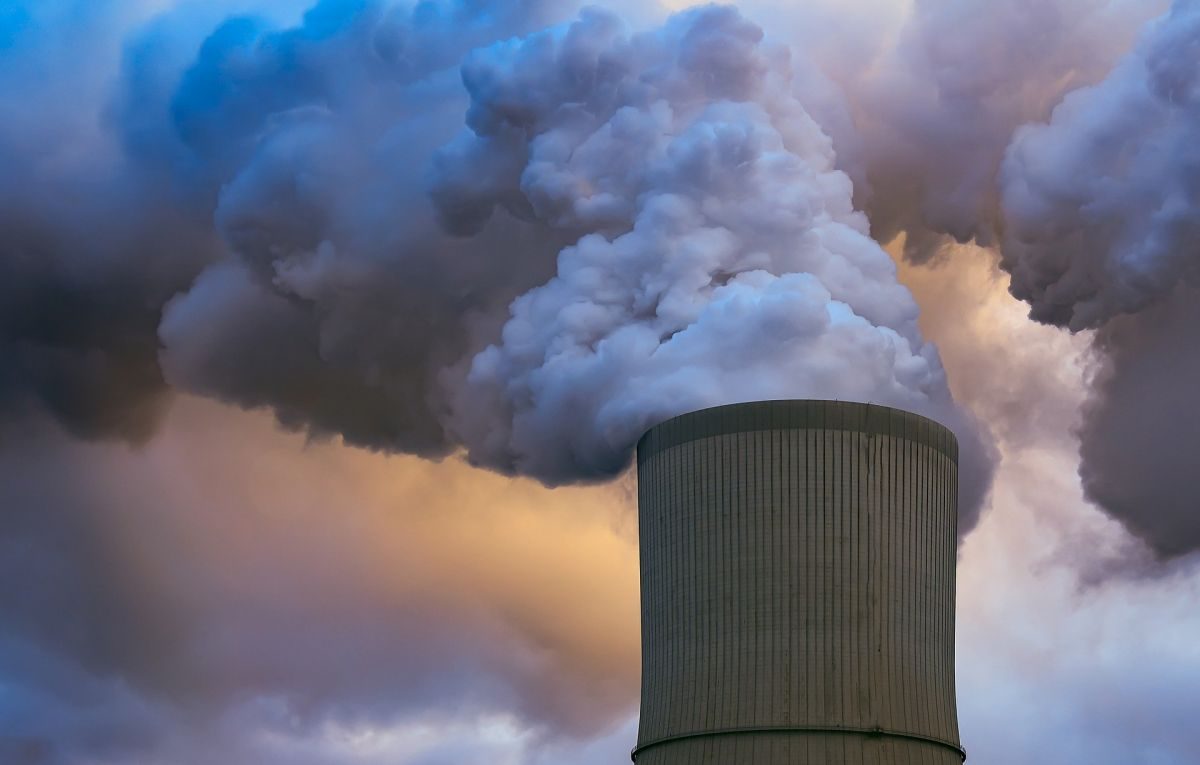
Most carbon dioxide is produced in four countries, and none of them has succeeded in reducing it.
Most carbon dioxide (CO2) is produced in just four countries — China, the US, India and Russia — as well as the European Union as a whole.
All of them agreed in Paris in 2015 to cut emissions in order to limit dangerous global warming — but what steps have they taken since then?
China
China is the largest producer of CO2, accounting for a quarter of all global emissions. Its carbon emissions are still rising, mainly due to its reliance on coal.
China has not clarified whether its carbon neutrality will involve cutting emissions or offsetting them by finding other ways to reduce an equivalent amount of CO2.
Last month, Chinese President Xi Jinping announced an end to financing for new coal projects abroad.
However, within China itself, coal mines have been ordered to increase production to meet growing energy demand, even though Beijing has pledged to reduce coal use from 2026.
China has made progress in renewable energy: it now accounts for more than a third of all the world's solar energy and is the largest wind power producer in the world.
But according to the International Energy Agency, the country needs to cut coal demand by more than 80% by 2060 to meet its climate goals.
Meanwhile, the climate monitoring service Climate Action Tracker says China's policies and actions are "insufficient", and if all countries followed the same path, it would lead to a 3 °C rise in global temperature.
US: the highest emissions per person
By 2030, the US will cut CO2 emissions by at least 50% from 2005 levels, and half of new cars will be electric.
More than 80% of energy in the US is produced from fossil fuels, although renewable energy sources are steadily growing.
President Joe Biden's environmental plan aims to further develop green energy through a $150 billion clean electricity program to encourage utilities to move away from fossil fuels.
However, it has faced opposition from some US lawmakers concerned about the impact on the coal and fracking industries, which are deeply entrenched in the country's economy.
But Climate Action Tracker says US actions and policies are "insufficient" and need "substantial improvement" to meet the Paris Agreement goal of keeping global warming to 1.5 °C.
European Union: emissions are falling
The European Union has pledged to cut emissions by 55% from 1990 levels by 2030, and to obtain 40% of its energy from renewable sources.
The largest sources of CO2 emissions in the EU are Germany, Italy and Poland.
And while the bloc has common emissions targets, EU member states have different financial and technical capacities.
However, all member states must agree on how they achieve the bloc's goals, since the EU negotiates as a single entity at the 2021 United Nations Climate Change Conference (COP26).
Climate Action Tracker says the policies and actions of the European Union are "almost sufficient" to keep global temperature rise below 2 °C, while noting that emissions have been falling since 2018.
India: dependence on coal
India aims to reduce its "emissions intensity" by 33-35% by 2030. By that time, it plans to generate 40% of its electricity from non-fossil fuels.
India's annual CO2 emissions have steadily risen over the past two decades, but it has the lowest emissions per person among the top five.
India has argued that richer, more industrialized countries should bear a greater burden, since over time they have contributed far more to global warming.
India has also pledged a significant increase in energy production from non-fossil sources such as solar, wind and hydroelectric power, and in 2019 this figure reached 23%. But about 70% of India's power grid runs on coal.
In addition, Climate Action Tracker says the country needs to phase out coal power by 2040 and raise its target for energy from non-fossil sources.
Russia: peatlands and critical dependence on gas and oil
Unlike other countries' plans to cut emissions using advanced technologies, Russia still relies on its vast forests and peatlands to absorb carbon.
Wind, solar and hydropower, as well as other non-fossil fuel sources, make up a small share of the total energy balance of the "superpower".
Meanwhile, fossil fuels account for more than 20% of gross domestic product (GDP) — the total value of goods and services produced in Russia.
This demonstrates the Russian economy's critical dependence on fossil fuels such as gas and oil.
Climate Action Tracker says the country's policies and actions are "critically insufficient" to limit global warming to 1.5 °C.

Russian Attacks in Dnipropetrovsk Region: Two Killed, Seven Injured

Defense Forces Strike Four Russian Drone Control Points in Past Day, Including in Berdiansk

Britain Threatens Sanctions on Kremlin-Linked People; Poland Ready to Hand Ukraine Ammunition

Russia says it has completed "planned exercises" in the Black Sea

MVD: Fake Riots With Prop Blood Were Being Prepared Near Presidential Office

Law Enforcers Name Another Klitschko Deputy as Suspect

Berlin Holds Protest Against War in Ukraine; EU Prepares for Possible Russian Halt of Gas Supplies
North Korea Fires Ballistic Missile Over Record Distance in Five Years
Irish Fishermen Force Russia to Postpone Naval Drills

US sanctions in case of invasion of Ukraine could completely destroy Russia's economy, NYT reports
