
Coronavirus and Culture: Disney's Troubles, Cute Forklifts and Camus in Demand

The entertainment industry has gone into quarantine.
During the COVID-19 outbreak, everyone is coping with mounting panic in their own way: Chinese teenagers are posting ironic videos on TikTok about their forced isolation, while American trolls are coming up with ever more elaborate conspiracy theories and urging the sick to drink bleach. Chinese businesspeople are not laughing: many spheres of life in the PRC have been put on pause, and culture first of all. We explain how the spread of the virus has affected the entertainment industry in China and other countries.
Mission: Impossible, if it is in Italy. Tom Cruise may be ready to risk his health while shooting the next film in the Mission: Impossible franchise, for example by performing a long HALO jump with a parachute, but the film crew is clearly not ready for such feats. Paramount has suspended production in Venice because more than 1,600 people have already been infected in Italy.
The crew of Mission: Impossible 7 was expected to spend three weeks there. The makers of the action comedy Red Notice, starring Dwayne Johnson, are also looking for new locations, having no desire to travel to Italy. Meanwhile, no cases of illness have been recorded in Scotland so far, but CBS, on whose commission the 33rd season of the racing reality show The Amazing Race was to be filmed there, nonetheless postponed the shoot as a precaution.
In China, almost all film production has been suspended for obvious reasons. Two projects by Hong Kong director Wong Kar-wai have been affected: while his Amazon series Triads War, about the Chinese mafia, has been cancelled for unknown reasons, the multi-episode drama Blossoming, which he is producing, has been postponed indefinitely precisely because of the coronavirus.
Streaming service stocks are rising. While airline shareholders are panicking, Netflix and similar services remain a successful investment. The company's shares have risen 15% this year, while the shares of American cinema chains AMC and Cinemark have fallen by exactly the same amount. Americans prefer to "nest" (in CNN's words) and use services that provide their offerings remotely.
The investment firm MKM Partners has compiled a list of companies that will benefit from the quarantine: among them are the video conferencing service Zoom, the computer game developer Activision Blizzard, and remote work and management software such as Slack. The medical service Teladoc did not make it into this portfolio of reliable investments, but last week it showed that the virus has also worked in its favour: the company's shares rose 10%. Apparently, users are drawn to the feature that allows them to communicate with a doctor remotely. Shares of home exercise bike maker Peloton also experienced a surge.
Meanwhile, the grand European launch of Netflix's rival, the streaming service Disney+, has been overshadowed by news about the virus. Exclusive presentations that the company had planned to hold in London on March 5 have been cancelled. Not to mention that while Chinese Disneylands stand idle, the company will lose at least $280 million.
One of the largest box office markets is in a coma. About 40 cinemas have closed in France and 50% of cinemas in Italy, but this is nothing compared with the situation in China, where 10,000 cinemas with 70,000 screens have closed. In two months of 2020, distributors lost roughly $1.9 billion. Business Insider predicts that the cancellation of the release of the new James Bond film No Time to Die will not be a major loss for the film's global box office, as the previous Bond film earned only 10% of its takings in the PRC. But the remake of Mulan was expected to be a hit in China, and if its planned release in the country does not begin on March 27, Disney may lose a significant share of its box office revenue.
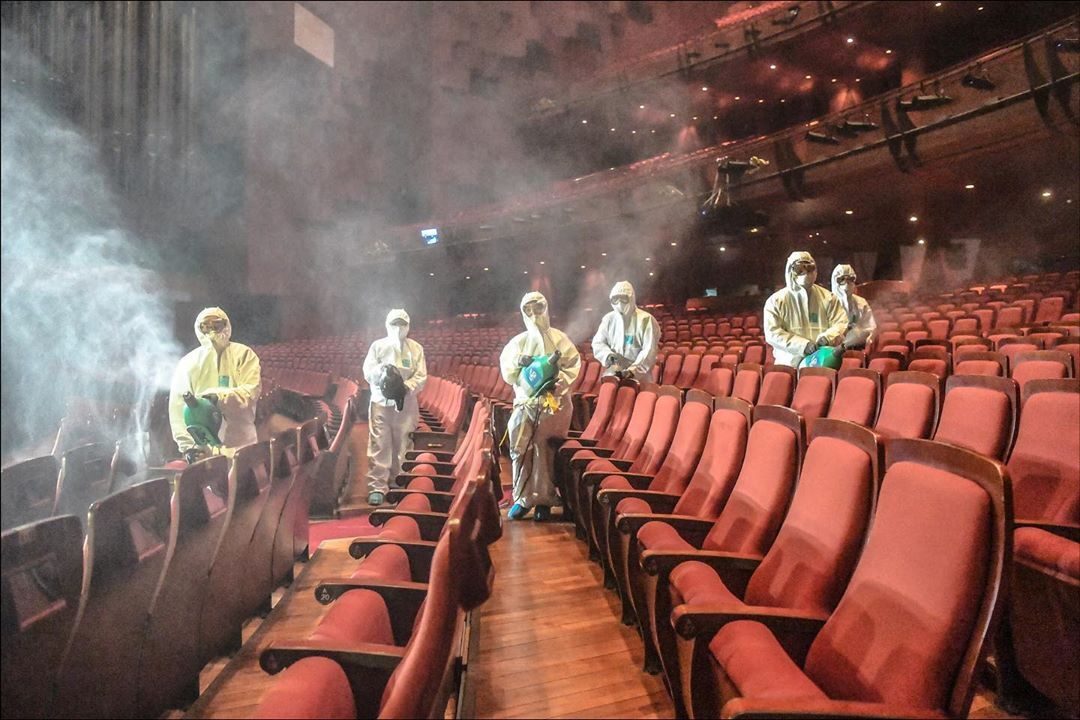
The releases of 1917, Jojo Rabbit and Little Women, which everyone who wanted to has already seen in Europe, have still not taken place in China because of the quarantine. Last year, on the first day of the Chinese New Year, box office receipts across the country totalled $360 million, while this year the entire opening weekend barely reached $2 million. The coronavirus outbreak may seriously undermine China's status as the second-largest film market, and yet the PRC was forecast to overtake North America in box office volume as early as 2020.
K-pop stars cancel tours. Lovers of Korean music will not be meeting their favourite groups any time soon: K-pop kings BTS cancelled their April tour of South Korea, which means that Seoul alone will leave 200,000 fans disappointed. The groups Seventeen and Winner also chose to cancel concerts in Asia. In Thailand, the two-day show by boy band GOT7, which was to entertain an audience of 50,000 spectators, has been postponed.
The TV channels KBS, MBC and SBS, which had usually invited fans into the studio to record K-pop programmes, stopped this practice in January: now their shows are recorded behind closed doors. British and American artists, including the bands Green Day, The National, Foals and rapper Stormzy, are also reluctantly cancelling tours in Asia, where many of them (for example, Avril Lavigne) have built the most devoted fan base.
Korean pop star Chungha (Chungha) voluntarily went into quarantine after two members of her team returned from Italy with coronavirus. Everyone is taking extra precautions: even the organisers of Shanghai Fashion Week decided to hold it online. The presentation of collections by more than a hundred Chinese designers will be broadcast live.

Readers and gamers will be left without new releases. Because of the coronavirus, fairs and festivals are being cancelled around the world. In San Francisco, the GDC game conference, which was due to start on March 16, has been postponed. When Sony, Electronic Arts, Kojima Productions, Amazon and Epic declined to take part, holding it became pointless. Facebook cancelled its F8 Developers Conference scheduled for May. In late February, the global gathering Mobile World Congress did not take place in Barcelona. At such events, company representatives not only announce the release of new products but, just as importantly, contact one another and potential investors. So the cancellation of some Comic Con could cause serious damage to publishers, especially smaller ones.
Time writes that although GDC cannot compare in scale with the E3 exhibition, its cancellation will be a blow for indie developers: not only have many of them already spent money on flights and hotels, but now the long-awaited networking, followed by the signing of contracts, has slipped out of their hands. "For some, this could ruin their career," says Rami Ismail, founder of the Dutch indie studio Vlambeer.
The book publishing world is also uneasy. Although the popular London Book Fair is still scheduled for March 10-12 (unlike the cancelled Paris one), some participants have chosen to skip it, including Amazon, the large American publisher Simon & Schuster and the publishing services provider Ingram Content Group. Holding the fair with such a lineup is as good as not holding it at all, the trade press writes.
But the classics have been lucky. In Italy, Albert Camus's novel The Plague (1947) and José Saramago's Blindness (1995) have once again become bestsellers: both books are about epidemics. True, interest in the compatriot has not grown in France: bookshops note that The Plague is not being swept off the shelves the way Notre-Dame de Paris was after the fire at Notre Dame.
Live broadcasts instead of reality shows. The spread of the virus is affecting everyday life even in small things: WHO representative Bruce Aylward jokingly offered a journalist his elbow instead of his hand to show that handshakes are inappropriate now, while his Italian colleague Angelo Borrelli urged compatriots to refrain from effusive hugs and kisses when meeting. Officials are busy with new rules of etiquette, while ordinary people are looking for new heroes. For example, on Chinese social media, since the start of the outbreak, videos of TV presenters wearing medical masks have become extremely popular: users praise them and write that they will follow their example.

Meanwhile, bloggers have launched a campaign to help elderly Chinese avoid infection. Online greeting cards with glitter in the style of the early 2000s internet first spread on social media as a parody, but over time people began reposting them in earnest. This picture, for example, wishes the recipient a happy Chinese New Year and urges them to celebrate it at home. "Let's meet next year," it says. Weibo users sincerely thank the authors of the colourful cards. "Thank you! I forwarded your picture to my chats," one writes. Another says they shared it with their grandparents.
While China's entertainment industry is on pause, people have found a replacement for traditional shows: live broadcasts. The construction of two new hospitals in Wuhan turned into an absorbing reality show for the Chinese: in January, more than 40 million people watched it. At the same time, viewers developed favourites among the construction machinery: one concrete mixer was nicknamed the "White Rabbit" and a truck the "Red Little Bull Brother". A whole cult has formed around the "kawaii" forklifts: on Weibo they are the subject of drawings and paeans of praise, in which the lifts are called "the cutest defenders".

Business is not always able to weather a lull, but consumers of content, as it turns out, very much can. And while people are able to enjoy remote work and find national heroes even among little trucks, humanity has hope.
Marina Moynihan, TK Media

Russian Attacks in Dnipropetrovsk Region: Two Killed, Seven Injured

Defense Forces Strike Four Russian Drone Control Points in Past Day, Including in Berdiansk

Britain Threatens Sanctions on Kremlin-Linked People; Poland Ready to Hand Ukraine Ammunition

Russia says it has completed "planned exercises" in the Black Sea

MVD: Fake Riots With Prop Blood Were Being Prepared Near Presidential Office

Law Enforcers Name Another Klitschko Deputy as Suspect

Berlin Holds Protest Against War in Ukraine; EU Prepares for Possible Russian Halt of Gas Supplies
North Korea Fires Ballistic Missile Over Record Distance in Five Years
Irish Fishermen Force Russia to Postpone Naval Drills

US sanctions in case of invasion of Ukraine could completely destroy Russia's economy, NYT reports
