
Football Stars Are Actively Investing in Esports. Why Do They Need It?
Their own World Cups, their own Champions League and billion-dollar profits.
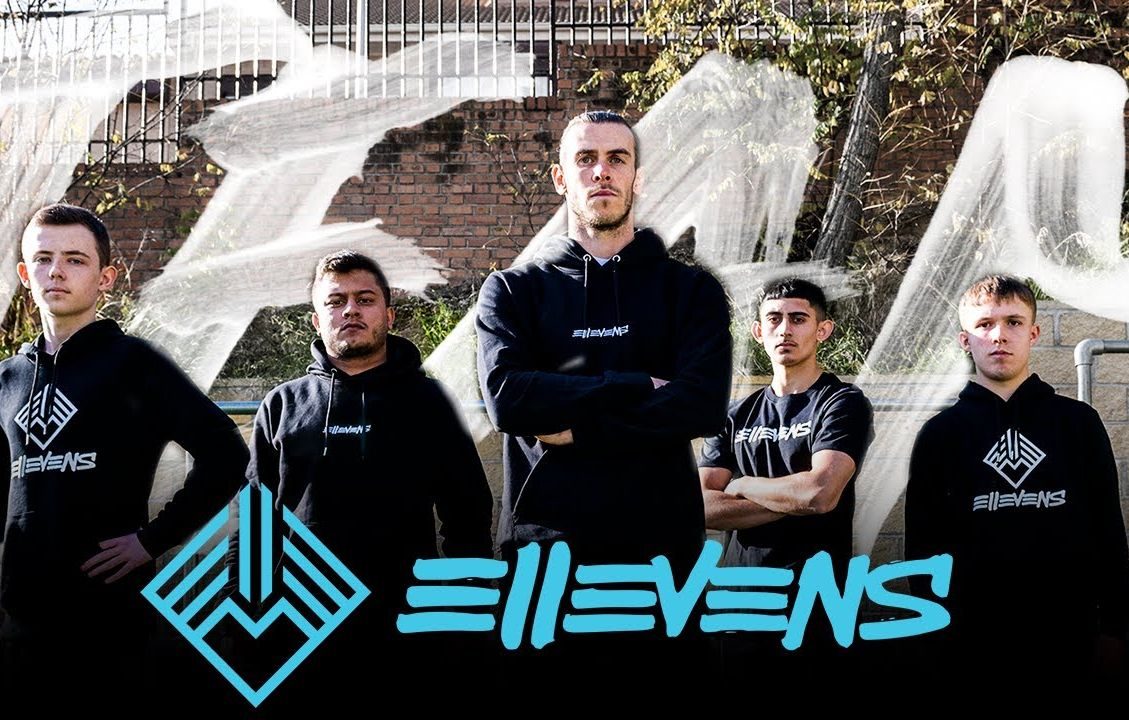
Last Sunday, February 9, the FIFA eClubs World Cup concluded in Milan, Italy. In the final, Complexity Gaming beat Ellevens and claimed its debut tournament victory. The teams could not determine the stronger side in regulation time (0:0), so everything was decided in a penalty shootout. Still, what is interesting here is not the final score but the people behind the finalists: co-owner of Complexity is Jerry Jones, owner of the American football club Dallas Cowboys, while Ellevens, in partnership with 38 Entertainment Group, was launched only recently by Real Madrid star Gareth Bale.
The four-time Champions League winner, who only announced the assembly of his own team in early February, set out enormous ambitions right away: alongside applying to take part in the 2020 World Cup, his team began talking about plans to “become one of the strongest teams in the industry.” And this concerns not only dominance in FIFA. The plans also include taking part in tournaments for Fortnite, Rocket League and Counter-Strike: Global Offensive.
Bale — is not the first football celebrity to decide to invest in esports. For context: Brazilian Pedro Resende moved to the newly formed team of the Welshman from... the Mesut Özil team M10 Esports. The midfielder of London's Arsenal and once the most expensive German footballer has been involved in esports business for a year and a half now. Mesut also has his own channel on Twitch, where he has repeatedly streamed Fortnite.
Özil, however, was not the first English Premier League footballer to decide to invest money in esports. Shortly before the German, Leicester's Premier League champion Christian Fuchs got involved, forming a nine-person team, NoFuchsGiven, to play FIFA. The 33-year-old Austrian became so engrossed in the process that last year he announced plans to build an esports arena with 1,000 seats, together with a hotel complex, near New York.
Another star who recently burst into esports is Frenchman Antoine Griezmann. The Barcelona striker announced in January the creation of the team Grizi eSports, which he will run together with his brother Theo. The Griezmann brothers' first priority is to assemble a team of about 20 gamers who will be competitive not only in FIFA but also in Fortnite, League of Legends, Counter Strike: Global Offensive and Rainbow Six Siege.
Theo Griezmann
Antoine and I have always loved video games. I will act as manager, handling recruitment, player search and work with sponsors. But we will make all decisions together.
Footballers of past generations are also following modern trends. For example, 2010 World Cup winner Álvaro Arbeloa is a partner of the team Origen, which plays League of Legends, while 1987 Ballon d'Or winner Ruud Gullit even owns the esports academy Team Gullit.
Of course, it is not only footballers but also football clubs that invest in esports. At the recent World Cup, for example, Manchester City and Roma were present, and Switzerland's Basel had last year's world champion Tekkz in its lineup. Spanish (Valencia, Real Sociedad), French (PSG, Monaco, Lyon), German (Schalke, Wolfsburg), Portuguese (Sporting), Dutch (Ajax) and Danish (Brøndby) clubs also have their own teams.
In December 2016, Kyiv's Dynamo also announced the launch of an esports division. The Ukrainian vice-champions immediately announced the signing of Ukraine's FIFA champion Vitaliy “STORM.Labotryas” Mukhi and held several Dynamo Kyiv eSports Cups. Dynamo was not without a scandal either: gamer Ruslan “ruha” Soroka accused the club of not paying his salary and announced his departure in 2017.
Although nothing has been heard from Dynamo about its esports division for a year, development across the country will apparently be welcomed, as the issue is now to be handled at the state level. As Servant of the People MP Oleksandr Sanchenko told TK Media in an interview, esports arenas are planned to be built in Ukraine, and esports may soon be officially recognized as a sport.
Oleksandr Sanchenko
We are quite strong in this sphere thanks to Na'Vi and other guys who are known around the world. But there are things that can be tweaked so that we, as a country, are strong too. This includes attracting more tourists. It is a matter of building quality esports arenas and recognizing esports as a sport. This is the prerogative of the relevant ministry. We have already met, and this process has been launched.
What is the benefit of investing?
Esports — is no longer just money and prospects. Esports — is huge popularity and truly huge money. In December, Forbes, citing Green Man Gaming, recorded the total revenue of the esports market at $1 billion. What is behind it? A huge audience, which by the start of the year was due to pass the mark of 650 million people worldwide.
Total esports revenue is expected to reach $2.3 billion within three years, which will leave even the traditionally wealthy realms of the UEFA Champions League and Formula One behind. By the way, UEFA is not sitting idle either: last year the esports Champions League was launched, and its final took place in Madrid a day before the football Champions League final. The winner of the tournament, with a prize fund of $280 thousand, was American Chris from New York City, who beat Bulgarian Ivan “DrNightWatch” Churov 7:4 in the decisive match.
In Fortnite, the rates are, of course, even higher: last July, at the Fortnite World Cup, 16-year-old Kyle “Bugha” Giersdorf took home $3 million. That is more than the winner of Wimbledon tennis earns, and the number of game consoles that can be bought for that sum is hard to even count.
“Esports is part of everyday life,” says Christian Fuchs. “We talk about Fortnite and FIFA in exactly the same way we talk about football and rugby. [Fortnite streamer] Ninja is as big a star as Messi and Ronaldo.”
Vasyl Obaraz, TK Media

Russian Attacks in Dnipropetrovsk Region: Two Killed, Seven Injured

Defense Forces Strike Four Russian Drone Control Points in Past Day, Including in Berdiansk

Britain Threatens Sanctions on Kremlin-Linked People; Poland Ready to Hand Ukraine Ammunition

Russia says it has completed "planned exercises" in the Black Sea

MVD: Fake Riots With Prop Blood Were Being Prepared Near Presidential Office

Law Enforcers Name Another Klitschko Deputy as Suspect

Berlin Holds Protest Against War in Ukraine; EU Prepares for Possible Russian Halt of Gas Supplies
North Korea Fires Ballistic Missile Over Record Distance in Five Years
Irish Fishermen Force Russia to Postpone Naval Drills

US sanctions in case of invasion of Ukraine could completely destroy Russia's economy, NYT reports
