
"Ministerial" and "Prosecutorial": How the Industrial Waste Disposal Market in Ukraine Works and How Its Players Use Law Enforcement to Eliminate Competitors
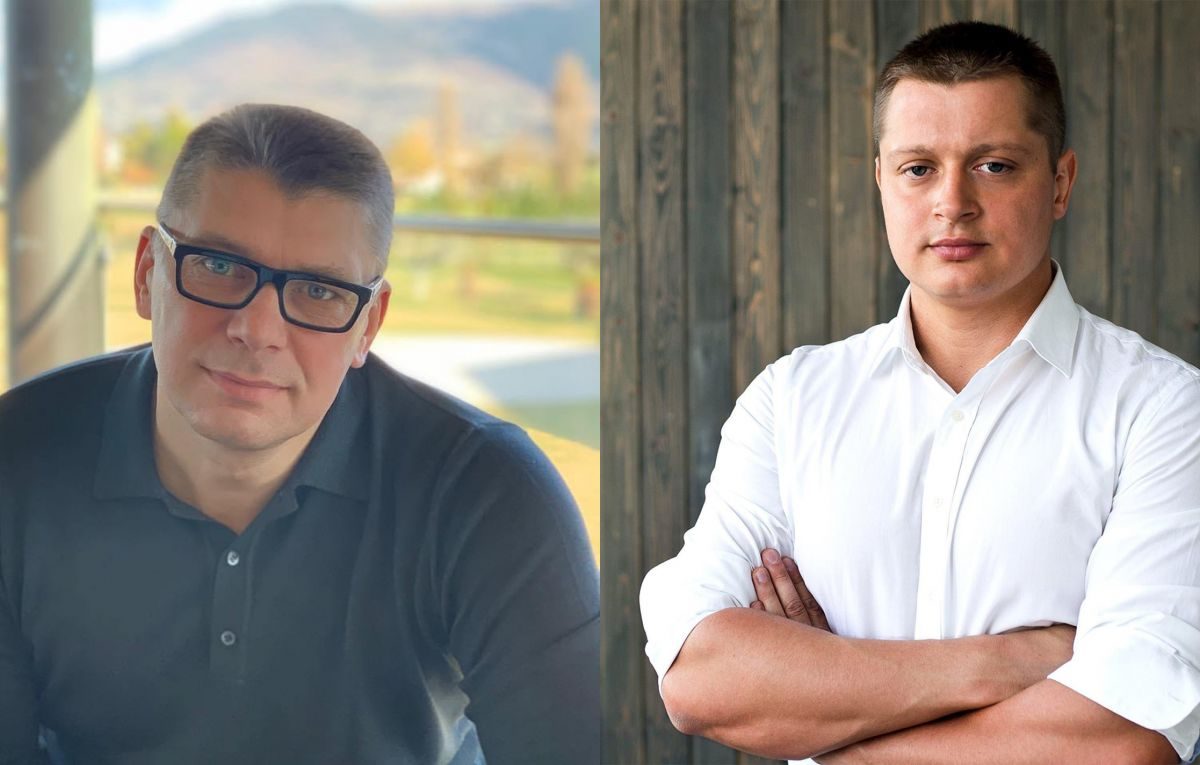
An interview with ECO-FORCE co-founder Ihor Vysochyn and ECOTEK-OIL project manager Hlib Ryzhov.
Everyone knows that Ukraine's investment climate is not always favorable for doing business. The close merger of business and politics, as well as the threat of raider attacks by law enforcement agencies, create additional risks for entrepreneurs; to minimize them, President Volodymyr Zelensky, speaking at the Davos economic forum in January 2020, even proposed that foreign companies be assigned an "investment nanny" in the government for anyone investing more than $100 million in the Ukrainian economy. In May 2020, the president changed the terms of the project: now a personal "nanny" was promised to every entrepreneur who put in more than $30 million.
While the government looks for solutions and tries to offer comfortable conditions for foreign investors, investigators and prosecutors often become "investment nannies" for Ukrainian entrepreneurs. The specifics of doing business and the domestic business culture do not always resemble Western business standards: in the struggle for a place in the sun, companies "order" their competitors from law enforcement to knock them out of tenders, and run disinformation campaigns in the media.
It is not enough to set up a company and offer the market quality, competitive goods and services: if a business gains momentum and the company has not secured the support of political elites and law enforcement, expect visitors in uniform.
In early July, ECO-FORCE co-founder Ihor Vysochyn stated that his business was under pressure and accused the Office of the Prosecutor General and the State Bureau of Investigation of fabricating criminal cases at the request of competitors.
ECO-FORCE and ECOTEK-OIL are probably the most progressive companies in Ukraine's industrial waste disposal market. Entering the market in 2016 and offering industrial plants unique waste processing technologies in the form of specially equipped landfills and filtration pools, ECO-FORCE quickly won the market's trust and began working with industrial giants such as DTEK and Ukrgasvydobuvannya. Before that, waste processing practices did not exist in Ukrainian realities at all: drilling waste was simply hauled away and buried, and the main beneficiaries were firms affiliated with various officials of the Ministry of Ecology and law enforcement officers.
Since September 2019, ECO-FORCE has been living on the criminal agenda. First, co-founder Ihor Vysochyn was served with a notice of suspicion under Article 191 of the Criminal Code of Ukraine (Misappropriation of property through abuse of official position). Then, almost a year later, the classification was changed to Article 190 (Fraud). About a year and a half later, prosecutor Oleksandr Pidlisnyi suspended this investigation as well and opened a new case under Article 236 of the Criminal Code of Ukraine (Violation of environmental safety rules). The case of abuse of position or fraud fell apart: a fraud charge requires the presence of a victim, and none of the companies, despite the prosecutors' persuasion, agreed to recognize themselves as such.
"The prosecutor understands that a year and a half later he still has nothing to take to court," Vysochyn says, commenting on the opening of the new criminal case. "But he doesn't even aim for that. The real goal is for the 'show to go on' and for the company to keep living 'on the criminal agenda," the entrepreneur is convinced. "With searches, interrogations, arrests, and blocking of economic activity."
TK Media spoke with ECO-FORCE co-founder Ihor Vysochyn, ECOTEK-OIL project manager Hlib Ryzhov and criminal defense attorney at the law firm Noosphere Vitaliy Bondarchuk, and learned how drilling waste disposal works in practice, who controls this market, and why "law enforcement" is trying to clear it out.
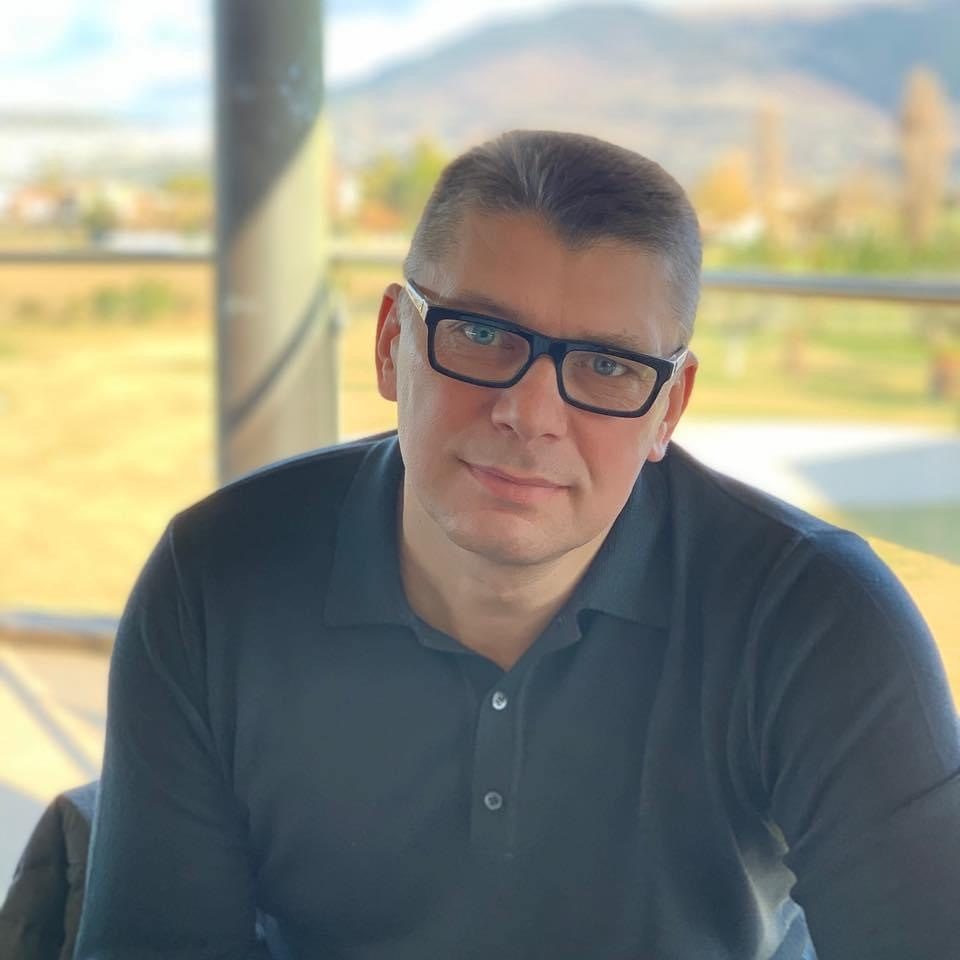
Ihor Vysochyn, co-founder of ECO-FORCE
How many years have you been engaged in industrial waste disposal?
Since 2016. In 2016 I founded ECO-FORCE and obtained all the permits. On the 4th or 5th attempt, we received a license from the very complicated and heavily regulated profile ministry (Ministry of Ecology and Natural Resources — ed.), after which we finally started working productively.
How did you come to this field, and what did you do before?
Before entering waste disposal, I was in the pharmaceutical business. I had a chain of pharmacies that I built from scratch. Then, after I successfully sold that chain, a friend of mine from Kremenchuk offered me to buy concrete basins and a special site, a landfill built in the 1970s by the largest textile factory in the Soviet Union, located in the city of Kremenchuk. This special site and storage tanks were intended for waste from dyeing production. That is, they were made in the Soviet way, using special concrete. We acquired this site and began working to change its specialization to the burial of industrial waste of hazard classes 3 and 4.
How many such landfills are there in Ukraine in general?
In Ukraine, I do not know of similar landfills that were built using special concrete, using liquid glass, on land designated for the burial of industrial waste. There are analogues, of course, but they are inferior to ours.
So you had a unique approach to the market in terms of compliance with all environmental safety norms and rules?
Yes. An countless number of documents were collected. After all, we prepared for this business for two years. We collected an incredible number of approvals and permits, obtained a license, and started working. Thanks to the uniqueness of our technology and material and technical base, we became very attractive contractors for our partners, were able to win contracts and tenders. With our appearance on the market, we started to get in the way of many. Those who were used to working differently: not processing, but hauling away and burying. And then criminal cases began, searches, interrogations, and custom-made articles on the "flush tanks".
So how is this market actually organized? How many main players are there? And what is your company's market share?
Now that we have started living on the criminal agenda, now that prosecutors have started persecuting us, we have practically no work. We only do one thing: go to court and go to interrogations. They are trying to discredit us in front of our partners, and no one wants to have problems with law enforcement.
The market itself is quite harsh; not many companies have special licenses for this type of activity. Those who have the material and technical base can be counted on one hand. As I have already said, every industrial enterprise, in the course of production, generates waste in addition to finished products. Production waste has to go somewhere. Every industrial enterprise operating in Ukraine today has in one way or another dealt with one of the companies that holds a license to handle hazardous waste and provides this enterprise with services for processing, burial, and disposal of waste. But now, since very few enterprises have stayed afloat and very little money circulates in the market, the share of free funds that can be generated by providing such services is shrinking, so competition is growing, and market players begin to take some unscrupulous steps — for example, they order a competing company to be targeted.
Our company is unique not only in its technologies but also in the fact that we are not connected with anyone; that is, we have no "roofs." Mainly, "ministerial" enterprises have always worked in this market — those created by people who held posts in the Ministry of Ecology and Natural Resources. These were their companies, and it was tough to compete with them on the market, because everything there worked by order. But somehow we, with our technology, our skill, our experience, and our material and technical base, reached the level where we could successfully compete with these companies. And companies have different "roofs": ministerial, SBU-type, committee-type, and prosecutorial. But recently everyone has started moving under the prosecutorial roof.
And to understand the dynamics, what was the market share before these criminal adventures began?
As far as the drilling sludge disposal market is concerned, this is the sphere of gas and oil extraction, new deposits, and geological exploration, where life is still bustling and money is moving. We probably had about 80 percent of the drilling sludge disposal market. We worked with companies such as DTEK and Cadogan Petroleum; we serviced two drilling rigs for them where they conducted exploration; Geoalliance, Poltava Oil and Gas Company; in general, we cooperated with many drilling companies and they worked closely with us. Everyone liked everything.
So am I correct in understanding that you entered the market in 2016 and, thanks to unique technology and a material and technical base, you were able to win 80% of all orders?
I think so. I think it was no less than 80 percent. Our competitors did not like us, and it all started, probably, in 2017, when we began to receive the first "greetings." Commissioned articles began to appear on dubious resources, claiming that we are somehow bad, that our landfill is bad, that everything about us is wrong. They began to put pressure on our customers and our partners.
Could you tell us how this happened? Am I right that there was a fairly medieval, unregulated market, fully tied to the regulator, to the ministry, where there were their own companies affiliated with various officials that successfully earned money? And then you appear — a transparent company, with a transparent material and technical base, with new technologies, with a new approach. You very quickly weed out all the competitors who worked without technology, who were outdated and did not match the spirit of the time. And then the pressure on you begins. How did it happen? Before the criminal cases appeared, was there any informational component?
Yes, there was an informational component. For example, a request from the regional council was sent to all law enforcement agencies asking them to check the activities of ECO-FORCE, on the grounds that we take this drilling sludge to landfills, that we contaminate fields and rivers with waste, and dump it wherever we can. Then they began interrogating our director. After that we won a tender at Ukrgasvydobuvannya thanks to our unique technology. And, apparently, they thought we had some kind of backroom deal with someone. And before we could fulfill these contracts, they began to put pressure on us — they opened criminal cases.
Who was behind this?
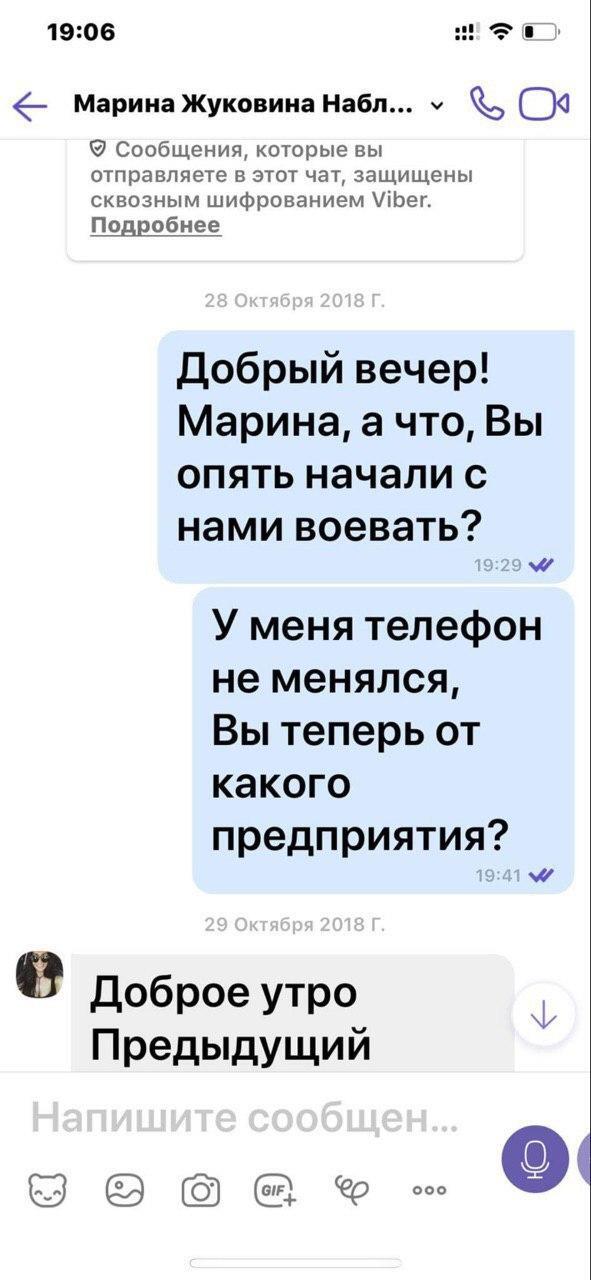
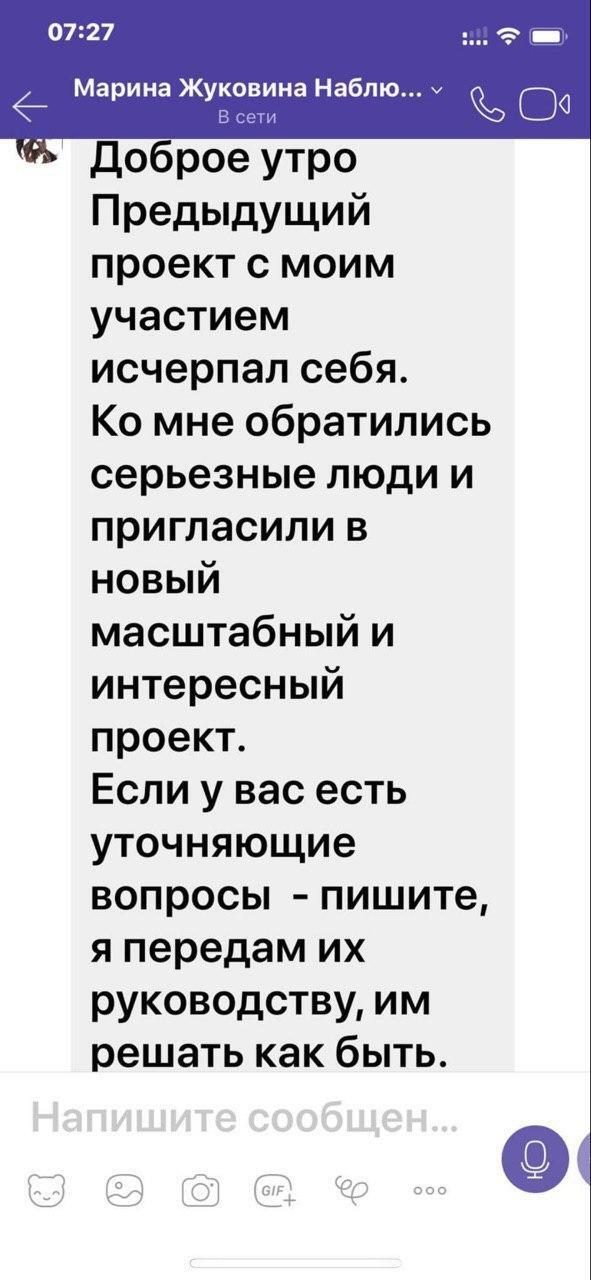
Then, in my opinion, the ministerial firms were behind it. There is a website called "InfoNews" that published smear pieces about us; its head is Marina Zhukovyna. She kept sending us greetings endlessly, saying that serious people stood behind her, that the waste market should belong to these people, and we, of course, paid no attention to this and did not take her seriously. We believed and still believe that everything in our company is organized correctly.
So the journalist was telling you that the market should be controlled by other people whom she works for?
Yes, of course. We asked directly: maybe we should talk to the people who stand behind you, hear what they want, maybe they have some new technologies, a vision for joint development? But, of course, no answers followed. She was working on order for companies affiliated with prosecutors.
This started in 2017. How successful was the discrediting campaign against your company at that time?
At that time, no one took it seriously. Well, yes, there is competition, everyone understands that. Our partners also understand it, and they understand it now. But since all of this is now on paper, there is a criminal proceeding, everyone is being questioned, summoned, and not allowed to work calmly, I believe the discrediting campaign on their side has been carried out quite successfully.
And the next stage is criminal prosecution, which began in 2019?
Yes, in September 2019, out of the blue. Before we had even finished working and fulfilling the contracts with Ukrgasvydobuvannya, in one day what has been going on for almost a year began. These are searches, interrogations, pressure, and preventive measures.
A criminal case was registered as early as February 2019 on the complaint of an unknown person named Regin, an unemployed resident of the village of Sencha in Poltava region. It was opened under Article 191 of the Criminal Code (misappropriation of property through abuse of official position).
Presumably, this is a frame-up?
I think so. No one knows him, and I don't know him either. A criminal case was opened. And all this time they were probably watching, walking around, looking at how we work and what we do. And already in September 2019 I was served with a notice of suspicion, searches were carried out everywhere, masked raids, seizures, confiscations, and interrogations began, along with preventive measures. The prosecution asked for my arrest, but the court refused to grant the motion. Subsequently, the prosecutor withdrew his appeal, since he could not prove any risks to the investigation.
In one day, masked raids came to you and your employees and began dragging everyone in for interrogations?
Yes. Even at Ukrgasvydobuvannya, up to the chairman of the board. The only question the prosecutor was interested in was: "Do you know Vysochyn Ihor Oleksandrovych?" This is the main question, which they still ask. With whomever they meet during interrogation, even under the new article on pollution, the only question for everyone is: "Do you know Ihor Vysochyn and did he give you any illegal instructions?"
Vitaliy Bondarchuk
Attorney, law firm NoosphereIn September 2019, one of the founders of LLC ECO-FORCE was served with a notice of suspicion, and a motion for his arrest was filed in court. The court of first instance refused the prosecutor's request for arrest, and at the appellate court the prosecutor withdrew his appeal, since he could not prove grounds for arrest. Simultaneously with serving the suspicion, the founder's accounts and the company's assets were frozen. Subsequently, the court lifted the arrest on the company's accounts as unfounded, and also lifted the arrest on the founder's property. Since September 2019, prosecutor Podlisnyi A. A. has extended the pre-trial investigation deadlines twice and suspended the criminal proceedings three times, since the deadlines were running out and there was no evidence of a crime (under the law, after a suspicion is served, the pre-trial investigation must be completed within two months).
In May 2020, a new suspicion under Article 190 of the Criminal Code (fraud) was served on the company's founder, since the case under Article 191 of the Criminal Code (misappropriation) had fallen apart.
Obviously, the crimes under Article 191 of the Criminal Code of Ukraine and Article 190 of the Criminal Code of Ukraine have different elements, but the prosecutor is not concerned about losing his reputation, since his task is to carry out the order.
So the questions are aimed simply at making you toxic and creating the impression that you are a person with problems?
Absolutely right.
The criminal case was opened under Article 191 of the Criminal Code of Ukraine — misappropriation of budget funds on an especially large scale. But since in six months they could not find a single budget employee or official, after all I am not a subject, I am just an ordinary co-founder of a company, they changed the classification to Article 190 of the Criminal Code of Ukraine — fraud. So now I am a fraudster, the organizer of a criminal group. It turns out we "deceived" Ukrgasvydobuvannya and supposedly stole money from them. Even though Ukrgasvydobuvannya has no claims against us at all, all contracts have been fulfilled, bank guarantees have been returned, and reconciliation statements have been signed. I do not see how they will prove this. I understand that the discrediting continues, and the pressure on me and the enterprise's employees also continues. But I do not see any prospect of them going to court with this. I, of course, understand that for them the main thing is the process. All this is trouble, labor costs, and financial expenses; I had to lay off half of the employees.
So the criminal case for fraud has no victim who recognizes themselves as a victim — Ukrgasvydobuvannya?
Yes. And they officially write about this in letters.
But the case continues. Prosecutor Oleksandr Pidlisnyi writes letters about us to the Ministry of Ecology, to the Kremenchuk City Council addressed to the city mayor, and to the Environmental Inspection Department. The environmental inspectorate is now being blindly used by prosecutor Pidlisnyi. Prosecutors are being involved in inspections. The inspectorate issues unclear conclusions, which are provided to the prosecutors, while we are not even told the results: they refer to investigative secrecy. Previously the head was Vadym Osipenko, a protégé of the head of the environmental safety department of the Ministry of Ecology, Serhiy Lukyanchuk, whose enterprises still operate successfully in the industrial waste market. Is it really the case that the current head, Martosenko, will be an accomplice in fabricating criminal cases against our enterprise at the request of prosecutor Pidlisnyi?
The selective approach of the SEI (State Environmental Inspection, — ed.) is also said to be evident in a conclusion claiming that drilling sludge at municipal solid waste dumps is of excellent quality, while ours is supposedly toxic. What is this, if not evidence of a "prosecutorial hook"?
A fraud charge requires the presence of a victim, and there is no victim in the case. Ukrgasvydobuvannya does not consider itself a victim, and has sent a corresponding document to that effect. The tender results were not contested, and the price offer of LLC ECO-FORCE was only 2.2% higher than the price offer of the tender participant that proposed the lowest price. At the same time, LLC ECO-FORCE demonstrated appropriate work experience, as well as two sites for placing liquid and solid drilling waste.
Vitaliy Bondarchuk,
Attorney, law firm NoosphereIn mid-2019, LLC ECO-FORCE completed its work under the contract. JSC Ukrgazdobycha accepted the work without claims, signed the acts of services rendered and reconciliation statements, returned the bank guarantee (provided to cover losses if the contract were performed improperly), and, after land reclamation, recognized the land as suitable for agricultural work.
If the SBI had any claims, it is obvious that it should have expressed them to the firm and JSC Ukrgazdobycha before the return of the bank guarantee, given that the SBI had already been collecting "evidence" for half a year. However, during February–August 2019, while the work under the contract was being carried out, the Kyiv territorial department of the SBI did not summon any officials of LLC ECO-FORCE for interrogation and did not even send a single request to the firm. This is understandable, since the Kyiv territorial department of the SBI did not set itself the goal of establishing the true circumstances, but only of carrying out an order to remove the firm from the market.
You said that a new criminal case was opened recently, under a different article. Could you tell us about it?
Yes, it was opened under Article 236 of the Criminal Code of Ukraine. It is not exactly about pollution; it is about the illegal use of facilities that have led to pollution, which may cause death or endanger people's lives. So now they have chosen the landfill itself as the object of criminal prosecution, and as I understand it, the next steps will be the arrest of the landfill, a ban on the enterprise's operations, and a petition to the ministry saying, look, they have such an article, so the license must be revoked.
In essence, they realized that after a year and a half, nothing fits under the original storyline, there is no prospect in court, the deadlines mean the case will soon have to be closed, but the show must go on. Under any article. They halted the main case, and now they have opened a new one, and once again there is a second wave of interrogations, although the questions are the same: "Do you know Vysochyn? Why don't you know him? He is such a bandit, he must have given illegal instructions." As for the actual pollution — not a single question.
No suspicions have been announced within this case yet?
No, but I think everything is still ahead; they are preparing something. I think they will try to make the enterprise's director the target in order to completely paralyze the work. We'll see.
The prosecution understands the weakness of its legal position. A year and a half of investigation has passed, and in essence they have nothing to charge us with, nothing to take to court. That is why prosecutor Pidlisnyi is now personally calling employees and persuading them to act as witnesses for the prosecution. Otherwise, he threatens them with "complicity." They urgently need at least someone from outside who could confirm the prosecution's version and repeat the theses they have written. People, of course, are in shock. This is the atmosphere in which we have to work today.
Has anyone approached you during this time with any conditions, offers, or negotiations?
No, no one has approached. I think prosecutor Pidlisnyi is carrying out an order whose goal is to drive us out of the market, remove us from the market, and discredit us. This process does not allow for negotiations. I do not believe that a person in such a position would be occupied with and living only with me.
Tell us how communication with the prosecutor works. What does he tell you when you ask him all these questions?
On the day when the articles about prosecutorial abuses came out online, the prosecutor was not in a very good mood. Our appeal did not take place because there was no quorum for the court, so the hearing was postponed to July 21. But when prosecutor Pidlisnyi walked into the corridor, he approached one of my lawyers and said: "I will go to the end." What that end is — I don't know. Maybe it is already a threat to my life, maybe a threat to my family's life. I do not understand it. What do these words mean? Perhaps we should be alert now.
I have only one question right now for the prosecutor and for everyone who ordered me. Trucks carrying drilling sludge are still driving around, drilling has not stopped. Tenders are now being announced on a load-and-haul scheme. At the same time, 5–6 wells are being drilled in Ukraine. Where is the sludge going? If our sludge is toxic — fine, but where is the sludge going that exists now? Where the enterprises operate in which the ultimate beneficiaries are Mr. Pidlisnyi and his boss. Where are they taking it?
Hlib Ryzhov, Project Manager at ECOTEK-OIL
ECOTEK-OIL is involved in one criminal case with ECO-FORCE. How are you connected?
ECOTEK-OIL is a subcontractor of ECO-FORCE. Ukrgasvydobuvannya announced a tender for drilling waste disposal. It stipulated the mandatory availability of technology for dewatering and neutralizing drilling waste, and it turned out that we had a certain acquaintance with ECO-FORCE. We signed an agreement that we would handle dewatering and neutralization, and they would handle placement.
Let's figure out how drilling waste disposal works at all. What is this procedure?
In Ukraine, pit drilling has always been used, and recently non-pit drilling has appeared. What is pit drilling? Pit drilling means that a large pit was dug next to the rig, into which all the waste was dumped. Such a kefir-like mass, drilling mud, drilled rock — all of it went there. Then, when drilling was finished, the pit was covered over, grass was sown, and it was forgotten. This was pit drilling, and it suited everyone. However, because in Poltava and Kharkiv regions there are places with high groundwater, digging a pit became impossible; moreover, a mandatory procedure appeared, namely public hearings. Before drilling began, hearings took place, and local residents started to protest that they did not want these pits and waste in their fields. Then the question arose: what to do with this waste? And drilling companies began holding tenders for hauling away and disposing of drilling waste. There is not a single facility for drilling waste disposal in Ukraine. There is nowhere to take it either. The only option is an industrial waste landfill. There are only two landfills in Ukraine, and the distances to them are quite considerable. One is in Kharkiv region, and the second is, in fact, the ECO-FORCE landfill. And companies that hold licenses for hazardous waste disposal began loading this waste, drilling sludge, and hauling it wherever they agreed — to the nearest municipal solid waste landfill. If you dig around, there are many excellent articles and videos on the internet showing how these trucks with waste leave and haul drilling waste to landfills.
And how harmful are these wastes to the environment?
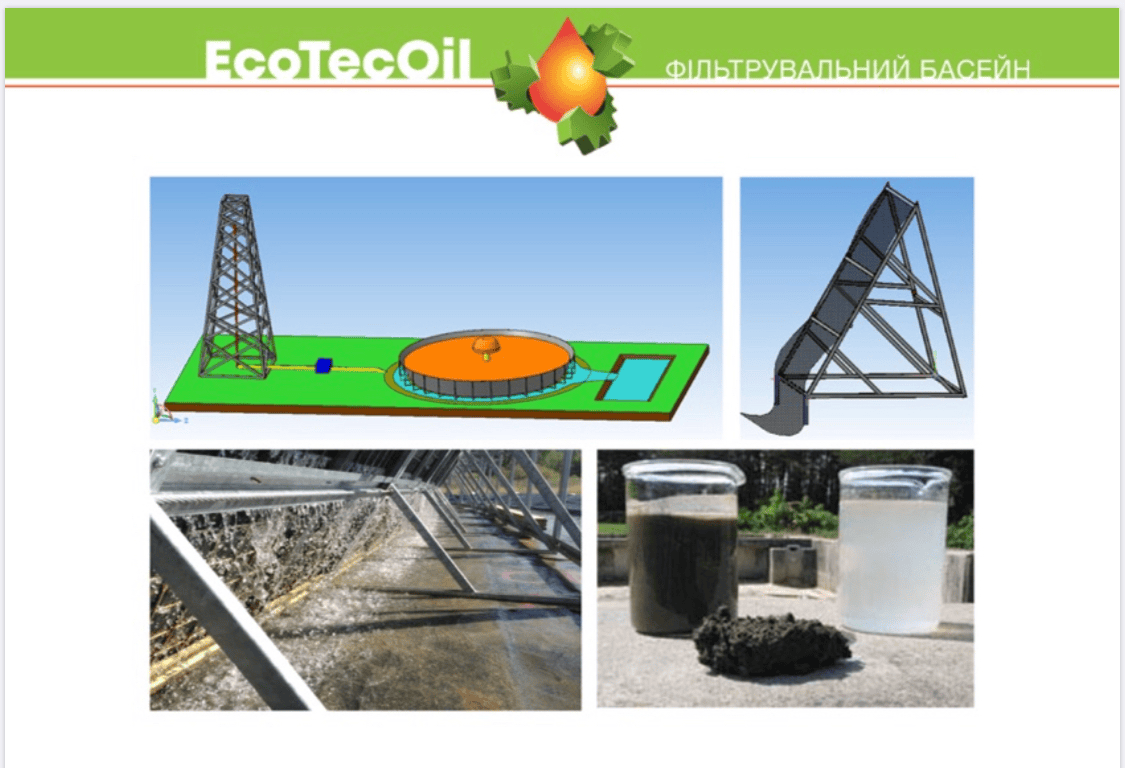
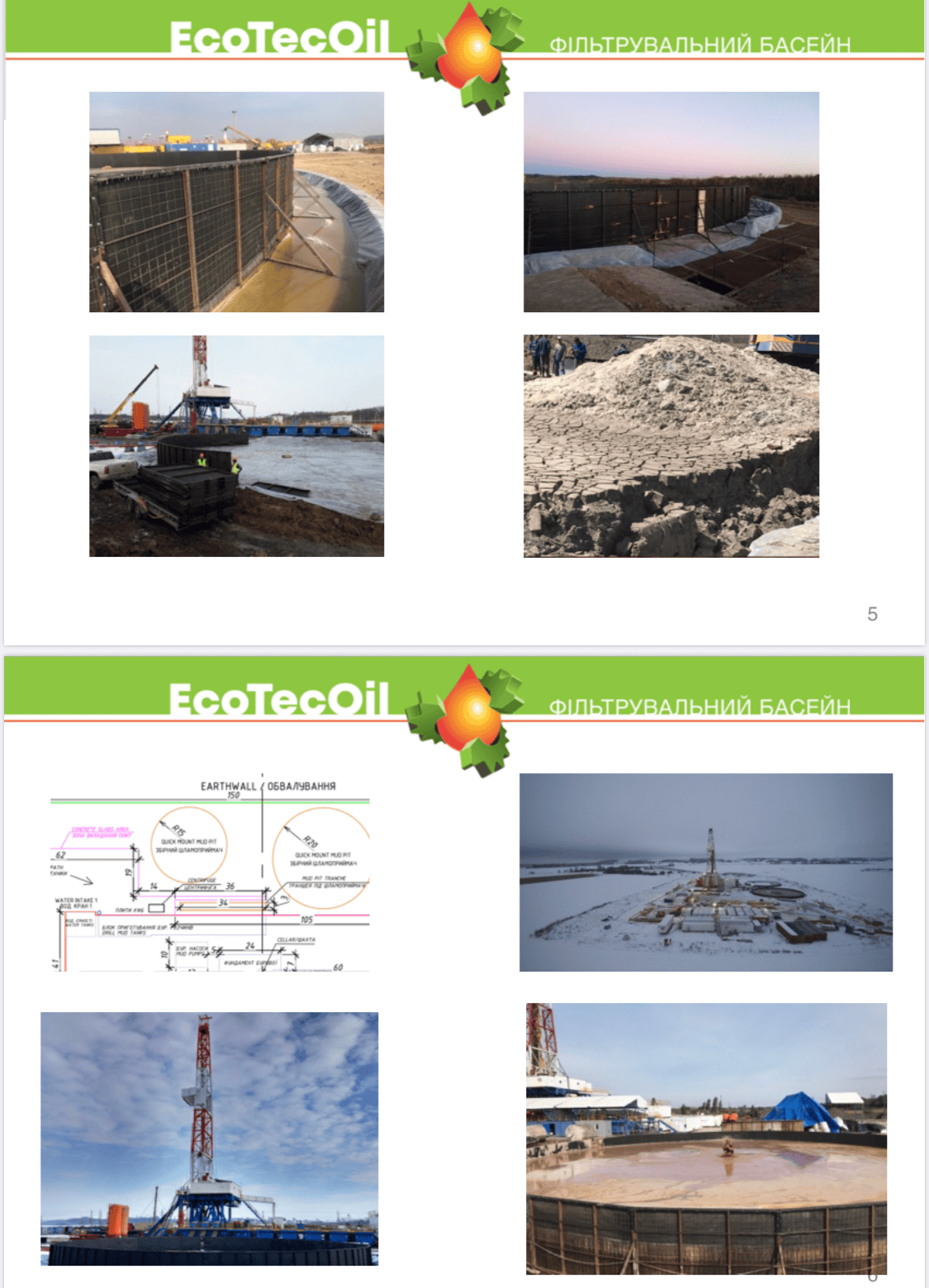
Drilling waste belongs to hazard class IV. Class IV means moderately hazardous waste. But the "kefir-like" consistency of this waste does not allow it to be placed at a municipal solid waste landfill, nor poured into the sewer, because it immediately clogs the treatment facilities. Accordingly, something must be done with it. It needs to be separated into solid fraction and water. For Ukrgasvydobuvannya we proposed a technology called a "filtration pool." The essence is as follows: there is a drilling rig, and on it a filtration pool like this is installed, of various diameters. At the rig we are talking about, it is 30 meters. Drilling sludge is pumped into it. Using a flocculation station, we add reagents, flocculants, and coagulants, whose task is to pull together the entire solid mass and push the water away. The water drains through the filtering wall of the pool along a water channel into a water intake. This water is reused to prepare drilling mud. And then, when drilling is finished, we have a dry residue left, which can be used as secondary raw material for backfilling a municipal solid waste landfill or as a construction material.
How exactly does the process of drilling waste disposal work around the world and in Ukraine?
Working at drilling rigs in Ukraine, I was able to discuss this topic with foreign drilling specialists. This field is most developed in Kazakhstan. There, directly next to each deposit, there is a drilling waste disposal plant. In Ukraine, it turned out that there is no infrastructure for this at all; there are only two industrial waste landfills and a bunch of companies that cooperate with law enforcement structures and have found for themselves a wonderful business — load it up and haul it wherever possible. After we proposed our technology, it suited everyone. Because the process runs normally, waste is processed right at the rig, no large numbers of trucks drive around, nothing is spilled on the roads. And most importantly, all the waste is processed into secondary raw material. In connection with this, a global resistance began, and its main goal is to discredit us and our technology.
After all, previously all companies worked on the principle of "load it, haul it wherever it works out, take the money, and let come what may." But we do processing. If you read the Law of Ukraine "On Waste," you will see the "waste management hierarchy." First is preventing waste generation. Second is processing and reusing waste, which is what we do. And only the last step is disposal, which is done in an extreme situation, when there is no technology for processing; only then should it be taken and hauled to a landfill. In Europe, this is considered a barbaric approach. And when we appeared with our processing technology, it was, of course, a surprise for everyone.
How long have you worked with this technology?
So far we have worked on five drilling rigs in Ukraine. One rig generates about 5,000 cubic meters of waste. Of that, 2,000 cubic meters is water filtered by us, which goes into preparing drilling mud and other needs. And, most importantly, the enterprise does not pay for removing this water. That is, the state-owned company Ukrgasvydobuvannya saved money by filtering the water and reusing it, rather than paying for its removal.
How is the industrial waste disposal market organized in general?
As for the market in general: there was a certain period when licenses were simply sold at the Ministry of Ecology, which handed them out left and right; a price tag was formed. The market formed in this way, and, accordingly, the approaches to work are the same. As soon as a decent tender appears, ecologists, activists immediately show up, and the division begins.
Those who actually work can be counted on one hand. And they work, again, like this: they come, take the waste away. And where you put it afterward? Someone also counts that as work. We are the only company that offers a service not of hauling and burial, but of drilling waste processing. And so we appeared among guys who hauled waste and had no problems at all. That is why the problems began for us.
This is like a classic story where there is a medieval market, where fire is made from stones and sticks, and then someone appears who knows how to light a fire, and criminal cases begin right away. How did the technology appear and how did you implement it?
Yes. When we won the Ukrgasvydobuvannya tender for hauling and disposing of drilling waste, I understood that this was not a waste that could simply be loaded and hauled away without consequences. Again, it is a kefir-like mass that has to be loaded and somehow transported. So I started looking for what options existed in the world at all. I met Ukrainian specialists, we considered many options, and decided to refine a technology that had previously been used for dewatering bottom sediments of lakes and sand. A great deal of work was done on analyses, conclusions, obtaining permits and technical specifications. A substantial amount of document work was completed. Because when a technology appears for the first time, especially at such a company as Ukrgasvydobuvannya, documents and permits, and there are very many of them in the environmental sphere, are very important.
Thus, a technology for full processing of drilling waste was proposed, whereby the "kefir" is turned into water, which is reused, and secondary raw material, which can be used in construction or to solve another environmental problem by backfilling a municipal solid waste landfill. Municipal solid waste landfills are supposed to do layering under their regulations: a layer of waste, a layer of soil, a layer of waste, a layer of soil. But they don't do it, because there is no money for it. They simply dump waste, and that means rot, insects, odors, rodents, birds, spread of infections, and so on. Layering is needed, and we are ready to provide this layering practically for free. That is, we solved two environmental problems: we processed drilling waste that would otherwise have ended up in a landfill, and we provide the nearest territorial community with soil for backfilling municipal solid waste landfills. This can be accompanied by analyses, videos, activists. Please, look, there are no problems at all, we are as open as possible. And when you work for two years at a drilling rig, up to your waist in this sludge, doing everything right with a large team, and then masked raids, thugs with automatic rifles, searches, rudeness come to your home, then you sit and think...
And now they have written that we deliberately introduced this technology in order to limit the circle of participants.
So, too clever and too good-looking?
Yes. In essence, the case is built on this. For me it is completely clear that the only goal of the criminal prosecution is to push the technology out of the market and return everything "to its place." After all, to load waste and haul it to the nearest landfill, you don't need much brains.

Russian Attacks in Dnipropetrovsk Region: Two Killed, Seven Injured

Defense Forces Strike Four Russian Drone Control Points in Past Day, Including in Berdiansk

Britain Threatens Sanctions on Kremlin-Linked People; Poland Ready to Hand Ukraine Ammunition

Russia says it has completed "planned exercises" in the Black Sea

MVD: Fake Riots With Prop Blood Were Being Prepared Near Presidential Office

Law Enforcers Name Another Klitschko Deputy as Suspect

Berlin Holds Protest Against War in Ukraine; EU Prepares for Possible Russian Halt of Gas Supplies
North Korea Fires Ballistic Missile Over Record Distance in Five Years
Irish Fishermen Force Russia to Postpone Naval Drills

US sanctions in case of invasion of Ukraine could completely destroy Russia's economy, NYT reports
