
Narcissus and Paranoiac: Trump Through the Eyes of a Former CIA Psychologist
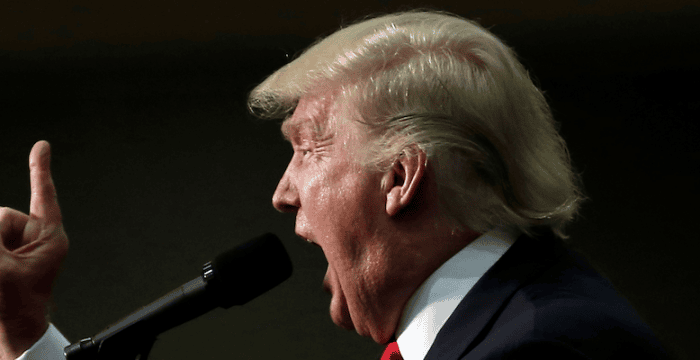
In January, all anyone talks about is impeachment.
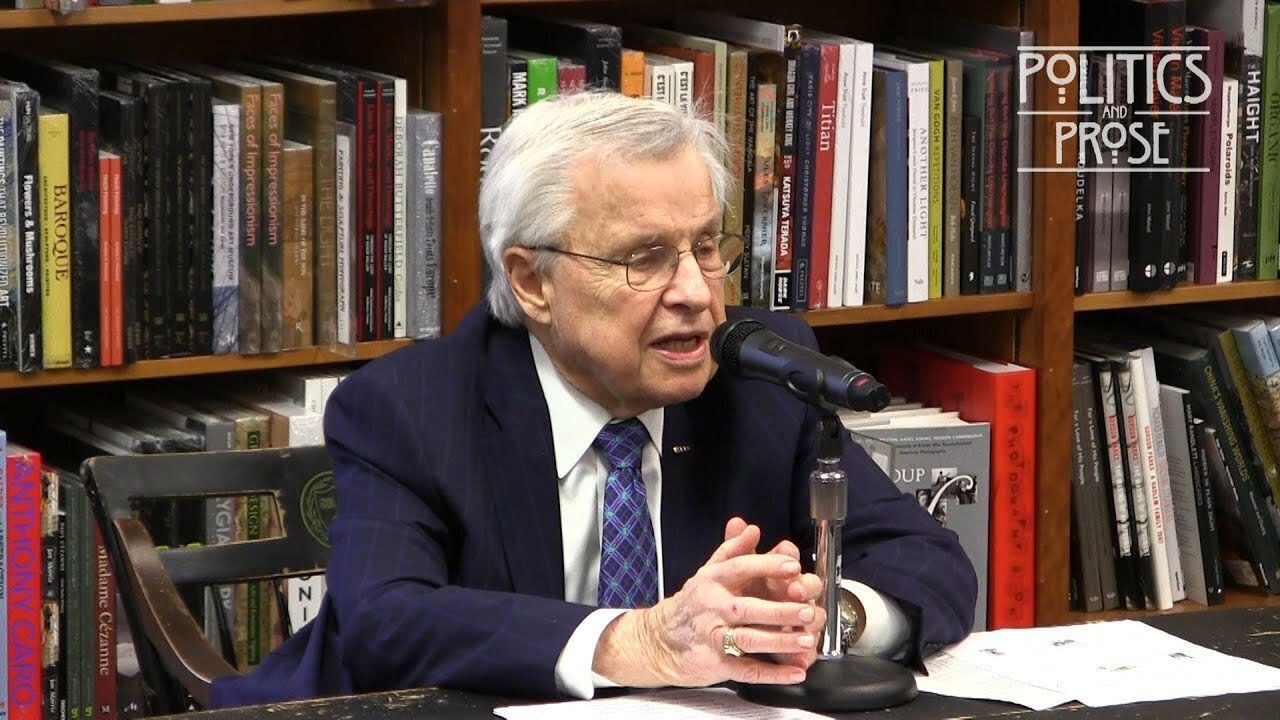
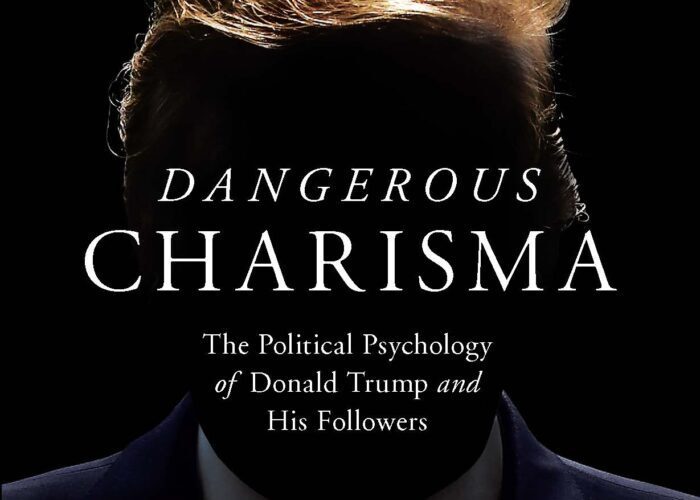
The book Dangerous Charisma: The Political Psychology of Donald Trump and His Followers has been published by Pegasus Books. Its author is Jerrold Post, a political psychologist who has devoted his career to profiling politicians and terrorist leaders.
Over 21 years at the CIA, he compiled psychological profiles of Israeli Prime Minister Menachem Begin, Egyptian President Anwar Sadat and Iraqi leader Saddam Hussein: all of his profiles ultimately influenced US international policy. But now the psychologist's attention is focused on his own president, whom Professor Post sees as a dangerous narcissist.
On the eve of the Senate impeachment hearings, we read his book and retell its key theses.
Narcissistic injury is what psychoanalysis calls the feeling of resentment and inadequacy from which a fantasy of one’s own greatness may later emerge. But for a charismatic leader (that is, one whom masses of believers blindly follow) to emerge, both the leader and the follower must be “wounded.” They essentially transfer their narcissistic injury onto each other. Only the leader engages in mirror transference, seeing in his followers a reflection of his own greatness, while the leader’s supporter tends toward idealizing transference: he seeks in his mentor an unattainable perfection.
Not all followers of political cults are narcissistic: sometimes the political situation forces them to join the majority. And not all such cults are destructive. For example, during World War II Winston Churchill was a typical idealized leader, which met the demands of the moment. But as soon as the dark times passed, the ideal was debunked, and Churchill himself was ousted from the prime minister’s post. Mustafa Kemal Atatürk, Mahatma Gandhi, Martin Luther King were typical representatives of reparative charismatic leaders, that is, those who use their supporters’ aspiration toward an ideal to build a new, just society. But in Trump’s case, narcissism borders on pathology, believes Professor Post, and he lists the evidence of this.
Inability to empathize. Pathological narcissists are so absorbed in a sense of their own greatness that they cannot show elementary sympathy, even when political decorum demands it. Speaking at a rally in Texas, Trump managed to ignore the fact that Hurricane Harvey had just swept through the state, but repeatedly drew attention to the number of his supporters (“What a crowd! What a turnout!”). The US president did not shy away from insulting Senator John McCain when it had already become known that McCain was dying of cancer. And even his funeral became an occasion for a narcissistic comment: Trump complained that he had not been thanked for giving the “green light” to transporting McCain’s remains on a military plane.
Zero empathy extends even to a narcissist’s closest relatives. Consider, for example, Trump’s lawsuit against his own nephew, Fred Trump III, during the division of the estate of Donald’s brother, Fred Jr. The newborn son of Fred Trump III suffered from seizures, and the parents planned to pay for his insurance from inherited funds. But this did not melt Donald’s heart. Though, in fairness, he did not have to kill his own uncle to rule alone (hi, Kim Jong Un!).
Tendency toward paranoia. This does not mean that the person has fallen victim to psychosis and no longer distinguishes reality from fiction. He is simply always morally prepared for a trick and for finding a scapegoat. One piece of advice in Trump’s book The Art of the Comeback (1997) states directly: “Be paranoid.” In his case, the scapegoat is invariably the liberal media, which in Trump’s view are always conducting a “witch hunt.”
Uncontrolled aggression. Another piece of Trump’s advice from the same book reads: “Hit back.” Sometimes the opponent did not even have to make the first move: while in elementary school, Trump once punched his music teacher in the eye. As a public figure, Trump allows himself only verbal aggression, but within that framework he does not particularly restrain himself. Consider his tirade against TV host and activist Rosie O’Donnell: “She’s a slob, she talks like a truck driver, her show was a flop, her magazine is a total disaster… I think I’ll sue her.” And all of this for questioning his moral authority over the 20-year-old contestants of the Miss America pageant, the rights to which Trump owned in the 2000s.
Excessive touchiness. The offender may be not only a critic (as in O’Donnell’s case), but also an impersonal situation. It is unknown whether Trump kicks a humming refrigerator, but even his victory in the 2016 election was offensive to him, since he believed Hillary Clinton had received too many votes: “millions of illegal votes” must be subtracted from her result, Trump wrote. In this case, resentment is a response to an imperfect result, but the reaction may also be denial or outright lies, as in his claim about the largest turnout at the inauguration ceremony.
Underlying self-doubt. It is precisely from this that the narcissist defends himself with the illusion of his own greatness. And it is from this that he diverts attention when delicate questions arise. For example, during the investigation into Trump’s ties to Russia, he regularly changed the subject to… Venezuela. “They are our neighbors… People there are suffering and dying. And we have options, including possible military intervention,” the president blurted out in the midst of the investigation, thereby only emphasizing that he had something to hide. Interestingly, most of the traits listed above were possessed by the main character of the film Citizen Kane (1941), the callous, loud media magnate Charles Foster Kane. It is this film that Trump calls his favorite film of all time.
“The second son in line.” The pattern of innate leadership curiously shows up not in the eldest sons, as is commonly assumed, but among sons who were not initially considered as heirs. US President John F. Kennedy, Israeli Prime Minister Benjamin Netanyahu, Indian Prime Minister Rajiv Gandhi: their parents did not see any of them as successors, having more charismatic and active sons for that role. When those sons chose a different career or died, the “second son in line” stepped onto the stage: for example, ophthalmologist (!) Bashar al-Assad, who worked in London, had to urgently return home when his father’s favorite, speed enthusiast Basil al-Assad, crashed his Mercedes.
The heir to Fred Trump’s empire was supposed to be his first son, Fred Jr., but he chose a career as a pilot, and later took to alcoholism and died at the age of 42. Donald, who was used to considering himself “option No. 2,” turned out to be a true son of his father and a man of immense ambitions.
Overestimating one’s abilities. During the 2016 presidential campaign, Trump claimed that he had written the best-selling book in the world, referring to his opus The Art of the Deal. He also calls it “my favorite book after the Bible.” Overestimating his own significance often cost the businessman money. The board game Trump: The Game sold 800,000 copies instead of the expected 2 million, and among his other failures were such multimillion-dollar flops as Trump Airlines, a magazine bearing his name, a vodka brand bearing his name, steaks bearing his name, Trump University and, of course, the notorious bankrupt casinos.
It has already become part of folklore that Trump considers himself an expert on any subject. At various times he claimed to “know more than anyone else” about the following: drones and technology in general, TV ratings, ISIS, social media, courts, the VISA system, trade, the system of government, renewable energy, taxes, debt, infrastructure and construction. This may seem like just a figure of speech, but in Trump’s case, a self-proclaimed “very stable genius,” it points to a genuinely narcissistic cast of mind.
Inattentiveness and lack of curiosity. A narcissist’s traits can cause him serious problems when it comes to taking in information. And it’s not only that Trump’s monosyllabic speech is at the level of a sixth-grader, while previous presidents and candidates spoke at the level of eighth-grade essays. The problem is that instead of the question “What can be done in this situation for the country?” he hears “What can be done to preserve or improve my position?”
As a result, he finds it difficult to focus on reports from subordinates. Former officials, including ex-CIA director Mike Pompeo, complained that staff found it hard to get information to the president. An additional obstacle is that Trump is not willing to yield intellectual primacy: in his picture of the world, no one but himself can claim expertise. “I am my own chief consultant,” Trump proudly declares.
Self-object transference. One could object that Trump has at least one trusted adviser: his daughter and counselor Ivanka. But the family members and friends of a narcissist (if he manages to maintain normal relations with them) are forced to be not full-fledged allies but “self-objects,” people who simply complement his “self” and boost his self-esteem. When Trump’s first wife, Ivana, ceased to be complimentary to his ego, a divorce followed. Trump himself admitted that he gave her too much authority in his casino and the Plaza Hotel: having turned from an adoring housewife into a businesswoman, she ceased to be a desirable “mirror.”
Children, too, must not be independent personalities but self-objects. Scott Melker, who studied together with Trump’s son Donald Jr., recalls that once Trump came to his dorm and, finding Donnie in a sweater instead of the agreed-upon suit, silently slapped him.
“Conscience is Swiss cheese.” In other words, a leaky system of values: a person seemingly declares strict moral principles, for example, the importance of family, but does not follow them himself, while continuing to accuse others. Trump cynically commented on the divorce of Bill and Hillary Clinton, hinting that Hillary might also have cheated on her husband, while he himself went through two public divorces, never forgetting to mention that men like him are logically in search of a new “good piece of ass,” that is, a sexual object.
Narcissistic rage. The narcissist is extremely unpredictable and quick-tempered. A consequence of his injury is narcissistic rage, which in Trump manifests itself in his famous morning Twitter storms, when the president may devote a dozen posts to topics both global and utterly insignificant. Because of these outbursts, many, including journalist David Brooks, have described Trump as a person with bipolar disorder.
“Materialization of thoughts.” Sometimes during such a Twitter storm, Trump may announce some idea (for example, depriving transgender people of the right to serve in the military) as a done deal, without informing the relevant agency. Similarly, he announced the withdrawal of troops from Syria. The narcissist’s thought carries a kind of royal imperative: having merely flashed through his head, it must come to life, and the rest be damned. Adjusting reality to fit the leader-narcissist’s emerging fantasy falls entirely on subordinates.
Based on the book Dangerous Charisma: The Political Psychology of Donald Trump and His Followers by Jerrold Post & Stephanie Doucette

Russian Attacks in Dnipropetrovsk Region: Two Killed, Seven Injured

Defense Forces Strike Four Russian Drone Control Points in Past Day, Including in Berdiansk

Britain Threatens Sanctions on Kremlin-Linked People; Poland Ready to Hand Ukraine Ammunition

Russia says it has completed "planned exercises" in the Black Sea

MVD: Fake Riots With Prop Blood Were Being Prepared Near Presidential Office

Law Enforcers Name Another Klitschko Deputy as Suspect

Berlin Holds Protest Against War in Ukraine; EU Prepares for Possible Russian Halt of Gas Supplies
North Korea Fires Ballistic Missile Over Record Distance in Five Years
Irish Fishermen Force Russia to Postpone Naval Drills

US sanctions in case of invasion of Ukraine could completely destroy Russia's economy, NYT reports
