
Theory: Trump Is Blocking TikTok Out of Personal Revenge for Trolling
The version was voiced by a journalist from the American Forbes.
U.S. President Donald Trump plans to ban the Chinese app TikTok if it is not sold to American owners within three months, citing national security: so that TikTok cannot leak data to Chinese authorities.
But there is a theory that Trump may be driven not only and not so much by national security concerns, but by resentment and a thirst for personal revenge. Below we publish a free translation of a column by Forbes journalist Abram Brown, published on the outlet's website on August 1.
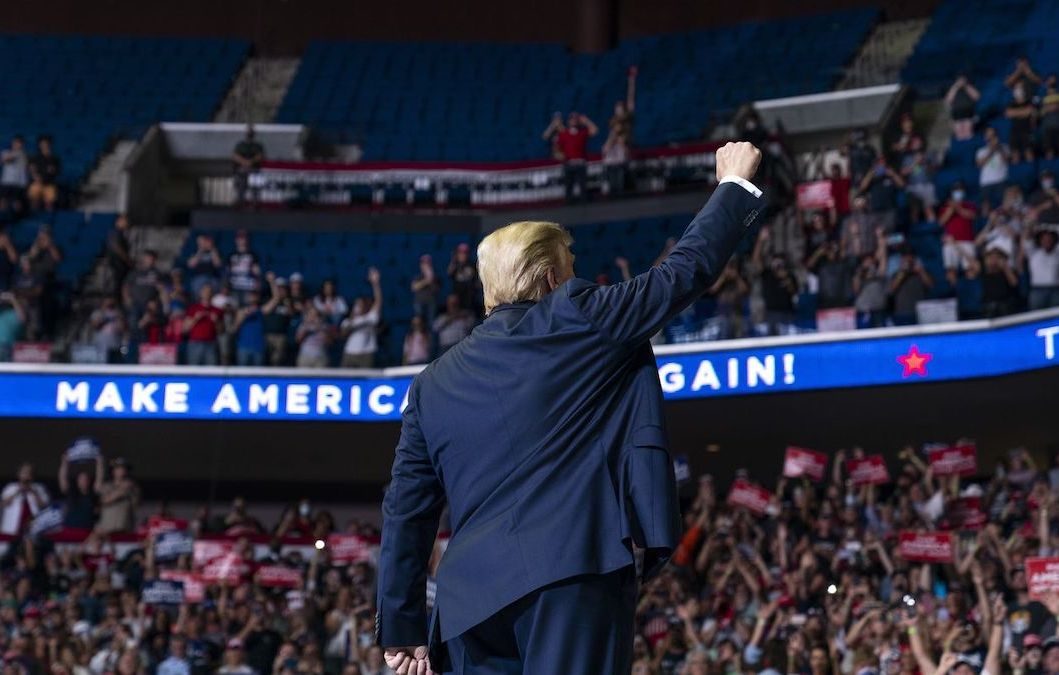
The idea of banning TikTok in the US was first discussed a few weeks ago, and among TikTok users a theory is popular that China and national security are simply a convenient pretext, while in reality the president wants to block access to an app popular with young audiences, linked to Trump's June rally in Tulsa, Oklahoma.
The event was meant to give a boost to Trump's election campaign, showing his popularity by drawing 20,000 people after several months of isolation due to the coronavirus. The entire plan was completely ruined by TikTok users and other young people who booked tickets to the event but did not show up. This is just a theory, and no one except Trump and perhaps a few of his White House insiders knows the real motives. But it has the right to exist, because it makes sense and coincides in time.
In June, Trump announced that he wanted to hold a rally in Tulsa on June 19 — Juneteenth, the day commemorating the end of slavery. The decision angered residents of the city, which has a painful and brutal history of racism, and in the end the president had to make concessions and postpone it to the following day.
But this step did not stop the campaign, which formed and developed on TikTok and Twitter about a week before the rally. Its goal was simple: to book tickets on Trump's website under fictitious names, phone numbers and email addresses, and then ultimately ignore the gathering. This step was supposed to instill in Trump false hope of a large crowd and make him look foolish in front of an empty hall.
A few days before June 20, Trump's campaign announced that nearly 1 million people had applied for registration. But when the evening of the rally arrived, the BOK Center in Tulsa was filled to a maximum of one-third. Television showed Trump's speech in front of stands with large empty rows. The online campaign against him worked.
Yes, the coronavirus pandemic kept some people at home, and Trump blamed protests in Tulsa, although journalists noted that there were few protests there that evening.
The subsequent timeline supports the theory: about two weeks later, US Secretary of State Mike Pompeo became the first official in Trump's administration to comment on a possible TikTok ban. This marked the beginning of a sharp escalation by the country's leadership toward TikTok, which had already been operating in the US for two years.
Until then, installing the app was at most prohibited for members of the armed forces on government-issued phones. Also, several senators, such as Josh Hawley of Missouri and Marco Rubio of Florida, had expressed concerns about data security on TikTok. Whether Trump knew about it is not known at all. Despite the huge number of posts on Twitter, he never mentioned TikTok.
But after Tulsa, he could no longer fail to learn about TikTok. The internet trolled the president, who does not like any public disrespect toward him. In a matter of weeks, TikTok went from a source of concern for a few conservative senators to a national security threat in the eyes of the White House.
The revenge theory is very popular, and the TikTok community is now asking another question: was it worth it? Was it necessary to humiliate the president, disrupt his plans, and turn an entertainment app into a political target?
Translation and adaptation by Yevgeny Blazhko, TK Media

Russian Attacks in Dnipropetrovsk Region: Two Killed, Seven Injured

Defense Forces Strike Four Russian Drone Control Points in Past Day, Including in Berdiansk

Britain Threatens Sanctions on Kremlin-Linked People; Poland Ready to Hand Ukraine Ammunition

Russia says it has completed "planned exercises" in the Black Sea

MVD: Fake Riots With Prop Blood Were Being Prepared Near Presidential Office

Law Enforcers Name Another Klitschko Deputy as Suspect

Berlin Holds Protest Against War in Ukraine; EU Prepares for Possible Russian Halt of Gas Supplies
North Korea Fires Ballistic Missile Over Record Distance in Five Years
Irish Fishermen Force Russia to Postpone Naval Drills

US sanctions in case of invasion of Ukraine could completely destroy Russia's economy, NYT reports
