
Trump, a Missile, Two Iranians: What Happened in Iraq and Why the Whole World Is Talking About an Imminent War in the Middle East?
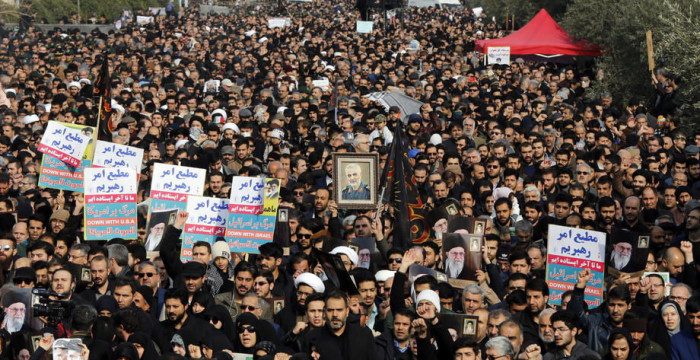
On the night of January 2–3, at one in the morning local time, an American strike drone circling in the night sky over Iraq carried out two air strikes on the territory of Baghdad International Airport. The targets of the air strikes were two armored vehicles that had just been leaving the arrivals terminal. Both vehicles were destroyed in the bombing, and all the people inside were killed.
A total of 11 people were killed, and several more were seriously wounded. Here is the full list:
- General Qasem Soleimani – commander of the special “Quds Force” unit of the Islamic Revolutionary Guard Corps (IRGC) in Iran.
- General Hussein Jaafari Naya – military officer of the IRGC Quds Force in Iran.
- Colonel Shahroud Muzaffari – military officer of the IRGC Quds Force in Iran.
- Major Hadi Tamri – military officer of the IRGC Quds Force in Iran.
- Captain Vahid Zamanyan – military officer of the IRGC Quds Force in Iran.
- Mohammed Reda al-Jabari – head of the press service of the special brigades of the “Popular Mobilization Forces” of the Iraqi Armed Forces.
- Abu Mahdi al-Mughandes – deputy commander-in-chief of the special brigades of the “Popular Mobilization Forces” of the Iraqi Armed Forces.
- Samer Abdallah – fighter in the special brigades of the “Popular Mobilization Forces” of the Iraqi Armed Forces, brother-in-law of Imad Mughniyeh, founder of Hezbollah, who was killed in 2008.
- HassanAbdelHadi – fighter in the special brigades of the “Popular Mobilization Forces” of the Iraqi Armed Forces.
- Haidar Ali – fighter in the special brigades of the “Popular Mobilization Forces” of the Iraqi Armed Forces.
- Mohammed Al-Shibani – fighter in the special brigades of the “Popular Mobilization Forces” of the Iraqi Armed Forces.
Among the dead, the greatest international resonance was caused by the deaths of two men: General Qasem Soleimani and Abu Mahdi al-Mughandes. What actually happened, who the dead were, and what this threatens for the US, Iran, Iraq and the Middle East as a whole?
Who was Qasem Soleimani?
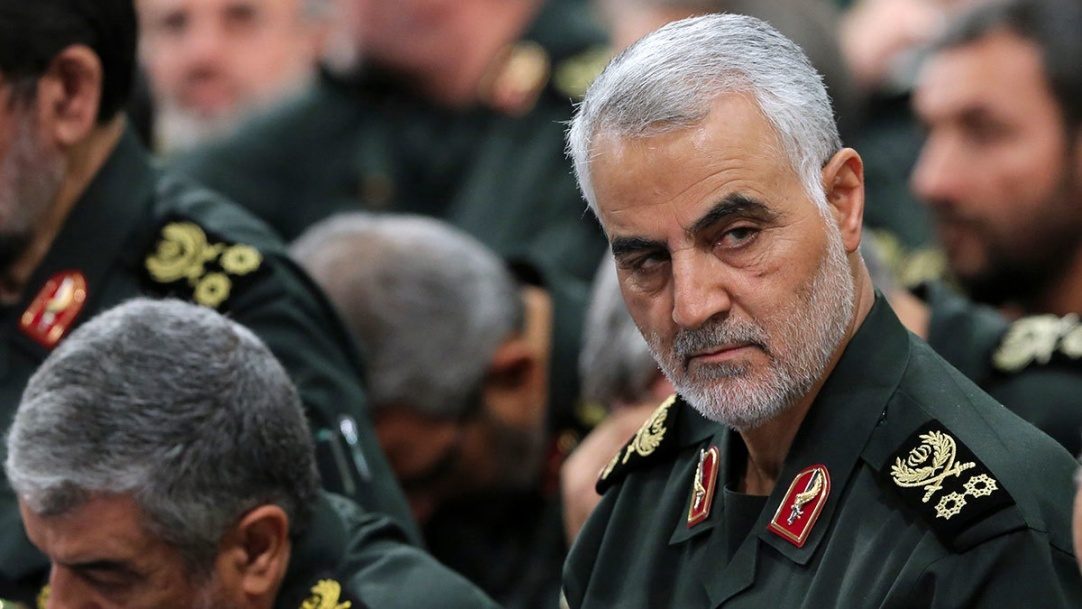
General Qasem Soleimani was the commander of the special Quds Force unit within the Islamic Revolutionary Guard Corps (IRGC) in Iran. This unit is the only one among Iran's security structures that carries out special operations abroad.
Mainly, this concerns surveillance of the opposition, data theft, building agent networks, logistical support, information operations, sabotage and subversion, acts of sabotage, organizing explosions and political assassinations, intimidation and pressure operations, and identifying and eliminating foreign agents and spies. The Quds Force does practically everything that any intelligence service or foreign intelligence agency in any other country does.
Islamic Revolutionary Guard Corps (IRGC) – elite units of Iran's armed forces, formed from the closest supporters of the great Ayatollah Ruhollah Khomeini after the Islamic Revolution in Iran in 1979. Essentially, the IRGC is Iran's military elite, units semi-autonomous from the rest of the ground forces, with broad powers. In other words, it is something like a special guard that protects the state leadership and carries out the most difficult tasks.
Qasem Soleimani was a truly legendary figure in Iran, an idol to thousands of people, a living monument and almost a myth, with many nicknames, ranks and titles, both real and invented. Because of his low profile, mystery and the sensitivity of his activities (after all, we are talking about espionage and intelligence operations in other countries), Soleimani's persona has over decades grown a whole host of legends and tales.
Qasem Soleimani's career began in the 1980s, during the bloody Iraqi-Iranian war (1980–1988). Without any special education, Soleimani volunteered for the front, where he quickly began his rise up the career ladder, distinguishing himself in several battles against Iraqi forces. In one of them, Soleimani's unit even came under a barrage of chemical-weapons missiles, which the Iraqis at the time used liberally with the support of the US and Britain. By the age of 30, Soleimani had become a battalion commander and earned a reputation as an effective and talented military commander. After the war, he was sent to chase smugglers on the border with Afghanistan and to suppress Kurdish uprisings in the northwestern mountainous regions of Iran.
He headed the Quds Force brigades in 1997, and since then has achieved remarkable success in building sabotage and agent networks and military-organizational networks across the region. His first combat operation was the fight against the Taliban in Afghanistan. After the US invasion of Iraq and the overthrow of Saddam Hussein, Soleimani became fully convinced that even a country that voluntarily renounces its nuclear program cannot be safe, and that US guarantees are worth nothing. It was then that Soleimani began building the entire regional military-political architecture, geared toward confronting the US, that exists today.
General Soleimani truly did a great deal for the IRGC. He was one of the key figures in building pro-Iranian anti-American brigades in post-Saddam Iraq. Their guerrilla war against American occupation forces ultimately forced the US to hand power over to local politicians. Another project of Soleimani and the IRGC was consolidating the influence of the Shiite movement Hezbollah in Lebanon, where it created a political party that enjoys popularity among a significant part of the population. For example, it won the last elections in May 2018. Finally, Soleimani also had a hand in forming the Syrian pro-government militia “National Defense Forces” (NDF), which helped the regular army hold territories captured in battles during the military campaigns of 2013–2017.
Besides fighting the Americans and other enemies of Iran, Soleimani became one of the main military leaders in the fight against terrorist organizations in the region, which were usually supported by the Sunni monarchies of the Persian Gulf, competing with Iran for leadership in the Middle East. First, the war was waged against the Taliban in Afghanistan in the 1990s, then against al-Qaeda in Iraq after 2003, and finally against the “Islamic State” in 2013–2018. It was General Soleimani who helped form the Iraqi special brigades “Popular Mobilization Forces,” which included hundreds of thousands of Shiite, Sunni, Christian, Yazidi and Assyrian volunteers who stopped IS terrorists right at the gates of Baghdad in 2014. Today these brigades are influential, popular and combat-capable units within the structure of the Iraqi Armed Forces.
In Iran itself, the popularity of Qasem Soleimani, on whom the state's external military-intelligence activity rested, bordered on a kind of ritual, fanatical worship. Even Supreme Leader Ayatollah Ali Khamenei called him a “living martyr (shahid)”, and after his death, today he personally came to the Soleimani family to express his condolences – that is how important this man was to Iran's leadership.
Who was Abu Mahdi al-Mughandes?
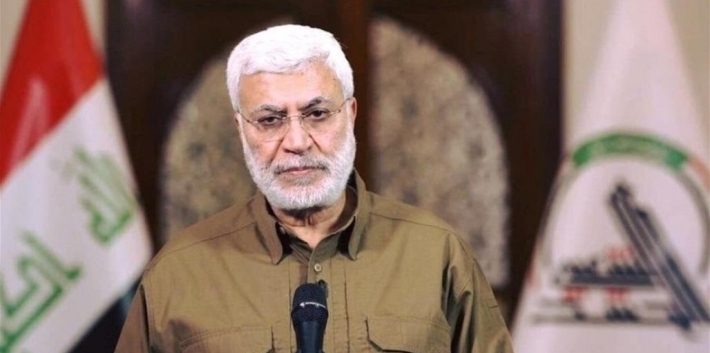
Abu Mahdi al-Mughandes (real name Jamal Jaafar Mohammed) is the deputy commander of the special brigades of the “Popular Mobilization Forces” (in Arabic “Hashd al-Shaabi”) within the structure of the Iraqi Armed Forces. “Popular Mobilization Forces” is a coalition of various armed brigades formed from volunteers in 2014 in response to a call from Iraq's spiritual leader, Grand Ayatollah Ali al-Sistani, to fight the “Islamic State,” which was then preparing to seize Baghdad.
Al-Mughandes was from the southern Iraqi city of Basra; his father was a local resident and his mother was Iranian. After graduating from university in 1977, he joined the Shiite opposition party Dawa (today it sits in parliament), which Saddam Hussein shut down two years later. Al-Mughandes, as a particularly active member of the party, was forced to flee from Iraq to Iran, where he volunteered for a military camp organized by Iran to train Iraqi dissidents for an armed uprising against Saddam. Al-Mughandes quickly established ties with the IRGC leadership, where he met General Qasem Soleimani. The Iraqi took part in numerous military operations aimed at countries that supported Saddam Hussein during the Iraqi-Iranian war (1980–1988). For example, he is believed to have been involved in the bombings of the French and US embassies in Kuwait in 1983. For this, Kuwait sentenced him to death in absentia. He fled to Iran, where he obtained citizenship.
Al-Mughandes first returned to his native Iraq only after Saddam Hussein's overthrow in 2003. He immediately became security adviser to the country's first prime minister, Ibrahim al-Jaafari. In 2005 he was elected to parliament from the Dawa party. However, two years later, when the US tried to persuade Iraq's leadership to hand him over for organizing the 1983 bombings, Al-Mughandes fled to Iran again.
He returned in 2011, after the withdrawal of the main American forces from Iraq on the order of President Barack Obama. The IRGC made him commander of “Kataib Hezbollah,” pro-Iranian paramilitary brigades that strengthened Iran's influence and at the same time held back Sunni extremist groups in the north and northwest. When the Sunni uprising transformed into the “Islamic State,” Al-Mughandes was transferred to the newly formed “Popular Mobilization Forces.” He remained in this post until his death today.
Commanding the PMF brigades, Abu Mahdi al-Mughandes took part in virtually all the major battles against IS terrorists, from Baghdad to Fallujah and Mosul. He often had to cooperate with the very Americans he had fought his whole life. After the defeat of IS in 2018, relations with the US became strained again, while the PMF gained tremendous popularity as “war heroes” and “liberators from IS.” Al-Mughandes himself became one of the most popular fighters against terrorism in Iraq.
In 2017–2019, Al-Mughandes worked closely with Qasem Soleimani on containing the US, IS, Saudi Arabia and other sides hostile to Iran. He was the link between Soleimani and the PMF leadership in Iraq.
Why did the US decide to kill them? And why now?
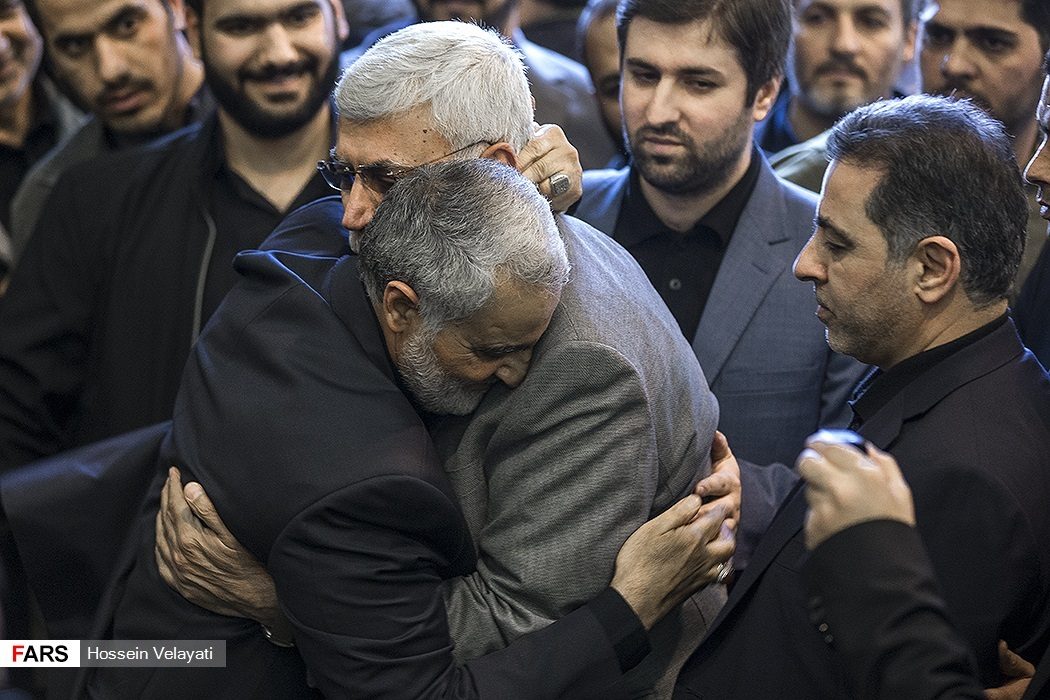
Three main factors stand out that influenced the decision of US President Donald Trump to strike Soleimani and al-Mughandes:
1. Influence of anti-Iran hawks in the Trump administration. It is no secret that Trump's team includes many right-wing Republicans from the Reagan-Bush-Cheney era, who believe only in a forceful solution to the “Iran problem.” They believe that with Iran one must be tough and often use force to contain it, up to and including a forced change of power in Tehran. Judging by everything, they hoped that Soleimani's death – an idol and legend – would undermine the morale of Iranians and turn them against the regime, provoking a popular uprising that would then be supported from Washington. The influence of these advisers is the reason why the current American administration is “obsessed” with the confrontation with Iran, making this direction central to its entire Middle East policy.
2. 2020 US presidential election. Obviously, such a bright, predominantly symbolic gesture is aimed at creating an image in which Donald Trump appears as a fighter against international terrorism and a hero not afraid to defeat his enemies and press the “fire” button. This political calculation is clearly aimed at boosting his ratings on the eve of the presidential election in November. Just one day before the air strike, Trump officially launched his election campaign with a rally in Florida.
3. Impeachment against Trump. Another possible motive for the White House was an attempt to drown out the negative and toxic information noise surrounding the impeachment procedure against Donald Trump in Congress. The idea being that the air strike and frightening talk of an imminent war with Iran should overshadow the endless discussions of impeachment.
4. Oil and weapons. It is no secret that the main beneficiaries of this situation are US oil companies and arms corporations. As confrontation escalates in the Middle East, demand for oil and weapons grows. That is a gold mine for many companies operating in these industries. In a sense, this is exactly why Iran is “needed” by the States. Shale oil production forces world prices to be kept at no less than $60 a barrel, and when they fall, something has to be done to raise the stakes and push prices up. After the strike on Soleimani, oil prices jumped as much as 4%.
How did the international community react?
Most countries reacted with restrained negativity. UN officials UN condemned the US air strike, calling it a violation of international law and pointing out that a military strike by one state on the territory of another and the killing of a high-ranking official is in essence an act of aggression.
The European Union responded negatively to the air strikes, although it went against the US position, limiting itself to vague grumbling that the strike naturally raises the level of tension in the region. European Parliament President Charles Michel issued a statement calling for an immediate de-escalation of the situation in Iraq. Obviously, destabilization in the Middle East is not beneficial to Europe under any circumstances (oil flows, refugees, security of the Mediterranean basin and Central Asia). Germany, while condemning the air strike, immediately tightened the rules of conduct for its military contingent in Iraq because of possible provocations. Germany has 160 soldiers there who train Iraqi Armed Forces personnel. France, offering the sharpest criticism of Trump, asked its citizens to stay away from crowded places in Iraq. Britain merely called on the sides to show restraint and did not welcome the US air strike on Baghdad, as Washington had expected from its ally Boris Johnson.
Canada's reaction was much more positive. In a special press release, Canadian Foreign Minister called on the sides to show restraint in order to preserve the integrity and unity of Iraq. However, he hastened to note that “Canada has long been concerned about the activities of the Quds Force brigades and General Soleimani, whose aggressive actions led to the destabilization of the region.”
Russia condemned the US, and the Russian Defense Ministry called the air strike a “short-sighted decision,” noting that it would only aggravate problems in Iraq and the region. In addition, Russian President Vladimir Putin spoke by phone with his French counterpart Emmanuel Macron, and the two of them agreed that US actions undermine the integrity and stability of the Middle East. There was also a conversation between Russian Foreign Minister Sergei Lavrov and US Secretary of State Mike Pompeo, in which Lavrov expressed his concern over the events surrounding Soleimani's death. In essence, Russia refrained from any sharp reaction to what happened and clearly signaled that for now it does not intend to get drawn into the conflict between the US and Iran in Iraq.
China urged all sides of the conflict, “especially the US,” to show restraint and calm. Official Beijing reminded that it “has always opposed the use of force in international relations,” and accused the US of violating Iraq's sovereignty and territorial integrity. China's restrained position and “peacemaking tone” are explained very simply: for the PRC, the Middle East is the main source of crude oil supplies, which China imports in huge volumes. Any destabilization that threatens these supplies is undesirable for China.
Almost all Arab countries of the region condemned the US air strike and sent condolences to Iran over the death of General Soleimani. Even Saudi Arabia, a US ally, published a short statement calling on the sides to stay calm. Turkey reacted negatively to Soleimani's death, noting that US actions “will increase instability” in the Middle East. Syria strongly condemned the killing of the Iranian general and sent condolences to Tehran over it, accusing the US of “aggression” against Iraq. The pro-Saudi government of Yemen welcomed Soleimani's death, calling it “an important step toward ending the conflict in the region.” Jordan suspended flights of its planes to Baghdad and Najaf due to the threat of escalation. Kuwait called on all its citizens to leave the territory of Iraq. The Islamist movement Hamas in the Gaza Strip sent condolences over the general's death. Prime Minister of Israel Benjamin Netanyahu, as expected, rose to defend Donald Trump, praising him for the killing of Soleimani. Lebanon, Bahrain and Pakistan tightened security measures at their embassies in Iraq because of possible unrest and escalation of the confrontation.
What are they saying in the US itself?
US President Donald Trump immediately unleashed a series of tweets justifying his decision and claiming that Soleimani was “responsible for the deaths of millions of innocent people” and that “he should have been taken out long ago.” In its press release on the air strike, the Pentagon said it had been carried out “for the purpose of self-defense and preventing attacks on American citizens” that General Soleimani had allegedly been preparing. US Secretary of State Mike Pompeo was more restrained and merely stated US commitment to “peaceful de-escalation with Iran,” which sounded rather schizophrenic, given that Washington struck first and sharply worsened the situation in the region.
In Congress, however, the reaction was far more negative. Speaker of the US House of Representatives Nancy Pelosi said that Congress had not been notified of the forthcoming air strike on Soleimani, and demanded that Trump's administration immediately inform them of further US steps in connection with the consequences of the Iranian general's killing. Presidential candidate and former Vice President Joe Biden published a statement in which he called Trump's actions “lighting a fuse under the powder keg” of the Middle East. Another presidential candidate, Senator Bernie Sanders, painted a grim picture of an “approaching regional war” caused by Donald Trump's “destructive” actions. Senator Elizabeth Warren, although she blamed the late Soleimani for the deaths of thousands of innocent people, noted that “reckless actions lead to escalation around Iran and may result in the deaths of new people and a new war in the Middle East.” The reaction of Senator Cory Booker was similar; he managed to describe how terrible a “killer” Soleimani was and to hint at Trump's lack of any broad strategy for the Middle East. In short, the reaction in the US was, as usual, divided along party lines: Democrats spoke out against the air strike, while Republicans lavishly praised the president.
In connection with rising regional tensions after the death of Qasem Soleimani, the US immediately asked all its citizens to leave Iraq and also sent another 3,000 troops to the Middle East, in addition to the 3,500 that had been moved to Jordan and Kuwait a few days before the air strike on Baghdad. In addition, employees of some American oil companies began evacuating southern Iraq because of threats of attacks from pro-Iranian forces.
What are they saying in Iraq and Iran?
These two countries reacted most sharply, since their representatives had been killed, and not the least senior ones in the hierarchy. In Iraq, perhaps for the first time in many years, absolutely all political forces united and together condemned the US air strike, calling the Americans “aggressors” and calling for their troops to be expelled from the country. Influential Shiite preacher Muqtada al-Sadr, leader of the largest parliamentary bloc “Sairoon,” who had never particularly sided with Iran, sharply condemned the US, called it “aggressors,” and called on parliament to immediately convene an emergency session to raise the question of withdrawing all American troops from Iraq by denouncing the relevant 2008 agreement.
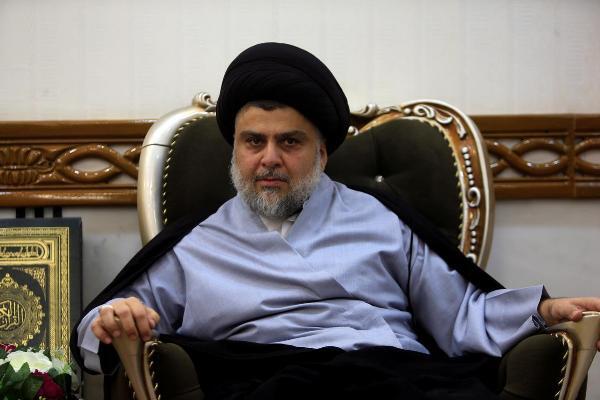
Similar statements were made by the Iraqi Communist Party, the Dawa party, the State of Law party, the al-Fatah bloc and Iraqi President Barham Salih. In addition, representatives of the Iraqi Armed Forces expressed clear displeasure that the US had not even informed them about the forthcoming air strike.
In Iran, Soleimani's death became a national mourning. Massive demonstrations in support of the slain general, who in the eyes of the public became a “great martyr,” took place in many large cities. Supreme Leader Ayatollah Ali Khamenei, in fury, vowed to “take revenge” on the United States for this killing. For the first time in Iran's history, he personally presided over an emergency meeting of the Supreme National Security Council, attended by IRGC leadership, Foreign Ministry officials and President Hassan Rouhani.
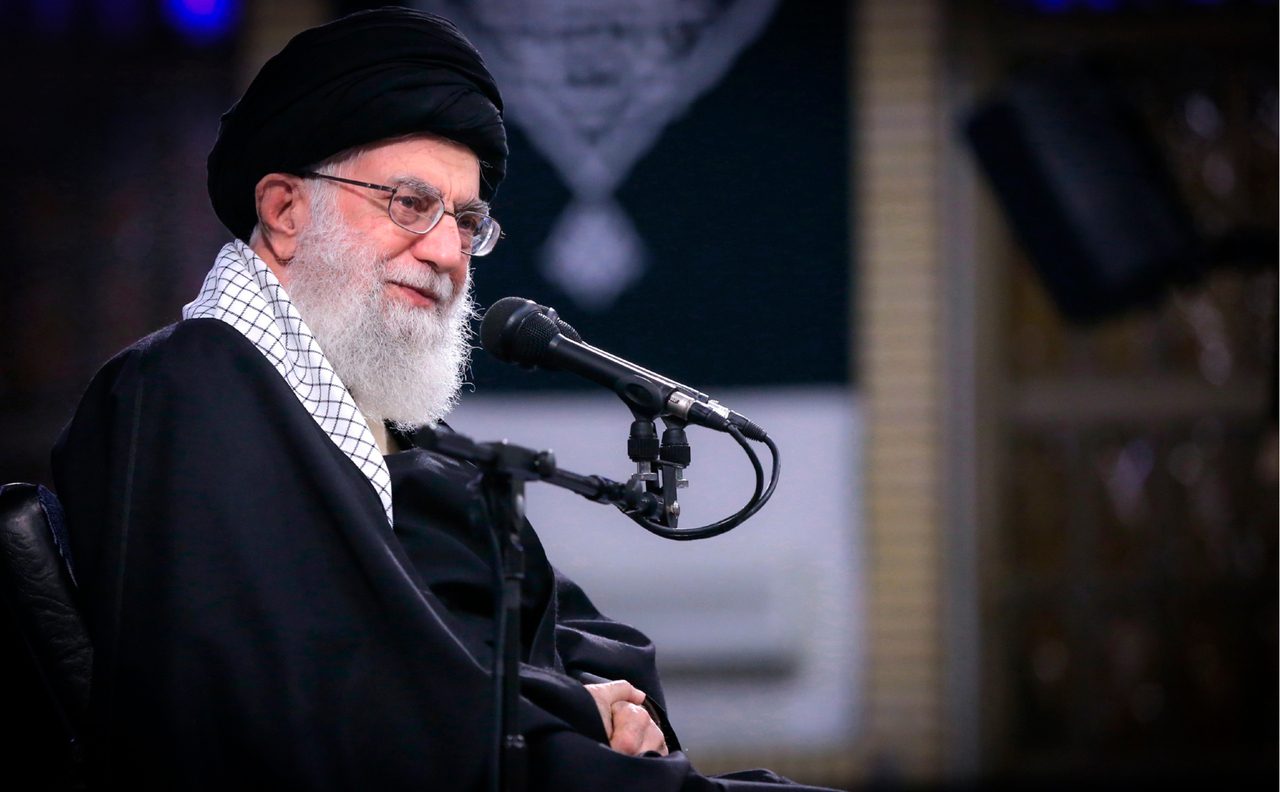
Iranian Foreign Minister Mohammad Javad Zarif wrote on his “Twitter” that “the US committed an act of international terrorism,” calling the Quds Force, which Soleimani commanded, the most effective in fighting the terrorists of “al-Qaeda” and the “Islamic State.”
Will there be “retaliation” from Iran? And does it have the means to respond?
Iran cannot fail to respond. The death of such a high-ranking IRGC officer forces the leadership of the Islamic Republic to act, otherwise they risk losing face. A significant part of the population demands “revenge” for the slain Soleimani, and the security forces in the IRGC themselves cannot simply remain silent and ignore the deliberate killing of their own commander.
Iran does have the capacity to “respond” to the US. Of course, a direct military confrontation remains unlikely, since no one in the region wants a full-scale war. However, Tehran is capable of using its proxies in various countries. Possible variants of Iran's “retaliation” against the United States could be the following:
- Denouncing the 2008 agreement in Iraq and withdrawing the American contingent from that country
- Launching a guerrilla war against American troops stationed in Syria and Iraq
- Escalation of hostilities in Yemen
- Blocking the Strait of Hormuz and stepping up naval maneuvers in the Persian Gulf, followed by the seizure of oil tankers
- Rocket attacks on American military facilities in Syria, Iraq, Saudi Arabia, Kuwait, Bahrain and the UAE
- Cyberattacks on US military infrastructure in the region
- Provoking an uprising in Palestine against Israel
- Undermining US-allied political regimes in Saudi Arabia, Jordan, Kuwait and the Emirates
- Attacks on US embassies and consulates
- Attacks on oil facilities in Saudi Arabia, the UAE and Iraq
And what does all of this have to do with Ukraine?
Nothing. Ukraine cannot influence this situation, since it is not a significant player in the Middle East, neither in terms of trade and economic ties, nor in the context of intercultural exchange, nor at the level of political contacts with local elites. The only thing to remember in Kyiv is that destabilization of the Middle East is not in Ukraine's interest, for the following reasons:
1. Refugees. Growing pressure from the Global South on Europe and Central Asia may echo in Ukraine. It bogs the EU down in its internal squabbles, preventing us from building normal communication with it, and also worsens the security situation in the Mediterranean region, near the borders with Turkey and in South Asia.
2. Security. Destabilization of the Middle East and a possible final exit of Iran from the 2015 nuclear deal would automatically lead to a nuclear arms race in the region. Erosion of the global non-proliferation system for weapons of mass destruction is not in Ukraine's interest, as it is one of the beneficiaries of the current world order and of this very system, however imperfect it may seem.
3. Terrorism. Any chaos is fertile ground for international terrorism and the radicalization of the population. Ukraine does not benefit from the spread of terrorism and extremism from the Middle East, which also threatens our country, although few here know about this or talk about it. Given the weakness of our economy and social institutions, destabilization of an entire region is not the best ecosystem for development.
4. Oil. Destabilization leads to rising oil prices, and we mainly import oil from abroad. Accordingly, rising oil prices are a losing scenario for Ukraine while it remains an importer of energy resources.

Russian Attacks in Dnipropetrovsk Region: Two Killed, Seven Injured

Defense Forces Strike Four Russian Drone Control Points in Past Day, Including in Berdiansk

Britain Threatens Sanctions on Kremlin-Linked People; Poland Ready to Hand Ukraine Ammunition

Russia says it has completed "planned exercises" in the Black Sea

MVD: Fake Riots With Prop Blood Were Being Prepared Near Presidential Office

Law Enforcers Name Another Klitschko Deputy as Suspect

Berlin Holds Protest Against War in Ukraine; EU Prepares for Possible Russian Halt of Gas Supplies
North Korea Fires Ballistic Missile Over Record Distance in Five Years
Irish Fishermen Force Russia to Postpone Naval Drills

US sanctions in case of invasion of Ukraine could completely destroy Russia's economy, NYT reports
