
Bellingcat Investigation into Wagner Fighters: Office of the President Offers No Explanations, Russian FSB Was Unaware of Operation
The text version of the investigation into “Wagnergate” will be released within two weeks.
Bellingcat investigators looking into the disruption of an operation to detain members of the Russian private military company Wagner have not received answers from the Office of the President of Ukraine.
Bellingcat’s chief investigator Christo Grozev told NV in an interview that he believes the Russian FSB was not aware of the operation initiated by Ukraine.
More on what Grozev said about the failure of the operation to detain the “Wagner” fighters.
Silence from the Office of the President
Grozev believes the operation was not “leaked,” but that the Office of the President took “legitimate but mistaken actions” that may have seemed right at the time.
Christo Grozev
chief investigator, BellingcatSo far we have not received an official response (from the OP — ed.), but after several attempts we stopped trying. When we finish the documentary, we will make one more last-minute request for comment.
He insists the biggest mistake was that the Ukrainian authorities did not acknowledge the half-failed operation. “By calling it an operation; by publishing all the calls at once; thousands of minutes of the mercenaries’ confessions — this would have provided an evidentiary basis for many court cases now underway, including in The Hague and Strasbourg,” Grozev said.
In his view, it was possible not to call the operation a failure, but to say: “We did not carry it through to the end, but we gathered enough evidence and information that humiliates the Russian side and its special services, and we are putting it into the public domain.”
Christo Grozev
chief investigator, BellingcatI am encouraged by the fact that they have already acknowledged it: such an operation did take place. Perhaps they do not call it an operation and try to portray it differently, but it happened (Verkhovna Rada temporary investigative commission — ed.).
FSB ignorance
In the interview, Grozev said the most important part of his investigation is demonstrating how humiliating it would have been for Russian special services, rather than the failure on the Ukrainian side.
Christo Grozev
chief investigator, BellingcatFor me, the most important thing would be to show how humiliating this operation was for Russian special services, because it all passed them by; they understood nothing.
He also disputes the Ukrainian government’s version that the operation could not be completed because the FSB knew about it and could have somehow reacted and discredited it at the last stage. “All the data we have gathered contradicts this,” he said.
Christo Grozev
chief investigator, BellingcatThe FSB understood nothing, both after the arrest of these 33 people and after the Belarusian side handed them over to Russia. The Ukrainian side’s belief that the FSB knew is mistaken. The FSB knew nothing.
Other details
Asked why Ukrainian President Volodymyr Zelensky denies that such an operation took place, Grozev suggested he may have been advised to do so.
Christo Grozev
chief investigator, BellingcatMost likely because at the beginning someone advised him to deny it. Now it is impossible to backtrack and not deny it. Often the West, civilized countries, deny carrying out unsuccessful operations. Because one cannot publicly disclose too much information about how operations are conducted; one cannot leak internal information.
He noted that the operation became a failure precisely because the information came into the public domain, so there is no point in continuing to deny it.
“From the first day, one should have said: ‘Yes, we did this, here are the benefits for Ukraine, here is the evidence, we are handing it over to The Hague.’ I would have done it that way. Why did they do the opposite? It seems to me Zelensky received some wrong advice,” Grozev concluded.
Asked when Bellingcat’s detailed investigation would be published, he said the text version is already ready and will be published in about two weeks. On the timing of the two-hour investigative documentary, he said at least another six months are needed to make it. He plans to win an “Oscar” for it.
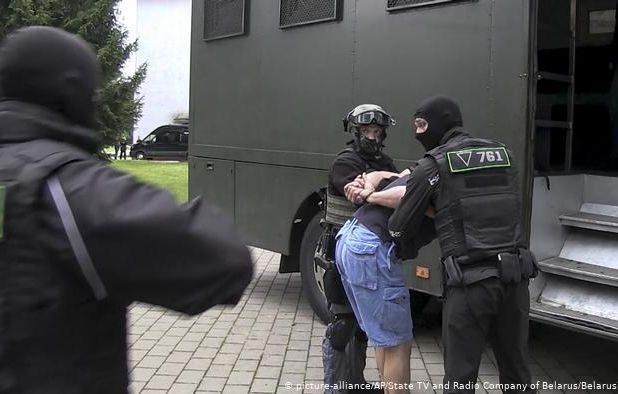
As a reminder, on July 29, 2020, in Belarus 32 Wagner fighters were detained. At the time, Belarusian authorities claimed they had been planning provocations in the country ahead of the presidential election.
After the detention, the Prosecutor General’s Office, as well as the President of Ukraine, asked Belarus for extradition of the detainees, citing their participation in combat operations in Donbas. But instead, Belarus returned the Wagner fighters to Russia.
Later, Russia stated that Ukrainian special services were involved in the case of the fighters. According to preliminary information, the Wagner fighters had been lured to Minsk to be detained by the SBU, but the operation fell apart. There was also information that it was allegedly disrupted by Head of the Office of the President Andriy Yermak, who ordered that the fighters not be detained. The OPU denied everything.
At the same time, the SBU confirmed in court that it had conducted reconnaissance on the “Wagner” fighters right before their detention. Also, one of the heads of the GUR stated that the operation indeed was supposed to take place.
Zelensky stated that the special operation to detain Wagner fighters in Belarus was indeed being prepared, but not by Ukraine, although “other countries tried as hard as they could to ‘drag’ it into this story”.

Russian Attacks in Dnipropetrovsk Region: Two Killed, Seven Injured

Defense Forces Strike Four Russian Drone Control Points in Past Day, Including in Berdiansk

Britain Threatens Sanctions on Kremlin-Linked People; Poland Ready to Hand Ukraine Ammunition

Russia says it has completed "planned exercises" in the Black Sea

MVD: Fake Riots With Prop Blood Were Being Prepared Near Presidential Office

Law Enforcers Name Another Klitschko Deputy as Suspect

Berlin Holds Protest Against War in Ukraine; EU Prepares for Possible Russian Halt of Gas Supplies
North Korea Fires Ballistic Missile Over Record Distance in Five Years
Irish Fishermen Force Russia to Postpone Naval Drills

US sanctions in case of invasion of Ukraine could completely destroy Russia's economy, NYT reports
