
Flight Simulator Lets You Fly Over the Entire Globe (Ukraine Included). How Did They Model the Planet?
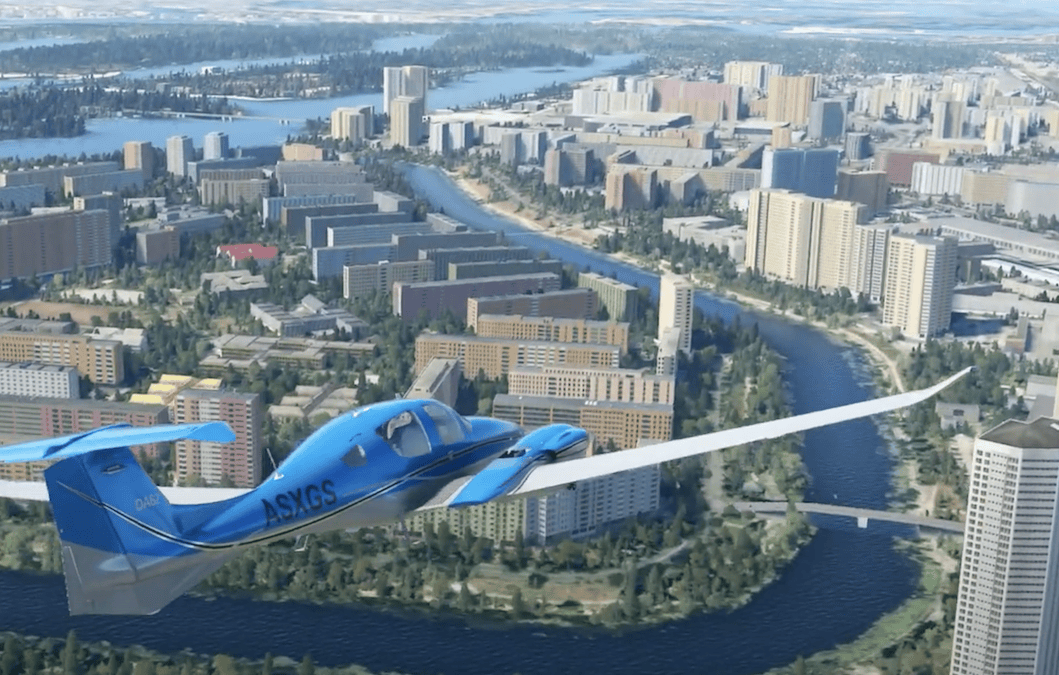
A breakthrough in the gaming industry from Microsoft.
What is Microsoft Flight Simulator?
Even if you don't know, the name makes it easy to guess that this is a flight simulator for airplanes, so far available only on PC. The first version came out back in 1982, long before Microsoft became known around the world thanks to the Windows operating system.
Moreover, before the groundbreaking Windows 95 release, Bill Gates' company released six versions of the game for IBM. The first one looked like this:
The Windows 95 version. It came out in mid-1996 and was already visualized quite decently. Well, compared to the first one.
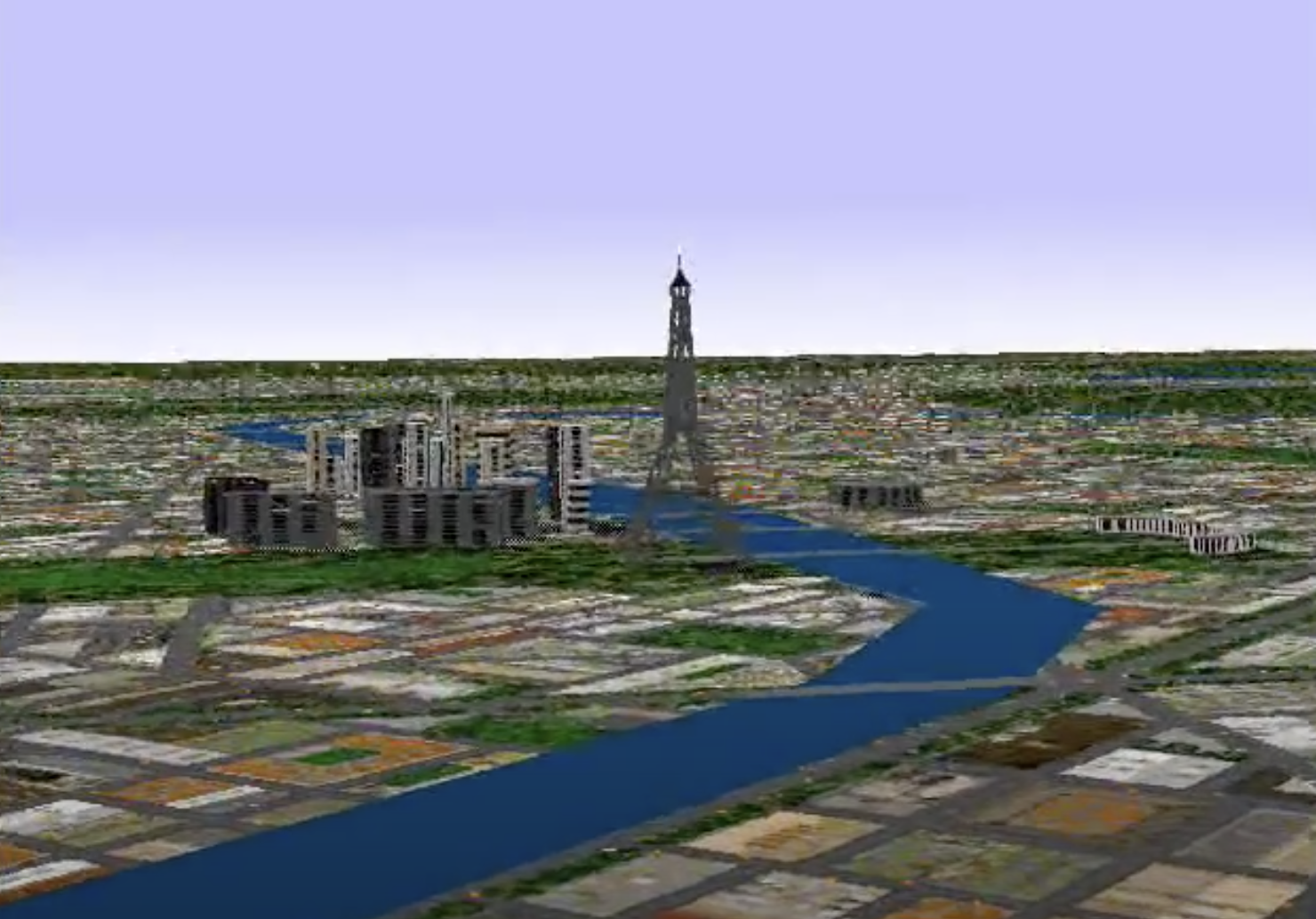
In October 2006, the tenth version of the simulator was released and became very successful: over the next few years Microsoft released successful updates for it. But the attempt to launch a new series in 2012 — Microsoft Flight — was a complete failure and was soon pulled from sale.
Finally, in August 2020 Microsoft made a gigantic breakthrough not only within Flight Simulator, but across the entire gaming industry, by releasing for the first time a game that models the whole world and conveys the feeling of flying in the sky. A complete triumph.
How did they manage to model the planet?
In late September, the Engadget.com website reported on this in detail.
The task was to give players the ability to fly anywhere on the planet with realistic topography and accurate 3D models of objects, even in the densest cities in the world. This cannot be done by manually creating every object.
Microsoft and developers at Asobo Studio managed to do this thanks to large-scale data processing using the Microsoft Azure AI service.
Through machine learning, satellite photos from the Bing Maps map service (for users it is overshadowed by Google Maps and Apple Maps) totaling 2.5 petabytes (1 petabyte = 1024 terabytes) were processed. Bing Maps data covers the entire planet, but there was little of it, because it exists only in 2D.
After an attempt to turn them into a 3D version of Seattle, Flight Simulator franchise head Jorg Neumann turned to Azure with a request to develop a machine learning method to transform the entire planet Earth into a giant 3D model. And they succeeded.
"The mission was to make the planet as close to reality as possible," — Neumann said. As a result, Microsoft Flight Simulator strives to model with maximum accuracy not only buildings but also trees and grass.
But modeling the world map is not the only thing integration with Azure and machine learning is used for. Algorithms from Microsoft's division can model the weather in real time, and the AI Speed Generation technology conveys the voices of "air traffic controllers" so realistically that it seems Microsoft hired actors for the voice-overs, which is not the case at all.
So, does everything work without bugs?
No, the technology has become groundbreaking, but it is not yet perfect. Artificial intelligence sometimes draws a 212-story tower in Melbourne that does not exist there. And Bing Maps does not allow textures of Ukrainian cities to be created on its basis as well as, for example, New York was made.
Microsoft promises to make every effort to fix problems in the algorithm and plans to release updates every two months that will detail individual regions as much as possible. In late September, the first such update for Japan came out.
And what does Ukraine look like there?
At a certain altitude, Kyiv itself looks very, very realistic. Of course, the lower the plane descends, the less accurate and blurrier the textures become, unlike American cities. As mentioned above, this depends on the quality of the detail in the source data from Bing Maps.
You can see what Kyiv looks like in several reviews on YouTube. For example, here:
Can the whole game be downloaded to a hard drive?
Not the whole game, of course. Only the basic base of 90 gigabytes needs to be downloaded. The remaining petabytes of information are streamed in real time from cloud services (and deleted when no longer needed), where computing operations are also performed.
Cloud gaming is the future. Google's Stadia, which allows playing without consoles and regardless of PC capabilities (as long as there is a good internet connection and a sufficient graphics card), is not yet perfect and not available to everyone, but it is already entirely real.
Where to play and how much does it cost?
Microsoft is betting only on its own platforms, so the simulator will be released only on Windows and Xbox. PlayStation owners should not count on the game in the foreseeable future.
The price listed on Steam is far from the highest: from 1500 UAH.
For Xbox, this will be a debut. Previously, releases were only for Windows.
How is the game planned to be developed further?
Even now the game's capabilities seem simply incredible — from terrain modeling, very accurate in some regions, to real-time weather modeling. But the creators are not going to stop and are considering using satellite data to display forest fires or wind turbulence.
"Yes, we may have this data, but how do we use it? How can we convey this to people? This whole stack fascinates me. This is only the beginning," — said Jorg Neumann.
Evgeny Blazhko

Russian Attacks in Dnipropetrovsk Region: Two Killed, Seven Injured

Defense Forces Strike Four Russian Drone Control Points in Past Day, Including in Berdiansk

Britain Threatens Sanctions on Kremlin-Linked People; Poland Ready to Hand Ukraine Ammunition

Russia says it has completed "planned exercises" in the Black Sea

MVD: Fake Riots With Prop Blood Were Being Prepared Near Presidential Office

Law Enforcers Name Another Klitschko Deputy as Suspect

Berlin Holds Protest Against War in Ukraine; EU Prepares for Possible Russian Halt of Gas Supplies
North Korea Fires Ballistic Missile Over Record Distance in Five Years
Irish Fishermen Force Russia to Postpone Naval Drills

US sanctions in case of invasion of Ukraine could completely destroy Russia's economy, NYT reports
