
Hague Trial Opens in MH17 Crash Case. Key Points
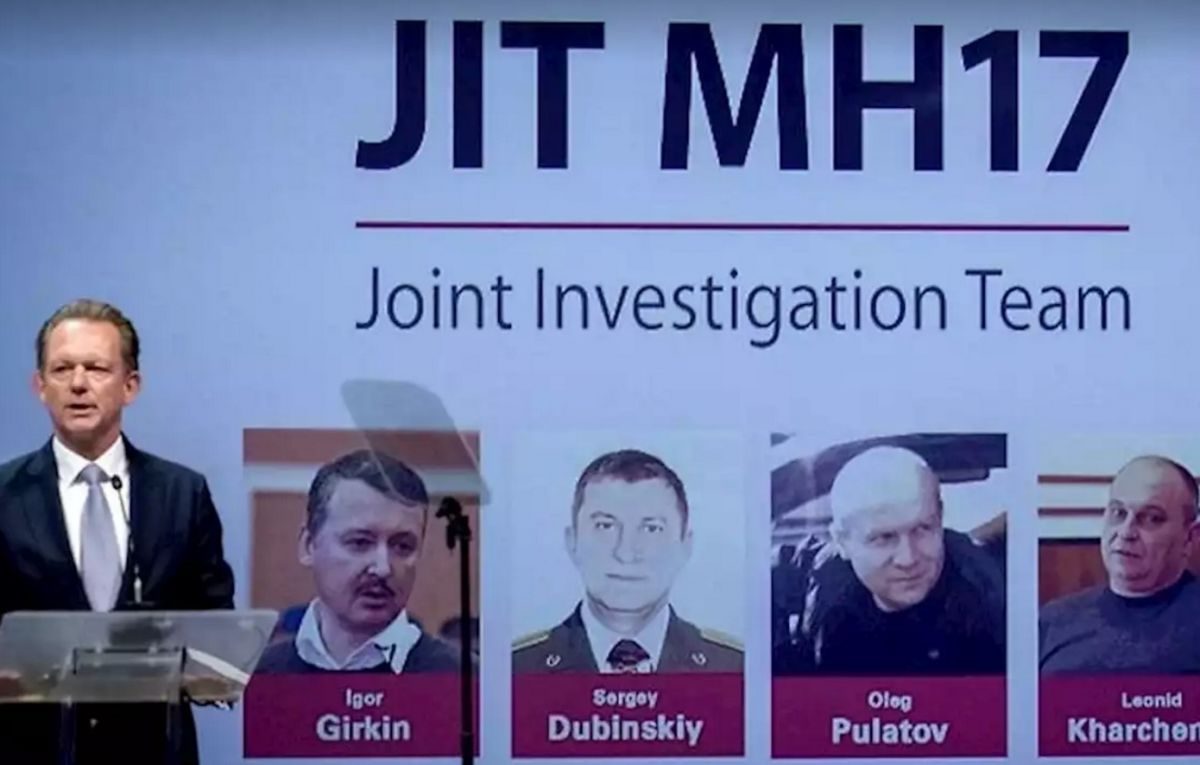
The Hague District Court has begun hearing the case of the Malaysia Airlines Boeing 777 shot down over Donbas in July 2014.
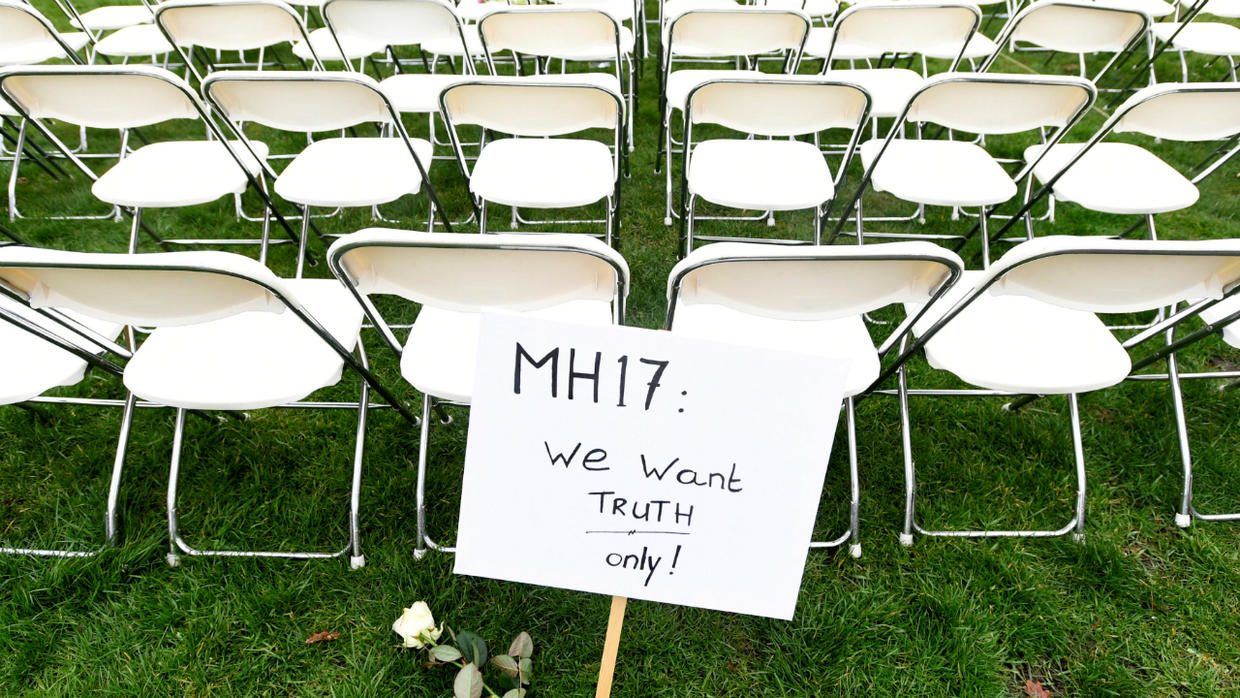
On Monday, March 9, a trial by the Hague District Court over the crash of flight MH17, which was flying from Amsterdam to Kuala Lumpur but was shot down over Donetsk Region along the way, began at the court complex near Schiphol Airport in the Amsterdam suburbs. The Joint Investigation Team (JIT) concluded that the aircraft, which had 298 people on board, was shot down by a missile fired from a Buk surface-to-air missile system.
In June 2019, the JIT charged Igor Girkin, Sergey Dubinsky, Oleg Pulatov and Leonid Kharchenko in the case. However, as expected, none of the accused attended the hearings, although the prosecutor reported that summonses had been sent to all four. Dubinsky, having received a summons in a Russian court, declared his innocence, and Pulatov holds the same position — he is the only one of the accused whose interests are represented in court.
As for Girkin and Kharchenko, attempts were made to contact them by phone, social media and email, but all to no avail. Judge Hendrik Steenhuis, in the presence of more than a hundred journalists, had no choice but to remind everyone that the defendants in such a case would be tried in absentia.
After the names of all the victims were read out and a brief pause was observed, the Dutch prosecution began presenting the results of the investigation, based on 35,000 pages of materials. They stated their readiness to bring charges against the suspects on two counts: shooting down the aircraft and the murder of 298 passengers and crew members.
Prosecutor Ward Ferdinandusse said the investigation was “extremely complicated” because the site of the tragedy is “in an area of active armed conflict.” He also added that Russia had actively obstructed the investigation, which was already complicated by the need to account for the risks faced by witnesses “who live in territory of lawlessness.”
The investigation examined four versions of what happened, but after studying all the evidence, the versions involving an explosion on board, an attack by a fighter jet and a missile strike by the Ukrainian armed forces were ruled out during the probe. The question of whether Ukraine should have closed its airspace, as the prosecutor stated, “is outside the scope of this trial”.
Ferdinandusse also added that the investigation does not stop with the start of court hearings, and the investigative team is now focusing on finding the members of the Buk crew involved in the attack and the commanders, including those in the Russian Federation. However, no other charges in the case are currently planned.
What the JIT investigative team concluded
The aircraft flying as flight MH17 was shot down by a surface-to-air missile fired from a Buk launcher belonging to the 53rd Brigade of the Russian Air Defense Forces. At least two surface-to-air missile launchers were sent to Ukraine, but one of them — the one whose transport, according to the Bellingcat investigative group, was handled by GRU officer Oleg Ivannikov — did not reach the territory of the so-called DPR due to a breakdown.
According to the investigation, many people took part in the transportation, protection and missile strike from another launcher, also brought to Ukraine from Russian territory, but not all participants in these processes have been identified, and some of them are already considered dead.
Notably, the prosecution has not decided whether to bring to trial the case of Vladimir Tsemakh, who in July 2014 served in the same armed group as the four accused. The investigation did not find enough evidence to charge Tsemakh, who was captured during a special operation in the occupied part of Donbas and later handed over to Russia in a prisoner exchange.
The prosecution also failed to find the necessary amount of evidence against the commander of the four accused, Igor Bezler. This is despite the existence of audio recordings published by the SBU of negotiations between Bezler and GRU Colonel Vasily Geranin, in which the former reports to the latter on the shooting down of the aircraft.
After a group of lawyers representing the victims' relatives, who are also participating in the ECHR claim against Russia, was presented in court, Judge Steenhuis closed the session. Hearings will resume on March 10 at 10:00 local time. The trial is expected to last about six months: due to the large volume of materials, sessions are scheduled until autumn 2020.
Based on materials from BBC, Hraty, Deutsche Welle and Radio Svoboda

Russian Attacks in Dnipropetrovsk Region: Two Killed, Seven Injured

Defense Forces Strike Four Russian Drone Control Points in Past Day, Including in Berdiansk

Britain Threatens Sanctions on Kremlin-Linked People; Poland Ready to Hand Ukraine Ammunition

Russia says it has completed "planned exercises" in the Black Sea

MVD: Fake Riots With Prop Blood Were Being Prepared Near Presidential Office

Law Enforcers Name Another Klitschko Deputy as Suspect

Berlin Holds Protest Against War in Ukraine; EU Prepares for Possible Russian Halt of Gas Supplies
North Korea Fires Ballistic Missile Over Record Distance in Five Years
Irish Fishermen Force Russia to Postpone Naval Drills

US sanctions in case of invasion of Ukraine could completely destroy Russia's economy, NYT reports
