
Iran Fires at US Military Bases. Why Didn't the US Respond? Will There Be a War? Who Benefits from This Conflict?
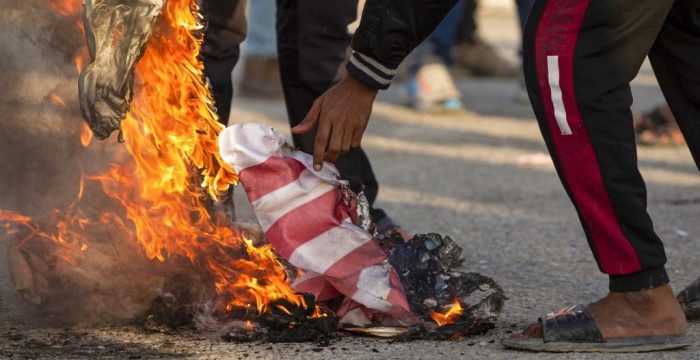
Another escalation in the Middle East between the US and Iran has drawn the attention of the whole world. Perhaps for the first time in a long while, one state has carried out a direct, official attack on US military facilities, thereby pushing the situation to the brink of a regional conflict. Now that the dust has settled, let's look at what happened on the fateful night of January 8, now that we have more complete information.
What happened and why?
On the night of January 7 to 8, at 01:20, Iranian missile units based at bases on the western outskirts of the city of Kermanshah fired between 15 and 35 short-range Fateh-113 missiles toward neighboring Iraq. Two targets were hit: the US Ain al-Asad Air Base in the western Iraqi province of Anbar, and a US base near the city of Erbil in the north, in Iraqi Kurdistan. Most of the missiles were launched at the first target, and only five at the second, one of which did not explode. The attack ended at 2:15 a.m.
It is still unclear exactly how many missiles were fired and how many hit their targets. The US reported 15 missiles fired by Iran, while the Iraqi military command cited 22 missiles, whereas Iranian media quickly reported “dozens of missiles.”
The time and place of the attack were not chosen by chance. It was from the Ain al-Asad base that the American MQ-9 Reaper drone took off, which on January 3 carried out an air strike on Baghdad Airport, killing senior Iranian General Qasem Soleimani.
«Ain al-Asad» — the largest US and International Coalition air base on Iraqi territory. It was established in 2004, following the overthrow of Saddam Hussein as a result of the US invasion of Iraq. The base is located in the Sunni province of Anbar in western Iraq, 160 km from Baghdad. During the Iraq War of 2003–2011, the base was used as an important logistics and transport hub, allowing fuel, supplies and food to be delivered almost anywhere. A huge base, it had all sorts of facilities that let military personnel feel comfortable: a movie theater, a swimming pool, a recovery and psychological support center, and so on. Famous American film and music stars often visited, as well as top politicians.
Moreover, 01:20 is the time of Soleimani's death. In fact, all these missile attacks on US military bases were Iran's response to the general's killing; the operation was called “Martyr Soleimani.” Right after the missile salvo ended, the Iranians finally buried Soleimani, placing his remains in a special coffin in the ground in his hometown of Kerman, as a sign that “sacred revenge” had been achieved.
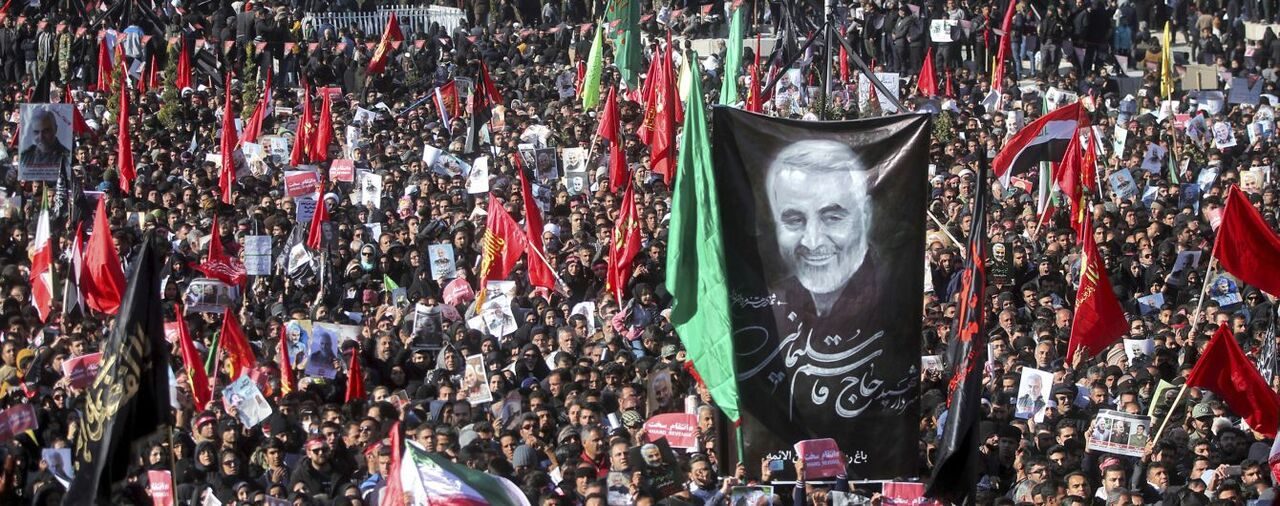
Why did the US kill the Iranian general?
Qasem Soleimani was considered by the US to be responsible for numerous sabotage and terrorist operations aimed at American forces in the Middle East over the past 20 years. In particular, according to the US, Soleimani coordinated the activities of pro-Iranian, predominantly Shiite forces in Syria, Iraq and Lebanon. The general made a significant contribution to building Iran's intelligence and political-organizational networks in many Middle Eastern countries: the Hezbollah movement in Lebanon, Shiite paramilitary brigades in Iraq, pro-government military militias in Syria, and armed anti-Israeli groups in Palestine. Naturally, with such active anti-American activity, Soleimani quickly became an enemy of the United States, which even designated him a terrorist.
Soleimani commanded the Quds Force special brigades within the structure of Iran's Islamic Revolutionary Guard Corps (IRGC), the body responsible for special operations abroad. In other words, General Soleimani was in a sense the head of one of Iran's intelligence services, similar to those operating in various other countries around the world. And between warring states, such people are primary targets.
Furthermore, the US believed that Soleimani's death could weaken Iran and demonstrate its vulnerability and weakness, thereby prompting the population to revolt, which the US would support. Finally, the ideological confidence of the American leadership in the need to escalate the conflict with Iran as the only right way to solve the “Iran problem” also played a role. And one should not dismiss the US president's desire to boost his own electoral ratings ahead of the presidential election in November of this year.
Why is there a conflict between Iran and the US at all? How long has it been going on?
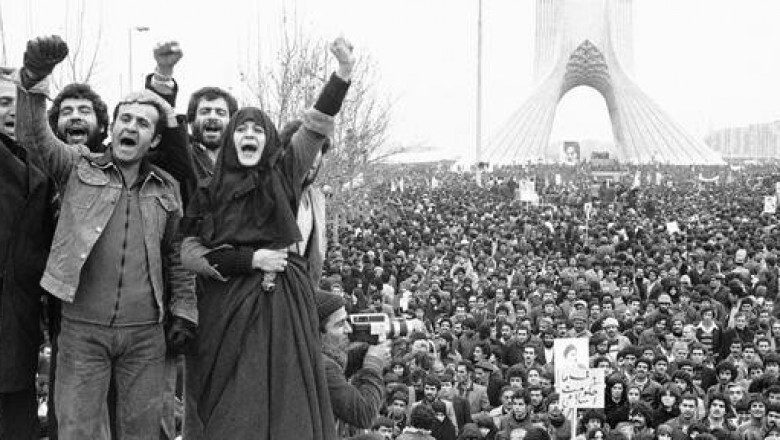
It dates back to 1979. That year, as a result of the Islamic Revolution, anti-Western nationalist elites came to power in Iran, overthrowing the pro-American government of Shah Reza Pahlavi. In response, the US immediately imposed sanctions on Iran, and in the war between Iran and Iraq that broke out a year later, it supported the latter by supplying weapons, armored vehicles, ammunition and even chemical weapons. This laid the foundation for the further conflict between Iran and the US after the end of the war in 1988.
An additional irritant in US-Iran relations became the regional ambitions of the Islamic Republic. The Iranians have never hidden their desire to extend their influence in the region, take control of the main transport and logistics hubs, and build their own energy infrastructure for selling oil and gas. These ambitions came into conflict with the interests of the US and its allies (Israel, Saudi Arabia, the Emirates, Saddam's Iraq), which led to the start of a long regional confrontation.
Finally, Iran's missile and nuclear program, launched back in the 1960s with US participation (when the Shah's Iran was still a US ally), completely soured relations between Washington and Tehran. Iran's rapid development of nuclear weapons and buildup of its missile arsenal prompted the US to impose sanctions on Iran, demanding that it give up its missiles and the production of an atomic bomb. Iran refused for a long time and lived under sanctions for decades, continuing to develop its nuclear arsenal. In 2015, international negotiators (the US, Russia, China, France, Britain and Germany) persuaded Iran to sign an international agreement under whose terms Iran would abandon its nuclear program, while in return international sanctions against it would be lifted.
However, when US President Donald Trump, a critic of the 2015 “nuclear deal,” came to power, he decided to unilaterally withdraw from the agreement and reinstate sanctions against Iran. Tehran considered this a “scam” by the Americans, concluding that all their guarantees and promises were worthless, and after a year of waiting it decided to shed some of the restrictions imposed by the agreement, gradually returning to the development of nuclear weapons. Europe and the other signatories did not support the US, condemned its withdrawal from the agreement, and to this day have called for preserving the deal at any cost. Starting in 2017, when Trump came to power, pressure on Iran gradually increased, which inflamed the situation in the region and sharpened the confrontation between Iranians and Americans in various countries.
Why was Iraq specifically chosen for the attacks?
For a long time, Iraq was a country on whose territory the US and Iran settled their relations. Because of its geographic proximity to Iran and its geostrategic position on the Arabian Peninsula, control over Iraq became an important geopolitical goal for many interested parties. The US could not allow the spread of ideologies and concepts of Iran's revolutionary leaders after 1979, which it viewed as “hostile.” And Iran could not allow the United States and its allies (primarily Saudi Arabia and Turkey) to establish long-term influence over Baghdad, especially after the devastating Iran-Iraq War of 1980–1988 for Iran.
After the US invasion of Iraq in 2003 and the overthrow of Saddam Hussein, Iran's influence increased many times over. The US, having failed in its attempts to build a democratic state on the Western model in the country, did not want to share power with Iran. In response, Tehran began supporting numerous Shiite paramilitary brigades, which launched a guerrilla war against American troops. The rise of international terrorism and the emergence of the “Islamic State” in 2013 put the US-Iranian confrontation on pause. Former enemies became allies for a time in the fight against IS. After the militants went deep underground, Iran and the US again began settling their relations, which only worsened after the US withdrew from the nuclear agreement in May 2018 and introduced new anti-Iranian sanctions.
Iraq remains one of the main arenas of the Iran-US proxy conflict in the Middle East. Both American and pro-Iranian forces are present here. US military bases located in remote areas of western and northwestern Iraq are an easy target for attacks. And a significant part of Iraq's political elite has nothing against Iran and holds far from the best feelings toward the United States. Therefore, it is not surprising that Iran decided to attack precisely here: it is easy, accessible, demonstrative and traditional.
Were there any casualties from the attack? And why didn't the US respond?
After the strikes, each side launched its own information narrative. Iran claimed that dozens of American soldiers were killed and wounded and a large amount of military equipment was destroyed. For its part, the US first reported that among those affected by the strikes were “exclusively Iraqis.” However, it later went further, stating that there were no casualties at all, which President Donald Trump later confirmed. Local Iraqi sources refuted information about the deaths or injuries of Iraqi citizens, but did not report whether there were any American casualties. It is impossible to verify the information on site, since the Americans do not let anyone onto the territory of the Ain al-Asad base, not even Iraqi military personnel who were stationed there.
The minimal losses from the missile salvo may be explained by the fact that Iran warned the US of the upcoming strikes, using several communication channels – through Iraq, Qatar and Russia. This allowed the Americans to withdraw part of their troops and take precautionary measures. Some time later, the Iranians themselves admitted that they had not been aiming precisely, and in general the goal of the strikes was to destroy military equipment, not to kill soldiers.
Most likely, some indirect understanding was reached between Iran and the US through intermediaries, which allowed them to exit the crisis, save face, and avoid unnecessary losses and an escalation to the point of war. Iran successfully avenged the death of its general, thereby calming the population and showing its “strength.” And the US lost no one, and was able to claim that it had repelled all attacks.
For precisely this reason, US President Donald Trump unexpectedly reacted with restraint, posting on his Twitter account “all is well!” Later, in his speech the day after the strikes, he took an unusually conciliatory and restrained tone, inviting Iran to new peace talks “without preconditions,” and also expressing a desire for dialogue with Tehran on its nuclear program. And Iranian Foreign Minister Mohammad Javad Zarif noted that “we are not seeking war and do not want escalation,” stressing that the missile strikes were a response to one specific action – the liquidation of General Soleimani – and nothing more.
So there will be no war between the countries?
Not exactly. Judging by everything, the sides have taken a pause, hit the brakes and temporarily lowered the level of tension in the region. Donald Trump was persuaded not to respond to Iran's missile strikes with military force, so as not to provoke truly large-scale attacks by the Iranians. However, this truce will not last long.
The problems underlying the US-Iran conflict have not disappeared anywhere. After the strikes, Trump strengthened sanctions against Tehran and again demanded that it unilaterally give up nuclear weapons. Iran rejected the US proposal for negotiations and continued to threaten the US if it does not lift the sanctions. All this means that de-escalation between the two countries will be only short-term, and the proxy war between them will continue.
The main focus of the US-Iran confrontation in the near future will be Iraq. A battle is brewing there over the withdrawal of American troops from the country. Last week, Iraq's parliament voted on this, and the government in Baghdad officially asked the Americans to leave the country. The US refuses to do so and is even making plans to expand its military infrastructure. Iran will do everything it can to expel American forces from Iraq by the end of the year, thereby strengthening its presence in the country. This means the conflict between them is far from over.
Who benefited from the attacks?
The escalation benefited international oil-producing companies, since it led to a rise in world oil prices. This increases oil producers' revenues from exporting oil abroad. This applies to companies in Saudi Arabia, Britain, the US, Russia, France and Canada.
Arms corporations also profit. In particular, conflict always generates demand for weapons. After Iran's strikes, shares of the American arms company Lockheed Martin rose, and Iraq resumed negotiations on purchasing Russian S-300 air defense systems after a long pause. In addition, Iran's missile strikes on Iraq may lead to a surge in interest among local countries in buying the latest missile defense systems. This particularly applies to states vulnerable to missile strikes from Iran – Saudi Arabia, the UAE, Bahrain, Qatar, Kuwait and even Oman.
Another beneficiary was the “Islamic State” terrorists in Iraq. In response to the missile strikes, militants openly rejoiced in their online media and welcomed the conflict between the two countries, which they equally hate. IS hopes that in the event of a large-scale conflict between Iran and the US, the sides will weaken each other and give the militants a chance to revive and seize control of Baghdad. Moreover, the killing of such well-known anti-IS figures in the region as Soleimani (who coordinated pro-Iranian forces against IS terrorists in 2014–2018) only weakens the Iraqi Shiite brigades, which are today the most combat-capable in the country.
Finally, the strikes strengthen the positions of radicals in both the US and Iran. Anti-Iranian radical neoconservative Republicans have long promoted the idea of a forceful solution to the “Iran question” as the most acceptable. For them, the strikes mean strengthening their arguments in favor of escalation and regime change in Tehran. In turn, in Iran itself, amid the escalation with the US, the positions and popularity of conservative circles and security hardliners have strengthened; for years they criticized Iran's reformist-moderate forces (headed by President Hassan Rouhani) for weakness, pliancy and readiness to make concessions. For them, the 2015 “nuclear deal” was a manifestation of Iran's weakness and short-sightedness, so Trump's withdrawal from the agreement became a second wind for them. The strikes have further strengthened their control over the government, especially after Soleimani's killing.

Russian Attacks in Dnipropetrovsk Region: Two Killed, Seven Injured

Defense Forces Strike Four Russian Drone Control Points in Past Day, Including in Berdiansk

Britain Threatens Sanctions on Kremlin-Linked People; Poland Ready to Hand Ukraine Ammunition

Russia says it has completed "planned exercises" in the Black Sea

MVD: Fake Riots With Prop Blood Were Being Prepared Near Presidential Office

Law Enforcers Name Another Klitschko Deputy as Suspect

Berlin Holds Protest Against War in Ukraine; EU Prepares for Possible Russian Halt of Gas Supplies
North Korea Fires Ballistic Missile Over Record Distance in Five Years
Irish Fishermen Force Russia to Postpone Naval Drills

US sanctions in case of invasion of Ukraine could completely destroy Russia's economy, NYT reports
