
Go_A Soloist Kateryna Pavlenko: I See Everything That Happens as an Opportunity
She also believes that if a person tries to speak Ukrainian, it should earn respect, and that person should be supported.
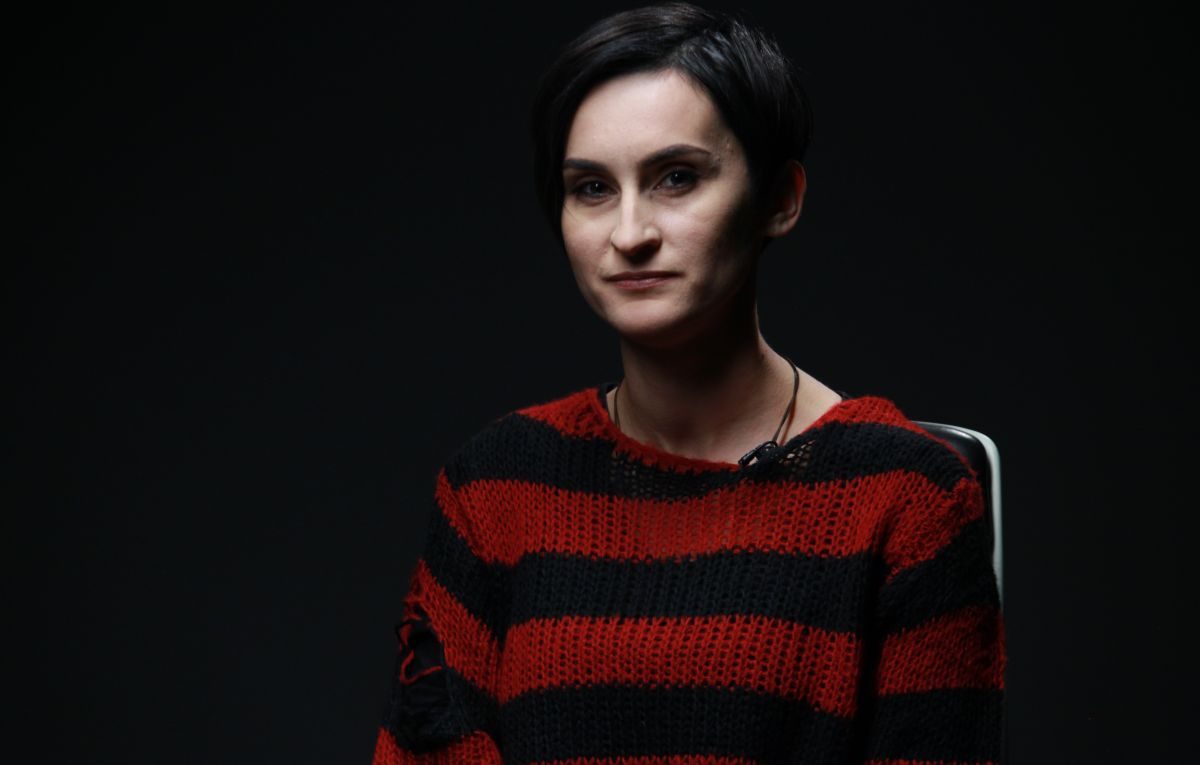
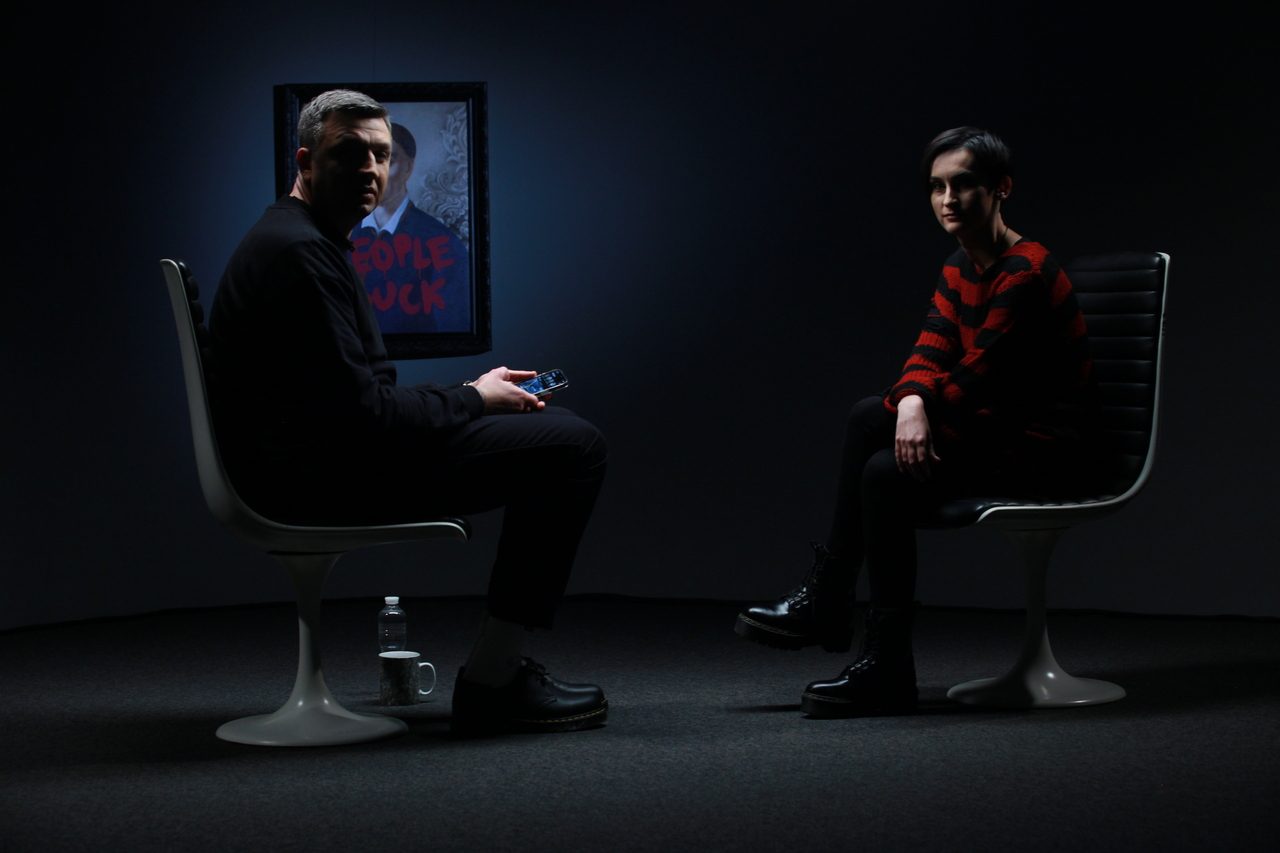
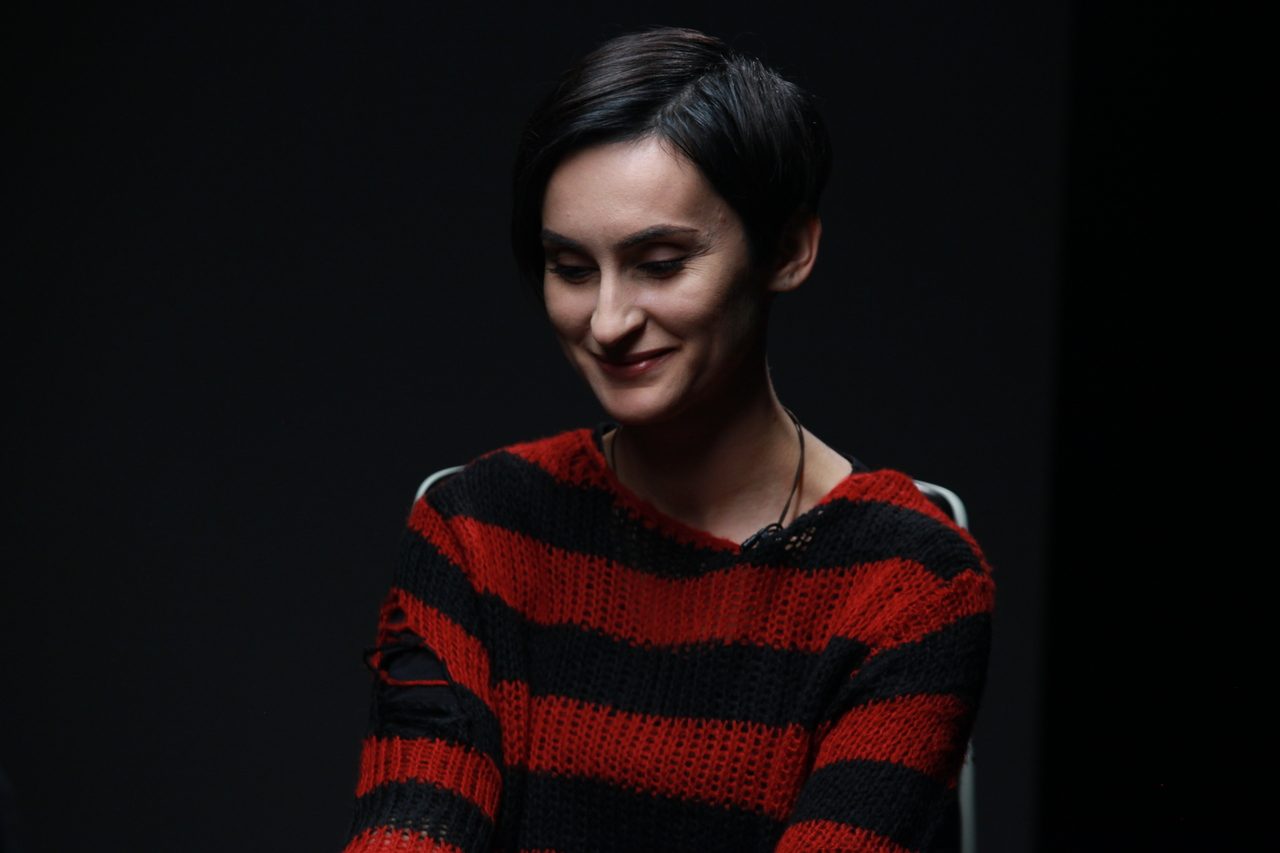
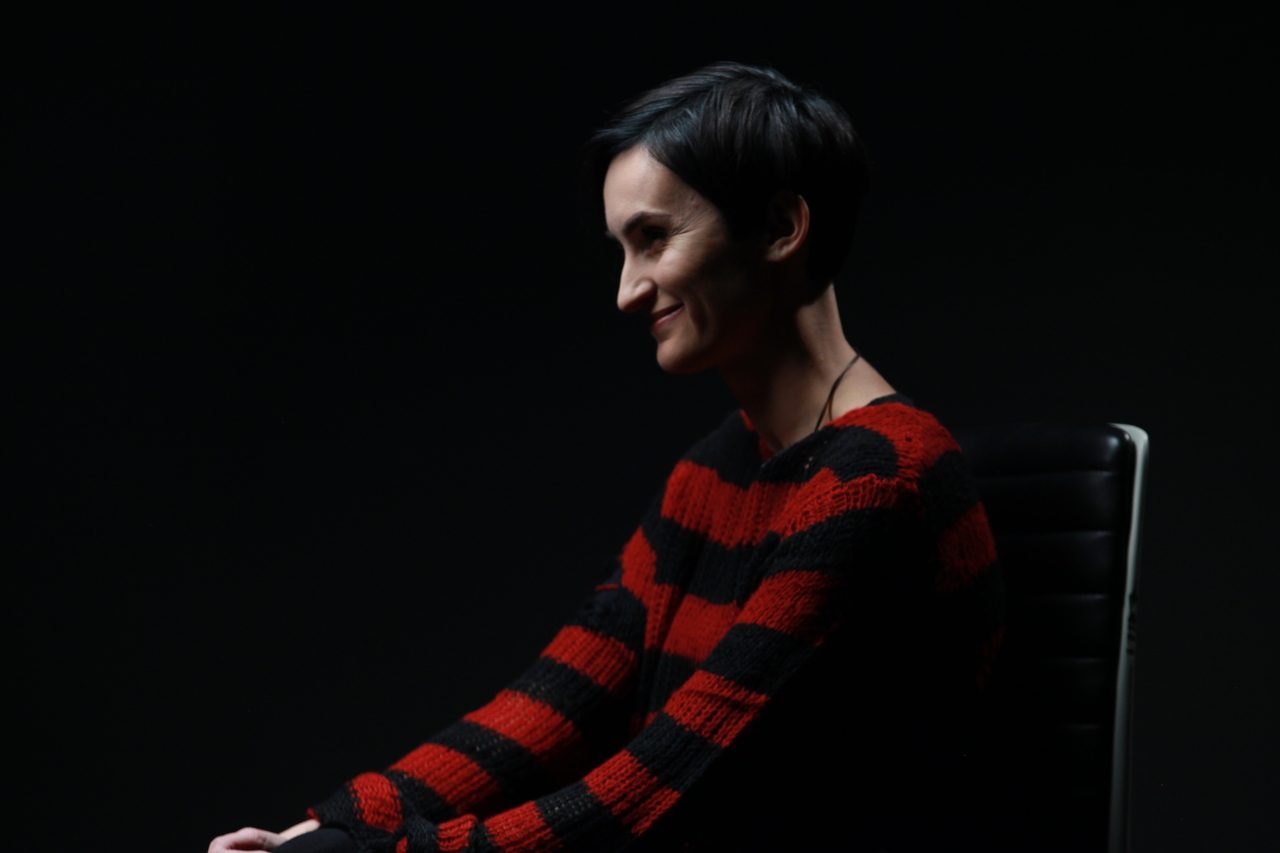
In a new episode of the program “Antypody” on Iceland TV channel, Ukrainian singer, folklorist, composer, songwriter and lead vocalist of Go_A Kateryna Pavlenko talked about her childhood in Nizhyn, promoting the Ukrainian language and solidarity, haters, trends and Eurovision.
There is a theory that this “morning glory” effect, when a person wakes up famous, has killed far more artists than heroin and alcohol combined. You are 32 years old, right?
33.
33. That is quite a mature age for an artist. Right?
Uh-huh.
Not counting veterans of the stage. That is, you gained fame at an age when dizziness from success is less likely, or not as striking, not as brutal. Anyway, does this sudden fame make your head spin, or do you not perceive it as sudden?
I don't perceive this fame as fame. I perceive everything that is happening as an opportunity.
So it is just the result of your work, and that's all?
Mine, and of the people who took part in it. You see, if it had fallen on my head out of nowhere, if someone bought a song for me, wrote the music for me, shot a video, told me how to smile on camera, told me what to do on stage, how to sing, set my voice, did all of this and even gave me money for it, like, here, go on, become a star, then maybe I would have gotten dizzy.
I don't know. I can only judge by myself. I don't know how it is for other people. I walked this path from the very beginning. And I know how all of this is achieved, so I think it would be pointless of me to treat it as some crazy success and fame. That is, fame is the last thing I think about when I do something in this life.
Are you an anxious person?
No.
Does anything at all worry you?
Well, some global things may worry me.
And in this country?
Of course they worry me.
What processes or what people?
Well, recently I took part in the play “Crimea, 5 AM”. And when I started reading the script, I realized that all of this is happening right now, in our country, to people who live in our time. And very many people don't even suspect that there are people who get 15 years in prison just for writing something on Facebook or just filming some violations on their phone, which they were simply trying to record, how other people violate the rights of others.
And they get 15 years, 20 years, life. And there are people who are caught in corruption schemes that are destroying our state, and they get house arrest. And then they wait until it all disappears from the information space, and then they quietly let them go.
Who in our country got 15 years?
Well, if you are interested in the topic of Crimean Tatars.
Ah, you mean in the occupied territory.
Yes. And of course, this disturbs me. A lot of processes disturb me. But you can simply throw a fit and scream that there is betrayal all around and that life is troubling, and pass it through yourself… I do pass it through myself, really. But now I am trying to pass it through myself a bit differently.
Because it is one thing to sit down, grab your head in your hands and scream that everything is lost, and another thing to pull yourself together and think about what you can fix in this situation, how you can be useful in changing something. And for that you need calm.
I read that you grew up in poverty, in destitution, well, at least that's how the media portray it. I read all those stories about how there was no glass in your house, the windows were sealed up, all of that.
I thought, at least with you I wouldn't have to talk about it.
And I don't want to talk about it either. I have a different question: who do you consider to be to blame for this?
No one.
It just happened?
I can't blame people for their worldview having formed in such a way that they considered what was happening to be normal.
You don't have to blame people, you can blame society, the state, whatever, or God.
And why? What's the point? What would that change? You know, when I do something in my life, I ask myself short questions: “For what?” Like, you do something. Today I'm thinking, should I wear these earrings to the interview. I put them on, look at myself and think: “So what? Is it necessary? These earrings. For what?”
No, well, you can go pretty far with that.
I'm talking about everyday, small things. And if we talk about global things, and especially about society, then of course you can blame it for not paying attention to me. Well, yes, I don't live in this world alone. Maybe they paid attention to someone else. I can't make people pay attention to things that are important to me.
I agree with you. That's healthy pragmatism, and I like it. I even try to cultivate and nurture it in myself in every way. Tell me about the city you grew up in. What kind of city is it?
Nizhyn. Nizhyn is the ideal city where a creative personality can grow up. There are very many of them there.
Why?
Because there is everything for you to develop. There are music schools, there is beautiful nature. Well, now something strange is happening there, they're cutting down chestnut trees in the city center, laying tiles somewhere. You know, the processes that happen in every provincial town when decentralization gives cities the ability to manage their own budgets. Something is being done.
You know, it's strange there. I wanted to rebel against some situations. Then I thought: “For what?” In the comments people write things like “everything is cool, well done, mayor, doing everything great, at least something is being done.” Nizhyn is the kind of city where nothing has been done for so long. There are just historic buildings, they took them and put plastic windows in, and made some shops and slot machines, and by now they've already closed some of them.
A barbaric attitude toward historic sites. There is a handful of people trying to preserve all of it. That is what Nizhyn is like now. I remember my uncle. He was also an activist, he tried to save the river there, they held some exhibitions there. The Nizhyn Fair is very famous for us, and from childhood my memory of the Nizhyn Fair is that there was an exhibition of artists there.
For me, this Nizhyn Fair was associated with an artists' exhibition. I always went there with my uncle. I guarded paintings there, talked with other artists, it was a cool hangout once a year. And Nizhyn is also associated for me with great concerts. There were quite powerful creative groups there. There was a children's choreography school, and a choir at the music school.
So the creative elite was present there. Yes. And now everything has turned into a fair where they set up tents selling shashlik. Some star whom everyone has forgotten gets invited. Or some aunties stand there and sing Russian songs to playback. That is the last thing that was there. A child could be born there and grow up creatively. Especially when I lived there, there was a rock studio at the school.
So there were all the conditions for a child to choose some creative path and develop in it. The only question is that when a child finishes choreography school, they need to do something further. And you have to take and simply leave from there. Because there is nothing more to do there.
What color dominates your childhood memories?
Green.
Green as the color of spring, in that sense?
More like summer. Or, you know, May. When the leaves are greenest. Not yet faded, just unfurled, but already enough.
What language did your family speak?
Nizhyn surzhyk.
Surzhyk? In what proportions of Russian and Ukrainian?
It's quite Russian, but also quite Ukrainian. That is, there's “elektrichki” with that softening; “hurky” is our word, Nizhyn hurky.
And what language do you speak?
Recently I was asked what language I think in. Of course, I still think in Nizhyn surzhyk.
Prokhasko once asked his readers what language you dream in.
Yes, in my dreams, somehow I don't remember what language. Dreams are a slightly different dimension. Dreams are the place where you don't need to put phenomena into words. Something just happens.
Have you ever come across people, or perhaps felt, how Ukrainian speakers in Ukraine feel, as one of the heroes of this program put it, like they're in a language ghetto?
Have you never wondered why, say, in Kyiv, Ukrainian, which is becoming more and more common, I have to state, and there are even relevant studies, is mostly the language of saleswomen and domestic workers? Very, very, very rarely taxi drivers. Tire fitters. No? You didn't notice this?
I come across a lot of Ukrainian-speaking taxi drivers. As for myself, the last time I felt that kind of pressure was in childhood, when my younger cousin and I decided to speak Ukrainian. And I remember there were some questions. In Nizhyn, if you're cool, you speak Russian, and if not very cool, you speak Nizhyn surzhyk. And everyone tried to speak Russian.
My older brother went to Poltava and brought us CDs from there: “Okean Elzy”, “Druha Rika”, “Faktychno Sami”, “Dymna Sumish”. We listened to them and thought: “Oh, cool.” He started speaking Ukrainian, although he finished a Russian-language school in Nizhyn. And I remember that my brother and I were also like: “Oh, great!” For us, the older brother was simply an authority. He would never advise anything bad.
And we started speaking Ukrainian. And I remember everyone looked at us like, “Why?” We only spoke Ukrainian at school, during lessons. And like: “Well, okay.” But we went around and it was a blast for us. We stood out from everyone.
And I remember getting on a trolleybus in Chernihiv and starting to speak Ukrainian, and someone behind me said “Bandera” or something like that. In Chernihiv. At first I didn't even understand what the joke was, and I probably didn't even know who Bandera was back then. Our history was taught a bit differently at that time.
Well, if we take what we call show business. This whole pop-music crowd. Is it mostly Russian-speaking or Ukrainian-speaking? Based on your personal experience.
Russian-speaking. I'm saying perhaps an unpopular thing, perhaps the thing we'd all like to close our eyes to and believe doesn't exist, but when the cameras switch off, very rarely do people remain Ukrainian-speaking. Very rarely. Even if you come in and the whole film crew speaks Ukrainian, you speak Ukrainian, and everyone speaks Ukrainian. And it happens very quickly. No one even notices.
I had such a situation. I once worked on a big talk show, and two ministers clashed on air. One was Russian-speaking, the other a Galician, accordingly Ukrainian-speaking. And they were squabbling there, threatening each other: I'll take you to court, I'll file a complaint against you.
As soon as the commercial break was announced, the Ukrainian-speaking minister approached the Russian-speaking former minister, by then, and said: “No, come on, what are you starting, let's go smoke.” This once again proves that in various spheres connected with public activity, unfortunately, it works exactly like that.
But it very often happens that a person starts speaking Ukrainian with me, and I see that they are trying. Well, while ministers go smoke after arguing in front of the cameras, there are also people who don't understand that ministers are ministers, they can show us any picture they like, but first of all we need to remain human.
And I think that if a person tries to speak Ukrainian, it should earn respect, and that person should be supported. Just as the Ukrainian language itself should be supported. It's just that a lot of people start mocking and laughing at it. And that is the problem. When people start competing over who is more Ukrainian. Especially in the comments. Well, nobody says it to your face.
And it's very sad, because a person is already trying to learn Ukrainian, and then runs into such aggression. I understand very well people who now find it hard to switch to Ukrainian. Now I am learning English, and I know a lot of words. I can read books in English. But I can't speak it.
It's difficult for me, because neural connections also have to form for the language itself to take shape in you. So I think these people simply need to be supported. Well, those who want to. There are many aggressive people. You know, the world works that way, information works so that when something bad happens, everyone notices it and starts focusing on it. And when something good happens, sometimes people are not able to notice it.
You said “nobody says it to your face, so they say it in the comments.” What is this phenomenon about in general, and what does it say about people, in your opinion?
I have many times come across situations where I see people on the internet being very brash and writing quite belligerently. Then I meet them in life, and I realize they are extremely insecure people. And because they are insecure, probably about themselves, they have to direct their aggression somewhere.
In fact, it's not another person who irritates them. They are simply trying to compensate for their dissatisfaction with themselves. And that is a very big problem. When you go into the comments and read them, you can diagnose everyone without being a psychologist.
What or who is the greatest threat to Ukraine?
However sad it sounds, and maybe now all sorts of things will be flung at me. But I think it's Ukrainians themselves. Of course, we have an external enemy, a very serious one. Very serious and very uncompromising. And the more I observe him, it seems, the more I understand that basically he is just some kind of “bespredelshchik”, a lawless thug, to whom everything is indifferent.
Ukrainians now hate each other very much. And this weakens us significantly before the enemy. That is, we have an enemy, and we also have one inside us. You understand, when there is a family, and in the family they support one another, then even if a child goes to school and someone there tries to offend them, they come home and know they have support, and they will all solve this problem together.
Mom will tell her that everything is fine, dad will tell her what to do in this situation, what to answer next time, and somehow they will solve this situation together. If the child goes to school, is told something there, and comes into the family, but in the family they also quarrel with each other, then it simply destroys everything around.
We need to pull ourselves together. Because if you even analyze our history: most of our great defeats and most of the events that shaped the course of history happened because we were not able to agree among ourselves.
Unfortunately, unfortunately. Do you hate anyone?
No.
No such anthropological hatred toward anyone?
No. I'm already 33 years old, and I have met a great many different people along my path. And it's very hard for me to hate anyone now.
Have you ever wanted to kill someone? Hypothetically. I'm not talking about preparing to commit a specific crime.
No. That never happened. When the thought arises that I wish someone harm, I start having internal dialogues and educational work with myself. I think that's abnormal.
Even at the Eurovision selection stage, due to the pandemic, you twice found yourself in this information time crunch, right at the selection stage, you faced a real wave, even waves of hate. In everyday life there is an opinion that creative people are very vulnerable. How did you cope with this?
I love it when there are waves at sea, you can catch them and enjoy them. How did I cope with it? Not at all. It passed me by. Sometimes some things reached me, when journalists called and asked for comments. But at that moment I already understood what I wanted.
When you know who you are, when you understand, when you have no doubts that you are doing something right, then basically hate doesn't affect you, because you know who you are. I don't depend on the opinions of the people around me. And if a person thinks badly of me, well, I know I'm not like that. That is their problem. It shouldn't concern me.
When your colleagues on the music scene joined these waves of hate, speaking very generally, Taras Topolia, for example, spoke quite aggressively. I recently saw that Ivo Bobul, Honored Artist, said that you are nobody and your name is nothing. Does that affect you somehow?
Well, Topolia... Well, I read his post. He just didn't figure it out at that moment, apparently.
And afterwards? Did you make up?
Well, he did make new posts this year and wrote that we're cool. And regarding Ivo Bobul, then…
A bit of a bitter aftertaste remained?
A bitter aftertaste? No.
Did you like Bobul at some point?
I really liked the song “And the Linden Trees Are Blooming”. I listened to it on the radio in childhood and liked the song. I listened to the radio station “Promin”.
Now make a proper cover, one that absolutely blows it away.
For what?
Just for fun. Well, you like the song, why not do it.
Well, look. If Ivo Bobul thinks I'm nobody and my name is nothing, then fine. I don't claim anything in principle. I don't walk around saying I'm a star. He himself came up to me and said I was a princess. First he said I was a princess, then he said I was nobody. Well, okay. I smiled and went to make myself a coffee.
By the way, this thesis about creative people, about their vulnerability, about some extraordinary abnormal sensitivity. Can you confirm or refute it?
I am very sentimental, very vulnerable, but this doesn't apply to hate. It depends on where you direct your focus of attention. I am vulnerable about some things; I pass a lot through myself, especially before. I pass many things through myself, sometimes things that don't concern me at all, and sometimes I write songs when emotions run high. And that is such a creative process.

Russian Attacks in Dnipropetrovsk Region: Two Killed, Seven Injured

Defense Forces Strike Four Russian Drone Control Points in Past Day, Including in Berdiansk

Britain Threatens Sanctions on Kremlin-Linked People; Poland Ready to Hand Ukraine Ammunition

Russia says it has completed "planned exercises" in the Black Sea

MVD: Fake Riots With Prop Blood Were Being Prepared Near Presidential Office

Law Enforcers Name Another Klitschko Deputy as Suspect

Berlin Holds Protest Against War in Ukraine; EU Prepares for Possible Russian Halt of Gas Supplies
North Korea Fires Ballistic Missile Over Record Distance in Five Years
Irish Fishermen Force Russia to Postpone Naval Drills

US sanctions in case of invasion of Ukraine could completely destroy Russia's economy, NYT reports
