
WITHOUT LIMITS: For 20-30 years we didn't want to help the state, but now we want the state to help us
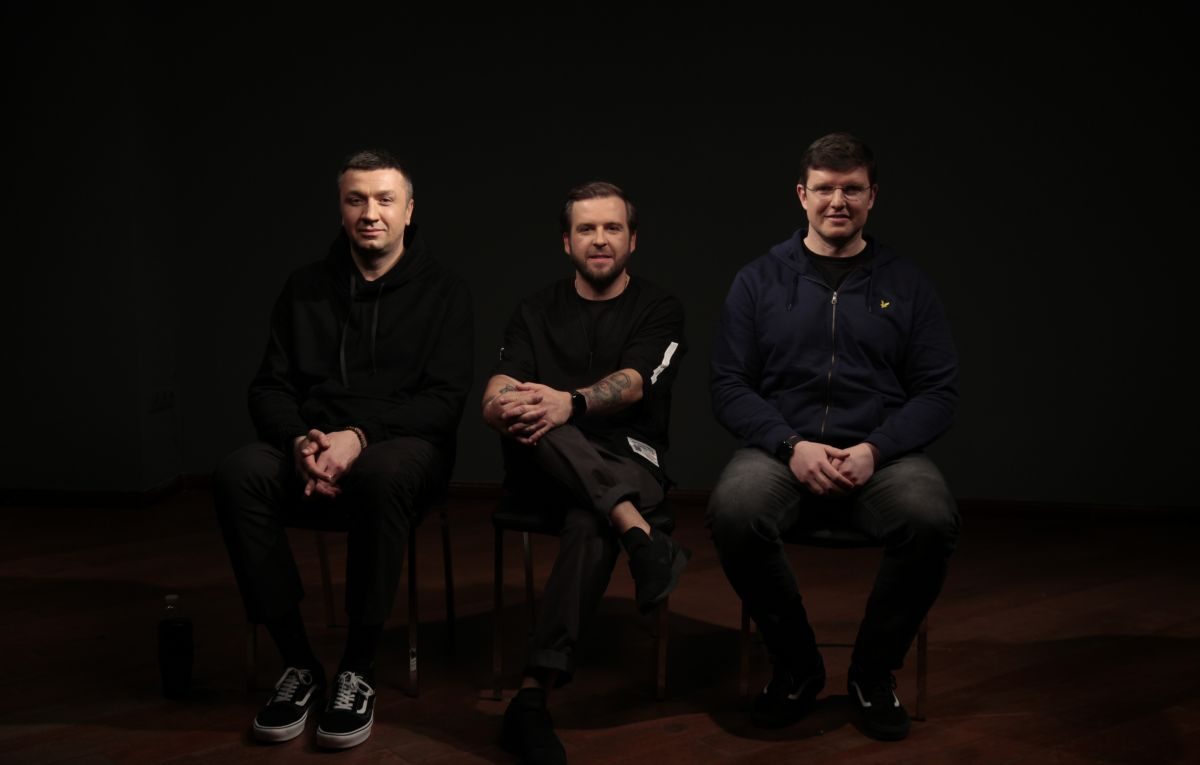
Band members noted that they did not vote for Zelensky.
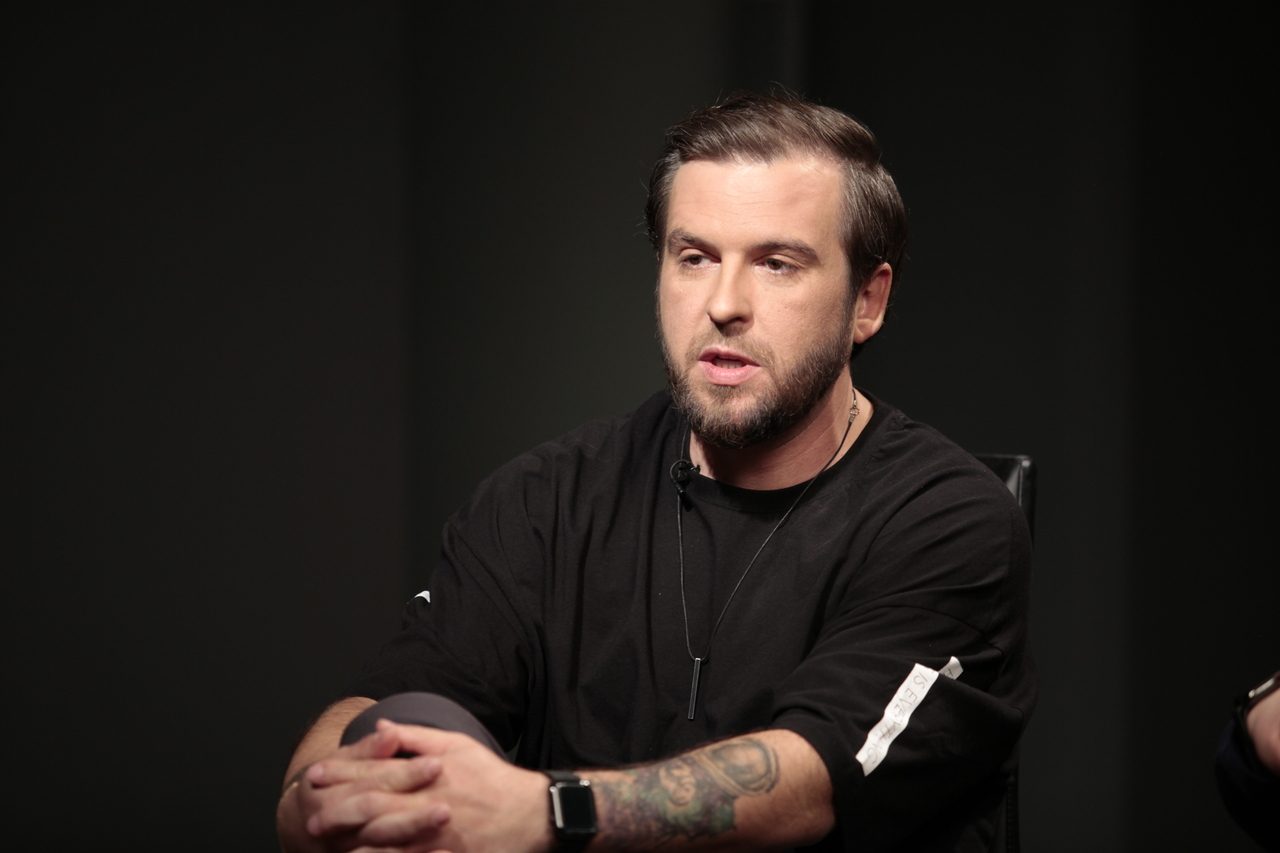
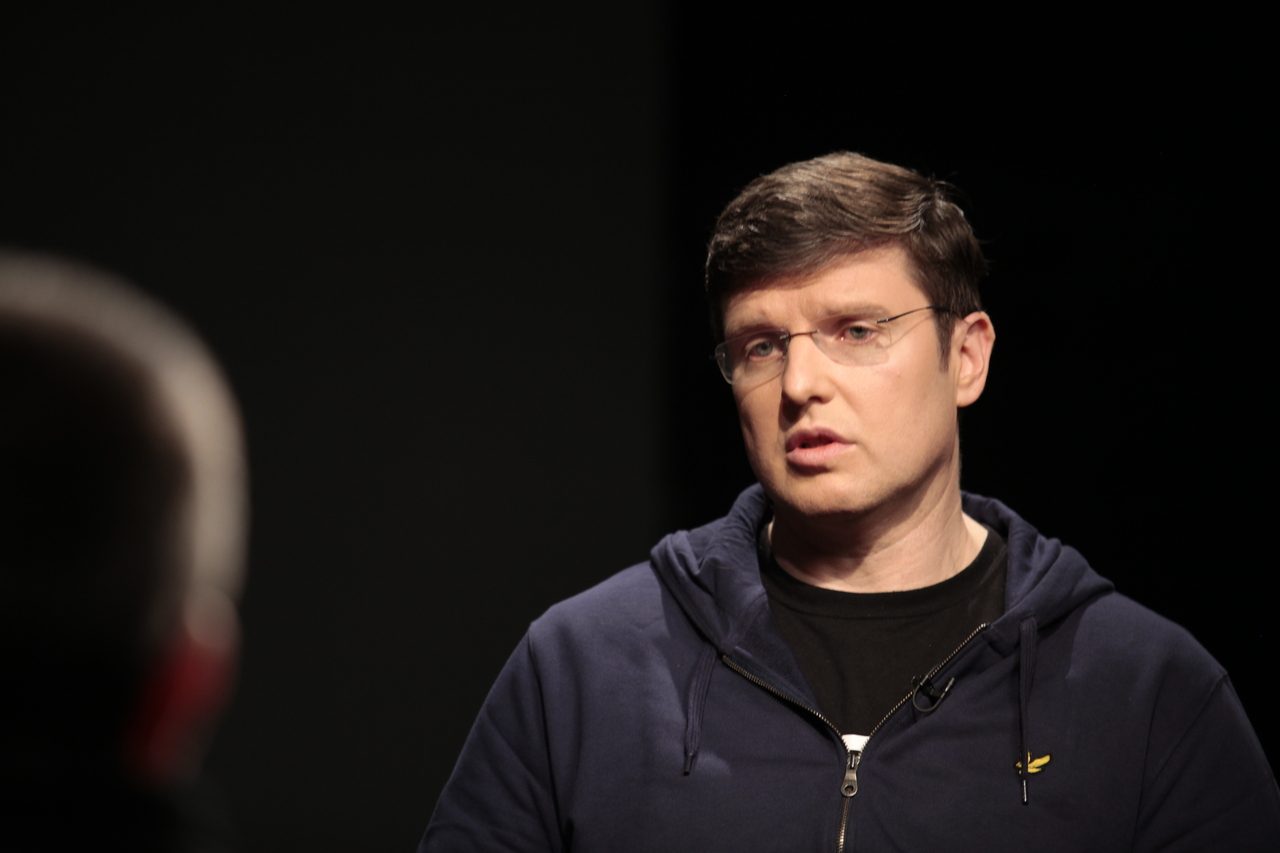
In a new episode of the Antypody program on the Island TV channel, Without Limits band leader Serhiy Tankhynets and team producer Oleh Khodachuk spoke about their acquaintance with Zelensky, Rifmaister, quotas for Ukrainian-language content and the impact of quarantine.
Do you know Zelensky?
Khodachuk: I know Zelensky.
For a long time?
Khodachuk: I know Zelensky. I haven't communicated with him since he announced that he was running in the presidential campaign.
Is that some kind of matter of principle, or was there simply no opportunity?
Khodachuk: Right now it is a matter of principle. I know him because of the cartoon we have just finished filming. We communicated with Volodymyr Oleksandrovych, and he is really a very talented manager, and the way he handled it. I saw how everything there is arranged. After he announced that he was running for president, I had no studio sessions with him, and I actually managed the cartoon myself, with the people who stayed there.
Wikipedia writes that one of the beneficiaries of your project Without Limits was Maksym Tkachenko, who is, it seems, the director of Kvartal Kontsert, one of the business conglomerate 95 Kvartal. And then, when he became a deputy, he transferred his share to someone else, as far as I understand. Am I right that in fact part of your project belongs to 95 Kvartal? No?
Tankhynets: So far, yes, but he became a deputy and he doesn't take any legal part in the project.
Khodachuk: I will take responsibility for this, I will explain, because it was basically my initiative. Again, it was 2017. That was long before Volodymyr Oleksandrovych even thought about running for president. I had already started working on the cartoon with him. And I realized that when I received an offer from Serhiy to become the producer of the Without Limits project, who else do I know in show business besides Serhiy, and whom I am now working with on the cartoon? Volodymyr Oleksandrovych Zelensky.
Of course I immediately called him and asked for a meeting and advice, so that he could suggest how to help me build this team. He said that he had the agency Kvartal Kontsert, which organizes concerts. I already had a plan at that time to do a large number of concerts. And at the start, Kvartal Kontsert helped us a lot to organize these concerts. That's the whole story.
Tankhynets: And then the presidential election took place. We are, so to speak, engaged in music, and they are engaged in politics.
Did you vote for Zelensky in the presidential election?
Tankhynets: No.
Khodachuk: I did not vote for Zelensky.
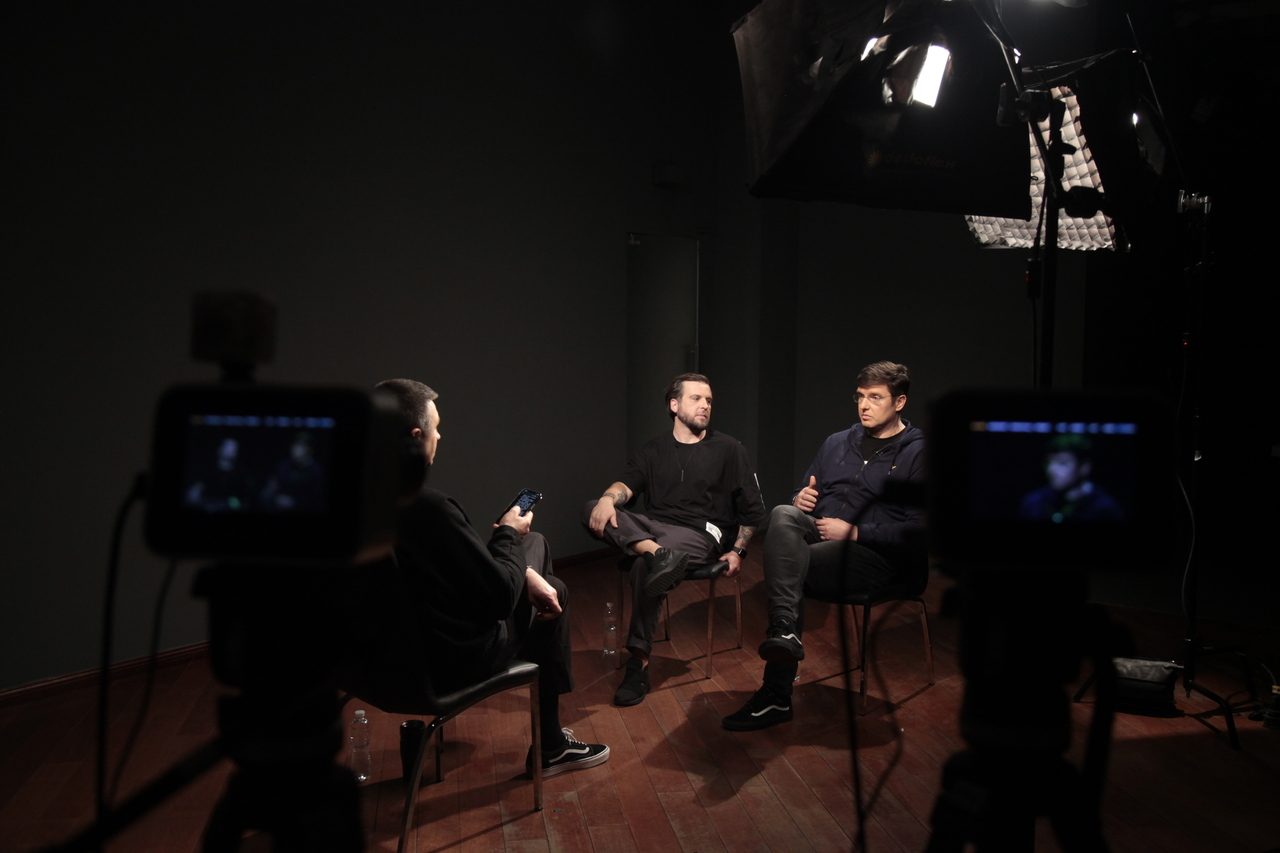
I saw you take part in the public discussion of Rif's case. Rifmaister, who is now behind bars on charges of murdering journalist Pavlo Sheremet. And your message was that you don't believe it, that you consider it arbitrary. Why don't you believe it? Do you know Rif?
Tankhynets: We have met several times, somewhere at music parties. Somewhere just shortly before his detention we also crossed paths on business. I can't call him my close friend, but I know he is a show business person, we crossed paths, somewhere we had a drink together. So we are friends.
And that is enough for me, this knowledge of Antonenko is enough to form in my head, adding to these impressions from meeting him, what I saw in the investigators' evidence. Clearly it is not him in those video frames, and putting all of this together, it seems to me that it is not him. We see a different person.
If there were, so to speak, one hundred percent evidence of his involvement, I think this investigation would have been completed long ago, a court verdict would have come within two or three months, and we would already know the truth. Such a long time, 550 days, and nobody says anything, nothing happens, and this, it seems to me, is also proof that they don't know how to get out of this situation.
I can simply say why I don't believe it. I am partly familiar with the case materials, I interviewed the lawyer, I interviewed Yulia Kuzmenko, who is also charged in this case, and I was at the off-record briefing the police arranged for a certain circle of journalists.
And when I asked questions of the head of the investigative department, the head of criminal police, and Deputy Minister Heraschenko, they gave answers. And I, as a former prosecutor, know how to ask these kinds of questions and know where the dog is usually buried when a case is being fabricated. And this is exactly what my confidence is based on. And I am curious what other people's confidence is based on. And do you believe?
Khodachuk: Of course not. My confidence is based on the fact that if a person has been sitting behind bars for almost two years and does not pose any danger to society, and I am sure a lot of people with authority in this country have signed as guarantors that he will not flee and will cooperate with the investigation, and after two years there is no real evidence. Listen, how can one believe him? Well, explain to me, what sane person could believe this.
I simply don't understand how people who are accused of committing deliberate murder by planting explosives in a car in the center of the capital can be out of jail? I mean, if you release them, you don't have evidence. If the court releases them, you don't have evidence. This is formal logic, this is Occam's razor.
Tankhynets: My logic is as follows. Change the preventive measure, let the person go to his family, and then go on with your investigation. Because he has been sitting behind bars for 550 days without charges.
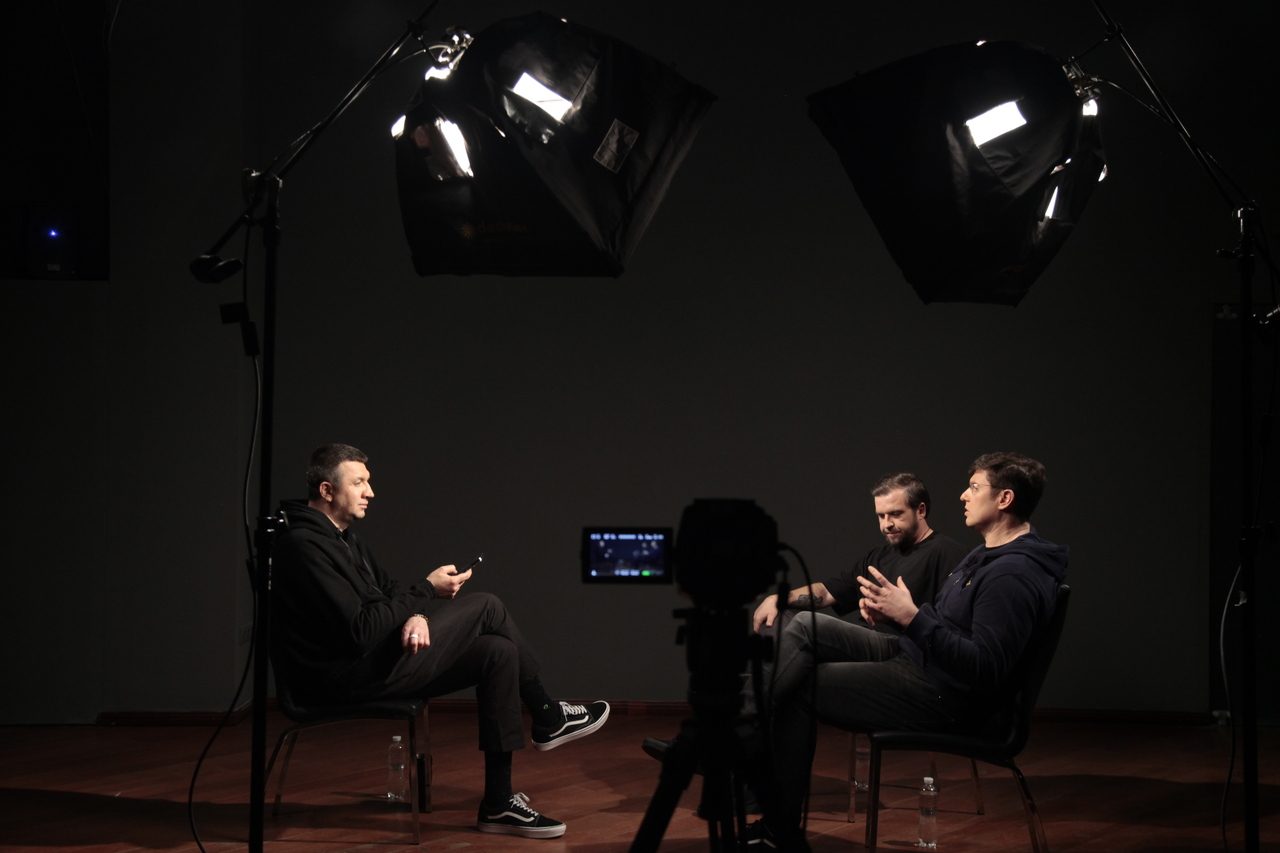
What is the government doing wrong?
Tankhynets: No idea. Well, what do all of us not like? We don't like the war, right?
I may not like the rain, but I don't know how to influence it. And we cannot influence the war. Because we were attacked, aggression is directed at us. If we were attacking, then one could go out into the streets in the country, as they did in the United States during Vietnam. But we did not attack anyone.
Of course I don't like it, I don't want my friends, acquaintances and simply fellow countrymen to die, but we cannot influence this. I mean, everyone has some remarks about the authorities. Perhaps in business, perhaps in the field of culture, perhaps in humanitarian or some other policy. We have a lot of experts in the field of international diplomacy.
Khodachuk: I really don't like the total corruption at many levels of government. As a person who deals with many different processes in business and in the economy, I simply see it. And this kind of chaos: every petty tsar in his place thinks he can squeeze something out of you. This is true in many things. It exists from the bottom to the top right now. I don't like many economic decisions. More precisely, the absence of them.
I don't like it when the government reports on its economic achievements by saying that it borrowed another 10-12 billion today at an auction selling domestic government bonds at 12%. Moreover, the day before, the National Bank issued refinancing of 10 billion to banks under these same bonds at 6%. I don't like such decisions. I understand where this leads from an economic point of view. To the absence of lending, to the crowding out of investment. Any economist will tell you this.
I don't like things in international policy. There are enough of these things. There are also right things. But they simply are not done to the end. The right things were about the land market. We supposedly launched it, and somehow so clumsily and foolishly that we will see where all this leads in the final mode. This is such an economic block. A separate program could be filmed about this, Serhiy.
About the economic block?
Khodachuk: About what I don't like in the government.
This is the first program with a creative team in which the abbreviation OVDP was mentioned. I was waiting all along for the financier in you to kick in.
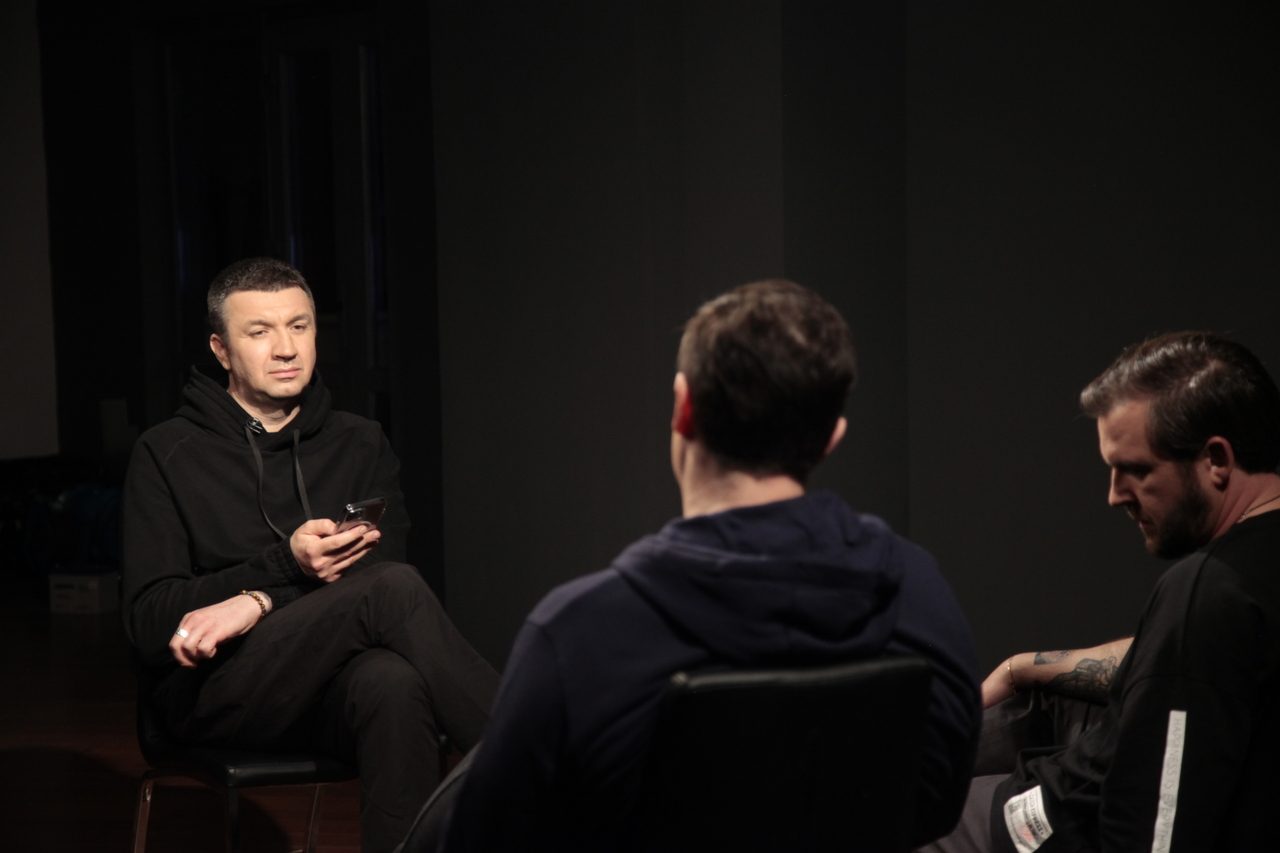
Do you follow new Ukrainian music at all?
Tankhynets: Frankly speaking, I mostly get music through the radio. When I'm somewhere on the road and there is no radio, then I use some of my playlists in iTunes. I listen to the radio Stylish with the New Year and music with taste, that's my favorite, and several Ukrainian radio stations that promote specifically Ukrainian music.
And stations that play a lot of hit music. And there is a lot there, thanks both to the work of artists and to program directors of radio stations, and to quotas, a lot of Ukrainian music that is worth attention. And there is almost none of the kind that isn't worth attention. Everything has changed literally over the last three years, and it is extremely cool.
So the quotas are working?
Tankhynets: Yes. I call them life-giving quotas. They provide a huge service for people, for musicians and for those who consume this music.
In your opinion, should the quotas be specifically for Ukrainian-language content, or could we somehow put English and Ukrainian side by side in this respect? No? Or is it better to promote Ukrainian-language content?
Tankhynets: Ukrainian-language. When we get there, in some time, we will have a lot of extremely high-quality Ukrainian-language content, and then we will need to learn English at a higher level than now. So it is possible to switch on some other languages there, not specifically English.
Khodachuk: Actually, Serhiy, you raised a very cool question. Simply unbelievably cool. Why? Because when you ask many bloggers who are popular, why do you make content in Russian if you are Ukrainian, what will it give you? Because of the market. Here there is Kazakhstan, Russia, Belarus. But in fact the market is English-speaking, and it is much broader.
And the fact that you ask this question is actually much deeper. I understand that you asked it deliberately. And perhaps quotas in English so that we would look there and try to become popular, Ukrainian show business, over there in the west. This is absolutely logical. Because if such apologists of the Russian world come to you, like Balashov, who was here recently and said that, of course, “russky yazyk, potomu shto tut vsye govoryat na russkom.”
There are 300 million Russian speakers and how many English speakers in countries. The market is much wider. And this is actually a question that makes you think that perhaps this is really worth doing at some point. But it just has to be done after there is none, when you open Apple, this…
Bedsheets of Russian music.
Khodachuk: Yes. Well, you have spoken clearly.
I just slightly disagree with Serhiy in that when the moment comes when we will need to know English a little more. In fact, it is better to know English yesterday. Because we are part of the global world and there is no other way.
Tankhynets: I agree. But quotas were introduced on the radio so as to give Ukrainian-speaking artists the opportunity to create Ukrainian-language content. And now to think about English-language content, teaching the state English at the expense of taking quotas away from Ukrainian artists, I do not agree with that.
But there is the Georgian experience. There is Georgian and English, they go side by side constantly.
Khodachuk: The sooner we reorient young people there. My older son has a Western education. He watches everything in English. And he has never had the 'Russian world' and everything related to it in his head, he will never even look in that direction. And he will always be a cementing foundation of Ukraine's development. I am sure that our future is there.
And therefore state policy, too, must be aimed at making this vector gradually bigger, dominant in our country. Of course, this has to be done. First to take root in the Ukrainian language, but gradually, perhaps some quotas. Gradually, a few percent, that would be, it seems to me, cool.
Tankhynets: To hold on to these Ukrainian quotas.
Khodachuk: Yes. Ukrainian quotas are certainly needed.
What should the state have done but did not do for the Ukrainian stage?
Tankhynets: Nothing.
Did it do nothing, or did it have nothing?
Tankhynets: What really surprises me are interviews, whole programs, when a bunch of top artists gather and start: “So what has the state given us?” Notice, this is said by people who burn leaves in autumn, who throw cigarette butts, I don't want to offend all those great artists and top artists of Ukraine who say this and have claims against the state, but I want to say that most people who throw cigarette butts and smash bottles in the stairwell, their main phrase now is: “So what has that state given us?”
What have artists given the state? As a rule, taxes zero, some enormous super-duper work to promote the Ukrainian idea, the national idea, you can count on your fingers the artists who did this and thought about it. And then, when it got a little tough, they started shouting: “Where is the help?” That is, for 20-30 years we didn't want to help the state, but now we want the state to help us.
Well, that's the typical position of a Ukrainian performer.
Tankhynets: I don't think so. The state owes us nothing.
Khodachuk: This is in many different discussions, it concerns now what we are talking about, artists, business. You know, here is the answer to the question of what irritates you most about our people. I am asked this question by many people. What really irritates me is that they sit and wait for someone to do something for them. To give something, to bring something, to relieve some burdens.
That's not bad, but first buy at least a lottery ticket. At least start doing something yourself. Some idea. Just somewhere, at least not throwing a cigarette butt in the courtyard, that's conditional. Just try to do something yourself. Buy a lottery ticket.
Quarantine. How did quarantine affect the band Without Limits and the business connected with it?
Khodachuk: It revealed our creative abilities even more.
Tankhynets: “Necessity is the mother of invention.” When quarantine began, we, the band, which before that had been continuously on concert tours for three years, continuously, for three years. Over three years we played over 200 concerts.
Khodachuk: 2019, the year before the pandemic, we played 174 concerts.
Tankhynets: 174 performances in one year. And we were, so to speak, in this kind of mode, and then on March 10…
Khodachuk: We had 2020 scheduled in the same way with a concert that ends on Independence Day at the Olimpiyskiy. And from the end of 2020 the world tour Without Limits was supposed to start, which would have covered 50 cities. 36 cities had already gone on sale. That is, we had scheduled things two years ahead back in 2019.
Tankhynets: And then on March 10 we were told… Well, we came home. We sat down, we sat. What will happen? Some people started with me all these stories with constant online interviews. Everyone started doing online concerts. We sat for a while, made our own online show. Once everyone had finished playing their online shows.
Khodachuk: This was also not trivial, we did an online concert at the Boryspil airport, next to the plane, with good lighting.
Tankhynets: It is called Transit Zone, if you're interested, watch it on our YouTube. We played this online and then we had to keep doing something. Another one of ours called, a member of our team who organizes most of the concerts for Without Limits.
He calls and says: “Serhiy, I have either a brilliant or a stupid idea. Now I'll tell it to you, you evaluate it and let's make some decision.” He describes a concept like a drive-in cinema. I don't know why nobody had thought of this idea before him. I immediately call Oleh and say: “Oleh, this has to be implemented right away.”
Khodachuk: It is quite labor-intensive. It's easy to say: “Let's do a drive-in.”
Tankhynets: In fact, it's a site 110 by 130 square meters, that is, two football fields. You need to cover them with light, sound, screens, logistics.
Khodachuk: The stage has to be on a different level already.
Tankhynets: Catering and so on. All of this has to be done. It is a medium-sized festival in every city we go to. We did about 13 cities like this. And all of them went great. It is such an atmosphere that it is hard to put into words.
Khodachuk: It was 400-500 cars in each city. We did all 13 concerts at airfields in big cities.
Tankhynets: Except Poltava. There it was near a shopping center. We would have done more of these concerts, but there was simply no technical possibility, there were no such sites. 12 airfields and one big parking lot near a shopping center in Poltava. And 450-500 cars honking and flashing their headlights at the same time. It's cool. It's such goosebumps. On May 29, the first concert took place in the village of Krupa near Lutsk. I will simply never forget these emotions. Very cool story.
Khodachuk: I was at this concert too, it's completely different when the horns honk, when they flash their headlights. And all these 500 cars do it at the same time. It's such a feeling, I have experienced very few like it. It's very cool.
Tankhynets: And then quarantine. Then dancing began. If it weren't for quarantine, I would not have been on the dancing show.
Dancing with the Stars?
Tankhynets: Yes. It was all scheduled for us, and I would have had no physical possibility to take part in it. And it so happened that quarantine helped me. I was categorically against it. Simply categorically. We talked, we met several times.
Still, I understood the prospects of this story, that it really is important. And yes, I talked myself into it a little. But when the first, second episode aired, I got such pleasure. I was already truly trying not to get kicked off and to dance. We danced until the 11th episode.
What is harder? Dancing or playing a concert?
Tankhynets: Dancing, it is incredibly hard for a musician, a rock musician, for whom it is ideologically all the opposite. But it is a very cool experience from a physical point of view. It is a cool experience. I am very glad that we were there.
Khodachuk: Look, we jumped ahead a little. I just wanted to say two points. From 2018 to 2020 it was a fall. In 2019, when we had 174 concerts. I just wanted to make two points. The fact that a concert in the Palace of Sports is already a leap, I would say, onto a completely different level of status. Because not many artists or performers can put on a show and fill the Palace of Sports. And of course, we took advantage of this. I understood that if we filled the Palace of Sports completely, then people would already treat us completely differently.
So it's a different price tag too, right?
Tankhynets: Yes. Simply when you can gather 10,000 people who came, truly came to you. We did not give out tickets to anyone, these people wanted to come and hear Without Limits, see what would happen, and get pleasure from it. Obviously, for this concert we set a normal price in advance. Because it is still hard for people to give big money, thousands of hryvnias, it is very hard to afford financially in our times.
And the prices were absolutely democratic. This was one of the conditions we were ready for. We understood that we needed this, because people want to and simply must see Without Limits at one of Ukraine's biggest venues. This is a cool story.
Khodachuk: Yes. And there was a live broadcast on M1, which more than a million people watched there. We collected the statistics afterward. And what is very important, we understood that it gave an additional boost to popularity. If in 2018 we ourselves organized these concerts. Organizational work, some billboards, we posted announcements. The price tag was right or wrong. That is, we learned from our own mistakes.
Already after this concert, organizers simply knew that Without Limits meant success. And many organizers came to us. Later, two organizers crystallized for us. And we had an interesting experience when we organized a big tour. In 2019, when we opened our concerts on the Spivochyi Field and went on tour. We organized it in such a way that we had two large organizers whom we already trusted and knew. And both of them, each wanted to do this tour.
Each of them even raised their fees. And we did something quite interesting. All of us played football as children. And we did, you know, how it used to be, you choose two captains, and each draws a player. And we did the same. We seated two organizers, we had a list of a hundred cities. And each drew which city he would hold a concert in. That's just such an interesting story, how we revived competition, how interesting the band Without Limits has become for those who make Ukrainian show business.
Which of today's Ukrainian performers earns the greatest respect from you? Who do you respect the most?
Khodachuk: Okean Elzy, Boombox.
Tankhynets: I respect people with a position that is close to me, and again, I won't be original, really Okean Elzy, Sviatoslav Vakarchuk, Andriy Khlyvnyuk. There are many others too. Well, Sviatoslav Ivanovych is one of the first who really rocked the country on a serious show business scale. Then Andriy Khlyvnyuk did it. Now Without Limits is doing it.
Khodachuk: That was said without a shade of irony.
And who earns the greatest disrespect?
Tankhynets: As far as I can tell, there are none in the country right now.
Are there no performers you don't respect?
Tankhynets: You said the greatest.
Khodachuk: Well, there are some, of course, but out of politeness and our upbringing, we will not voice them.
Tankhynets: Well, I certainly won't.
Khodachuk: I won't either. Because these could be their mistakes, something people did that they absolutely did not want to. Well, one has to forgive people.
Poplavsky is evil.
Tankhynets: That's freakery.
In my view, this person cultivates the image of such a caricature, in the Soviet sense of the word, pardon me, of a Ukrainian bumpkin. Plus sexism.
Tankhynets: Well, I wouldn't call him evil outright. In short, like or dislike, dislike.
Khodachuk: Frankly, I'm not interested in Poplavsky's work, I don't know what he does.
Tankhynets: No, well, his image is clear to all of us, probably to everyone too.
Khodachuk: I simply don't watch it, don't listen to it. And I don't even want to think about what it is, I have enough things that fill my environment, my worldview, and there is no place for Poplavsky in it.

Russian Attacks in Dnipropetrovsk Region: Two Killed, Seven Injured

Defense Forces Strike Four Russian Drone Control Points in Past Day, Including in Berdiansk

Britain Threatens Sanctions on Kremlin-Linked People; Poland Ready to Hand Ukraine Ammunition

Russia says it has completed "planned exercises" in the Black Sea

MVD: Fake Riots With Prop Blood Were Being Prepared Near Presidential Office

Law Enforcers Name Another Klitschko Deputy as Suspect

Berlin Holds Protest Against War in Ukraine; EU Prepares for Possible Russian Halt of Gas Supplies
North Korea Fires Ballistic Missile Over Record Distance in Five Years
Irish Fishermen Force Russia to Postpone Naval Drills

US sanctions in case of invasion of Ukraine could completely destroy Russia's economy, NYT reports
