
“Now We Need to Kill God.” Watchmen Is the Year’s Most Provocative Series
When Wikipedia isn’t enough, Peteypedia comes in handy too.
The text contains minimal spoilers.
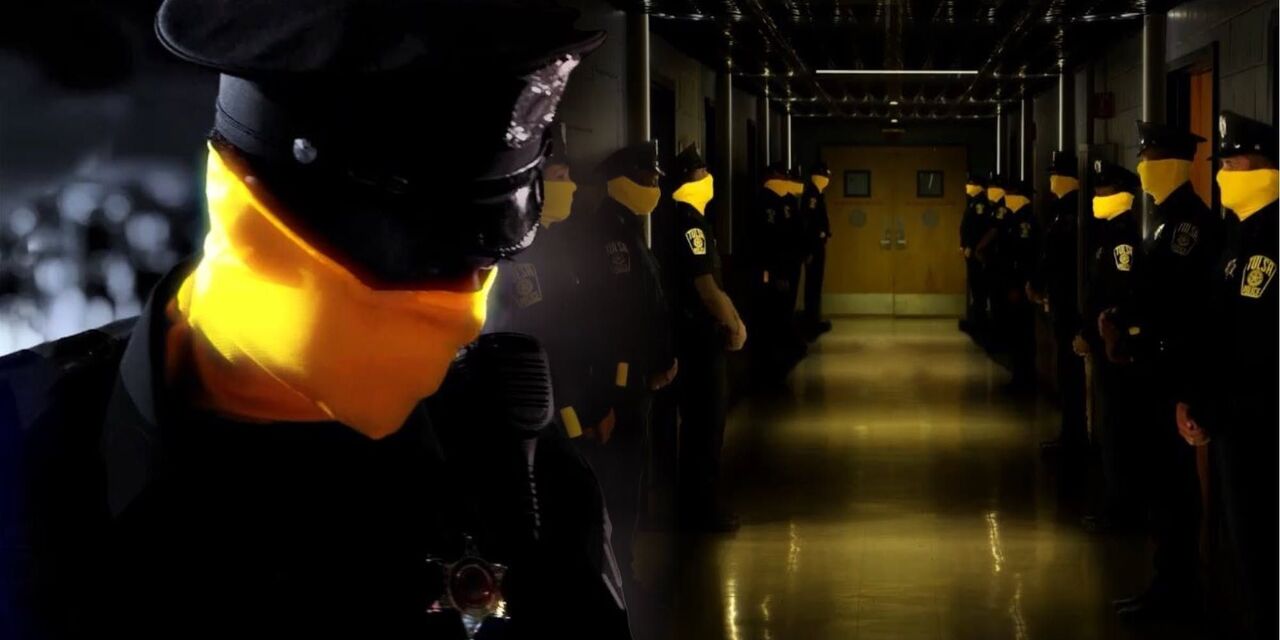
On September 8, 2019, in Tulsa, Oklahoma, USA, a police officer pulled over a car carrying salad and took ten bullets to the chest. The shooter wore a Rorschach mask, belonging to the famous crime fighter who vanished in the late 80s. The cop also concealed his face: in Tulsa, police officers must remain incognito after the events of the White Night.
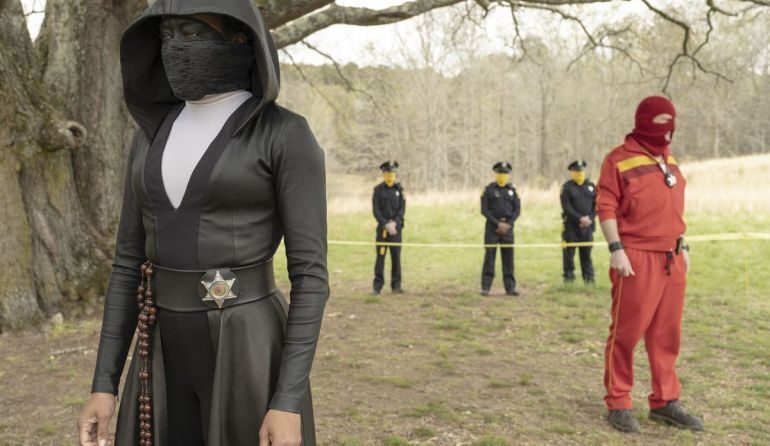
The mass attack by members of the extremist organization Seventh Cavalry on law enforcement officers became known as the White Night. Few survived, and those who stayed on the force put on identical yellow masks. The exception was detectives, who chose exclusive costumes and memorable nicknames: Sister Night, Looking Glass, Red Fear.
The events of Damon Lindelof’s Watchmen start with the investigation of a police officer’s murder, but everything quickly becomes much more complicated. What does a billionairess building the Eighth Wonder of the World have to do with it? Who is the old man in a luxurious mansion who burns servants alive? What secrets is an FBI agent hiding, the one who keeps an impressive blue dildo in her briefcase? Is it true that Doctor Manhattan has returned to Earth? Wait. Rorschach? Doctor Manhattan? Many of the questions Watchmen raises right at the start presume that viewers have a solid background.
Alan Moore and Dave Gibbons’ comic debuted in 1986 and has consistently appeared in rankings of the best in the genre since then. “Perfect comic” is a very common description. Having read it, the show will be easier to watch. Or at least it’s worth skimming the Wikipedia article, so the squid showers that regularly rain down on Tulsa (and the whole world) won’t surprise you as much.
On Rotten Tomatoes the series received 96% from critics and 52% from viewers. The gap is obvious: critics are clearly familiar with the original. Unprepared audiences may be shocked, enraged or scared off by Watchmen. Lindelof doesn’t help you quickly settle into this strange fantasy, where Robert Redford sits in the US presidential chair (do you need Wikipedia for that too?), Vietnam is an American state, the internet doesn’t exist, and tobacco is banned at the legislative level. A little homework won’t hurt. Along the way it becomes clear that Watchmen only partially intersects with the comic, unlike Zack Snyder’s 2009 film. According to Lindelof, it is not an adaptation but a remix of Moore’s ideas.
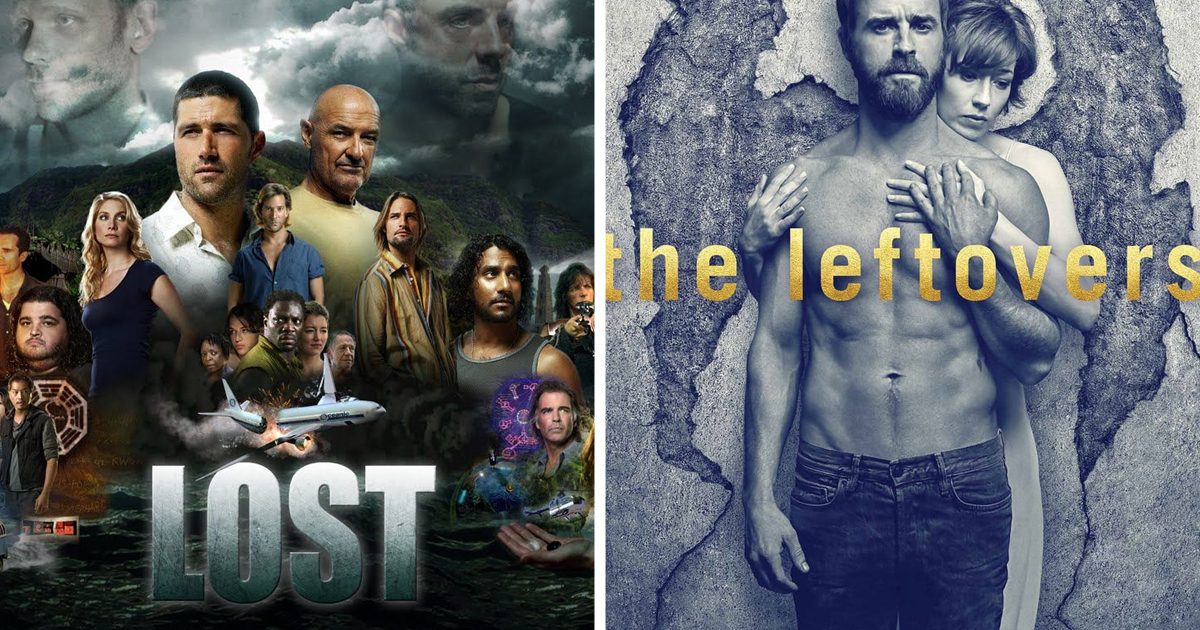
In the comic, the world stood on the brink of nuclear war, costumed heroes were outlawed, and one very clever man found a brutal way to prevent a clash of superpowers. According to Gibbons, who put Moore’s story on paper, plot was not his priority; the artist was much more interested in the layered nature of the story, its hints and allusions. An ideal concept for Lindelof, who before Watchmen blew up the internet with two series: “Lost” and “The Leftovers”.
Damon is sure his show is not meant to be watched in one go. Each episode has so many pitfalls that it’s advisable to spend the six days after its release online: reading Reddit, where the wildest theories are discussed (some, voiced after the first episode, even turned out to be true), listening to podcasts with the showrunner, and keeping Peteypedia open, an analogue of, well, you know what, dedicated exclusively to Watchmen.
Hints to the most shocking plot twists are there from the very beginning; Lindelof’s series are a peculiar game with the audience. You can opt out of playing, not dig deep, but the effect will be entirely different, and this partly explains the 53% freshness on Rotten Tomatoes too.
What’s on the surface? The emphasis has shifted from the nuclear threat to the modern agenda: in the world of Watchmen the Ku Klux Klan is alive, just under a different name. The roots of the local conflict in Tulsa stretch back to the start of the last century (time to go to Wikipedia again, “Greenwood massacre”) and, thanks to Lindelof, have a crucial influence on the backstory of the original. Moore remains silent; he generally dislikes attempts to bring his work to the screen. But the idea of white racial supremacy fits perfectly into a story where there was not even a hint of it.
And then Lindelof does what made his “The Leftovers” a cult show: he plays on emotions alongside the plot line, reinterpreting global ideas. What is divine intervention and where can religious fanaticism lead? Is there a place for a superhuman in society? Can one blindly believe in the truth of one’s own convictions? Does a person really know what will be better? After all, why wear masks?
“I hope our show is remembered for its courage,” said Carrie Coon, who starred in “The Leftovers.” “It pushed boundaries.” Watchmen continues in the same direction as Lindelof’s previous show. It is something absolutely unique for television, unrepeatable, and therefore controversial and ambiguous. A nine-episode provocation that, judging by the numbers, succeeded. On average, each episode was watched by more than seven million viewers. This is HBO’s most successful new release since “Big Little Lies”. True, back then viewers were drawn primarily by Nicole Kidman and Reese Witherspoon. Lindelof’s cast is not as well known, but no less powerful.
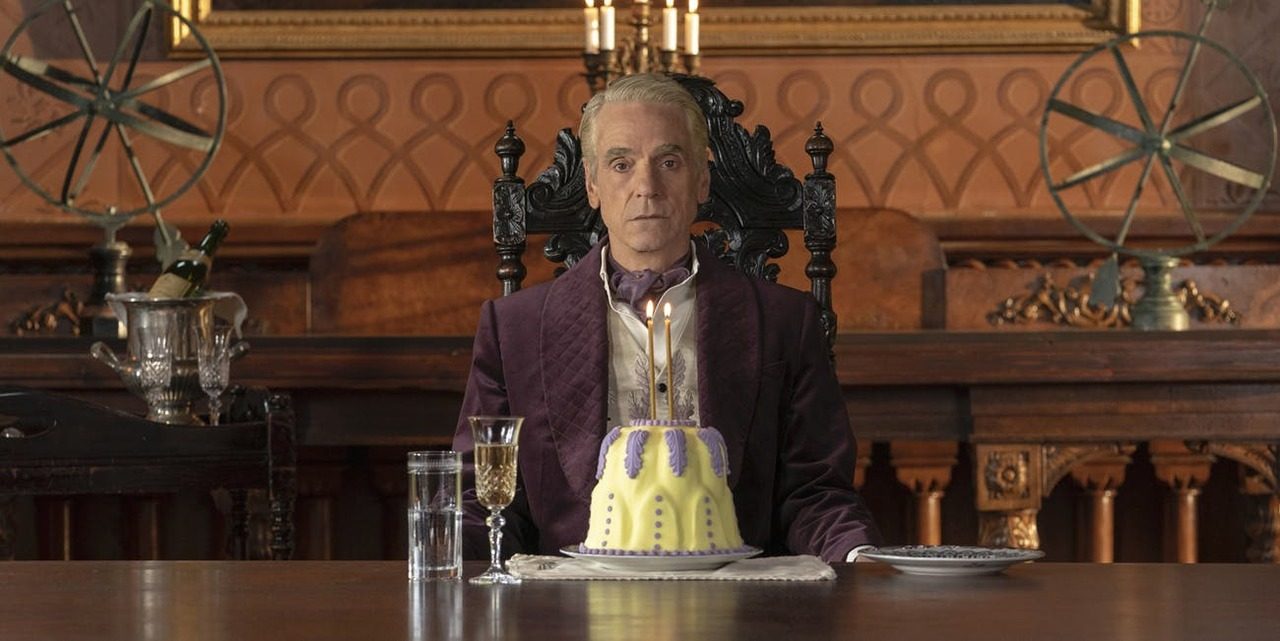
Regina King and Jeremy Irons are Oscar winners. Don Johnson and Tim Blake Nelson are actors from films by Tarantino and the Coen brothers. Yahya Abdul-Mateen II is the future star of the new “Matrix”. Famous faces add weight to Watchmen, and sometimes absurdity, especially in the storyline of Irons’s character.
Absurdity is another of Lindelof’s weaknesses. Remember what was going on in “Lost” closer to its final season? In Watchmen, embryos are fished out of a lake, court decisions are made with the help of pigs, a person is hooked up to an elephant, and jokes are told while talking on the phone with Mars. Although all of this is trivial against the backdrop of a godlike being who possesses boundless power but wants only one thing: simple human happiness.
Watchmen has many layers. It is a strange but powerful statement about the problems of modern society and an appeal to religious discourse. A psychoanalysis session and a vivid visual range set to a soundtrack by the legendary Trent Reznor and Atticus Ross, plus covers of George Michael. A biting satire on people in power and a screen adaptation of a joke. And of course, a story about love, like all of Lindelof’s works.
“I know people will be shocked. That they’ll find it unpleasant. But I hope someone will like it. It’s important to keep a balance,” says the showrunner. And he promises that there will be no second season. Everything ended precisely at the moment when Angela Abar ate the egg and raised her foot over the pool.

Russian Attacks in Dnipropetrovsk Region: Two Killed, Seven Injured

Defense Forces Strike Four Russian Drone Control Points in Past Day, Including in Berdiansk

Britain Threatens Sanctions on Kremlin-Linked People; Poland Ready to Hand Ukraine Ammunition

Russia says it has completed "planned exercises" in the Black Sea

MVD: Fake Riots With Prop Blood Were Being Prepared Near Presidential Office

Law Enforcers Name Another Klitschko Deputy as Suspect

Berlin Holds Protest Against War in Ukraine; EU Prepares for Possible Russian Halt of Gas Supplies
North Korea Fires Ballistic Missile Over Record Distance in Five Years
Irish Fishermen Force Russia to Postpone Naval Drills

US sanctions in case of invasion of Ukraine could completely destroy Russia's economy, NYT reports
