
The Sternenko Trial Will Either Open the Gates of Hell for Maidan Activists or Protect Them
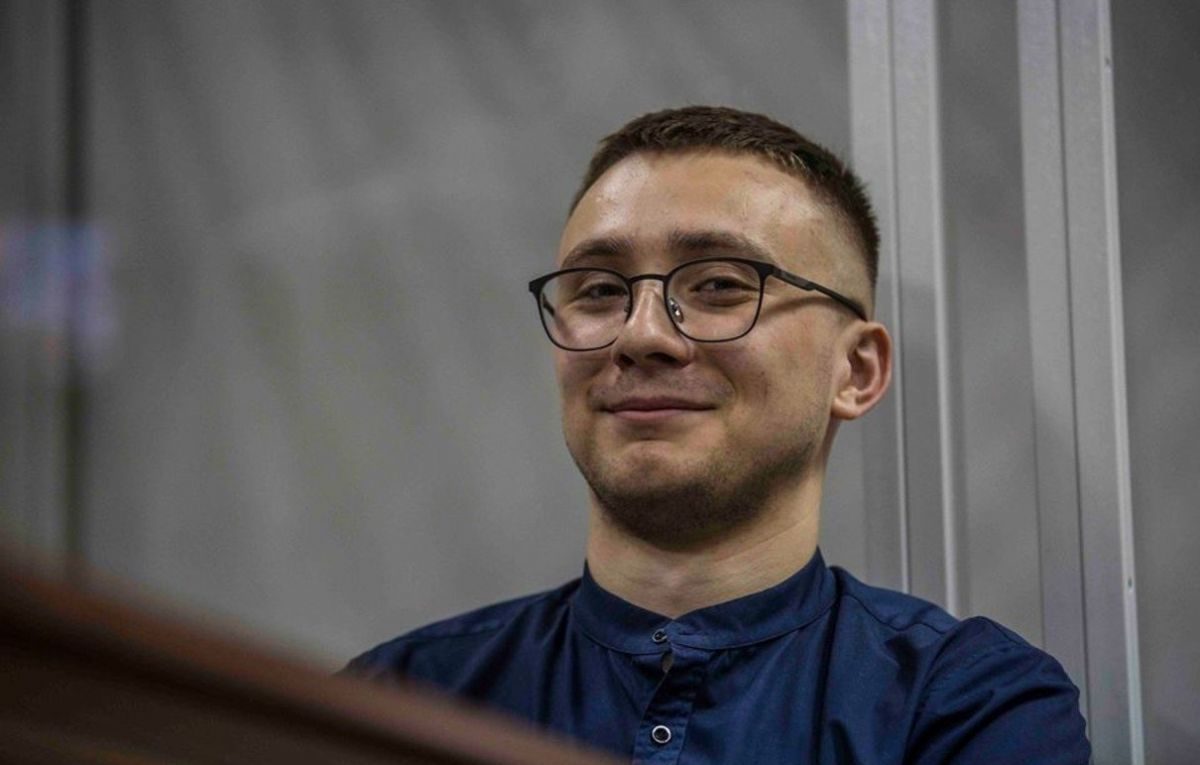
Volodymyr Petrov on the Sternenko case.
Last week on #PetrovLive we discussed the question “Why can Sternenko be called a political prisoner?” The answers split into three groups: the first, “You’re a Zelebobasvolochtvar!”, the second, “He’s a fighter against the regime and a critic of the authorities!”, and the third, “Hmm…”.
I stopped communicating with people from the first group, because I don’t understand Komsomol-speak. The second group was easier; it was enough to explain that there is no regime, and that a critic of the authorities is every other person here. I recommended the third group look up Wikipedia and a biography, put things together and formulate an answer.
My question did not deny, as the “Komsomol types” seemed to think, that the Sternenko case is political, but I completely reject their formulation and argumentation of why it is political. Moreover, I find the rhetoric of Sternenko’s lawyer completely incomprehensible, as his entire conduct turns the case into a standard criminal one.
In my opinion, the Sternenko case lies exclusively in the political plane, because the criminal acts were committed during a political coup, a change of the state’s political paradigm, and by him as a political figure.
And if Sternenko had committed criminal acts proceeding exclusively from personal political convictions that had no connection to the nationwide agenda, then yes, it would be crime, terrorism, separatism, and treason against the Motherland. But what Sternenko did in those days was done by 50% of the country on the basis of political expediency.
Burned and shot cops, murdered deputies, titushky buried in fields, Kiva, who put a district police station and a justice department in Pavlohrad under machine guns, Parasyuk, calling for a violent change of the constitutional order, the looters Mosiychuk and Lyashko, and thousands of others.
Therefore, lawyers trying to prove the absence of a criminal offense are doing their opponents a big favor by shifting the process entirely into the criminal plane.
It is necessary to explain to judges and society that all the criminal offenses committed were a consequence of the political situation and of the activities of the politician Sternenko for the good of the country, including the murder he had to commit while defending his life as the life of a political figure whose activities caused several assassination attempts against him.
The trial of Sternenko will either open the gates of Hell, into which all the political and public activists of the Maidan era will fly, or will make them all safe.
And so I don’t have to get up twice, I’ll address the political and public figures of the Maidan era: guys, do you understand that on Sunday you betrayed a “brother” by marching peacefully and cutting the rally from an indefinite one down to three hours, not using a single one of the dozens of opportunities to set up tents, and gathering around yourselves people, 90% of whom have no relation to the country’s political agenda?
If you’ve forgotten how to rally properly, then SaveFOP is standing there on the Maidan; they manage it more or less. Clumsily and not without flaws, but some indefiniteness and principle are present.

Russian Attacks in Dnipropetrovsk Region: Two Killed, Seven Injured

Defense Forces Strike Four Russian Drone Control Points in Past Day, Including in Berdiansk

Britain Threatens Sanctions on Kremlin-Linked People; Poland Ready to Hand Ukraine Ammunition

Russia says it has completed "planned exercises" in the Black Sea

MVD: Fake Riots With Prop Blood Were Being Prepared Near Presidential Office

Law Enforcers Name Another Klitschko Deputy as Suspect

Berlin Holds Protest Against War in Ukraine; EU Prepares for Possible Russian Halt of Gas Supplies
North Korea Fires Ballistic Missile Over Record Distance in Five Years
Irish Fishermen Force Russia to Postpone Naval Drills

US sanctions in case of invasion of Ukraine could completely destroy Russia's economy, NYT reports
