
«The Sun Looks Like the Red Glow of an Oven». Ukrainians in Sydney and Melbourne on What Is Really Happening in Australia
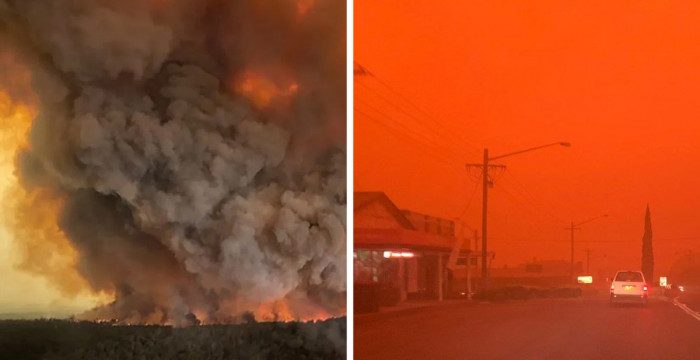
How the continent is suffocating in fire and why Australians are not panicking.
Australia continues to be engulfed by the largest fires in the country's history, leaving a third of the population at risk. The fires have swept through 6 million hectares of forest and protected areas — 7 times the area burned in the Amazon forests and 3 times the scale of the California fires.
TK Media spoke with Ukrainians living in Sydney and Melbourne and learned what is happening in Australia and how the authorities are fighting the natural disaster.
Maria Kirichenko, Sydney
- Without exaggeration, we are seeing hell on earth. The situation is completely catastrophic. In December, air quality in Sydney exceeded critical levels by 20 times; it was equated to the number of cigarettes smoked in a day — from 4 to 37, depending on the district. It is hard to imagine what is happening at the epicenters of the events and with the tiny lungs of animals. We, at least, are used to city dust and exhaust fumes, but for them this is fatal.
Half a billion animals — mammals, birds, reptiles — were burned alive or suffocated by smoke. A third of the koala population has been wiped out — they move slowly and feed exclusively on eucalyptus, which contains a lot of oil that makes it highly flammable.
Flames 50-70 meters high cannot be extinguished. Water evaporates before it reaches them. They can only be controlled, to some extent. And there are the weather conditions — heat, drought and wind that carries embers up to 20 km away. In strong winds, fire can move at 120 km/h. Not even a car can outrun that. The fire front stretches for hundreds of kilometers, and limited human resources are not helping the situation either.
The dry, hot climate in Australia has led to the country breaking records for the hottest days in its history several times, most recently reaching 48.9°C. In New South Wales, the densely populated state where a third of the country's population lives, a state of emergency has been declared three times – each lasting a week.
I live in an ordinary neighborhood [of the capital of New South Wales] Sydney, next to a protected area. It's a fairly safe area. We very often have smoke so thick that not only can you not see the horizon — visibility is no more than 300 meters. And the sun looks like the red glow of an oven. All December the sky was grey-orange. Even though the fires are about 65 km away from us, at one point ash was falling from the sky. You go out to work in the morning and your car is covered in ash.
At least 24 people have died in the fires so far, and another 28 are considered missing. Dust and ash from the fires are settling even on the glaciers of neighboring New Zealand, which is 2,000 km from Australia. But despite this, in many cities people continue going about their business, and tourists keep actively arriving in the country.
High temperatures are not uncommon in Australia. People often cool off under air conditioning or at the beach. On the coast, the temperature rarely exceeds 40 degrees. There is no panic. There is a desire to help. That is why people are taking the initiative. For example, well-known comedian Celeste Barbier started a fundraiser for the firefighters of New South Wales. With an initial goal of $20 thousand, $37 million has been collected, and this amount keeps growing.
Barbier, among others, was joined in making significant contributions by pop stars Kylie Minogue and Pink, Hollywood celebrities Nicole Kidman and Russell Crowe, world No. 1 tennis player Ashleigh Barty, and many others.
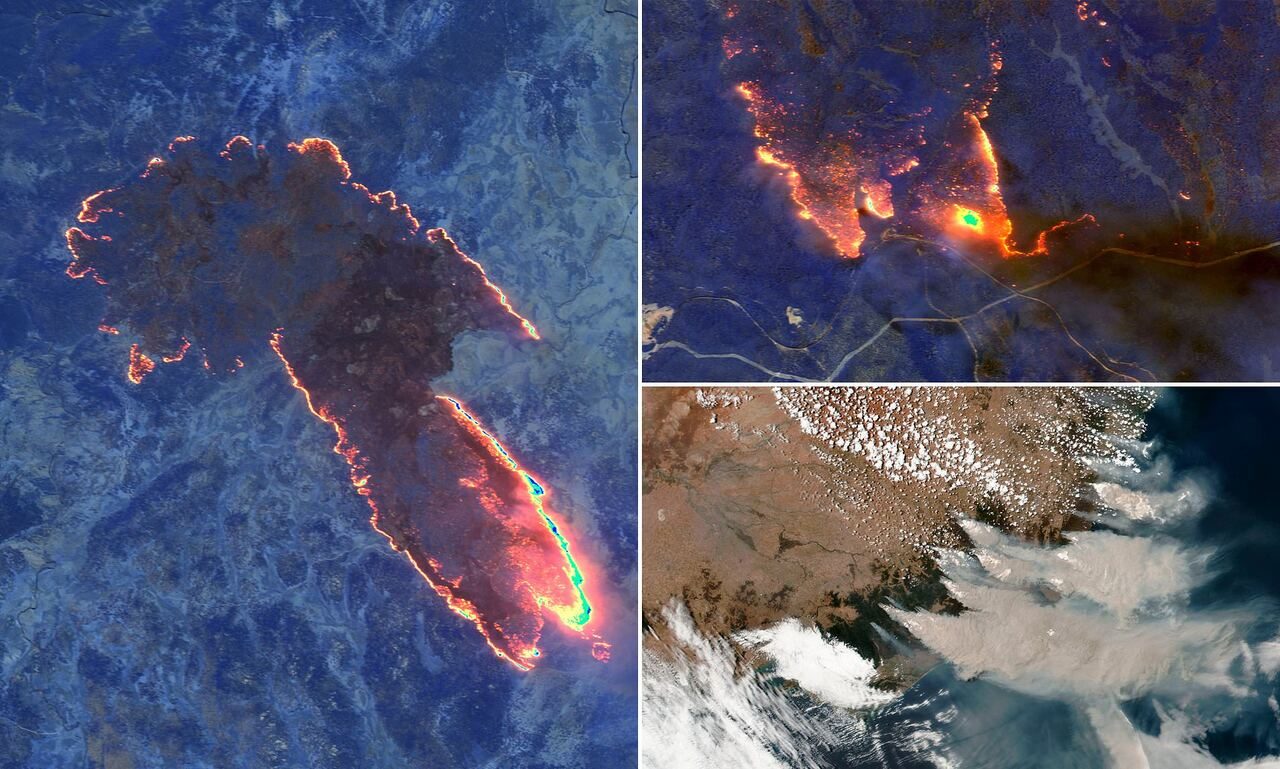
- How are locals reacting and what are the authorities saying?
- The reactions vary. From anger at the prime minister to treating firefighters as cult heroes. The authorities, in the person of Scott Morrison [Prime Minister of Australia], deny climate change and go on holiday to Hawaii while the country is in a crisis of unprecedented scale. Many firefighters and volunteers are not being paid right now. At the same time, Morrison says that «they want to be there themselves», and that firefighters can draw inspiration from... cricket players. This is driving people mad.
Now the military and navy have additionally been mobilized; earlier, army reserves were also brought in to help. The situation is largely being handled thanks to Shane Fitzsimmons, the chief commissioner of the fire service, who leads the operations; everyone is immensely grateful to him.
Why is there no panic and no help from civilians? Australia is a structured country where rules and laws work. To fight fires, special qualifications and skills are needed, especially at such a scale. Garden hoses and buckets are fine when it comes to protecting your own home, but they are useless against a force of nature. People are helping as best they can — donating money, food and things, and providing shelter for firefighters and volunteers.
I have two acquaintances who are involved in the mobilization: a girl who volunteers as a firefighter and a guy who is a psychologist in the army reserves. They help people in danger zones, cook food for firefighters, and they need qualifications even to cut down trees. The guy from the army reserves has such qualifications, but even so he is not always allowed to do it.
Ordinary people simply will not be let in. Police and the army are blocking roads and turning cars back.
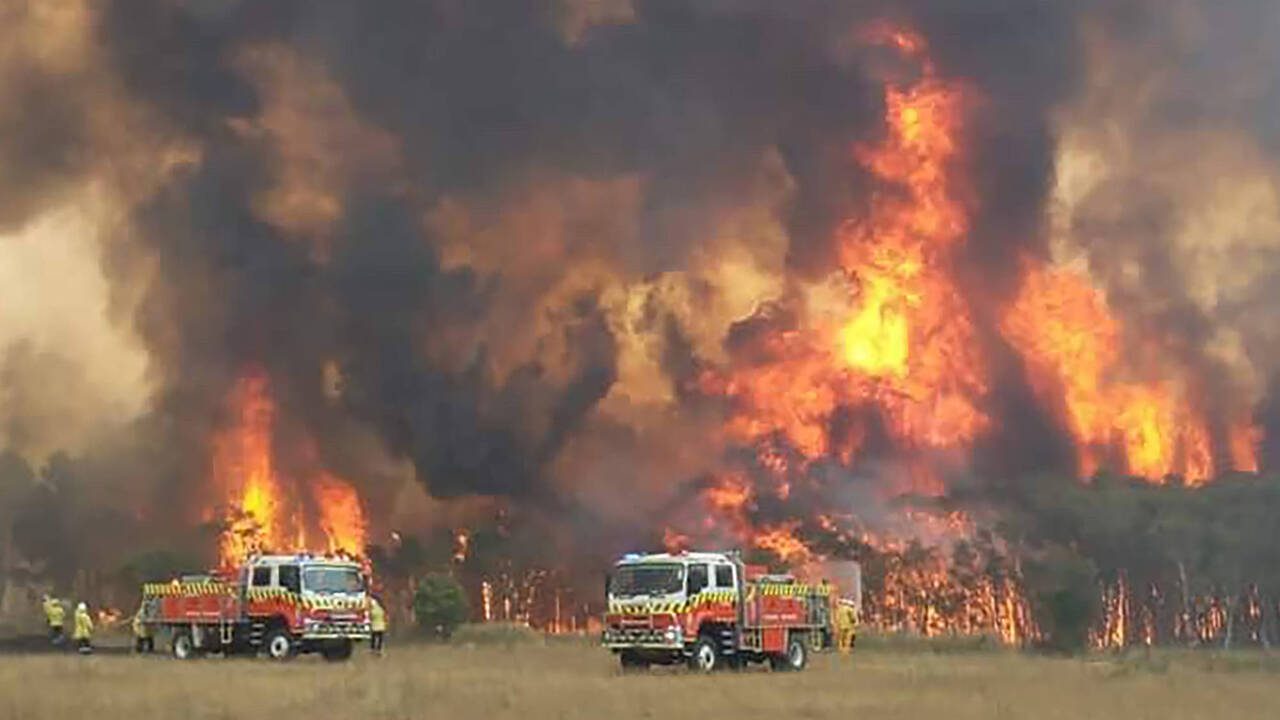
Who is to blame? Court cases and investigations are currently underway against 180 people who are in some way connected to the fires — arson, violation of the ban on any kind of open flame — barbecues, unextinguished cigarette butts, campfires, etc.
24 people are under investigation for deliberate arson, which carries up to 21 years in prison, and if it also involved an attempt on human life or damage to property — 25 years in prison. 47 people were fined for a discarded cigarette butt or matches — $660; on days of a total fire ban, this amount doubles. 53 people who violated the total ban received fines from $5,500 to a year in prison».
What to do if the danger gets close?
«Grab the dogs and run to the nearest open area, away from trees and houses, — Masha answers without hesitation. — In my case, it's the schoolyard 300 meters from my house».
Theodor, Melbourne
The fires are about 250 km east of us; they are not affecting us much, but that is for now — there are also quite a lot of forests around Melbourne that could catch fire at any moment, as happened in 2009. There were several fires in the surrounding forests and bushland, but they were quickly contained. The only thing affecting us so far is the wind, which brings all the smoke and soot to us, and the rain, which knocks all the soot and grime to the ground. The air pollution index was around 400-450, which is negligible compared to 2,000-2,500 in Canberra and Sydney.
We are not expected to have extremely high temperatures in the coming week, so the fire danger rating has been lowered to moderate, but as soon as the next so-called heatwave arrives, when air heated to 45 degrees is carried in from the desert along with hurricane-force winds, it could catch fire here too. In Melbourne itself, the mood is normal; people live as they always have, and the fires do not affect us the way they do Canberra or Sydney. But of course everyone talks about it, and many are helping in any way they can, both the victims and the firefighters. Today, incredible donations have already been collected for the fire services of Victoria and New South Wales. Professional volunteer organizations from the USA have also arrived to help locals.
Here is a map of the fires at the moment. It only covers the state of Victoria, since we have separate emergency services from New South Wales. Where nothing is marked on the coast in the upper right, the elements are actually raging at full force.
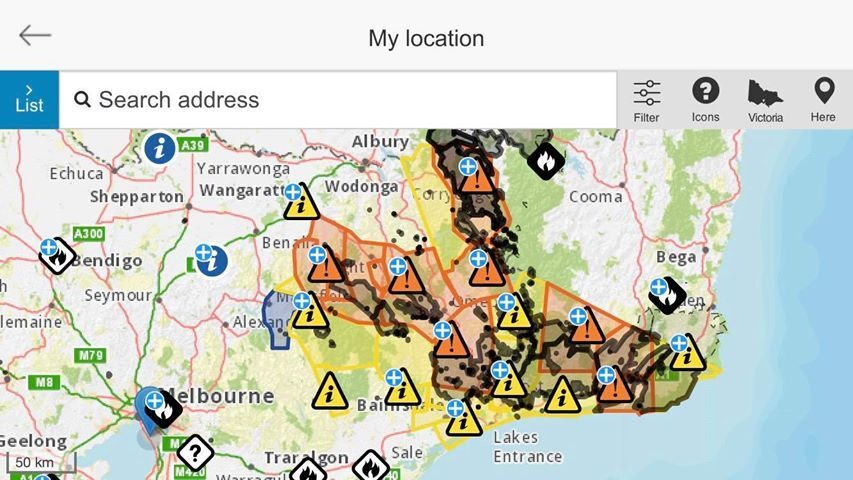
And these are my photos from when the rain and wind brought smoke and soot to us. Not very catastrophic, but it feels like you're breathing at a forest campfire in the smoke.
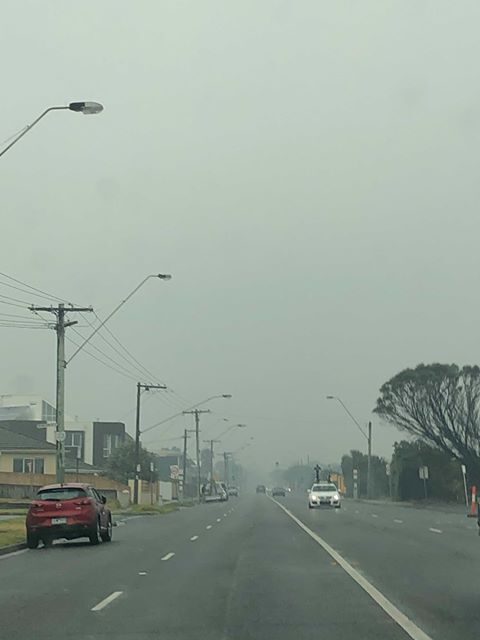
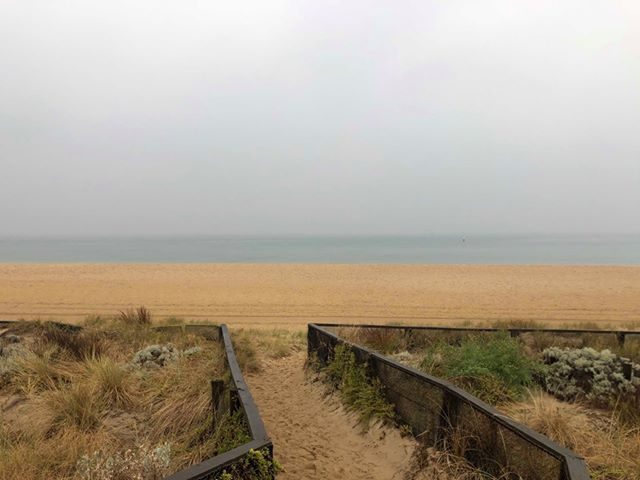
The fire season ends in April. The authorities, as usual, are doing nothing — they only started stirring recently, especially against the backdrop of our prime minister Scott Morrison going to Hawaii to vacation with his family during the most destructive phase of the fires. Local authorities, of course, did something when the fires had already started, but local government largely depends on the federal government. The fires will end when there is nothing left to burn, or when rainfall can really affect the fire, because ordinary rain lasting a few hours won't put anything out — the water just evaporates. It can only help contain it, and even then only briefly.
The real consequences are hard to assess today. Of the main ones, I would highlight the huge insurance payouts for destroyed movable and immovable property. Second, multibillion-dollar losses for livestock farming. Third, losses for local fauna and flora, but this is not 480 million, as everyone says. The real losses will be known closer to winter (summer, from the point of view of Ukraine — ed.), when everything has burned out and the cleanup begins.
There is also good news: in Victoria, the number of missing persons has decreased from 28 to about 21, and 7 have been found alive.

Russian Attacks in Dnipropetrovsk Region: Two Killed, Seven Injured

Defense Forces Strike Four Russian Drone Control Points in Past Day, Including in Berdiansk

Britain Threatens Sanctions on Kremlin-Linked People; Poland Ready to Hand Ukraine Ammunition

Russia says it has completed "planned exercises" in the Black Sea

MVD: Fake Riots With Prop Blood Were Being Prepared Near Presidential Office

Law Enforcers Name Another Klitschko Deputy as Suspect

Berlin Holds Protest Against War in Ukraine; EU Prepares for Possible Russian Halt of Gas Supplies
North Korea Fires Ballistic Missile Over Record Distance in Five Years
Irish Fishermen Force Russia to Postpone Naval Drills

US sanctions in case of invasion of Ukraine could completely destroy Russia's economy, NYT reports
