
Historical justice: two regional councils vote to urge the Verkhovna Rada and president to rename Russia as Muscovy in the Ukrainian language
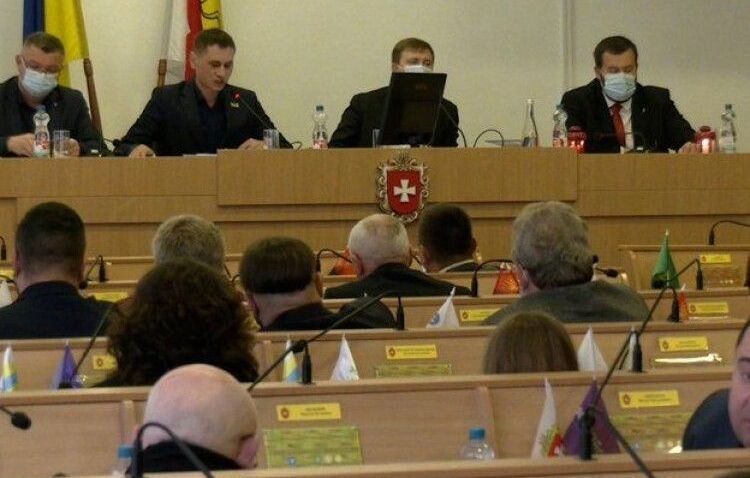
Deputies explained the reasons for Moscow's hatred of Kyiv, which has lasted more than 850 years.
The Lviv and Rivne regional councils have called on the Verkhovna Rada and President Volodymyr Zelensky to rename the Russian Federation as Muscovy in the Ukrainian language.
Appeal from the Lviv regional council
On the evening of December 21, deputies of the Lviv regional council supported an appeal to the central government, in which they called for “restoring historical justice and in the future using the name Muscovy instead of Russia and Russian Federation at the state, official and public levels,” and to call citizens of the Russian Federation “Muscovites”.
In the appeal, the deputies note that changing the name of the Muscovite kingdom “posed a serious challenge to the identity of the Ukrainian people and serves as a justification for the occupation of part of the territory of modern Ukraine.”
“For the past several hundred years, our northeastern neighbor, which constantly encroaches on our territory, has unlawfully used the stolen state and geographical name ‘Russia’,” the regional council’s statement says.
The council recalled that 300 years ago, after a series of victories over Sweden and the conclusion of the Treaty of Nystad, on October 22, 1721, Peter I renamed the Tsardom of Muscovy as Russia and proclaimed himself emperor.
Maps and atlases of the 15th, 16th and even 18th centuries did not depict the country as Russia, only as Muscovy. The Muscovite state was widely known as Muscovy, Muscovitia and sometimes even Tartary, the deputies said.
Historical excursus by the Rivne regional council
Previously, the Rivne regional council supported a similar appeal to the Rada and the president. The deputies propose calling Russians “Moskvins”.
“We are convinced that restoring historical justice and returning to our northern neighbor its true name will have a significant impact on socio-political processes in Ukraine and on the development of the Ukrainian state itself,” the appeal says.
As noted in the appeal, the claim that the name “Muscovy” may not correspond to the international name of the state is refuted by the official Ukrainian name of the state, Bundesrepublik Deutschland – Federal Republic of Germany.
At the same time, the most widespread international name of this state is “Germany” and its linguistic forms.
“Despite a century of statelessness (Soviet occupation — ed.), the Ukrainian people managed to preserve their own historical memory and distinctive culture, protect their language and revive their church. However, a number of historical factors, including the Soviet legacy, led to a loss of self-sufficiency among a large part of Ukrainian society. The concept of an eternal ‘unity’ and ‘blood ties’ with our northern neighbor, invented by Moscow’s ‘great holders,’ became the basis of an aggressive neighborly ideology and, as a consequence, the occupation of part of Ukrainian territory. Therefore, in the thirtieth year of restored Ukrainian independence, we must finally stop being held captive by alien pseudo-theories,” the deputies said.
The deputies also presented a historical excursus from the burning of Kyiv by Andrei Bogolyubsky and the subsequent founding of Muscovy by him, clearly showing that Moscow’s hatred of Kyiv has continued without interruption since 1169.
“There are many reasons for this hatred, but at its root lies our complete opposite: mental, genetic, ethnological and worldview differences,” the diplomats share.

Russian Attacks in Dnipropetrovsk Region: Two Killed, Seven Injured

Defense Forces Strike Four Russian Drone Control Points in Past Day, Including in Berdiansk

Britain Threatens Sanctions on Kremlin-Linked People; Poland Ready to Hand Ukraine Ammunition

Russia says it has completed "planned exercises" in the Black Sea

MVD: Fake Riots With Prop Blood Were Being Prepared Near Presidential Office

Law Enforcers Name Another Klitschko Deputy as Suspect

Berlin Holds Protest Against War in Ukraine; EU Prepares for Possible Russian Halt of Gas Supplies
North Korea Fires Ballistic Missile Over Record Distance in Five Years
Irish Fishermen Force Russia to Postpone Naval Drills

US sanctions in case of invasion of Ukraine could completely destroy Russia's economy, NYT reports
