
WHO Approves First Malaria Vaccine
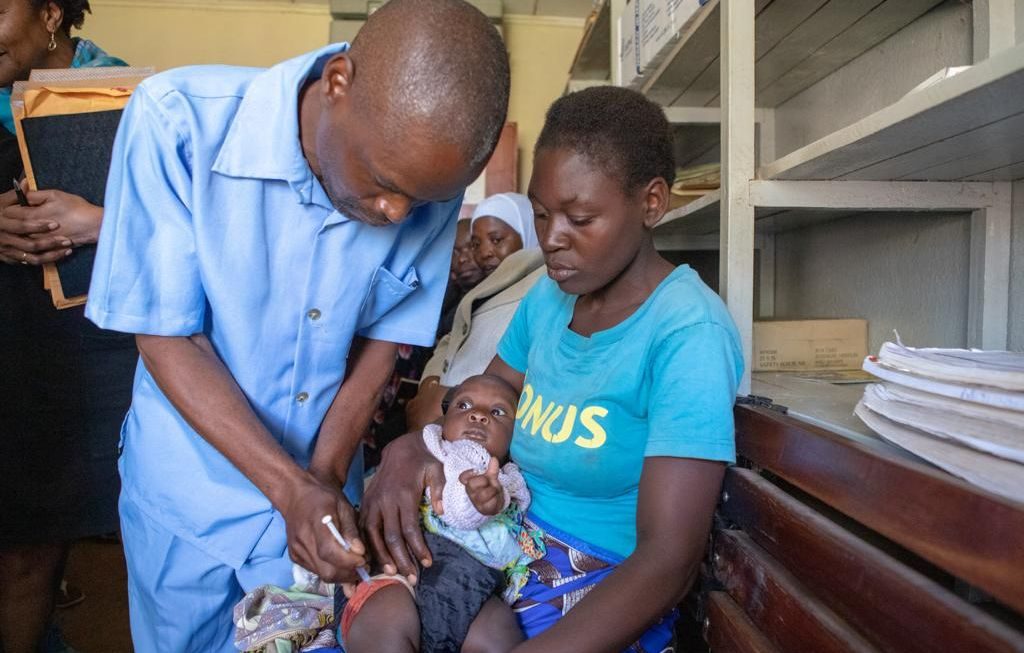
Although the drug prevents 30% of severe cases, it could still save thousands of lives.
The World Health Organization has recommended the first malaria vaccine for children, a development that took 30 years.
We explain what is known about the new drug, how Africa is fighting the disease, and what other developments are underway.
The First Malaria Vaccine
Tedros Adhanom Ghebreyesus
WHO Director-GeneralThis is a historic moment. The long-awaited malaria vaccine for children is a breakthrough in science, child health and the fight against malaria. Using this vaccine alongside existing malaria prevention tools could save tens of thousands of young lives every year.
The recommendation is based on results from an ongoing pilot project in Ghana, Kenya and Malawi, in which more than 800,000 children have been vaccinated since 2019.
The vaccine should be given to children from the age of five months in four doses. So far, 2.3 million doses have been administered.
The vaccine, developed by the British pharmaceutical company GlaxoSmithKline, is called Mosquirix (RTS,S).
Its use has shown that the vaccine reduces severe malaria cases by 30%, even in areas where residents use special measures to combat the insects that carry the infection.
Compared with vaccines against other diseases, the effectiveness of Mosquirix is relatively low. However, malaria claims so many lives that the new product will still prevent tens of thousands of deaths every year, WHO experts say.
Moreover, the new drug is effective even against the protozoan parasite Plasmodium falciparum, which is carried by female Anopheles mosquitoes and causes the most dangerous form of malaria, known as falciparum or tropical malaria.
Developing the vaccine proved difficult because the parasite is far more complex than a virus or bacteria. "Forget lions, tigers and sharks. The tiny mosquito kills more people than any other creature," science correspondent Thomas Moore said.
The vaccine's development was funded by Gavi, the Vaccine Alliance, the Global Fund to Fight AIDS, Tuberculosis and Malaria, the global health agency Unitaid, and the Bill & Melinda Gates Foundation.
Fighting Malaria
Malaria is spread by mosquitoes, so the main preventive measures are mosquito nets and indoor insecticide spraying. But even these simple measures are not affordable for everyone.
About 300 million nets have been distributed in sub-Saharan Africa, yet even after this, fewer than half of all households have a full supply of them.
Funding for anti-malaria programs has declined significantly. In 2019, according to WHO data, only $3 billion was received instead of the $5.6 billion needed.
Last year, the situation was complicated by the COVID-19 pandemic. WHO warns that even small disruptions in malaria treatment could lead to higher mortality.
For example, a 10% reduction in access to malaria medicines leads to an additional 19,000 deaths.
According to the WHO head, malaria mortality has halved since 2000, and in many regions of the world the disease has been completely eliminated. However, worldwide there are 200 million cases of infection and 400,000 deaths from malaria each year.
Two-thirds of those infected and killed are African children under five years old, the UN notes. Malaria remains the leading cause of child illness and death in sub-Saharan Africa. Every two minutes, the disease kills one child.
Ways to Finance Vaccination and Other Developments
Work is currently continuing on other malaria vaccines. Scientists at the University of Oxford are developing one of them, Matrix-M.
The first two phases of the study, which involved hundreds of children in Burkina Faso, showed an efficacy of 77%. The third phase will involve 5,000 children.
Experts said it is now important to find funding for producing and distributing the approved vaccine in a number of the world's poorest countries.
GSK has pledged to produce 15 million doses of Mosquirix annually, in addition to 10 million doses produced under WHO programs. At the same time, demand for the malaria vaccine could rise to 50-110 million doses by 2030.

Russian Attacks in Dnipropetrovsk Region: Two Killed, Seven Injured

Defense Forces Strike Four Russian Drone Control Points in Past Day, Including in Berdiansk

Britain Threatens Sanctions on Kremlin-Linked People; Poland Ready to Hand Ukraine Ammunition

Russia says it has completed "planned exercises" in the Black Sea

MVD: Fake Riots With Prop Blood Were Being Prepared Near Presidential Office

Law Enforcers Name Another Klitschko Deputy as Suspect

Berlin Holds Protest Against War in Ukraine; EU Prepares for Possible Russian Halt of Gas Supplies
North Korea Fires Ballistic Missile Over Record Distance in Five Years
Irish Fishermen Force Russia to Postpone Naval Drills

US sanctions in case of invasion of Ukraine could completely destroy Russia's economy, NYT reports
