
Group of Lakes With Liquid Water Discovered on Mars
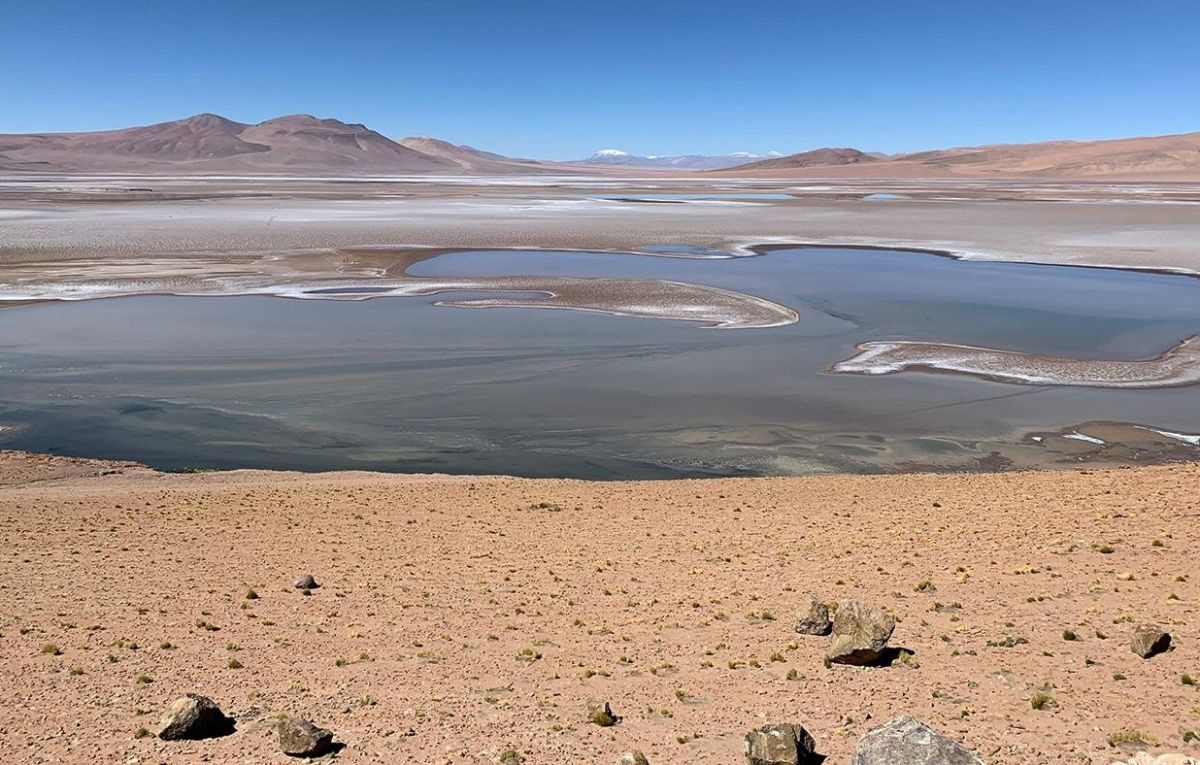
This discovery may indicate that Mars has water and life.
Two years ago, researchers of the Red Planet reported the discovery of the Big Salty Lake under the ice at the South Pole of Mars. Now scientists have confirmed the existence of this lake and, in addition, found three more. This is stated in a scientific publication in the journal Nature Astronomy.
This incredible discovery was made using radar data from the Mars Express orbital spacecraft of the European Space Agency. Studies of the same site on Mars in 2012-2015 sparked heated debate in the scientific community, because the conclusion that the Big Salty Lake exists was based on only 29 observations.
Now, however, the evidence base has expanded: 134 observations have been carried out at the site so far. One of the latest showed that three more lakes are located near this lake. The width of the largest of them is — 30 kilometers.
Elena Pettinelli
Planetary scientist at Roma Tre UniversityWe identified the same body of water, but we also discovered three other bodies of water around the main one. This is a complex system.
Scientists sent the MARSIS radar sounder to Mars, which sends radio waves into the surface. The length and character of these waves make it possible to understand what kind of surface the probe is over. It can determine solid ground, ice or water. MARSIS detected some areas with wave patterns that indicate the presence of liquid water hidden beneath a kilometer-thick layer of Martian ice.
The surface of Mars has low pressure, caused by the planet's lack of a dense atmosphere, which makes liquid water in the form familiar to us impossible. But scientists have long believed that water may exist beneath the surface of Mars, left over from the time billions of years ago when the planet had seas and lakes.
If such reservoirs exist, they could be potential habitats for Martian life. Scientists have evidence of possible organisms existing in very cold places: on Earth, life exists in the subglacial lakes of Antarctica. But scientists still have doubts: for water to remain liquid on Mars, it must be very salty. And in very salty water, microorganisms have low activity or do not live at all.
Although scientists still argue about the interpretation of the research, some believe they will be able to prove the existence of liquid water and therefore life on the Red Planet. The upcoming Chinese mission to Mars, “Tianwen-1,” planned for February 2021, may clarify the results and cause a sensation in the scientific world.
Earlier, NASA successfully launched an Atlas V 541 rocket carrying the Perseverance rover, which will explore the planet Mars. It is also searching for life on Mars.

Zelensky: Russia Used 115 Missiles, Nearly 1,900 Guided Bombs and Over 3,000 Drones in a Week

Attack on Major DTEK Energy Facility in Northern Odesa Region Leaves Some Families Without Power

Britain Threatens Sanctions on Kremlin-Linked People; Poland Ready to Hand Ukraine Ammunition

Russia says it has completed "planned exercises" in the Black Sea

MVD: Fake Riots With Prop Blood Were Being Prepared Near Presidential Office

Law Enforcers Name Another Klitschko Deputy as Suspect

Berlin Holds Protest Against War in Ukraine; EU Prepares for Possible Russian Halt of Gas Supplies
North Korea Fires Ballistic Missile Over Record Distance in Five Years
Irish Fishermen Force Russia to Postpone Naval Drills

US sanctions in case of invasion of Ukraine could completely destroy Russia's economy, NYT reports
