
Journalist Aider Muzhdabaev: Russians Are People United by a Common Crime
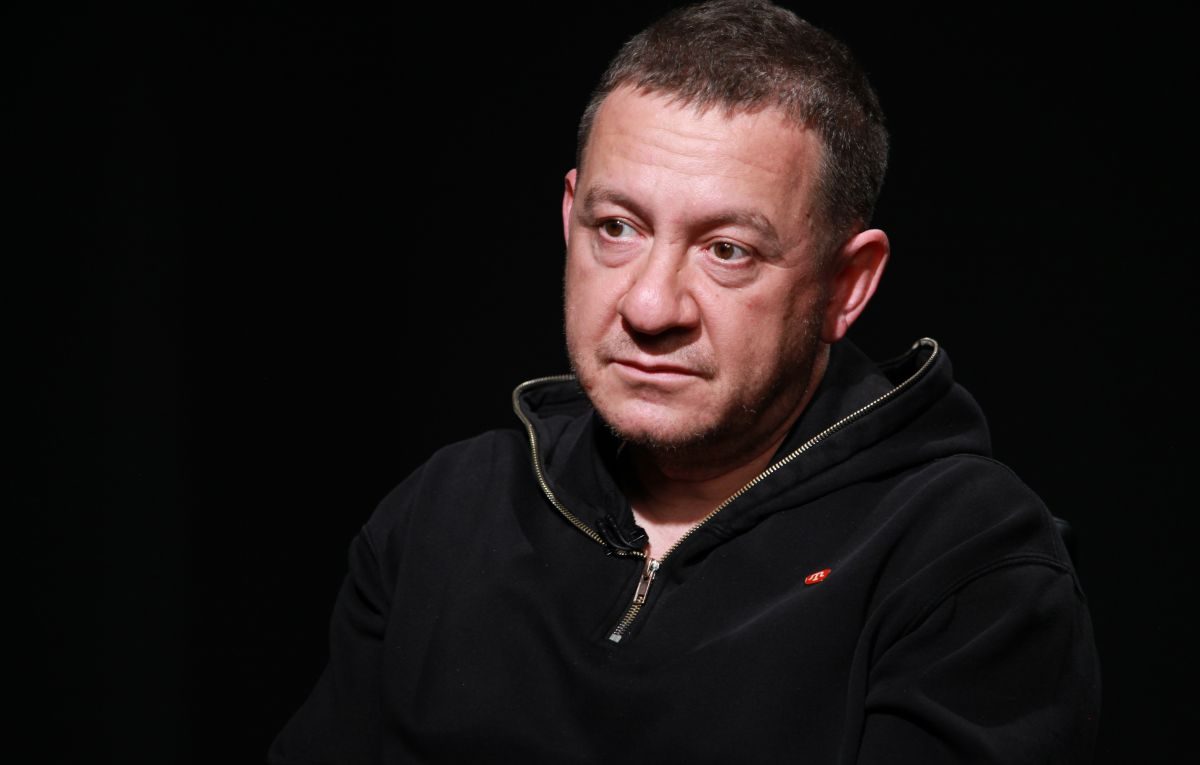
In his view, involvement in the occupation of Crimea “turns on” and unites Russians.
In a new episode of the program “Antipody” on the Iceland TV channel, Russian and Ukrainian journalist, blogger and media manager Aider Muzhdabaev spoke about life in Russia, the problems of Crimean Tatars, and expressed his views on Putin, Navalny, Nevzorov and Venediktov.
You lived in Russia for a long time, you saw a lot of it, I think you know this country well. Explain, if you can, as briefly as possible but clearly, what is the main difference between Russia and Ukraine?
So much. It's just that Ukrainians, the vast majority of them, don't understand. That is, on the surface they look similar.
Depends on which region of Russia.
No, well, they're still similar, at least Slavs are similar to Moscow there, to the regions around it. But the difference is that you asked briefly, and it's hard for me to describe. Because people behave differently in restaurants, for example. There it's customary to shout: “Hey, come here.”
And is that perceived as normal?
Yes. In transport, conversations take place in a completely different tone. There, when you walk in, and this was even before the war, you walk into any establishment and the first thing you do is Moscow, this is the center, you just look around, to see who might cause a conflict with.
So there is a potential aggressor?
Yes. And they treat each other aggressively. They treat everyone around them aggressively, and you don't even know, he may be sitting there politely, looks like a normal person by appearance, but within an hour he'll drink vodka and start behaving in a way you don't expect.
So there you are always in tension. It's just that Kyivans are not familiar with this at all. Not even Kyivans, I'm not even talking about Ivano-Frankivsk or Lviv residents. Kyiv is a big city, the distances are normal, but that's not the point. The point is communication between people, it's completely different. I'm even sure. You were born in Luhansk.
No. I wasn't born in Luhansk, but I lived there for quite a long time.
You know, they say there's such a stereotype about Donbas, I always meet people from Donbas here, well, it's just some refined intelligentsia, lots of people like that.
There are various ones. Both emotional and temperamental people, but I can say that probably those people who left for the unoccupied territory probably had already managed to assimilate or already had some traits that helped them, let's say.
You asked me to illustrate, I'm trying to make it vivid. Do you know the worst district of Donetsk or Luhansk? Just imagine.
There were no bad ones there, there were screwed-up ones.
Okay. Any district of Luhansk.
Forgive me please, fellow countrymen, Kambrod.
See, although they say it's an aggressive environment, there are some concepts between people there. I just talked and am now talking with a former journalist who lived in Donetsk all his life. And when he came to visit me in Moscow, he said that here there's no communication even between colleagues at all. In transport, everywhere. That is, he's from Donetsk, he said, we have a cultured city.
You're right. In general, the further east, the tougher the people. I've noticed this, and when you already relax, let's say, somewhere in Kyiv, while not losing your Donbas experience, but when you come, let's say, to Kharkiv or Dnipro or I'm not even talking about Mariupol and other cities further east, it's felt there.
It's absolutely at a sensitive level. Toughness, fewer smiles on the streets. That's it.
Kyiv is, as Roma Tsymbaliuk says, the city of love, that is, people walk around relaxed here.
That's true. That is, I understand that the fate of aggression comes from Russia to us too.
Well, Moscow, there's one more feature that concerns Moscow as not even a megalopolis. It was such a capital where many Ukrainians also tried to go.
Why past tense? They're still trying.
Not in such numbers. That is, this is a city where from the very first minute, when I got there, and I got there by train, I got out, I had such a bag, a computer, a pair of jeans. I had been there before, I have relatives living there who weren't deported from there in the 30s. Part on my mother's side. She stayed there. I visited and didn't see this, but when I started working there, when I first met even the landlady of the apartment.
I remembered Dostoevsky, remembered that old pawnbroker. I arrived in 1998, and literally within half a year a crisis — the one when my salary equaled my rent. The exchange rate changed, and she wanted to give back the deposit for the apartment so as to profit from this exchange rate, and I was so hungry, I would never have done that, I respect people who are older than me, but I just grabbed her by the collar and said: “Hand over the money, you bitch.”
I had nothing to eat. I was just lucky that an apartment turned up, which belonged to my acquaintances from the region where I was born, their daughter had moved to the United States, and a small apartment became free, which they rented to me so I could live there and just have order there. And that saved me, and also saved the fact that I was promoted and got more money. That's how I survived. Otherwise I was already wanting to flee from there.
There, I just remember, for about a year I almost didn't talk to anyone at all. This is despite the fact that I worked the whole editorial office, where I moved, for three years as a correspondent, well, I lived in Tambov, where I was born, traveled around various cities there, wrote for them. They knew me there. But such a wall. That is, so you understand.
They treat Ukrainians with chauvinism, but inside they treat with chauvinism anyone who has come, and not only those of Asian or Caucasian appearance, but simply, if you're not a Muscovite, you're already a second-rate person. But they're all themselves, you understand, who stayed there, well, what original Muscovites are there? Well, maybe ten percent of them.
But they treat you so humiliatingly, they don't communicate, that is, I became one of them. No, I still didn't become one of them there. To make you understand, a big newspaper, many people worked there, work there. Now it's just terrible there. Yesterday I was shown what they write there, it's just horror. So, it was just very hard to communicate there, they didn't want to communicate, they turned their backs.
Then, when I got my first position, the attitude was already different. That is, this society is very hierarchical, caste-like. Probably every country has something similar, but this is just a society of apartheid at different levels. Racial, national. In a certain way it's a GULAG. You informed first, someone was removed. I was the first person in the editorial board who was not only not a Muscovite, but hadn't started a career there.
Everyone there started their careers, they grew there like mushrooms. And they didn't let anyone in. Somehow I appealed to the editor-in-chief, who is also the owner, he started pulling me up, despite everyone being against it, I later found out how they went around there and told things. That is, I'm from Moscow, you know what I'm used to? To filth of any kind. I calmly take it.
If you take a Russian and imagine him as some kind of cake, in layers, or some cocktail, what components would make up the archetypal representative of the so-called deep people?
If you allow, I'll switch to the trophy language, as I call Russian, it's just more accurate and faster that way.
I generally compare their society to brine, because I just observed it. They are all like cucumbers, they're of different sizes, different shapes, but all of one type. I had so many friends, seemingly completely different people, by education, by experience, by profession and so on, but in the end they all turned out to be cucumbers in one jar, all pickled the same, all hate me the same, all love their motherland the same.
You can compare them to some nasty drink, something tasteless, bitter, dirty, shitty, bad-smelling, but for me it's first of all a society where it's not accepted to stick out from under the lid. They know this clear signal. When Putin made it clear to them that he is building a Reich, they all lined up in a row. And this decision was made instantly, they didn't even think.
And for me that was complete nonsense. I'm somehow used to people deciding for themselves, not being commanded from TV, and they're like zombies. They were just given a signal, and all these elite journalists and all these so-called independent commentators… And I realized that I had lived 43 years among people who betrayed me in one day. About 99.99 percent.
It was just a stupid, empty waste of time, I admit, that I just lived that life in vain there. For myself I got some professional experience, but everything I wanted to achieve when I went into journalism at 15, I achieved nothing. Absolutely nothing. Even worse, when I started, during perestroika, everything went in the reverse order, like a film running backwards.
And now, worse than it is there now, I couldn't have predicted. I assumed it would be bad, but this bad, no. It's a textbook ugly society. We were talking with some smart people about what Russians are, they say “Russian — there's no such nationality.” Well, I agree, “Russian” is a stolen name. So what is it? It's not an ethnos, it's people united by a common crime.
A common crime unites best of all. Common holidays, common some external similarities, even linguistic — that's a second question, they are united by a common crime. Everyone understood that the occupation of Crimea was a crime. Immediately everyone understood that it was a violation of all laws, any treaties. And this involvement in the crime, it turns them on, it unites them.
I want to ask you, to put to you, let's take three surnames, known to everyone, and you explain what's wrong with them and why? Navalny.
A racist, a Russian chauvinist at the cellular level. If you look at his quotes, they're not just some anti-Ukrainian, anti-Georgian, they show his attitude. He is so contemptuous, well, listen, when there was war with Georgia, when they attacked Georgia, Putin seemed like an angel compared to him, and Putin was prime minister then, he formally didn't even participate, it was Medvedev who supposedly gave all the orders.
But Putin promised to cut off Saakashvili's balls.
Yes. But even against this background he wanted to be a bigger Putin than Putin, a bigger Medvedev than Medvedev. He proposed bombing all of Georgia. Don't you remember this quote? It's his LiveJournal. Bomb all of Georgia with bombs and expel all Georgians from Russia. That is, carry out ethnic cleansing.
Well, what did they actually do in the end?
No, they didn't do it. In the end this psychosis passed.
There were facts of mass deportation.
Children were re-registered in schools. A call comes to me, I often tell this episode, the chief cardiac surgeon, he is ethnically Georgian, and he calls me and cries, this is the chief cardiac surgeon of Russia, and he cries and says: “Aider, what is happening, this is fascism, thank you for calling things by their names.” And I wrote a text that this is fascism, re-registering children is fascism, ethnic cleansing is not allowed.
I didn't write about Navalny, I learned about it later, he wasn't such a celebrity then, he just yapped at his nationalist gatherings. He gathered Russian marches. It's all so funny, here comes Navalny, behind him come some incomprehensible people with imperial flags, with imitation swastikas. And everything is so harmless, but after each of these marches people were killed.
After each. Whose conscience is that on? He lured people there, that's also on his conscience. He is a mental racist. You know, even Putin, he is a situational racist, he's probably an imperialist, but this one relates to people with contempt. He said Ukrainians don't exist, we're all the same. The Belarusian language is funny. That's the attitude. It's hard to hide.
He's a misanthrope, a racist-misanthrope. Well, I think he doesn't treat Russians very well either in principle. I never believed him. And I was even called a Kremlin agent there, when he ran for mayor in 2013 or 2011, I wrote that you should never vote for him in your life, because he advocated creating camps.
Then the stream of Navalny's supporters to those camps, which they built near Moscow for migrants. Built on Navalny's call, and then from rallies they were taken there.
I once wrote that I'm always struck by the ability of Russian liberals to build a GULAG out of nothing and sit down there.
Yes. The story about Navalny is wonderful. I don't wish him anything bad. He, of course, is not a killer himself, not some beast, but I don't believe him. At all. And I always judge the activities of any politicians by results. I studied in a math class.
Take the number of rallies, participants under Nemtsov, and about two months ago the Nemtsov-Navalny people said: “We will no longer hold protest actions in Russia.” From 80,000 under Nemtsov, marches with Ukrainian flags, in which I participated, to zero under Navalny. That's all.
Nevzorov.
Nevzorov I like. Strangely enough, I have so many Lithuanian friends, and of course they hate him. But he, as I like, to me personally, I don't know how publicly he did it, but he certainly said that he had wasted his entire youth. He is such an anti-imperialist now, but he was an imperialist. He was a real fascist. What switched in him, I don't know.
We communicated with him several times. I loved him for, you know, and even now I sometimes watch his videos, very rarely, for his stance against Russian priests. It's absolutely brilliant. Have you seen the video where he butchers the carcass of Patriarch Kirill?
I saw it, Lessons of Atheism, I think he has a series. He's a talented publicist, he has such an interesting language, uses interesting metaphors. Well, that's despite the fact that I understand how all this works and how it is all absorbed.
He is, of course, part of what is permitted. He is allowed more than anyone. How that came about, I don't know. And he always says: “I have access to the Kremlin.” He told me this personally: “I'm a cynic, I have access to the Kremlin, I love money.” And at the same time he's really a terrible Russophobe. You just read his text, he leaves no stone unturned. Your so-called motorolas, who have run wild there, he calls them pithecanthropes.
Well, my Motorolas are just like yours. From some shitty car wash in central Russia.
Yes, exactly. It's clear that Nevzorov is a Russophobe. He says he's ashamed before the Lithuanians, I don't know if he apologized or not, whether they forgave him. Most likely not. I'm just saying that he, unlike everyone else, is the only really talented person. That Prilepin is crap, that's crap.
Well, Prilepin as a writer is basically shit.
Yes. And this one is talented. And he still calls the war a war, you understand. If he had at least once said that Ukraine is to blame, well, at least somewhere I'd hear it, I'd immediately, I don't regret anything, I part ways with people very easily lately. I hear what contradicts me, I just forget. No need, so no need.
If I heard even a word about Ukraine or Crimea, I would easily forget. Earlier I had him on air on ATR and so on. Now I understand that it's better not to touch him at all. But I like him for his Russophobia, he's intellectual and very witty.
But, true, for about a year I haven't seen what he does, maybe something has changed. I like how he mocks them, the “skrepy” (traditional values) and so on. At least he definitely doesn't pretend to be what he's not. I haven't heard him call himself a leader of protests. He is cynical, talented.
Venediktov.
Once, a month before my departure. We got to a reception for some reason at the Israeli embassy. Or they rented a hall somewhere. Ah, so it was the anniversary of Israel's independence. And he says: “Oh, Aider, because of your notes our radio will be shut down.” I'm like: “Come on, they won't shut it down.” And they didn't. But I'm no longer there, and haven't been for a long time. And they banned me, by the way, need to check whether there's an archive.
Maybe the archive was shut down. I was friends with Venediktov's deputy, I won't name his surname, God be with him, cowardly with wet pants. And Venediktov himself is a classic courtier. He's smart, of course, but he's very cynical, and he's absolutely pro-Kremlin. And all these attempts to pass him off as some separate entity.
You know what else his secondary nature is, he always liked to show how close he is to Putin. This “you know what, we exchanged a couple of words there with the tsar,” you understand. He didn't call him tsar, but the point is that he always said he was very close to Putin. He directly says: “Putin allowed me to work.” For now I won't say, work. He keeps telling some backgrounds.
But on the whole I don't care, because I know what this site, this radio works for. It's the same rebirth, under the same signboards, but only more cunning, they publish some opposition-like stuff. But you understand, when Zakhar Prilepin is published there, I don't need anything else.
Is that some kind of sham opposition?
Yes. The owner is Gazprom. Well, they have to have it. Look, there should be a liberal radio where Evgenia Markovna Albats will denounce the regime, there should be liberal television, “Dozhd”, which in fact has always been the Medvedev channel that releases steam from this pressure cooker.
And they show foreigners that there's such a dissident editorial. And a print newspaper. Novaya Gazeta. An absolutely FSB project, the FSB oversees it from start to finish. Periodically they even kill these employees of this newspaper, you understand, there were five killed. Fantastic.
Why is it okay for Crimean Tatars to be part of Ukraine, but not okay to be part of Russia? Why is being part of another state, ethnically another state, accepted, but being part of the same other state is not acceptable? What prevents Tatars from assimilating on the territory of Russia?
Well, that's a very easy question, I don't know why such long preambles.
Well, I think he may offend people. I've talked with many people, starting from 2014, I can explain why this question is posed. It seemed to me that Tatars are all in principle of their own opinion.
Ideally, they would like to have either some extremely broad autonomy, or ideally their own state or some federation, confederation. And then that would be the optimal option for them. And under whom they will be, under Ukraine or under Russia, people said this. That's exactly why I decided to ask you.
Good that you asked. Many people watch us, who are my regular viewers, your audience, of course, overlaps with mine, but not so much, so I'm interested in telling this specifically to your viewers.
Let's start from the beginning, because we, Crimean Tatars, live in constant lies. Let me explain. Catherine, when she seized Crimea, just like Putin, immediately began to seize lands, expel people. And everyone remembers the genocide, 18 May 1944, when 100% were deported. In fact there were seven or eight waves of deportations. In Crimea there was no longer serfdom.
They drove people from their lands, she simply drove people off, well, I don't know how to compare, like the Indians, I guess. And in the 19th century there was a moment when out of ten people, eight Crimean Tatars were expelled in two years. There were 250,000, 50,000 remained. How our people survived, I don't know, to be honest. I don't even know how Ukraine survived, but how the Crimean Tatar people survived, I also don't know.
It's some kind of providence. They drove us out under the legend that we are agents of the Ottoman Empire. And generally this stigma of traitor, Stalin didn't invent this stigma, he just slightly reworked it. It was difficult to consider us agents of the Ottoman Empire, which no longer existed by 1944. Then we became accomplices of Hitler. And under this pretext a complete ethnic cleansing was carried out.
But in principle the policy didn't differ either then or now. Probably there are still some people who believe in this decree, or whatever it's called, of the Spanish king in the 14th century, who wrote that Jews must either be baptized or leave Spain, because in their religious rites they mix the blood of a Christian infant into matzah. So here's your time, get out.
By the way, those who stayed and accepted Catholicism immediately fell under the Inquisition. And the Yad Vashem Holocaust museum begins precisely with this icon, where Jews supposedly cut up an infant. And anti-Semitism is built on absolutely surreal lies. That is, like some Goebbels-style thing.
So, Crimean Tatars have been living for 250 years with the stigma of traitor. Not deserved at all. There's not a single piece of evidence of our betrayal. Crimean Tatars kept their word, including at the time when they communicated with Ukrainian hetmans. They kept their word. And we were never traitors. We've been forced to justify ourselves all our lives for what we did not do.
For me to betray a person. I will never forget my history teacher, who in one moment stopped existing for me. She stood up and said: “Tell your classmates…” — 1987, I was 15 years old — “…why your people betrayed our country.” We always lived with this stigma. This is not the first day and not the last.
Anti-Semitism, perhaps, not to such an extent, after all many people no longer believe that infants' blood is mixed in, but that Crimean Tatars are traitors remains. The only people who were not returned is us. Everyone else returned after Stalin's death. We were supposed to be completely destroyed. We were not supposed to exist at all. At all.
And these people, who despite all this fate of theirs, despite these stigmas they lived with, returned, did not touch anyone, did not take away a single square meter from anyone. But it would seem, these people who occupied our homes should carry us on their hands, they should walk around and say: “Dear ones, we thought you would slaughter us, expel us from our homes, and you treat us to pilaf.”
So, they perceived this kindness in some other way. Well, this legend actually has terrible consequences. The occupation of Crimea, because of this, it's because of, how shameful it is to say, you are being watched in the Presidential Office, let them know that I know this too.
There, you know what happened under Poroshenko. You know what unites these two leaders of our time, who can't stand each other, well, not even they specifically are united, but their staff, I don't think they themselves think about this every day, even though Petro Oleksiyovych said that I'm a Crimean Tatar, promised us changes, and Zelensky now promises changes to the law.
Finally Ukraine recognizes us as an indigenous people who have no other homeland, only in Ukraine. I just know, I have people who can tell that in both, both administrations. Well, both there and there they say: “Crimean Tatars cannot be trusted, they are Muslim churki, they will take Crimea to Turkey.”
Let's start from the beginning. 1783, annexation of Crimea. I think that's where you get your smartness from. Let's apply logic, but then you have to say that Ukrainians want to live in Russia, well, that's logical, the language is similar, the people are big, we want to merge into a big people and dissolve. Well, the same, right?
Once I stumped a Ukrainian journalist, I say: “Where are you from?” From the Lviv region. Well, you Galicians dream of joining Russia so that for 25, well, at most 40 years you simply wouldn't exist? “No, we don't dream.” I say: “So what do we dream of then? The Ottoman Empire stole our chosen khans, they destroyed everything that could be destroyed, they exiled them to the island of Lesbos, there was everything.”
We have had the idea of living normally ourselves all our lives. This is a monstrous fantastic lie, which greatly hinders Ukraine. Because of which Crimea was occupied. And by the way, part of Donbas too, because it's a direct consequence of Crimea. Many Ukrainian journalists shot stories in 2007 about how Tatars were seizing land, what extremists they are.
The SBU was engaged in this, especially the Crimean branch, which immediately surrendered in full to Russia. They sowed this distrust. They said: “We are brothers with Russians, and these are churki, black, Muslims, terrorists,” whoever. So Russians came to Crimea, they created the local Mejlis (parliament — ed.), decided to create a council of elders. They found some old fools. Then they didn't even remember them.
There was only one news about it. But we have no elders, they confused us with the peoples of the Caucasus who didn't reach statehood. Russia captured them before they formed statehood. What elders? We have no elders. Half of our folklore is tales where the main character is a judge.
The main pastime of Crimean Tatars in their state was suing. Molière was staged during his lifetime. That was the middle of the 16th century. The first university of Ukraine. 1501, Bakhchisaray, professors, astronomy, it was all there.

Russian Attacks in Dnipropetrovsk Region: Two Killed, Seven Injured

Defense Forces Strike Four Russian Drone Control Points in Past Day, Including in Berdiansk

Britain Threatens Sanctions on Kremlin-Linked People; Poland Ready to Hand Ukraine Ammunition

Russia says it has completed "planned exercises" in the Black Sea

MVD: Fake Riots With Prop Blood Were Being Prepared Near Presidential Office

Law Enforcers Name Another Klitschko Deputy as Suspect

Berlin Holds Protest Against War in Ukraine; EU Prepares for Possible Russian Halt of Gas Supplies
North Korea Fires Ballistic Missile Over Record Distance in Five Years
Irish Fishermen Force Russia to Postpone Naval Drills

US sanctions in case of invasion of Ukraine could completely destroy Russia's economy, NYT reports
