
Amsterdam Court Rules to Return 'Scythian Gold' to Ukraine: How It Started and How the Parties Reacted
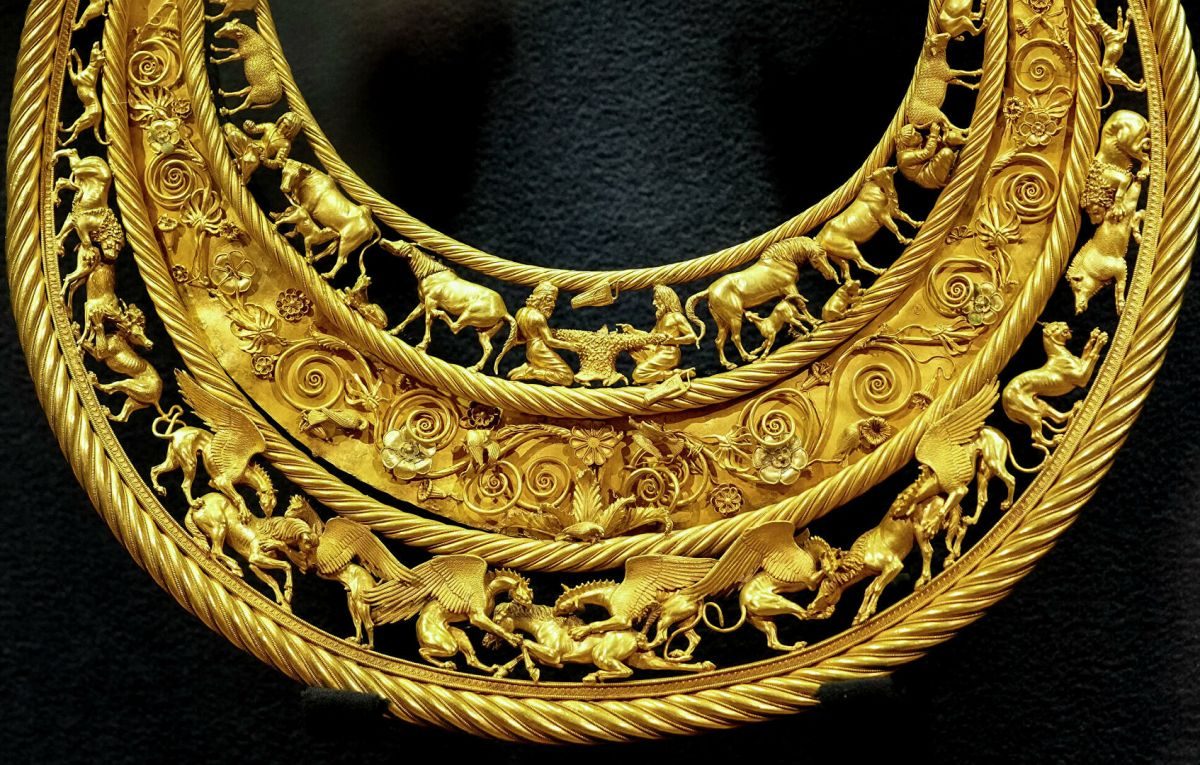
However, even this ruling may not be the last in the saga of the 'Scythian gold.'
The Amsterdam Court of Appeal has ruled that the collection of so-called 'Scythian' gold belongs to Ukraine and must be returned to the Ukrainian state.
The court's verdict states: "The Allard Pierson Museum (ARM) must transfer the so-called Scythian treasures to the state of Ukraine. Although the museum's exhibits originate from Crimea and in this sense may also be considered the heritage of Crimea, they are part of the cultural heritage of Ukraine."
The museum exhibits will be handed over to the State Historical Museum of Ukraine in Kyiv "until the situation in Crimea stabilizes." We explain how it all began and how the parties reacted to the court's decision.
What is the 'Scythian gold'
The case heard by the Amsterdam court concerns a collection of 'Scythian gold' consisting of hundreds of exhibits, which was on display in a Dutch museum when Russia seized Crimea.
On December 14, 2016, the Amsterdam court decided to return the 'Scythian gold' to Ukraine, but in January 2017 Crimean museums began the process of appealing the decision. The case dragged on and was suspended pending a decision on Ukraine's motion to recuse the judge.
On October 28, 2020, the Appeals Chamber of the Amsterdam court granted Ukraine's motion. President Volodymyr Zelensky welcomed the court's decision.
In February 2014, the 'Scythian gold' collection was taken to Amsterdam to take part in the exhibition 'Crimea: Gold and Secrets of the Black Sea,' which was held at the Pierson Museum. The exhibition consists of collections from five museums, one of which is located in Kyiv and four in Crimea (the Kerch Historical and Cultural Reserve, the Central Museum of Tauric Russia, the Bakhchisarai Historical and Cultural Reserve and Tauric Chersonese).
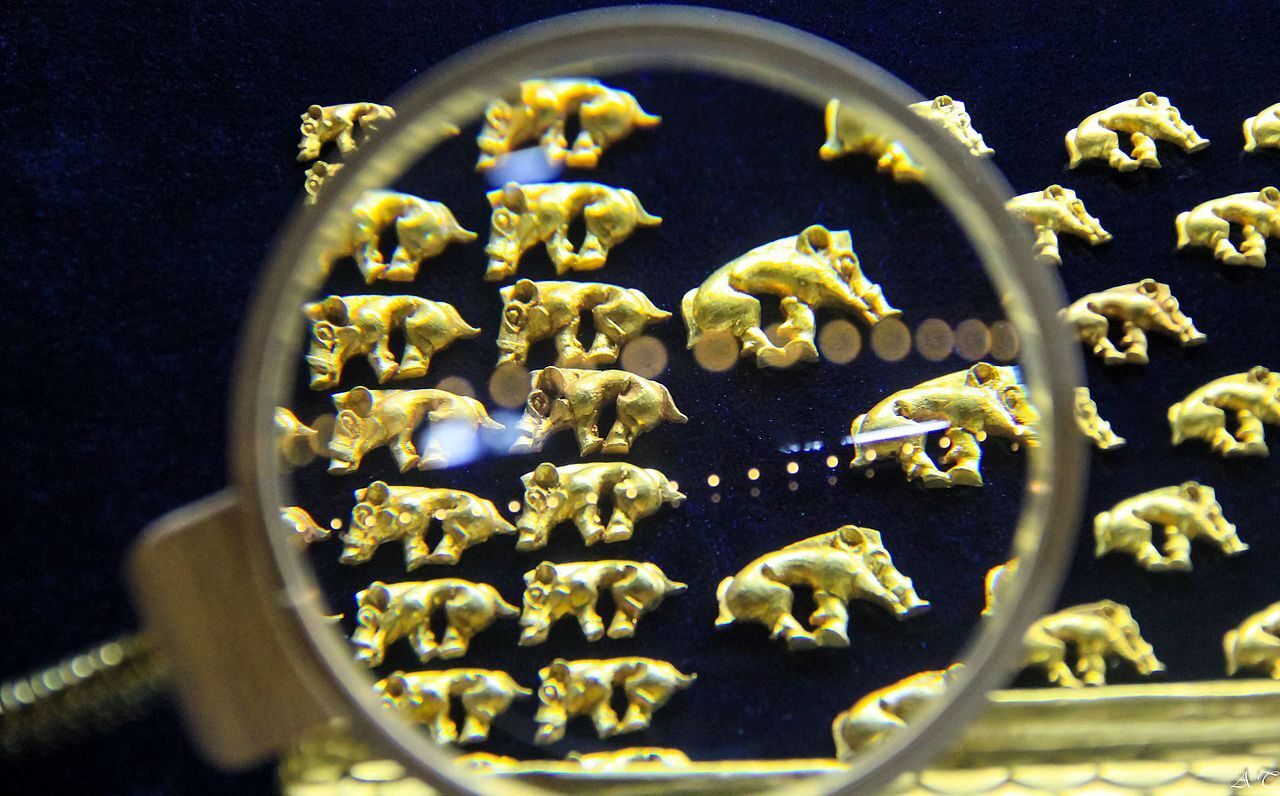
Among the exhibits are artifacts of Scythian gold, a ceremonial helmet, precious stones and swords of the ancient Greeks and Scythians. The Ukrainian side stated that the Scythian gold from the four Crimean museums should be returned to Ukraine. Russia, for its part, insisted that it be returned to Crimea, which it annexed in March 2014.
In occupied Crimea, it was stated that the estimated insured value of the 'Scythian gold' is about €2 million, while the actual value of the exhibits is much higher.
Reactions of the parties
President Volodymyr Zelensky said that Ukraine always takes back what is its own: first it will return the 'Scythian gold,' and then Crimea, which is occupied by Russia.
Volodymyr Zelensky
President of UkraineA long-awaited victory in the Amsterdam court! The 'Scythian gold' will return to Ukraine. We always take back what is ours. First we will return the 'Scythian gold,' and then Crimea.
The president also thanked the court "for its fair decision," and the teams of the Ministry of Justice, the Foreign Ministry and the Ministry of Culture "for the result."
At the same time, lawyers representing the Crimean museums will study the possibility of appealing the decision of the Amsterdam Court of Appeal.
Andrei Malgin
head of the Central Museum of Tauric RussiaThe decision did not come as a surprise to us, but I am, of course, shocked by this attitude of European justice toward the rights, interests and cultural heritage of Crimea. This is a disgusting decision, simply vile. And I deeply regret it. We will discuss this with our lawyers, and if they deem it procedurally possible, we will appeal.
Arguments of the parties
Each side in the dispute showed confidence that the case would be decided in its favor. In Crimea, they referred to the practice established in the museum world, under which priority is given to the rights of specific museums. The agreement on organizing the exhibition in the Netherlands states that the exhibits must return to precisely these museums.
Another argument of the Crimean museums was that archaeological treasures must be kept on the peninsula itself, in the area where they were excavated. However, these arguments did not convince the Ukrainian side.
Svetlana Fomenko
Deputy Minister of Culture of UkraineAsk at the Louvre whether everything stored there was excavated in Paris. Throughout the world, in accordance with all international conventions, archaeological finds belong to the people of the country on whose territory they were found. All these excavations were carried out on the territory of Ukraine, not only in Crimea but also in other places in the southern part of the country, so they belong to Ukraine. And it is exclusively the competence of our state to decide in which museum they will be kept.
In Kyiv, it was recalled that, under Ukrainian law, all museum exhibits are owned by the state, and museums are only temporary custodians.
Speaking at the Amsterdam court, the Ukrainians argued that cultural values from Crimean museums had repeatedly been taken to the "mainland" Russia, so it is not a fact that all of them returned to the peninsula.
Is this the final decision?
However, even this ruling may not be the last in the saga of the 'Scythian gold.' The losing side will most likely appeal it to the cassation instance, the Supreme Court of the Netherlands.
Russian media suggested that consideration of the case in this court could drag the process out by roughly two more years. However, under Dutch law, a court ruling takes effect after the decision of the appeals court.
Therefore, it is theoretically possible that the 'Scythian gold' will leave Amsterdam in the coming months.

Russian Attacks in Dnipropetrovsk Region: Two Killed, Seven Injured

Defense Forces Strike Four Russian Drone Control Points in Past Day, Including in Berdiansk

Britain Threatens Sanctions on Kremlin-Linked People; Poland Ready to Hand Ukraine Ammunition

Russia says it has completed "planned exercises" in the Black Sea

MVD: Fake Riots With Prop Blood Were Being Prepared Near Presidential Office

Law Enforcers Name Another Klitschko Deputy as Suspect

Berlin Holds Protest Against War in Ukraine; EU Prepares for Possible Russian Halt of Gas Supplies
North Korea Fires Ballistic Missile Over Record Distance in Five Years
Irish Fishermen Force Russia to Postpone Naval Drills

US sanctions in case of invasion of Ukraine could completely destroy Russia's economy, NYT reports
