
Andriy Biletsky: All Right-Wing Structures Do Not Support Sternenko Because Nationalists Have Questions for Him
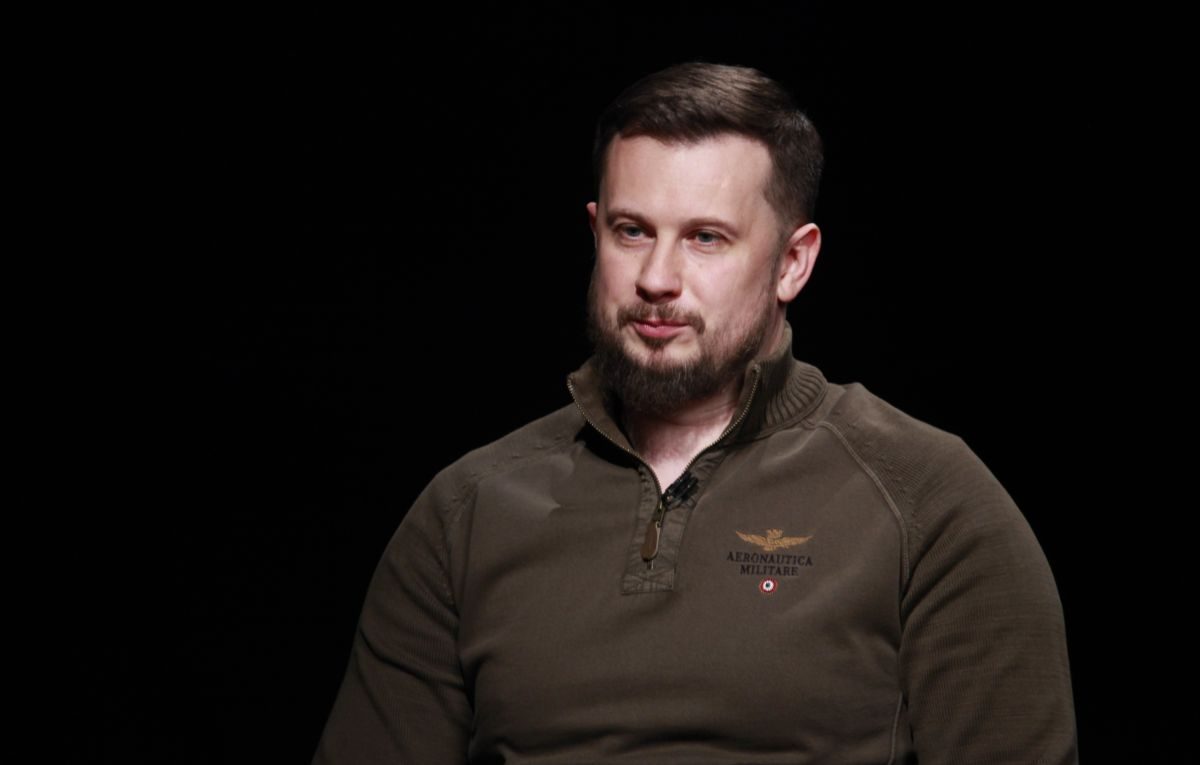
The politician also told the true story of how Azov was created.
In a new episode of the program “Antipody” on the “Iceland” TV channel, Ukrainian military, civic and political figure, founder of Azov, colonel of the National Guard of Ukraine, leader of the National Corps and People's Deputy of the eighth convocation Andriy Biletsky.
He told the true story of how the Azov regiment was created, about the start of the war in 2014, about Avakov and Kolomoisky, Medvedchuk's army, and also expressed his attitude toward the Sternenko case.
How did the Azov battalion appear and who gave it the first money? We all know the official story. How did it really happen?
Let's start from February 2014. Maidan had just ended, with shooting on Maidan. Then political prisoners began to be released. And it's a mistake that people often write that I was released under the law on political prisoners passed by the Verkhovna Rada of Ukraine. That's not entirely true. My name is in that law, but, unlike others who had been convicted, it was precisely then that the final court verdict came. On the 19th or 20th the court decided, and it was already clear that my comrades and I had been held for 2.5 years in prison on a case in which there was no corpus delicti. And no moment of crime. In other words, it was a completely fabricated case. So I was actually released not under the law, but under the final and justified decision of the court. Everyone else was simply released. My situation was a bit different.
Why was I there? I headed the Kharkiv organization and coordinated the All-Ukrainian organization “Patriot of Ukraine”. And precisely under Yanukovych there was a crackdown on football fans, nationalist youth organizations and circles, let's say. Back then people were jailed for everything, including invented cases, non-existent terrorist attacks, and threats to kill Yanukovych, when people painted stencils with a red dot on Yanukovych's forehead. Real prison terms were handed down for that. So, we were released, and I was sure that Maidan had won, that everything was over and so on. Then 40-50 people met me outside the detention center. Everyone asked me to come in the evening to a meeting at the regional administration, to PS, the Kharkiv ultras. Quite a lot of people gathered. Then it became clear that in Kharkiv, Berkut with tricolors, Oplot, was really controlling the street. All of Maidan was either holding rallies or sitting in the regional administration, and something had to be done about it. So it happened that I got into this story right away. Moreover, I went out confident that in Ukraine the moment of dignity had arrived.
The first thing that was done was to organize against Oplot. Then we attacked the Oplot headquarters, which was a huge building at the hippodrome. They were driven out of there. Everyone was shocked, because until then no one had shot. For the first time we were fired upon then. We arrived a few hours later at night and simply shot at the building from a car, and by sheer luck no one was wounded and no one died. That was the first action; it formed a group of people who decided to fight this in Kharkiv. But Oplot went nowhere. There were clashes and fights. Then tricolor checkpoints appeared all over the city. The militia did absolutely nothing, because it didn't know whose portrait to hang in the office now. That is, Putin or Turchynov or someone else, and it did nothing. Everything looked like Maidan in reverse. That is, a huge number of people in bulletproof vests and helmets, with batons, some with weapons, wandered around Kharkiv looking for “banderovtsy”. Although we were then taking them out exclusively as Russian-speaking Kharkiv residents. You know perfectly well how this happens. That was the beginning.
Then there was the regional council, then came that terrible storming of the regional council, when people were maimed. They conducted the “corridor of shame”. They were led like dogs, on all fours, then forced to kneel, doused with brilliant green, beaten and similar things. We took active part there, and we were in fact the front line. That is, all this was hardening us. It became clear it would not end well. After that came the first battle, when firearms were used against us en masse. It's worth looking at photos of Rymarska, 18. That's “Prosvita”. The Right Sector was based there then. Several hundred people attacked “Prosvita”. Mototola took part there directly. In the last interview of his life he told how he was there. It was already a serious attack. They fired with firearms, not traumatic but real firearms, from a large number of weapons. They tried to burn the entire building, and there were wooden floors, so they wanted to burn out who knows whom, the way rats are burned out. But then they were routed and we fought them off.
In the morning police arrived, still called militia then. Everyone was there. Kernes was there, the regional governor was there, the heads of the city and regional prosecutor's offices were there, the head of the SBU was there, the police chief was there, and some deputies were coming from Kyiv. The situation there was very complicated. So in the morning they started demanding: now we will storm, or you surrender. We surrendered and came out. There it was all clear. There was video of who started shooting. There were injured people on our side. The premises were completely shot up. And then it was decided to form the “black men”. From then on, we can say, “AZOV” was called “Azov” only by chance. Then the “black men” were formed. They were Kharkiv residents, some guys from Luhansk and Donetsk, and part of them were Kyivans, a smaller part, about a third. They were based in Kharkiv, outside Kharkiv, in the forests. And in principle we threw 80 percent of them out of there and cleared them out within a month.
For us the initial phase of the war, before artillery had started working, frankly speaking, did not differ from the Kharkiv stage; we were already mobilized internally. By then Sloviansk and Kramatorsk had already been taken. We tried to find a way to get weapons, get training and fight. Really fight. But there was a huge problem with this. The plan, frankly, was for me, as a Kharkiv resident, to fight in the Luhansk direction. But the army, the Security Service of Ukraine, the Interior Ministry, everyone shouted: “yes, yes, tomorrow, the day after tomorrow and so on.” Many were fed fairy tales: both the seeds of “Donbas” and the “Right Sector”, which had to sit in Dnipro for several months. When they were told: tomorrow we'll form a battalion and send you, sit and get ready. The same situation was with us. But since we were who we were, there were many moments when we captured things together with “Timur”, now killed, who headed the “Luhansk” battalion, Temur Yuldashev. He and I captured Klinchaev in Luhansk.
I remember, we first met in the office. You were thin then, with such a pale face, after prison, I understood. Lyashko was still around then. By the way, I don't know what Lyashko did with that Klinchaev, that he went even more insane afterward?
There was actually a terrible story there. Then we captured him (Klinchaev), and we took him to the airport, because Lyashko's plane was there, on which Lyashko promised to fly him to Kyiv. When we were driving to the airport, Timur was riding at a distance from the column and reported that a pursuit had gathered. And I told one of my comrades then, because we had one Makarov pistol for everyone, but the rounds were not 9x18 but 9x17. It wasn't a semi-automatic pistol. You had to pull back the slide and fire again after every shot. There were 10 or 12 of those rounds. I told him: “We won't hand him over, you have the pistol, you know what to do, and then we'll somehow break through across the fields.” That was already at night.
But then, as far as I know, Turchynov called. And as far as I understand, I can't say exactly, this is purely assumption, Lyashko called. He said the separatists promised to withdraw from the regional council if they were given Klinchaev. They promised they would give up something, hand something over. And if not, they would start storming the airport. So he had to be released. Lyashko scolded him then in his signature voice, which was really funny. And he released him. But not of his own will, but because someone from Kyiv, who was running the country then, called.
So we basically agreed.
Yes. They were deceived. They were naive people then: they thought one could negotiate. We didn't think so. In Kharkiv everything became absolutely clear. And since we couldn't sit still, we kept running between Kharkiv and Luhansk, and our groups kept going to Donetsk. And since we couldn't sit in one place, our friends from the Automaidan invited us to Berdyansk. Because there was supposedly information, and indeed it was released by the SBU of that time, but some of those SBU officers who later released this information ended up in Russia, so I can't say how true it was. Later they turned out to be double agents. We set off to Berdyansk with a group of about 57 men. The separatists planned to seize the military enlistment office there. There were two guards. And at the military enlistment office in Berdyansk, several thousand automatic rifles had been brought in from some units. So the Automaidan asked for help, so that we would come and not let this happen.
We arrived in Berdyansk. At that time they were seizing the Mariupol city council, building barricades, and armed men were appearing. We sat in Berdyansk for a day, understood that nothing was happening there, and went to Mariupol, where we set up base outside the city. And then in Mariupol a miracle happened. For us it was the day we obtained weapons. There was an attack on a military unit there, when a boy guarding it fired by accident. They tried to set fire to a car there, he fired, and by ricochet, I think, killed one of the attackers. After that, serious problems began in that unit. Most of the guys were from Mariupol. They were demoralized. Desertion began, and they were not trusted. So at night they approached us and said the situation was such that the weapons had to be taken out of the unit, because they were going to storm it that night.
We took apart part of the wall at the back and moved all those crates straight into buses. Here again, it's not a question of how I feel about people, but a question of objectivity and honesty. The same Lyashko, who was running around with all these matters then, called Turchynov. Turchynov thought for a long time and decided: the weapons had to be given to someone. He said that on the staff in Donetsk region there was a special forces company of Azov. We didn't even know the name. They told us: the special forces company is not filled with staff. Just a special forces company that was supposed to be based in Mariupol. Give us a commander, we'll register the weapons to him, responsible storage, and then you'll have some banner. That's no longer the idle existence of savages, but an objective force. Here we had a problem, because among the 56 people with us almost none had passports on them. They found Vova Shpara, who had a passport. He was immediately registered as a warrant officer, and all the weapons we had taken out of Marik were put on him.
Then this unit was stormed on May 9. A small part of the weapons was taken from there, and two armored vehicles were taken from there, with weapons and so on: a BTR-60 and a BRDM. So it was done correctly, because if this had not happened, then certainly about three hundred small arms would have spread around Mariupol. The next day we took out these weapons, just as we were moving toward Mariupol. And that was the very first battle of “Azov”. They set an ambush, a very stupid one from a military point of view. Outside Mariupol, at a bus stop, they set up a machine gun and three riflemen, and they shot up two cars and wounded one person, a hired driver of a yellow Gazelle. The whole bus was riddled with bullets, half the headrests had bullet holes, everything was broken, and not a single person was even scratched. They wounded the only person who had nothing to do with “Azov”. Well, they lightly wounded the guy who was the driver of the yellow Gazelle. He was simply paid, conditionally, 500 hryvnias for two or three days and for gasoline.
But then they also captured this Kakidzyanov. He had proclaimed himself Minister of Defense of the DPR, and he went himself to organize the ambush, with a gang of five people. He was taken prisoner, another one was taken prisoner, and the machine gunner was shot. They intercepted the very machine gun they had stolen at the checkpoint of the 72nd Brigade. The situation there was such that they poisoned people. They brought food, and in the literal sense there was no supply at all. And so they brought it, as if they were their own, Ukrainians. And they poisoned people at the checkpoint and stole weapons. Later it turned out that this was the same machine gun from that attack. That was the first battle.
After that we were asked to come to Kyiv to be registered, all of us, so that we would be officially registered, because nothing was working in Mariupol anymore. Almost all state institutions had been seized. We went to Kyiv. On the 8th we left for Kyiv, and on May 9 in Mariupol they seized the traffic police and again seized the city council. The city ended up under the control of the “DPR people”. I slept for the first time in several days, for three or four hours, at acquaintances' place. Then Anton Gerashchenko called me in the morning and said: here's the situation. You know everything there in Mariupol. He said they had seized the city. They asked to send Interior Ministry special forces, which is more or less his profile. He said those and those were refusing to fly, could we fly? I must say Anton deserves credit for this, he was very persistent and did everything right. What honestly worried me was not that in two hours we would be flying to Mariupol. I was simply cursing inwardly that I couldn't sleep another two or three hours at least. That was my main thought then. Everyone was woken up. There were absolutely no questions. There was enormous enthusiasm. We drove to a military airfield. There they gave us, for some reason, not a passenger plane but a cargo plane of the Ministry of Emergency Situations. And we flew to Mariupol on that Emergency Ministry plane.
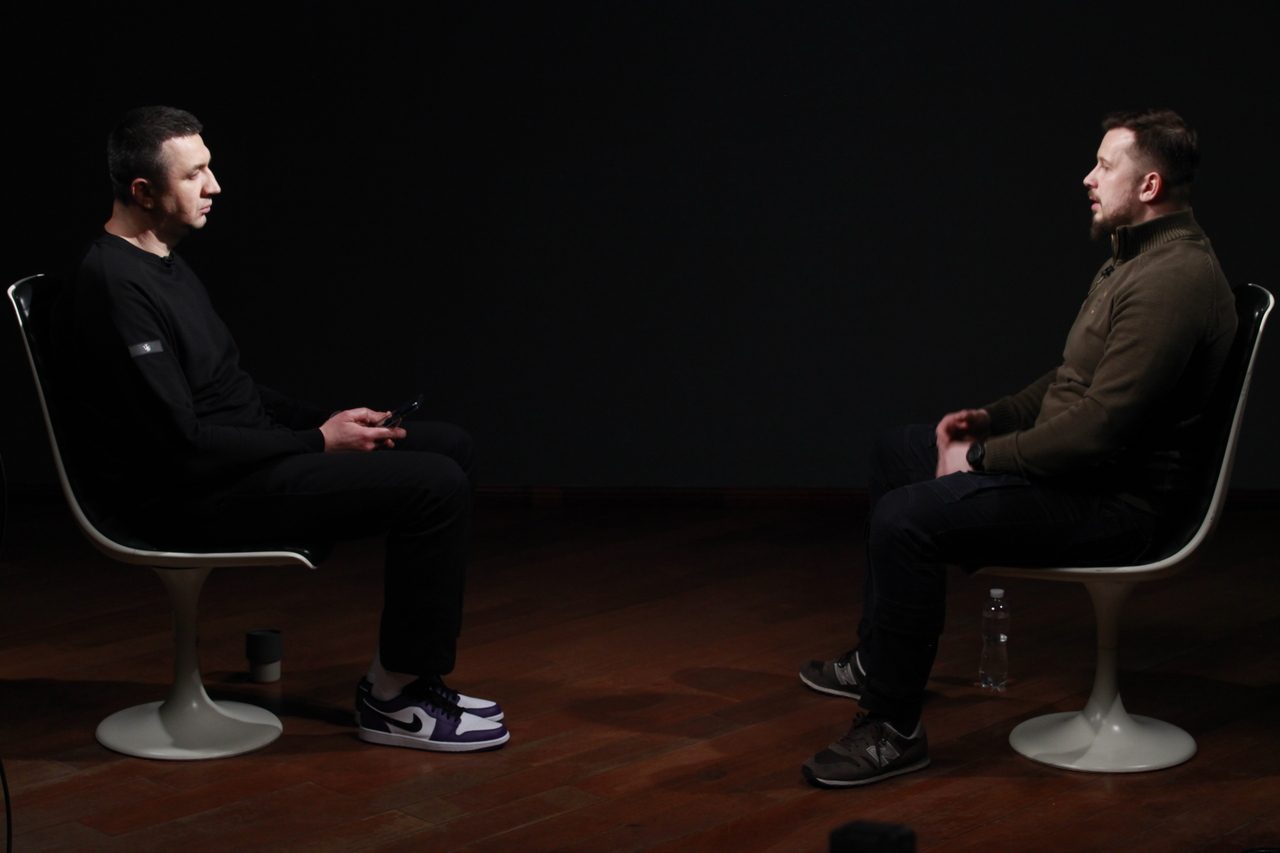
How do you see the Sternenko case, and why doesn't the “National Corps” take part in rallies in his support? Am I wrong? Well, a question arises. You yourself are a former political prisoner.
Let's take them one at a time. What is the Sternenko case?
The Sternenko case is the sentence handed down to him for the fact that in 2015 he kidnapped some separatist or member of some pro-Russian political force and, accordingly, demanded something from him. And, as the prosecution claims, he applied some torture to him and allegedly took something from him. That is what the prosecution claims. I would perhaps like to hear the defense's version, but, unfortunately, I have not heard it. It doesn't exist, as far as I know.
As a person who has been in prison, and simply as a person raised by people, I cannot talk about and discuss a person who in any case finds themselves in a difficult situation. That is simply wrong. It's ugly. I understand perfectly well, and I personally have serious concerns precisely about the case you mentioned, Sternenko's. That is, about the sentence itself. Why? I understand people perfectly well. Why they consider this story wrong. And in this respect I support them one hundred percent, setting aside Sternenko's personality.
And you have a question, as I understand it, about him?
For example, he was in the “Right Sector”. Let the Right Sector talk about him, or come out in his support. This doesn't happen. But there are several points. First, people probably would have fewer questions if Portnov, as they tell us, that no one in our country influences the courts, but I remember that Portnov announced Sternenko's arrest about a week before. Or three days, I don't remember. In any case, for some reason this guy, who is under sanctions in half of the normal countries of Europe, who now takes a completely incomprehensible position and has an incomprehensible influence on Zelensky, is announcing the verdict of an independent judicial branch of power.
I think there would be no questions if Tatarov, whom Zelensky protects like a Fabergé egg, were not the lawyer for the so-called victims in Sternenko's case. That seems to be his most important asset: Yermak and Tatarov. That is, he continues to actively defend them to his own detriment. And if Sternenko were not being tried by a Stalinist. In any case, they chose a judge who is his direct ideological antagonist. He probably already has antipathy toward Sternenko because of sharp differences in political views. All this raises a huge pile of questions.
As for, for example, the situation with Sternenko regarding the murder or self-defense, I generally think it's unimportant... Yes, it's clear that hardly two idiots with bare fists came to kill someone, well, that's strange. When they say: attempted murder. Attempted murder of what? Nobody has killed someone with bare fists, well, it's rare when it happens. I think this way: someone attacked a person, and the person has the right to defend themselves. We must teach that this should not happen in the country. Someone attacked you, you hit, killed, well, what can you do? No one forced you to attack a person. And he was unquestionably attacked. I also see unconditional self-defense here.
About the third case, about drugs, I have no idea, frankly. Discussing Sternenko, once again, is ugly. Now regarding the case. The “National Corps” has a billion court cases involving worthy people, on exactly the same absolutely similar charges, whom we support in pretrial detention with parcels and legal aid, whom we support in court, and to whose hearings we go. Take the case of a battalion commander who is now accused of beating a drug addict on the line, and who they wanted to put in pretrial detention, and so on. He even has a lawyer from the “National Corps”.
The case of Iranets is symbolic for me. A symbolic person, not a self-proclaimed hero for no clear reason. But a symbolic person, one of the leaders of the Right Sector on Maidan: Iranets. He went to the war from the first day, and I can attest to that, because I myself was there from the very first days. Everyone knows he fought impeccably. He came home to Chernihiv. And while walking with his pregnant wife, a group of people attacked him, not one or two. Someone had a crowbar and something else. And he killed one of the attackers. He was given ten years. No one goes to court for him. Well, friends go, guys from the “Right Sector” go, we went, and we are helping now while he is in the Zhytomyr colony. But no one knows. I am against such court decisions. But let's be objective: such decisions are not dozens but hundreds. In our country, more than 90% of verdicts are guilty ones, right? There are dozens, hundreds of such cases.
And in the interest of truth, I have to say that when they talk about the “first political prisoner,” honestly, it worries me. Well, Iranets. The guy fought for Ukraine. I know a nurse in Luhansk region who was under a clear suspicion, which was later confirmed, that scum were correcting and giving data to separatists. They were stopped, their phones were taken for several hours, they were taken somewhere and then handed over to the service. And in 2016 statements were written against them. Those who confirmed that these people had been brought to us. The military can't do anything, although this is a frontline zone, two kilometers. The woman, a nurse who had been fighting since 2014, was given a real sentence. Nobody is interested in these people. And do you know why? Again: likes. Because here you get, well, what can you say. This is a shot at each of us. And when Iranets was being locked up, when a billion cases were opened against military personnel and volunteers, wasn't that a shot at each of us?
And when was Iranets locked up?
Iranets was locked up, if memory serves, back in 2015. And so I have a huge question. That is, if all this was wonderful and normal, why is it like this? And I'm told: well, nobody is to blame that these people don't have a promoted blog. And nobody is to blame for it.
Activists make claims against you.
Well, they accuse us of something, there's “selling out” and something else, although to our faces, once again I'll tell you, nobody says anything. And I have a thousand times more questions for most of these people. But let's make it very simple. Look, what I had and still have, I can boldly say, is 14-16 thousand activists across the whole country. In Kharkiv or Odesa we gather more people at rallies than gathered here with the support of all of Facebook. Now that's where the passionate people are. I have my own activists, and my honesty and responsibility are first of all toward these people, who are engaged in real, serious matters.
By the way, I'll tell you frankly, we allowed it. We said: guys, this is a normal thing, if you want to support, then support. And Kyiv residents and activists of the “National Corps” go to these rallies. I'll start with simple things. In fact, this happens. Now regarding support: I have nothing bad to say about them, as you said, hyper-passionate... They are always honest, they've only switched sides fifty times and are now gathering for the fifty-first. I have absolutely no claims against them. I'll simply explain. Here, maybe I'll give an inside detail: there is a decision of all right-wing structures, and by the way, I abstained rather than supported it, not to take part in this story.
Is this some official story?
Yes. All right-wing structures, from small regional ones such as the “Carpathian Sich”, so to speak. You won't see the “Right Sector”, you won't see the “Carpathian Sich”, “C14”, you won't see “Tradition and Order”, “Freikorps” there. It is a general, absolutely shared story. It is literally the life story of a specific person, to whom nationalists have questions.
Well, you'll ask them when he's released.
Yes. But now, I think, asking them is inappropriate. Besides, there is video where guys who now serve in the SSO, who were in the “Right Sector” in 2014-15, are certainly not “vatniks” or “snitches”. They serve in the SSO, they belong to the General Staff of the Armed Forces. They clearly described his life path, his position and so on, being fellow villagers and in one organization with the person. So there are questions. But I'll say frankly, from a moral point of view I consider this verdict absolutely incorrect.
And fourth, what I can say is that for such verdicts no one has given anyone more than three years. Here it's seven years. They shoehorned robbery into it solely to give him the maximum, that is, not three years for detention, but a sentence for robbery. So, of course, this is a dirty story. But I'm saying, this righteous anger with which hyper-passionate people are filled somehow didn't spill over onto hundreds of absolutely worthy people. And they tell me: who is to blame that they don't have a promoted blog. Well, Iranets is to blame on the war, he was engaged in the war. He had no time.
Sternenko is now being placed next to Rifmaister. How correct is that, and do you believe Rifmaister could have killed Sheremet?
I don't want to believe this story. And I'll explain why I believe it very little. We were shown a video that looks complicated, there in the film with the pluses. One key question: what's the motive? So he walked near the house, here's a person who looks like him, photographing something. And what's the motive?
Well, the motive is written down: cultivating the greatness of the Aryan race.
I knew Sheremet personally, and he basically looked like a Nordic European, completely. So I suspect this cannot be the motive. There is no motive, and accordingly, until they show me the motives, how can I believe? They tell me: we've found out everything, the only thing is, why the hell did he do it? He killed a person, and not in a simple way either. This is Rifmaister. As far as I've said to acquaintances, he's not a bomber, he didn't take courses, he probably didn't understand how to do it.
Believe me, this is a complicated story that requires very serious qualifications. Even if you take an average good fighter, I doubt he could do it. It's a very specialized thing. Just as a good shooter is far from being a sniper, a good fighter is not a miner, bomber or sapper. It's a different specialty. Moreover, there is also such a specialty: the Muscovites have even now created a separate unit, called special mining. That is special mining. That is, you don't take an ordinary standard mine, do simple manipulations and install it, so to speak, facing the enemy, as they write on MONka.
I want to ask you about such phenomena of our reality as, for example, some of Sharii's passionate people, the Kiva militants he is forming. Among them there is a person who, as I understand, has a connection to you. Right? Don't you see the ‘ears’ of Arsen Borysovych behind all these structures?
Well, listen, that's too complicated. I'll explain it to you.
How does the police allow such structures to exist?
How does the prosecutor's office allow Medvedchuk to exist?
Andriy, you understand that in our prosecutor's office, nobody knows who is there, and at the head of the Interior Ministry we have the ultra-patriot Avakov.
I am not going to be Avakov's lawyer under any circumstances. And I can say that the fact that they do absolutely nothing and, mildly put, don't react properly, or more precisely don't react at all, is a hundred percent fact. Listen, do you even know complicated schemes that would work? I, frankly speaking, have realized that most complicated schemes can usually be explained by stupidity. And Napoleon said that one should not explain by a complicated game what can be explained by human stupidity.
I know Kiva. It so happened that the acquaintance was unpleasant from the very beginning, from 2014, even before all the militias and police and before “Azov” became “Azov”. So I know him from the “Right Sector”. I witnessed how this person, well, he's such a “kolobok”: he left his grandfather, he left his grandmother. He's an opportunist who ran over and stuck to Yarosh. After that he ran over and stuck to Kolomoisky. They were forming “Dnipro-2”, which was an attempt by the “Right Sector” to form a battalion, and he didn't go there himself. He stayed in “Dnipro” under Kolomoisky. After Kolomoisky he ended up near Avakov. While he was in the “Right Sector”, that gave him the chance to get to know Kolomoisky, and Kolomoisky gave him the chance to get to know Avakov. Avakov gave him, I don't know, or he decided it himself, to Medvedchuk. Each time, for a while, this is his ‘master’. So he's such a “kolobok”. As for Sharii, I simply don't know how to connect him, they don't have militants.
Well, they once beat up your people.
That sounds bad. Ten against two boys met and beat them with sticks. Ten against two, it's on video. Now Sharii doesn't hold rallies with more than 20 people. They ran in, did something, and scattered. Now they no longer allow themselves such things. Again, the police do absolutely nothing, and accordingly Avakov does absolutely nothing.
“Patriots for Life” is a public story. For example, Rabinovych and Medvedchuk each have a security agency. They have a huge number of bayonets, an order of magnitude more than “Patriots for Life”. The most notorious is Medvedchuk's “Storm”. The one that seized the base on Truhaniv Island and several other bases in Kyiv region. These were mainly fighters on Tverskyi Lane, where we blocked them, and that's when the police for the first time didn't know that a hundred people with weapons were on Tverskyi Lane, until the “National Corps” appeared there. Probably they didn't know.
“Storm” is far more dangerous. For example, when the SBU visited Truhaniv Island last year, it turned out that there was a “Lustra” there, that is, very expensive equipment worth hundreds of thousands of dollars, for intercepting mobile phones and regular communications. Moreover, this is a criminal offense in general. But, as far as I know, after squabbles in the prosecutor's office they returned this Lustra to them, and they returned the weapons. In 2020 there was an SBU raid there, which ended with nothing. They returned the weapons, they returned the Lustra, and they returned the recordings.
Well, you understand that people who meet at Surkis's birthday party are unlikely to offend each other.
Agreed. So, Kiva is from the clown circus. He's the combat clown wing, close to the greens' direction and so on. And there are absolutely serious structures that they don't actively show off, which are, so to speak, their main shock force. Until recently these structures were constantly expanding, that is, increasing in number. And neither the police nor the Security Service of Ukraine, nobody did absolutely anything about this until we started. We waited, we drew public attention to it and so on. But until we actually began to move, to disrupt their actions, to block them where they are armed and to oppose them. Although it's unpleasant. Although it takes time. Although then they catch veteran guys, not Kiva's bulls.
But this has to be dealt with. Because after that, one, two, three times, we did draw the attention of the police and the security service, which visited “Storm” two weeks ago. We drew attention, and all this began to happen, and in this way we are stopping this story in the literal sense. If Avakov, Bakanov, or someone else had not noticed this story for some time, they would have had thousands of bayonets, several thousand. And then among the titushky there would be a feeling that nothing terrible was happening: taking money from Medvedchuk and going out to defend their actions and so on. And then, besides parliament as a lever of influence, the media as a lever of influence, the economy as a lever of influence, and the incorporation of their partners Portnov, Tatarov and so on into power, they would also get a force lever, that is, the street. That is why they must be fought.
Why the police don't do this, and whether they're playing games, is again not a question for me. But I can state with a thousand percent certainty one thing: they don't. And again, Kiva in this situation is, frankly, a bit of a nonentity. Medvedchuk allocated him some money, and he gathered several hundred scum across the country. “Storm”, as a structure, is many times more dangerous and serious. The person who heads “Storm” is far more powerful than Kiva. That's a deputy from the OPZZh, Chorny. He's a person far more competent as a security man. A threat is a threat. Because if they already have almost all the levers needed to influence the country's politics, and a force component appears in the rear as well, it will be dangerous. So I think this must be fought wherever possible.

Russian Attacks in Dnipropetrovsk Region: Two Killed, Seven Injured

Defense Forces Strike Four Russian Drone Control Points in Past Day, Including in Berdiansk

Britain Threatens Sanctions on Kremlin-Linked People; Poland Ready to Hand Ukraine Ammunition

Russia says it has completed "planned exercises" in the Black Sea

MVD: Fake Riots With Prop Blood Were Being Prepared Near Presidential Office

Law Enforcers Name Another Klitschko Deputy as Suspect

Berlin Holds Protest Against War in Ukraine; EU Prepares for Possible Russian Halt of Gas Supplies
North Korea Fires Ballistic Missile Over Record Distance in Five Years
Irish Fishermen Force Russia to Postpone Naval Drills

US sanctions in case of invasion of Ukraine could completely destroy Russia's economy, NYT reports
