
Bolshevik Plant in Kyiv Sold for UAH 1.42 Billion: Who the Buyers Are, Plans for Redeveloping the Territory, Undervalued Price and KCSA Claims
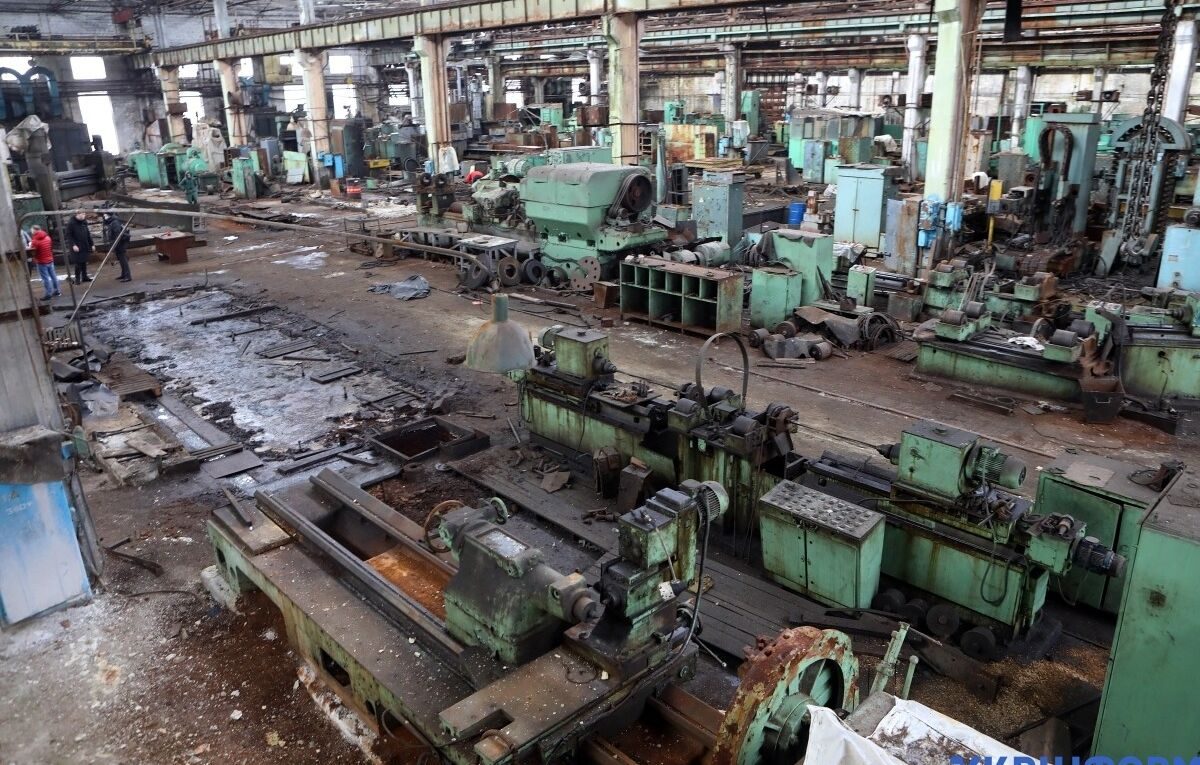
One of the workshops stands on the site of the potential approach to the Shulyavskyi Bridge.
On October 27, as part of the state program “Big Privatization,” the sale of JSC “First Kyiv Machine-Building Plant,” also known as the Bolshevik plant, took place.
In this article, we explain who the participants and the winner of the auction are, why the plant itself, although sold at an undervalued price, is of no value to investors, and how the Kyiv authorities are claiming one of the plant's workshops.
Auction
The State Property Fund (SPF) was responsible for organizing the auction. The auction started at 11:00. The SPF did not disclose the venue — the online broadcast was held in the congress hall of the Cosmo Multimall shopping center, located next to the Bolshevik plant.
Until the last moment, the SPF did not disclose the number of auction participants, although it had previously said that 15 investors had been admitted to the auction. The starting price of the auction was UAH 1.39 billion.
About 20 journalists attended the broadcast, along with representatives of the SPF, the consulting company KPMG, which carried out the plant's valuation, and several other experts.
As it turned out, only three companies laid claim to Bolshevik: General Commerce, IDK Kaskad and Invest Novatsiya.
The first company is linked to businessman Vasyl Khmelnytskyi (UFuture holding) and his partners. The second is linked to former MP Vitaliy Khomutynnyk. According to the register, the third participant belongs to Stepan Chernovetskyi, son of Kyiv's former mayor.
The auction result was announced at the second bid: IDK Kaskad raised the price by UAH 20 million, and General Commerce raised it by another UAH 20 million, becoming the winner of the auction.
As a result, the plant was sold to General Commerce for UAH 1.429 billion, or $54 million. Under the terms, the buyer must also repay the plant's debt in the form of unpaid earlier taxes and employee wages, amounting to about UAH 500 million.
Earlier, the developer SAGA Development had valued the plant's land plot at UAH 3.2–4 billion.
The new owner must also invest UAH 57 million in the repair and modernization of the plant's industrial site in Zhashkiv, Cherkasy Oblast. The buyer may also transfer all of the plant's production capacity there, since a condition of the purchase is the preservation of all the enterprise's activities.
The company now has 10 days to sign the contract, as well as 30 days to pay the amount and obtain approval from the Antimonopoly Committee. After that, 100% of the shares will be transferred to the buyer's account.
Purpose of the purchase: capital city land
The main asset of Bolshevik is 36 hectares of land in Kyiv, near the Shulyavska metro station.
Potential investments in developing the plant's territory could amount to $300–500 million. The new owners have not yet announced what they plan to build.
Vasyl Khmelnytskyi
investorKyiv will get innovative and comfortable infrastructure in the city center, an effective owner and billion-dollar investments, new jobs and development prospects.
According to experts' estimates, 650,000–750,000 square meters of residential real estate could be built on the plant's territory.
Dispute with KCSA
The Kyiv City State Administration demands that the plant's fifth workshop be transferred to municipal ownership. The reason is that it is located on the site of the Shulyavskyi overpass under construction, namely at the site of a potential interchange.
According to Deputy Head of KCSA Mykola Povorozynyk, the workshop must be transferred to the city authorities “at any cost.”
Mykola Povorozynyk
Deputy Head of KCSAIt is important that a channel of communication has appeared between the city and the owner of this territory. I hope that in the near future the issue of the fifth workshop will be resolved and that we will be able to complete the Shulyavskyi interchange as it was planned.
According to him, the workshop must be transferred to KCSA by any means: through a sale or by transfer in exchange for land debts.
Plant
The plant was founded in 1882 by Swiss national Jakob Greter and engineer Philipp Moser as the joint-stock company “Greter & Krivanek.”
In the 20th century, the enterprise became one of the largest manufacturers in Eastern Europe of large equipment for processing rubber, plastics and their waste. The plant produced plastic pipes, wood-polymer sheets, rotors and cylinders.
Since the collapse of the USSR, the plant has gradually declined. At present, about 80% of the equipment is in disrepair and unable to produce products that meet modern needs. As the SPF stated ahead of the auction, the plant's main activity was renting out premises.

Russian Attacks in Dnipropetrovsk Region: Two Killed, Seven Injured

Defense Forces Strike Four Russian Drone Control Points in Past Day, Including in Berdiansk

Britain Threatens Sanctions on Kremlin-Linked People; Poland Ready to Hand Ukraine Ammunition

Russia says it has completed "planned exercises" in the Black Sea

MVD: Fake Riots With Prop Blood Were Being Prepared Near Presidential Office

Law Enforcers Name Another Klitschko Deputy as Suspect

Berlin Holds Protest Against War in Ukraine; EU Prepares for Possible Russian Halt of Gas Supplies
North Korea Fires Ballistic Missile Over Record Distance in Five Years
Irish Fishermen Force Russia to Postpone Naval Drills

US sanctions in case of invasion of Ukraine could completely destroy Russia's economy, NYT reports
