
Chuck Palahniuk Has Released a Book on Writing Craft, Black Humor and Ukrainian Pirates. Here Are the Most Interesting Stories
The literary scene can be more dangerous than Fight Club.
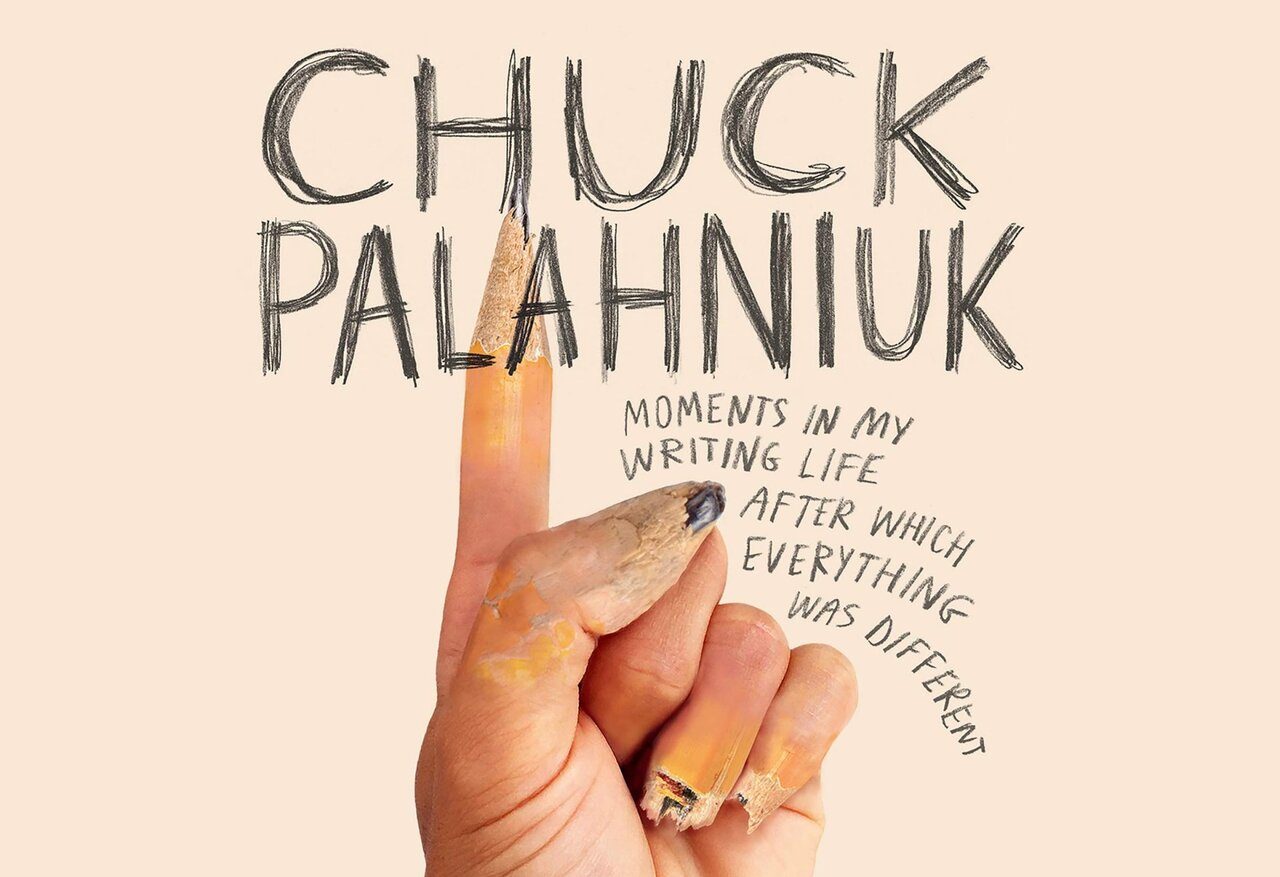
A grandson of an emigrant from Ukraine, the author of the bestseller Fight Club and a true master of black humor, Chuck Palahniuk recently released a new book, Consider This: Moments in My Writing Life after Which Everything Was Different. It is a guide for aspiring writers, but Palahniuk has peppered it with dozens of professional anecdotes. We will retell the funniest ones, and you can decide for yourselves what is true and what is his fantasy.
Work therapy. Palahniuk's main teacher of writing craft was Tom Spanbauer, who ran a course called “Dangerous Writing” for $20 a session. Readings took place in a dilapidated house without a porch, and before classes began Spanbauer made students trim overgrown currant bushes. “He said it would make us a team. It wasn't enough just to bring a manuscript. We had to spend whole weekends digging up soup cans and cat skeletons, then haul all of it to the dump. What did we know, anyway?”
Donuts with wheel grease. When Fight Club came out, Palahniuk worked at a truck assembly plant. Representatives of partner companies often brought boxes of donuts to the assembly shop to lift the workers' spirits: pink boxes the size of a suitcase, filled with pastries with Bavarian cream, coconut shavings and similar treats. “My friends' favorite prank was to bring a syringe of grease and swap the filling in a few of the pastries, then watch from behind the wire bins as someone bit into one of them. The joke never got old.”
Mop sharpener. On his first day at the plant, Palahniuk received an unusual assignment from his superiors: to get a sharpener for a rubber mop. After running around all the shops and enduring every kind of humiliation from foremen, he realized he had been the butt of a joke, but it also helped him understand the plant's structure and layout within a single day. Since then, readers have traditionally shared with Palahniuk their own stories of being subjected to hazing, that is, a mock initiation rite. Factory workers recalled carrying steam in buckets (nearly water in a sieve!), and TV crews recalled being made to wash the gelatin filters used for lighting (they dissolved in water). Finally, a veterinarian told the writer how his colleagues got him drunk, sewed him into a dead horse and made him claw his own way out.
Writer's inventory. One of the publishers once suggested to Palahniuk that a writer should register as a sole proprietor. He did so, after which the city authorities contacted him demanding a list of his inventory. Palahniuk replied that he was a writer and his inventory was ideas. “Then I was asked to count all the pens and pencils on my desk and enter them on the annual inventory form. They weren't joking. Neither am I.”
Air freshener. During a book tour of England, Palahniuk brought along two thousand tree-shaped car air fresheners scented with bacon, smuggling them past customs officers with a straight face. To the gathered readers he handed out one of these without comment and began reading his new story, about tourists who stopped by a thermal spring. The audience curiously squeezed and sniffed the fresheners they had been given, until the story took a grim turn. According to the plot, the hero steps out of his tent at night and smells meat. He realizes that one of his companions, drunk, climbed into the boiling spring and was cooked alive. “That night in London was exhilarating,” the writer recalls the audience's reaction.
Tattoo autographs. Palahniuk is not a fan of people who ask him to sign their bodies so they can immortalize the signature as a tattoo. Once a man came to a meeting with the writer, pulled up his trouser leg and showed Palahniuk's signature carved into his calf with a penknife. After that, Palahniuk ordered several crates of realistic-looking limbs from China: severed hands, cut-off legs and the like. Why? So he could sign them and toss them into the crowd of fans, of course. True, once bookshop staff mixed Palahniuk up with another writer and assured him that “the hands arrived safe and sound.” The writer turned out to be Aron Ralston, author of 127 Hours: Between a Rock and a Hard Place. “Yes, that same Aron Ralston. The man who, during a mountain hike, was forced to cut off his own arm.”
“The Lottery.” For a long time Palahniuk strove to replicate the effect of Shirley Jackson's story “The Lottery,” which in 1948 led hundreds of readers to cancel their subscriptions to The New Yorker, so shocked were they by the plot. That is how Palahniuk's famous story “Guts” was born. By his account, the number of people who have fainted during his readings now runs into the hundreds. But Shirley Jackson's spirit has not left his life. “By coincidence, I came into possession of some of Jackson's cremated remains. Her daughter Sadie was selling her mother's ashes online under the label ‘Shirley's Bones’ and sent me a portion when she learned I was a fan.”
Ukrainian subway. Palahniuk questions Neil Gaiman's theory that in developing countries reading a pirated copy of a book is like a first, free dose of heroin, after which the reader will start paying for the product. He has talked with fans from Ukraine who told him that subways there are still packed with people reading illegal printouts of Fight Club. A Russian fan once brought him a printed-out version of the novel Asphyxiation to sign and, with a heavy accent, demanded he sign it, saying that in Russia Palahniuk and Stephen King are mega-popular writers whom everyone reads for free. “It seems this man paid more for his pirated printout than a regular book from a printing house costs, unless ink, paper and binding are free in Russia.”
Under-the-counter sales. According to the writer, until recently in Barnes & Noble stores in New York his books (and Salman Rushdie's) were not put on the shelves. A customer had to ask the cashier about their availability, and the cashier would pull the novels out from under the counter, like alcohol or cigarettes. “If my books were left unattended, they were stolen. If Rushdie's books were left unattended, they were carried off to the public toilet and stuffed into the bowl. Barnes & Noble got so tired of thieves and clogged toilets that they took the books off the shelves to be on the safe side.”
Found manuscripts. Palahniuk says that after the scandal with Paramount, which stole the screenplay for Coming to America from journalist Art Buchwald, writers and screenwriters no longer touch other people's manuscripts. Who knows what might happen? Now, if a reader brings a printout of their novel to a meeting with the author, the writer asks them to put it in a special box. Right after the meeting it gets thrown away. Palahniuk's colleague Douglas Coupland once told him that unclaimed manuscripts are sometimes left in hotel closets on the top shelf. “I decided to check there whenever I could. Sure enough, I found expensive art books, handmade sweaters and other items, signed as keepsakes by the most famous figures in literary history.”
Plush penguin. Once Palahniuk held readings under the slogan “Bedtime Stories for Adults.” Attendees were asked to come in pajamas, bathrobes and slippers. At one point the whole crowd even took part in a run around the bookshop. Years later a man approached Palahniuk and said he had been at that event. He explained that the day before “Bedtime Stories for Adults” his closest person had died, his own brother. Not knowing what to do with his grief, he decided not to give up his ticket. “I came, and you handed me a huge stuffed penguin,” he told Palahniuk. “That's when I realized life still had some pleasant surprises in store for me. That good things could still happen to me.”
Native advertising. After the success of Fight Club, marketers queued up for years to use Palahniuk's work in advertising. He turned down Volvo, which wanted him to write a series of stories for its interactive website. He turned down BMW, which wanted a short story collection for an audiobook that would come as a bonus with the purchase of a car. Finally, PR people from a bank asked him to sell the rights to Tyler Durden's famous speech from Fight Club so they could insert it into an ad during the Super Bowl. Palahniuk made them a different offer. “It's not that I treat my books like my children, but I have some principles. I said I would deliver that speech myself instead of an actor. On TV. During the Super Bowl. If I'm going to sell out, I'll do it personally.”
Words from thrift stores. Palahniuk's mother sewed clothes for the children herself. No matter how hard she tried, it was obvious the clothes were not of the highest quality. The buttons had been cut from a wedding dress, and the fabric was sold for a song because it looked garish. Later the writer took to dressing in thrift stores, as he did not want to hurt his mother's feelings by wearing something expensive. This habit of modesty also showed in his minimalist literary style. “My language, like my clothes, was the cheapest. Store-bought clothes and polished words seemed to me like unnecessary showing off, so my brothers, sisters and I dressed in thrift-store finds and talked about the weather.”
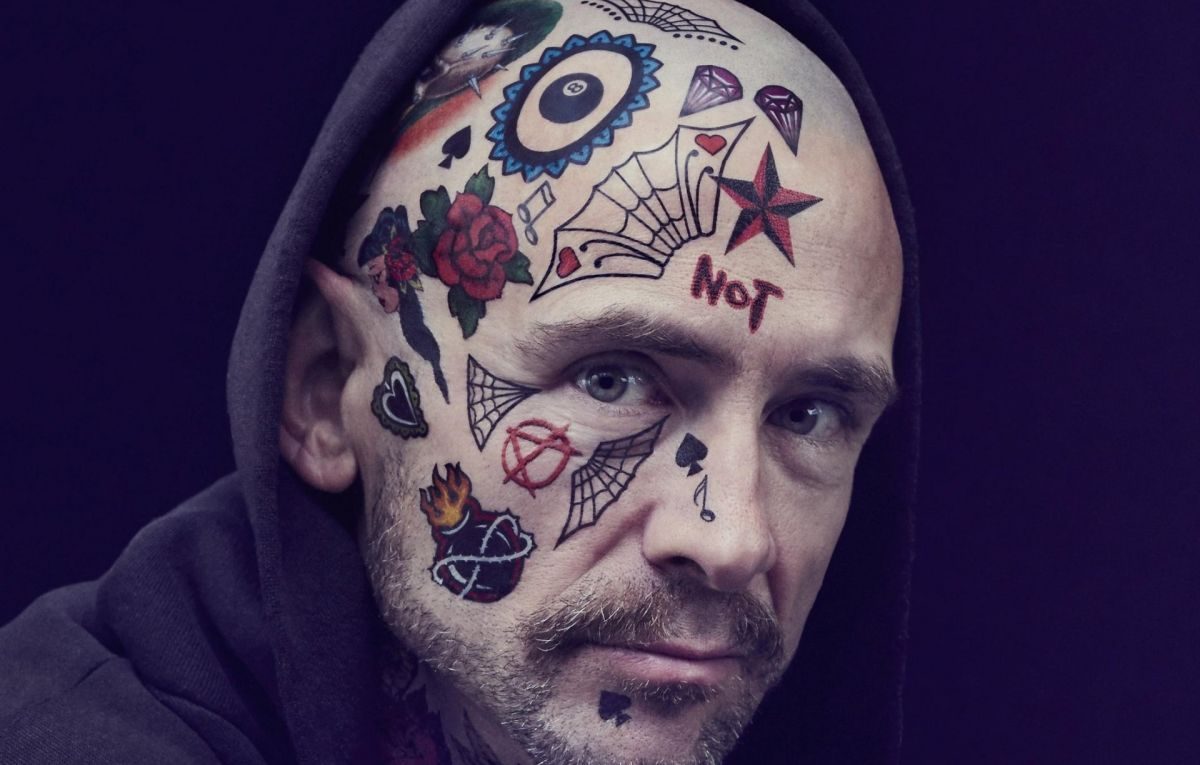
Prison tattoos. Palahniuk has long been embarrassed to be photographed for book covers with his neck exposed, as he thinks it is too long. But for the cover of his new book he wanted to pose in an ironic style. He shaved his head, bought a set of temporary tattoos and covered not only his face but also his hated neck with them. “Surprisingly, the publishers were thrilled. A week later their delight had faded. They decided it would hurt sales. Now we're negotiating a new photo shoot, without the prison tattoos.”
We hasten to reassure you: the book Consider This: Moments in My Writing Life after Which Everything Was Different was published by Grand Central Publishing with that very photo.
Marina Moynihan, TK Media

Russian Attacks in Dnipropetrovsk Region: Two Killed, Seven Injured

Defense Forces Strike Four Russian Drone Control Points in Past Day, Including in Berdiansk

Britain Threatens Sanctions on Kremlin-Linked People; Poland Ready to Hand Ukraine Ammunition

Russia says it has completed "planned exercises" in the Black Sea

MVD: Fake Riots With Prop Blood Were Being Prepared Near Presidential Office

Law Enforcers Name Another Klitschko Deputy as Suspect

Berlin Holds Protest Against War in Ukraine; EU Prepares for Possible Russian Halt of Gas Supplies
North Korea Fires Ballistic Missile Over Record Distance in Five Years
Irish Fishermen Force Russia to Postpone Naval Drills

US sanctions in case of invasion of Ukraine could completely destroy Russia's economy, NYT reports
