
Discounts for the Infected: How Coronavirus Crept into Advertising and Why It Is Embarrassing
Situational marketing of a smoker.
The spread of the coronavirus has posed a serious challenge not only to healthcare but also to common sense. For example, in Australia, supermarket shoppers fought over toilet paper, which is predicted to run short in the event of an epidemic. But businesses are not falling behind and manage to create viral (in every sense) ads stuffed with the worst stereotypes and clumsy slogans.
Despite the fact that people searched Google en masse for "Corona beer virus," and 40% of Americans said they would not buy this popular light lager, Constellation Brands says the virus has not hurt sales. It is promoting its new Corona Hard Seltzer soda with the slogan "coming ashore soon." "We sympathize with those affected by the virus and are monitoring the situation, but our customers understand that there is no connection between the virus and our business," company representatives said.
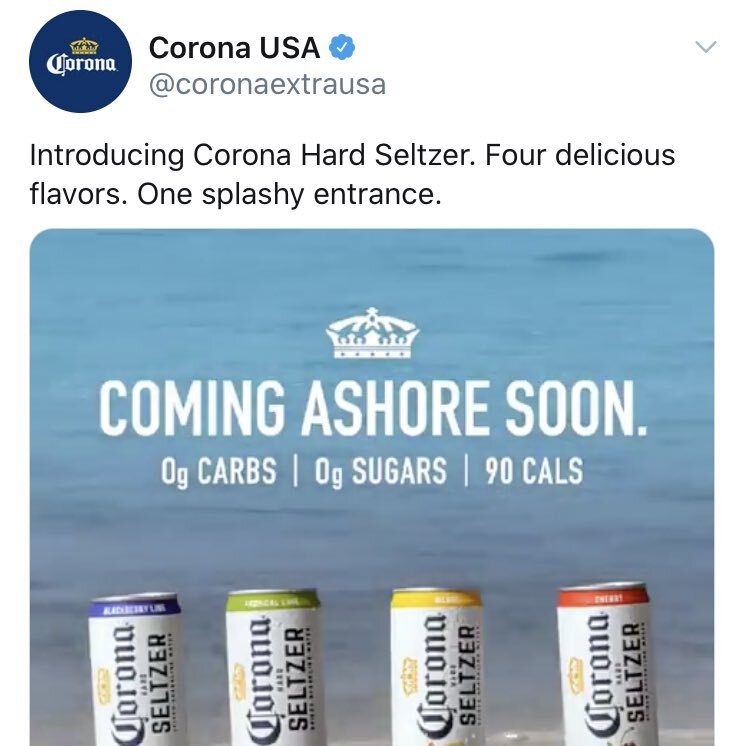
Constellation Brands adds that the new ad is a logical continuation of a marketing strategy that is already 30 years old and is based on "strong consumer attachment" (meaning Corona drinks are associated with summer and the beach). But commentators called the post offensive and untimely. On the other hand, the TV ad for the new drink does not feature the dubious phrase about "coming ashore," although it shows how the drink is delivered by sea on yachts, boats and jet skis.
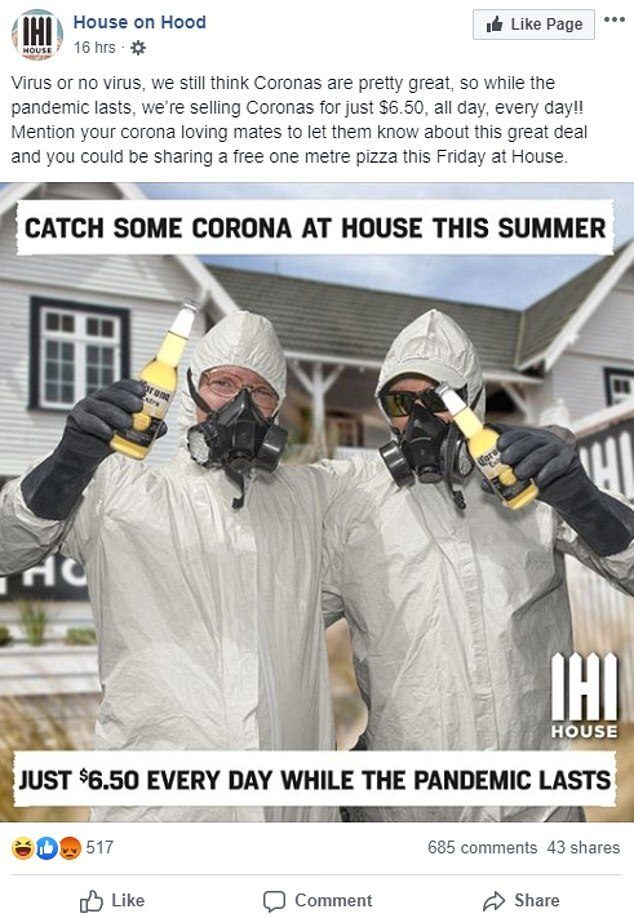
New Zealand bar House on Hood decided to play on the "problematic" name of the beer in its own way and posted photos on social media of people in protective suits with the caption "catch Corona at home this summer" (but the verb "to catch" also translates as "to contract"). The bar announced it would sell Corona beer at a reduced price of $6.50 until the coronavirus epidemic ends.
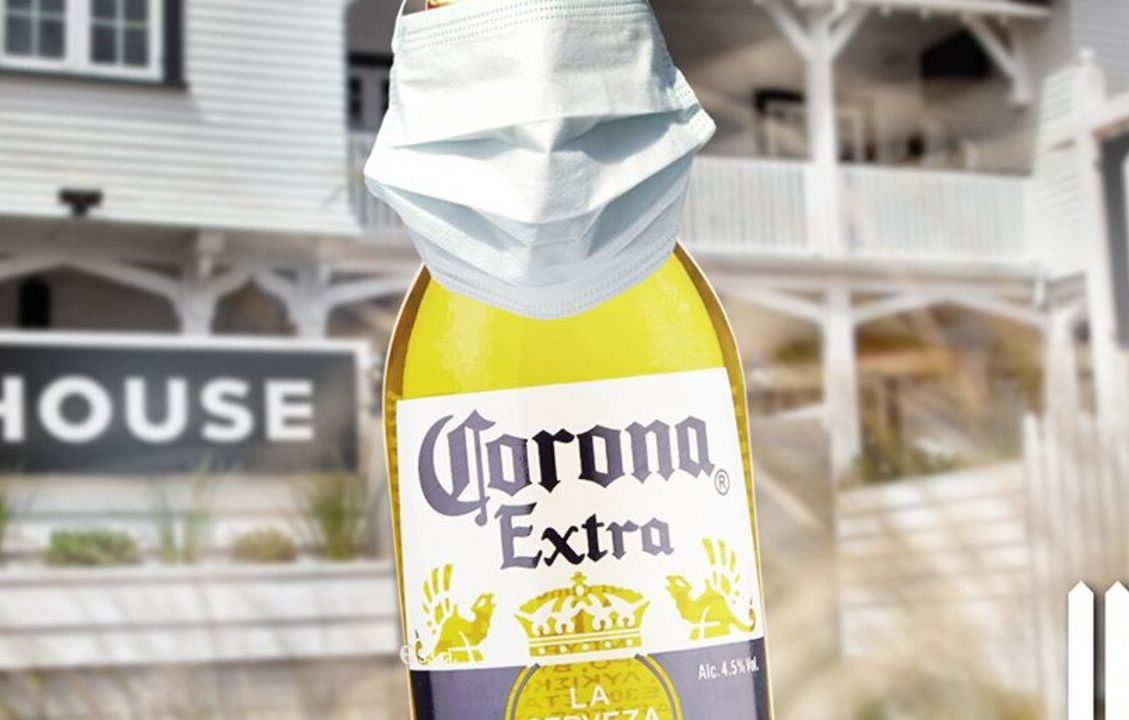
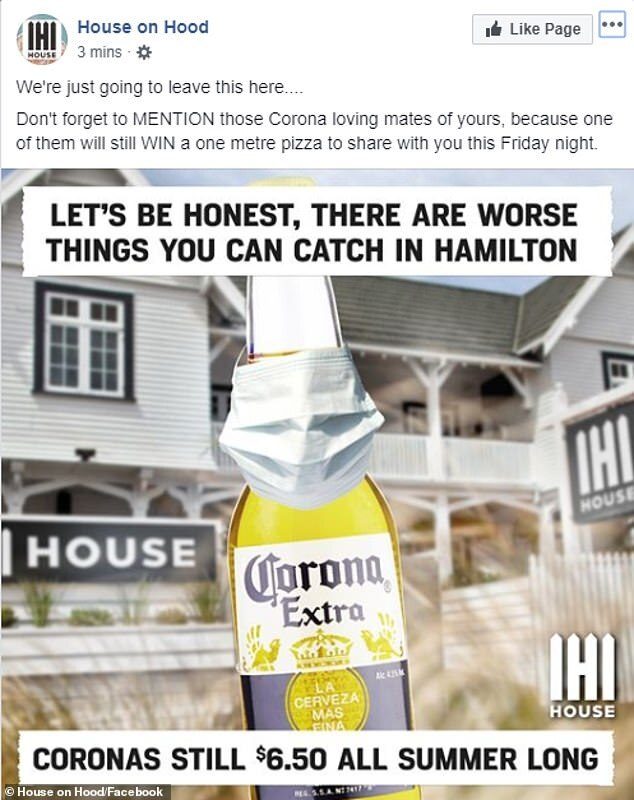
Their next post said that in the city of Hamilton, "you can catch things worse." The Corona Extra bottle was pictured with a medical mask.
Commenters rightly pointed out that it is foolish to joke about a virus that has claimed the lives of more than 6,000 people. "You didn't give discounts on Australian beer when wildfires were raging there? Why do you think it's okay now?" one follower asked. The jokes angered not only them but also the distributor Lion, which represents the Corona brand in New Zealand. "We were not aware of this advertising and do not approve of it. We will insist that it be removed," the company said.
Instead of quietly deleting the posts and apologizing, the head of Lawrenson Group, which owns the bar, accused commenters of hypocrisy. He called them "a small but loud group of people who are offended by everything." "So thank you to all the snowflakes for the free advertising, and thanks to all the other people with a sense of humor who liked our post," he wrote. ("Snowflake" in the English-speaking world is an insulting nickname for liberal young people who defend political correctness.)
Although it is hard to call coronavirus jokes in ads a model of refined humor so far. Even legendary parody musician "Weird Al" Yankovic wrote on Twitter that he would not make a parody of the Knack song "My Sharona" called "My Corona," although many fans asked him to. However, numerous social media managers and marketers would consider the 60-year-old Yankovic too conservative. In Lebanon, which is frightened by the prospect of an epidemic, for example, a furniture sale is advertised with giant banners showing an armchair wearing a medical mask.

New Zealand auto retailer 2 Cheap Cars also decided to jump on the bandwagon of situational marketing. (Could some kind of virus be infecting advertisers in New Zealand?) "Afraid to ride public transport? We have plenty of cars under $5,000 or from $25 a week," says their social media ad.

Local outlet Newshub asked the company's CEO for comment. He replied that the ad "is not serious about a serious issue." But that is not all. "If you have coronavirus, come and buy a car from us: we will give you a $500 discount," he added. Does one need to say that both ideas, giving such an answer and going anywhere with coronavirus, are extremely unfortunate?
A bar in Melbourne, Australia, also ran into trouble. The establishment called Mr. Chan's posted a caricature of a Chinese man with a bottle of Corona beer wearing a protective mask. "Special offer in honor of the Chinese New Year: limited-edition medical mask and a bottle of Corona for just $8!" says their Facebook post.
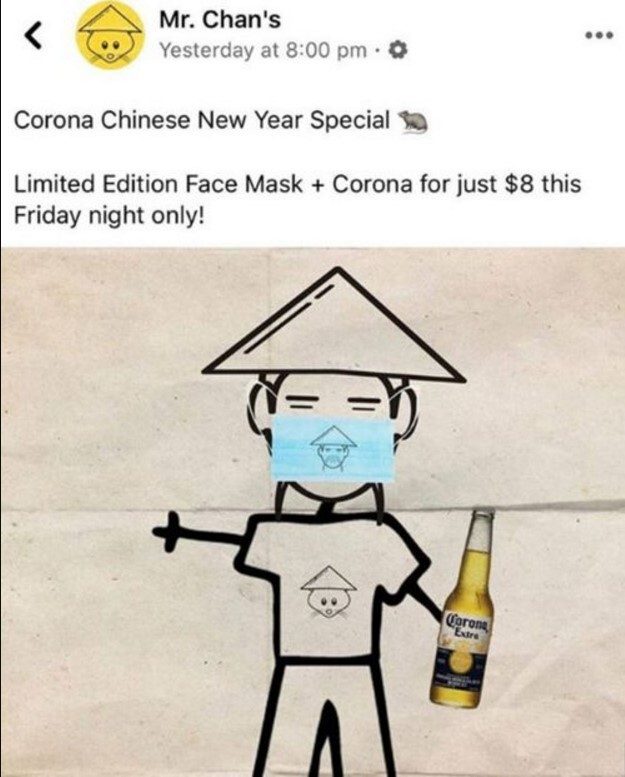
The management company Pawn & Co apologized for the bar's page creative. "We deeply apologize for the insensitive and inappropriate advertising distributed by the Mr. Chan's brand," company representatives said.
A poster from the Indian dairy company Amul, congratulating compatriots on their return from Wuhan and urging them to try a "home snack," did not generate much enthusiasm among commenters either.

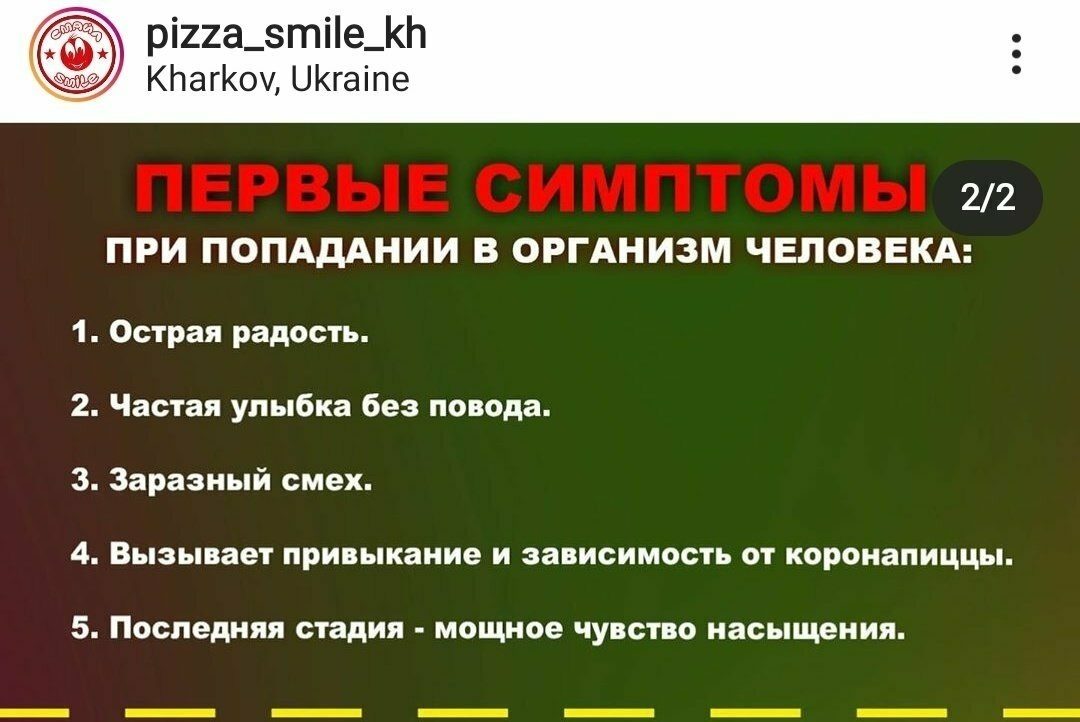
Ukrainian social media managers also distinguished themselves. A Kharkiv pizzeria used an image of the virus into which it integrated a photo of pizza. "Coronapizza is already in Kharkiv," says the post, listing the beneficial "symptoms" of its entry into the body.

And a capital company selling doors recorded a video in which an employee with a mask filter says that coronavirus is no reason to refuse renovation.

Still, such advertising fully matches notions of "folk humor." On OLX, for example, one can find an ad for selling an apartment "without coronavirus and interest." "No commission! The apartment is treated with antiviral substances. The virus is not scary for you!" the description says.

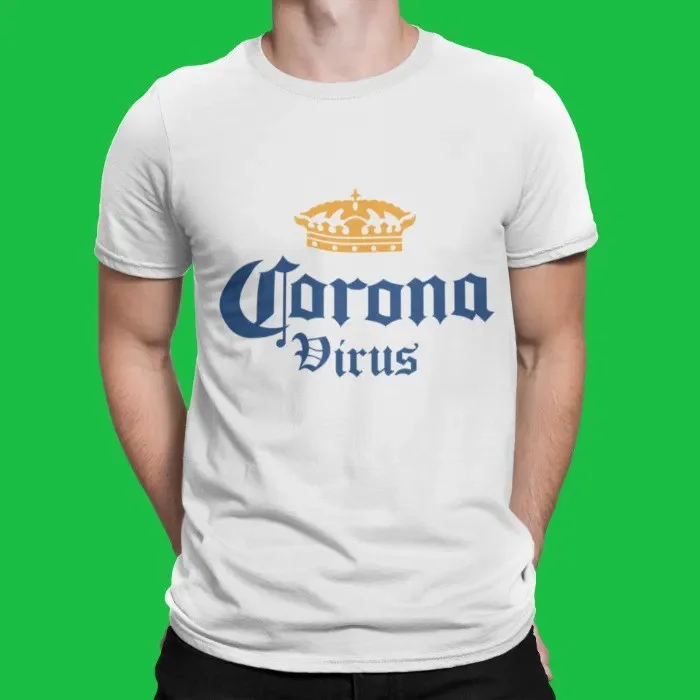
There one can also buy a "microscope to be the first to see coronavirus," a "keychain with protection against coronavirus," a "fog generator for coronavirus treatment," a "water purification system that kills coronavirus," and other masterpieces of situational marketing. On another marketplace, a Zaporizhzhia company sells T-shirts with a joke that has already bored everyone:
The marketing publication The Drum notes that large brands still show prudence and do not scatter references to the virus. Those who gave in to the desire to use the news hook did so carefully: for example, cosmetics brand Lush, known for its handmade soap, offered British customers free hand washing in its stores, but never mentioned the virus in doing so.
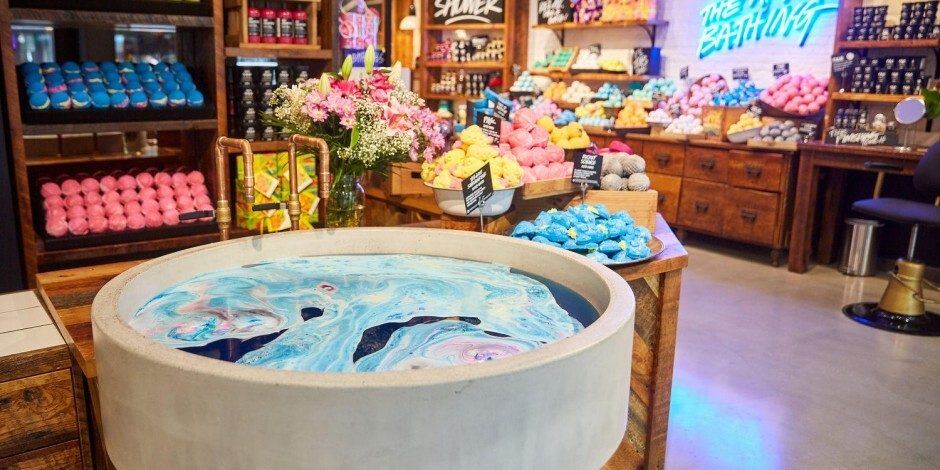
The name of the disease appeared only in the company's official statement. "Winter months are the time of year when hygiene is especially important, because colds are easily passed from person to person. But the current spread of the coronavirus makes regular hand washing more important than ever," its text says. Creative director of the marketing agency Wellmark, Ryan Wallmen, says serious brands prefer not to be associated with the coronavirus, even if a mention would benefit the company: the risk of negative perception is too high.
If large brands do talk about the coronavirus, they try to do so in an educational format. We have already written about how internet users invented a conspiracy theory about the company Lysol: supposedly it knew about the coming epidemic. Lysol and another cleaning products maker, Ecolab, joined the discussion in the format of "how to properly observe hygiene during a global health crisis." And the Clorox brand added a page to its website that describes the coronavirus in detail, and marked it with a note that some of the company's products "demonstrated effectiveness against viruses similar to SARS-CoV-2."
However, Purell, the best-selling hand sanitizer brand in the US, cannot afford such a thing. It is classified as an over-the-counter drug and is regulated by the Food and Drug Administration (FDA). This government agency is strict about advertising for such products and makes sure that the ads do not mention specific organisms that cause a particular disease. The Russian drug Arbidol, whose advertising claimed effectiveness against the coronavirus, will also be checked by the Federal Antimonopoly Service for violations.
US presidential candidates could not pass by the hot topic either. Michael Bloomberg, who recently decided to withdraw from the presidential race, earlier recorded a video in which he speaks in a setting strikingly reminiscent of the famous Oval Office and talks about how a "true leader" should respond to challenges like the coronavirus.
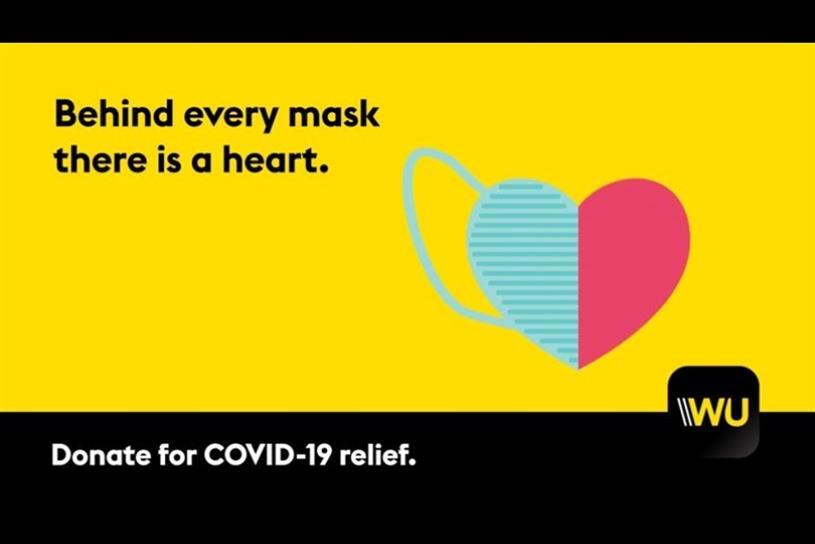
Although there were plenty of vultures among companies indulging in humor, many used the news hook to help China and other countries affected by the virus. For example, the Skechers brand sent a batch of shoes and jackets to the COVID-19 Command Center, 10,000 pieces in total. Western Union launched a fundraising campaign to support countries in the Asian region with the slogan "Every mask has a heart."
The spread of the virus became a test of humanity for brands. Their examples showed that situational marketing should be balanced and sensitive, and sometimes one can do perfectly well without it. After all, a "Cannes Lion" for "Coronapizza" will certainly not be awarded.
Marina Moynihan, TK Media

Russian Attacks in Dnipropetrovsk Region: Two Killed, Seven Injured

Defense Forces Strike Four Russian Drone Control Points in Past Day, Including in Berdiansk

Britain Threatens Sanctions on Kremlin-Linked People; Poland Ready to Hand Ukraine Ammunition

Russia says it has completed "planned exercises" in the Black Sea

MVD: Fake Riots With Prop Blood Were Being Prepared Near Presidential Office

Law Enforcers Name Another Klitschko Deputy as Suspect

Berlin Holds Protest Against War in Ukraine; EU Prepares for Possible Russian Halt of Gas Supplies
North Korea Fires Ballistic Missile Over Record Distance in Five Years
Irish Fishermen Force Russia to Postpone Naval Drills

US sanctions in case of invasion of Ukraine could completely destroy Russia's economy, NYT reports
