
Journalist Denys Bihus: the body of corruption is dark matter, the main investigation is “Velyur,” a pension is humiliating
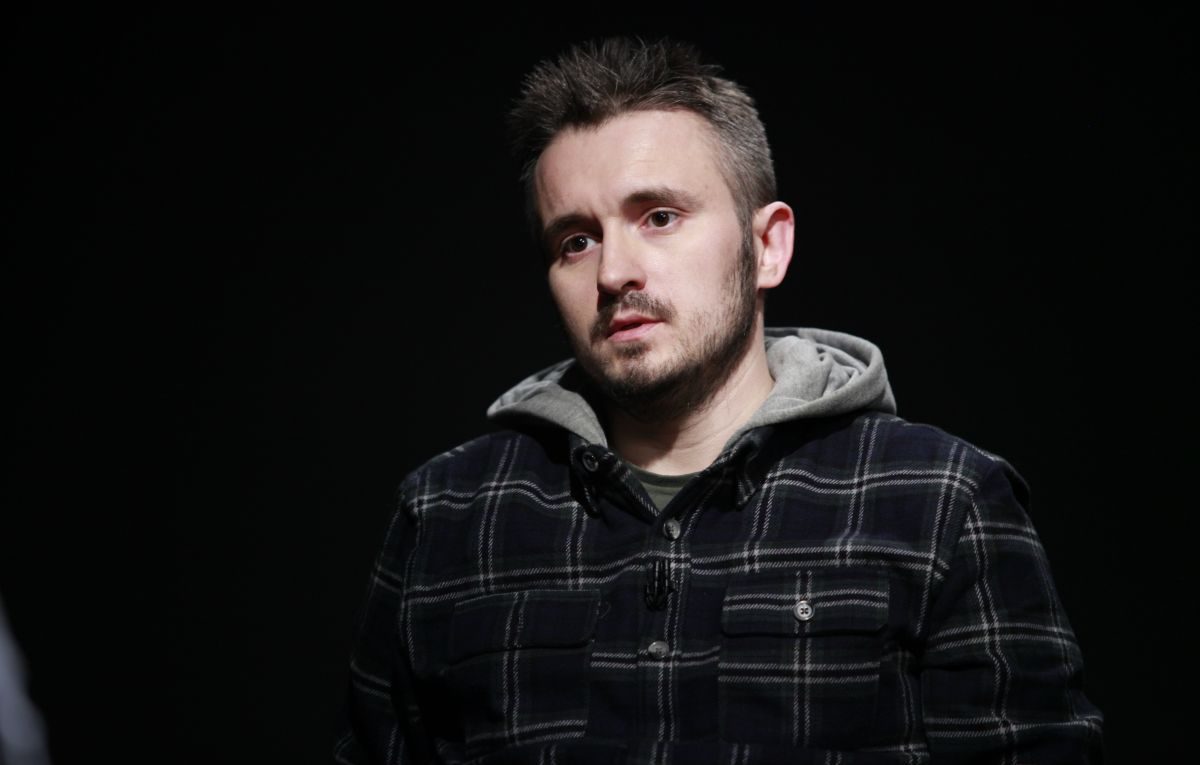
According to Bihus, there is no demand for journalism today.
In the new episode of the program “Antypody” on Island TV, Ukrainian journalist, host and editor of the Bihus.info project Denys Bihus spoke about leaks of information from law enforcement officers, journalism and morality, Svynarchuk-gate, humiliating pensions and salaries, and, of course, corruption.
Have law enforcement officers ever leaked information to you?
Globally?
Specifically.
We can assume that they have.
And how does that happen? I can tell you, so it's “quid pro quo.” When they were passing me materials on criminal cases that the then Prosecutor General Yarema was quietly holding back, I met with a “source” from the Prosecutor General’s Office. We met at the Arsenalna metro station behind some column. They handed me this flash drive there. And I noticed a tail on me that very time. Thanks to the skills from my previous work, I even posted photos, I even photographed these men, one of whom had a manipulator, and even one had a radio. That's the situation. How is it for you? Simpler?
Much simpler. Back then you had a lot of time.
Well, how so? In the family chat: “by the way, I work in the SBU, can I send it to you?”
By the way, that's not the worst option. Listen, life is always simpler than a detective movie. I can say that, in my experience, all the overly encrypted people who have met, meet, and will keep meeting people in life, in one hundred percent of cases are not carriers of anything interesting, maybe because they put too much effort into the atmosphere.
So a person who really has truly valuable information treats it more simply?
That's not the point. We live in a world where there are very many opportunities to pass something on.
Well, back then they just didn't leave bookmarks, now it would be possible.
Again, I don't know how it works in some other detective world, but in ours the system works differently. Law enforcement representatives don't drop on me, nobody meets me saying: “bro, there's a flash drive.” It's always, you have to know that this information exists at all. You have to understand where it will in principle be. So it's a long process spanning years, when you get to know all these people. Accordingly, it's not such an episodic story, which… Like at Arsenalna behind the column.
But it's romantic, admit it.
Yes, it's much more romantic than our gray everyday life. I don't know, I'll try to get killed at Arsenalna next time.
Give Bihus at least one reason to put on a hat. And a raincoat.
When I was 16, I wore a hat, a raincoat and a suit. Off camera someone is laughing, and it was really very funny.
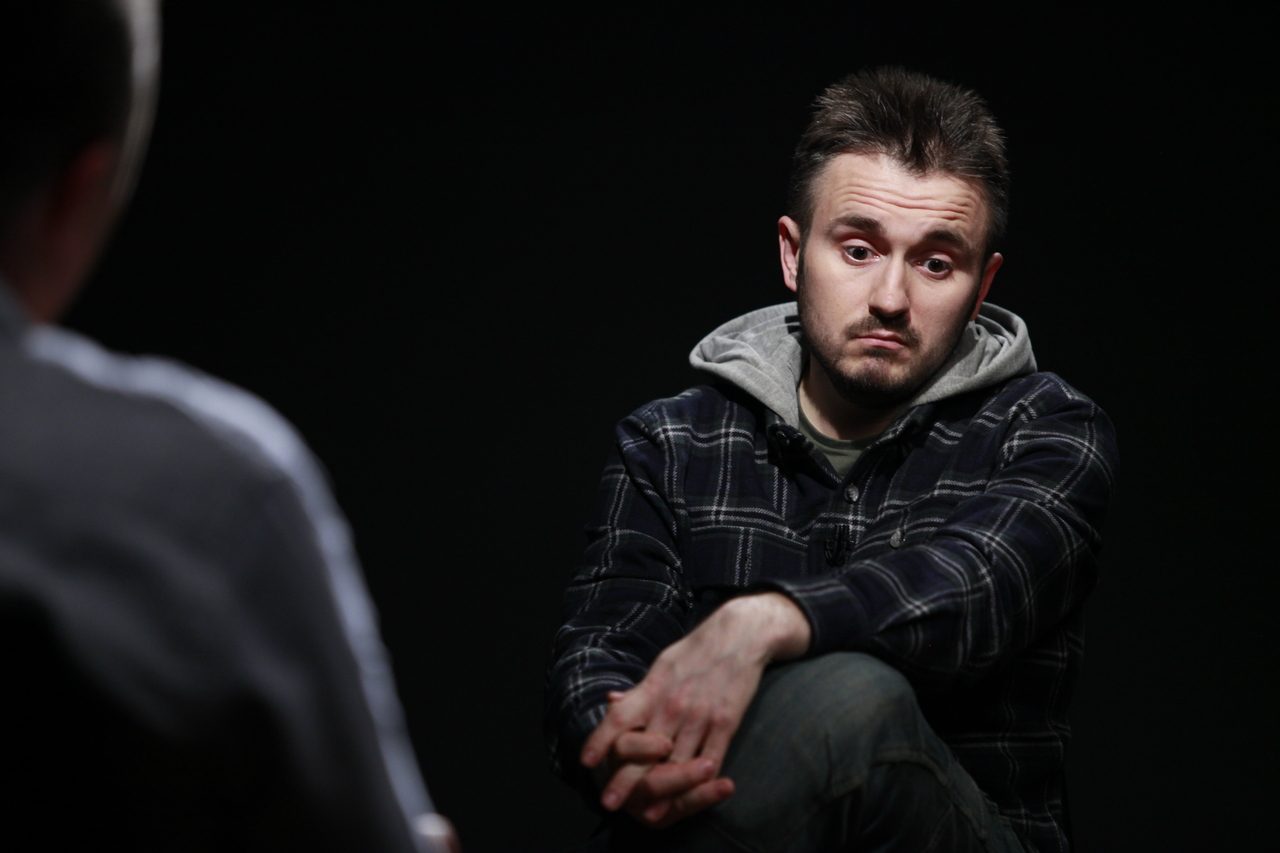
Can a professional journalist afford to disdain sources, or is that unprofessional? Can and should one communicate with one criminal in order to expose another, bigger or smaller? Can you take information from a corrupt prosecutor in order to expose a corrupt deputy?
An extremely situational story, but rather yes.
And if the information is absolutely objective and true. Do you take the political context into account, maybe, or how?
Look, as a team we work in economic and financial investigations, in general it started with tenders. Tender analysis, tender procedures, tender corruption. Then the context expanded quite a lot. Accordingly, in a country where absolutely everything is somehow tied to some political stories, the only way to work adequately is to define some basic rules and, yes, to move politics aside. Basically, of course, more attention is always paid to the authorities or representatives of the authorities as holders of administrative resources. But this is probably the only general, amorphous rule. I'm not ready to say that thefts from the budget by one political force would be more moral or acceptable than thefts from the budget by another political force. Accordingly, what difference does it make to me in this respect which political force's representatives are sawing something off.
Here we have such an invisible reference to Vitaliy Portnikov, who once argued that corruption is an institution without which the state cannot exist…
It seems to me that if you take all of Vitaliy Portnikov's columns over a decade and analyze them, there will be very weighty, interesting, meaningful and reasonably argued absolutely everything in them. Sometimes it will all contradict each other.
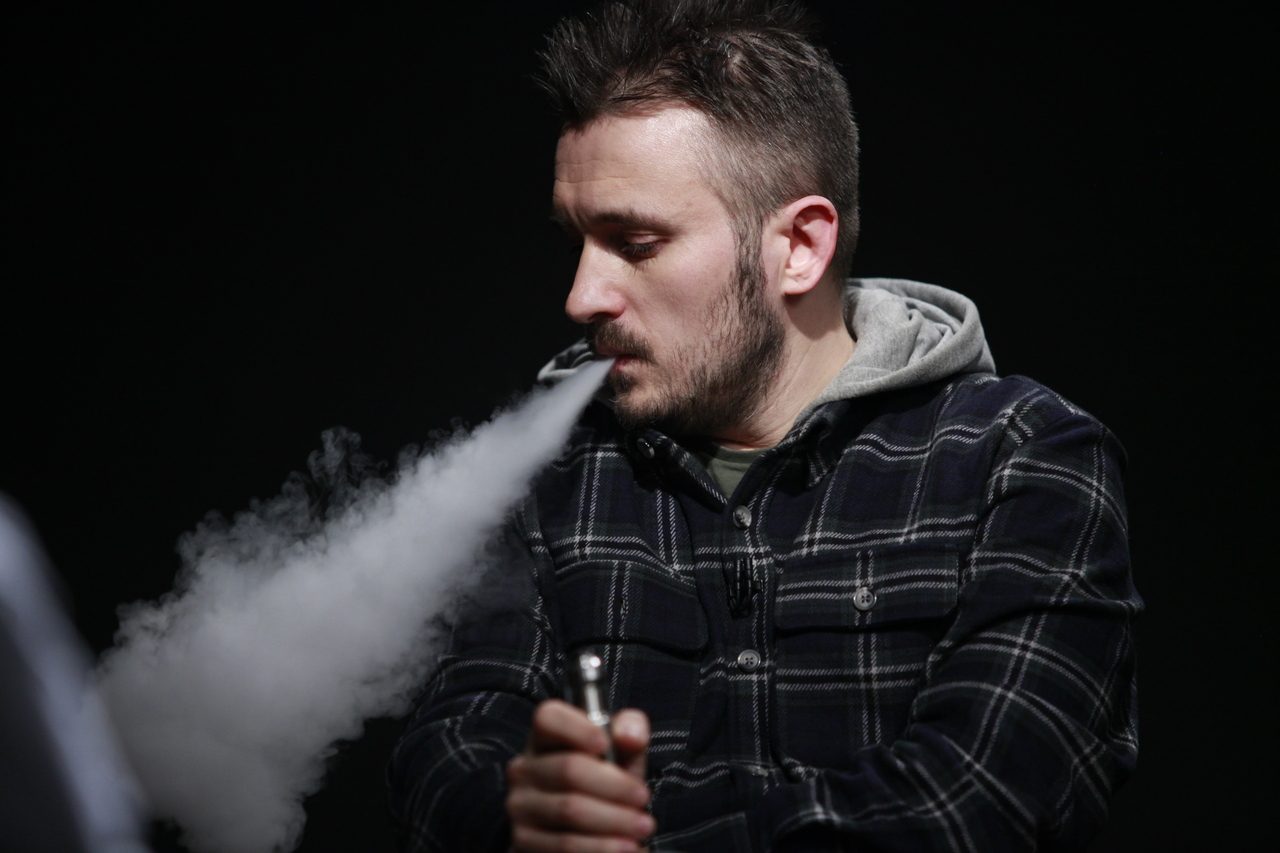
I remembered our argument when we were in the United States, I think we were in San Diego then. And we started talking about Kolomoisky. That was in the 15th year. He was no longer a “savior” then, but “let's go have a coffee” was said to Nayyem and so on. But I, having certain sentiments after the Dnipro, where I saw with my own eyes, this now has absolutely nothing to do with Kolomoisky, the heroic deeds of other people whom he supposedly moderated, I considered him then a kind of “savior” of the Dnipro. And you said then that no, he's a bastard, because he's a thief. And I can tell you that you were right then, and I'm simply admitting it now. Already six years later I admit your rightness and that I was not right then. Moreover, I began to be convinced of this already then, when he started all those latent conversations, there, with Sonya Koshkina, like, they're fighting themselves, all of that. For you, is it simply easy to admit being wrong?
Yes.
Then why didn't I know, and you did know about Kolomoisky?
First of all, if you take some Kolomoisky, considering his previous background as of the 15th year, and say that he is most likely a bastard and will remain one, then it is so hard to be wrong here. I don't remember that conversation, but, in principle, with oligarchs you most likely won't be wrong. By the way, a good question now is not about Kolomoisky. Here, you can try him on yourself. As of that moment, when we obviously were talking, Kolomoisky was a shady character even before that volunteer battalion period. You probably were somehow aware. And at that moment he was also not entirely good. He had there, for two or one and a half years, when he, I won't even talk now about what he was going through for his own sake. It doesn't matter. He did good things. At the same time he did bad things, but good things too. He funded volunteer battalions, supported them, he had patriotic rhetoric. Did all this happen? It did. Is it worth acknowledging his involvement in this? It is, of course. Does this somehow offset his previous or subsequent actions? Not at all. And in us there is some social craving for absolutely crisis generalizations: devils and saints. But since people, in principle, are quite ambiguous, sometimes even devils do something situationally good, and saints do some nonsense, then instead of acknowledging that here a person is good, here they're shit, here again good, here again shit, we have some goddamn constant rotation. Like: saint, no, devil, but he was a saint, no, a devil. And every year cancels and erases all the previous ones entirely. Wipes clean. Like he stole the energy systems, but he supported volunteer battalions, so he's a saint. I don't know, it's something extremely socially hysterical, this desire to finally determine who here is the damn messiah. And as of now we have a one hundred percent messiah. And as soon as something changes, everyone will curse him, and he will simply be a model monster. Until the next time when he'll again be needed as a messiah. Some constant broth.
Infantilism? Do people need someone like a “daddy in the house” or what?
Maybe. Here I'll honestly say straight out: I don't know. Call some smart socio-zoo-psychologist to explain all this.
The problem of our society is that we even need a “daddy” for a sociopsychologist.
Well, in short, sorry.
Your main investigation, at least the loudest, is the investigation into Svynarchuk and defense. Gladkovsky.
It seems to me that in the last two years I'm the only person who respects, again, the question of the self-identification of the Gladkovskys.
But they didn't change their gender. If they had changed gender, I would have wished them well.
Well, wait, a person changed their surname to the one they have. Why bother. Well, Gladkovsky.
Fine, Gladkovsky is defense. No, I just still don't understand the logic of changing a surname with such a habitus; if by habitus you're a Svynarchuk, why be a Gladkovsky?
Habitus is habitus. But recognizing self-identification is recognizing self-identification.
You know, there is a perfect convergence. In legal theory there is such a category. It's when everything coincides perfectly. Gladkovsky and defense is your loudest investigation. If you were AC/DC, then it would be your “Highway to Hell.”
By the way, no.
Why?
“Velyur,” because it's “Velyur.” Because by all indicators “Velyur” is the loudest.
But after “Velyur” the president didn't change.
Well, “after” doesn't mean “as a result of.” In the sense that if there had been no investigation into defense, would the president not have changed?
I don't know.
Well, I don't know either.
You understand, we're sitting here, two people, one of whom worked on “Right to Power,” which is considered the main factor in Poroshenko's loss in the elections. None of Poroshenko's supporters think he lost because he made some mistakes. And everyone is inclined, as you yourself said: if people look for a “daddy,” people likewise look for an enemy. So for them, whoever is at fault will be guilty, Bihus.
Well, he'll be guilty, he'll be guilty. That doesn't change the fact that it would have been the case, that it would not have been the case. He lost anyway. Well, there are the numbers. What can you do with them. This, by the way, raises a question for me. There is something in being the person whose investigation is capable of changing the political Watergate. But common sense and an understanding of the numbers say that “no, dude, you're not that person.”
Who leaked the Svynarchuks and Gladkovskys to you?
Who would tell you.
And when will you be able to talk about this?
I don't think I'll ever be able to. That's a question beyond basic ethics. Well, who is my source? Someone.
Is Matios involved in this? Don't be offended by me a second time, but I have to ask because it's in the public domain.
I don't think so, although I periodically enjoy how he gets trashed. But probably that's just my personal thing. Starting from around spring-summer of '18, Mr. Matios hated me, my team, and personally Mokryk so vividly and sincerely, and I thought he kept doing it and continues to do it to this day, that he wrote in his Facebook some amazing stuff. Like “yellowish lumps,” some such filth.
That's what happens to a person when their sister is a famous writer and you're a nobody.
Well, in short, he graphomaniacized in hate style, doing it with completely sincere enthusiasm. It's hard for me to imagine a situation in which he would… I, by the way, don't remember what he hated us for. It seems someone from his deputies was passing as a figure in a case. And he got carried away.
I remember there was a piece connected with Borzykh, Matios's deputy.
Borzykh? That happened with us. In short, relations with the military prosecutor's office didn't work out then.
That's a very close person. In fact, they'd have been better off portraying his wife. She brought in less financially than Borzykh.
Look, how many of those people there were, those who are not in office, inconspicuous, but who appear as a deputy department head, simply “buddies.” They generate some cash flow and quietly disappear from the scene. This is one of the points I sometimes think about. We can talk, if we've already touched on someone's reputation, that for, conditionally, Matios, it doesn't matter, for any person in a high public position, it still has at least some meaning, but for all these “bringers,” well, take Borzykh. Nobody knows who he is, and nobody will remember. And I don't even know where he is now or what's going on with him. That he's doing well and nobody will remember him, and he doesn't need it either.
And that is in fact the body of corruption. Not the bigwigs, but the gray matter. As Surkov said, gray matter, the deep people of corruption. That's really what it is.
In general I've never doubted that it's not gray matter. Most of the universe consists of inconspicuous and poorly recorded dark matter; likewise most groups consist of this inconspicuous and poorly recorded mass of people at the level of, say, deputy heads. And this is truly terrible, because from the point of view of media, with these people, at least in our information space, you can practically do nothing. They're not about publicity, they don't focus on themselves any public interest and, accordingly, they are “armor-piercing comrades.”
As one acquaintance of mine, a deputy, said: I don't know who this guy is, I know he's from the prosecutor's office, but his jacket is cheap.
No, well, in the case of the prosecutor's office it's a bit simpler, but yes. We don't know who this guy is, but he travels with three security cars. And what position does he hold? Well, he's some deputy there. Something like that.
A few months ago information spread on social media that you lost a lawsuit to the Gladkovskys. How was it in reality?
We lost the first-instance court, but won on appeal. Well, but given that the Gladkovskys' media power is a bit bigger, the information that we lost the first instance spread.
So now there's a new hearing?
No, we won the appeal, he filed for cassation, and beyond that I don't know anything yet. In the sense, whether the cassation was accepted or not.
So this is a long-term process?
Yes, it is.
And who defends you?
We have our own lawyers, there are colleagues from another legal public organization, there are a lot of people there.
Well, but they're wealthy people, I think they must have good lawyers there.
Listen, in general over the last two years a tradition has started to form where the subjects of investigation then go to court. And out of them, probably 9 out of 10 simply write a statement so they can give the news that they sued, and then they don't show up. But the Gladkovskys, they persistently show up, work, and prove. There is a certain irony in this, given the number of suspicions in the criminal process. And this is probably their biggest media trick: we lost the first instance, and they sold it to some of their audience as “innocent.” Well, okay. For an audience, criminal proceedings and a civil suit are roughly the same thing, and many have bought it.
Gladkovsky wins, Bihus goes to prison. Everything is clear.
Something like that. But you look at all this, at their rapture. They have a certain separate fan base. Small, but such a fiery one. It fits their fan base perfectly. But you look at this, at all this joy, and think: okay, there are five or six suspicions now, and today I saw the news: one of the main partners went for some other deal with the investigation. So it's moving quite well. The most ironic thing that can be imagined is when we, for example, lose some other court instance to Gladkovsky, but he can't enjoy it because he's sitting in jail.
And have you never felt sympathy for the Gladkovskys? Maybe, if you take into account their versions, they were truly forced to import spare parts for Soviet equipment, repair it, and so on. Didn't you have any moral doubts that maybe it really was needed for the needs of the war? Or were they still embezzlers?
This is one of the points and concepts that were very conveniently swapped somewhere in the process, although there was a big emphasis on this both in the material and afterward, to sell this legend. The key problem is not how it was imported, the key problem is how it was sold to state enterprises. There is an enormous difference between conditional smugglers, of whom, by the way, there are quite a lot, and the story where guys come to a state military enterprise and say: “You will buy from us, the price is this.” They're told that something is multiplied by four. Well, they say: “We apologize. Look, we've brought it to you and placed a ‘scary scarecrow’ in the corner. Do you recognize it? You do. The price will be this.” So embezzlement as such is not about how it was imported, but about how it was sold here. And administrative resources are also part of this. As for the disruption of supplies and so on and so forth, that's a separate story. Even at the stage of “so you'll buy here, here's your ‘cutlet,’ here's your ‘scary scarecrow,’ and that's corruption.” What is corruption? Corruption is the absence of competition and common rules for everyone. Details may be there for everyone, but the “scarecrow” is only for these.
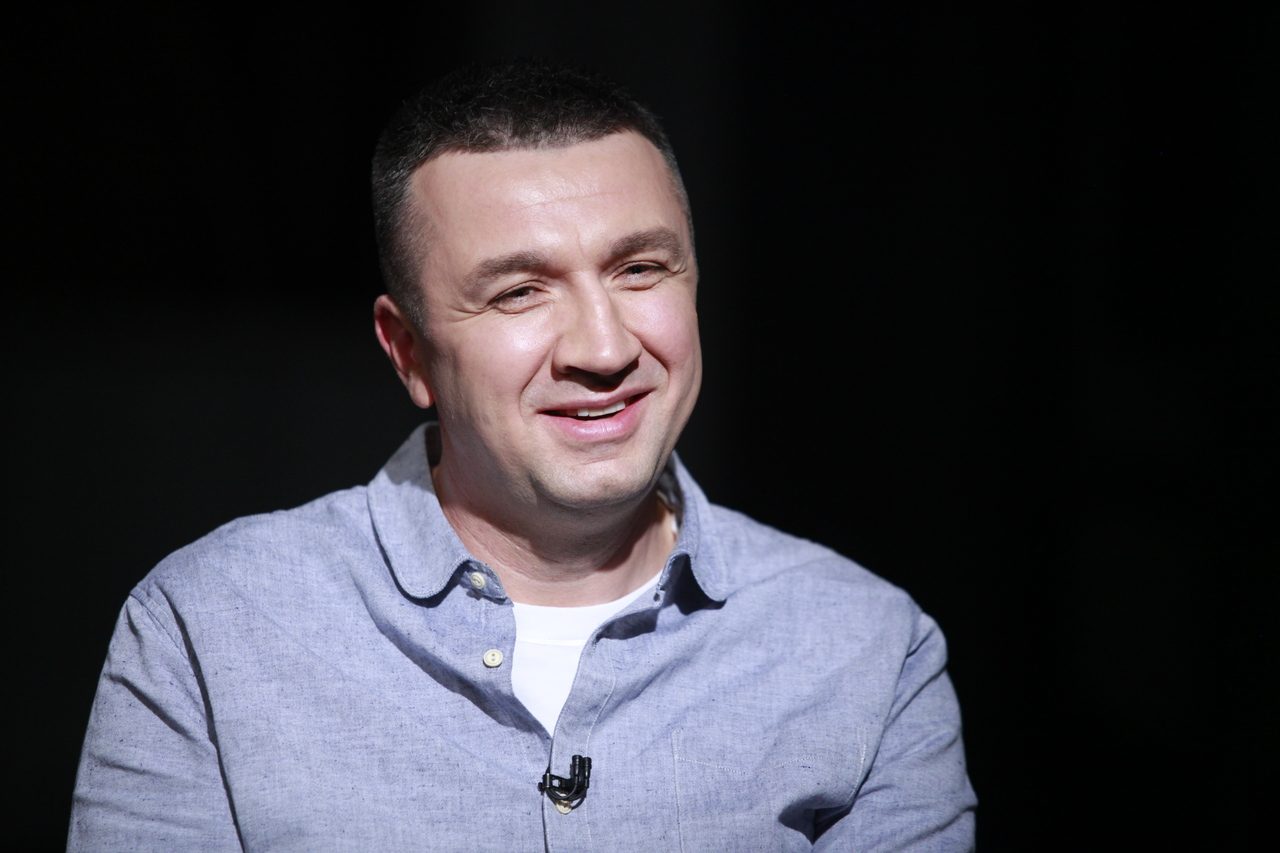
Do you have some kind of mission? What does it consist of?
I don't like this question.
Really? Have you been asked this question?
Well, it all periodically boils down to something like that, and you have to say something like that.
Here it's not necessary.
Well, it kind of implies something. I don't know. That is, having foolishly spent 10 years of life on what I spent them on, to say no, not at all. But to say that yes… In short, saying that I have a mission is pretty damn bad (bad — ed.) sounding.
In short, nothing special. It's just that people divide into those who simply live, do something, and people with a “guiding star” at the head.
I do something. I live and I do something. It's always much more honest to say that I simply like what I do. It's clear and presents you as a happy person. Because not that many people can do what they like. I can.
And when they give you all these various awards, like “Honor of the Profession,” do you not say anything like that from the stage?
In my case I always feel awkward, it always looks a bit cheesy. I don't know how.
You need to be a bit of a toastmaster.
I don't have enough of that in me. It's a pity, by the way, this probably would help in life and work and in art to be a bit of a toastmaster. Not mine.
What amount per month doesn't seem humiliating to you?
For what?
For living. You have a wife, children, you have a motorcycle.
I don't know. I just maybe don't quite understand the wording. What does humiliating amount mean? An amount can be humiliating for some work. If you, for example, unload a railway car of something.
Is a pension a humiliating amount? Say, my mom, who worked her whole life as a teacher, receives less than $100, it seems. That's humiliating. A doctor's salary is humiliating, a teacher's salary is humiliating.
Well, yes. But that's about work. It's not about how much you need to live. And a doctor's salary is humiliating, a pension is humiliating. A pension, as something that finalizes decades of a person's work, well, yes, is humiliating. As just a sum, it's simply a sum.
I asked one deputy: “How do you survive on UAH 30,000?” And people wrote me all kinds of things in the comments. Well, I asked somewhat jokingly, of course. But people started saying: come on, dude, 30 is a hell of a lot actually.
To live on? Right now I'm estimating how much I spend on myself. Well, on myself definitely much less. But again, this isn't about humiliation. That is, whether some money is humiliating or not only makes sense in the context of the work for which you receive that money.
What should be written on your grave? “Subscribe to the channel”?
If you had sent me this little question an hour before, I would have come up with something funny. But improvisation is not my thing. Well, I don't know.
And do you want something special there?
An epitaph? No, I want an epigram.
I'll quote in Russian: “The press is a gang of cruel faggots. Journalism is not a profession or a craft. It is a cheap dive, a refuge for all the writers and losers sent to ***, a secret entrance to the toilet of life, a vile, urine-dripping little hole that the construction inspector overlooked, but deep enough for drunks crawling off the sidewalk and masturbating over it like chimpanzees in a zoo cage.” That's Thompson. What is journalism from your point of view? Do you agree with this formulation?
We're going to plunge into such a boring thing now. In general, journalism is a craft. But journalism, for example, like reporting, and journalism as columnism, these are actually two completely different professions.
And in general, what does this journalism exist for, especially in the age of social networks? Is it needed? To record facts, or what?
To record facts, to at least try to structure them. For the sake of at least some attempt at structure, journalism is needed, because the world has become too unstructured.
And is there demand for it?
No.
It seems to me that people consume mostly emotions.
Yes. You just beat me to it. There is no demand for analysis, no demand for structure, no demand, in principle, even for facts. If we determine the presence or absence of this demand by simple majority vote. That is, there are some requests in local niches, but they are not large-scale. Moreover, even in those niches where these requests exist, each sees something of their own in these requests. I can quite well assume the existence of a group that believes what it consumes is analysis, while another group tells it: no, this is crap and pure emotions. And vice versa. But the basis in the modern information environment is emotions. And maybe it has always been so.

Russian Attacks in Dnipropetrovsk Region: Two Killed, Seven Injured

Defense Forces Strike Four Russian Drone Control Points in Past Day, Including in Berdiansk

Britain Threatens Sanctions on Kremlin-Linked People; Poland Ready to Hand Ukraine Ammunition

Russia says it has completed "planned exercises" in the Black Sea

MVD: Fake Riots With Prop Blood Were Being Prepared Near Presidential Office

Law Enforcers Name Another Klitschko Deputy as Suspect

Berlin Holds Protest Against War in Ukraine; EU Prepares for Possible Russian Halt of Gas Supplies
North Korea Fires Ballistic Missile Over Record Distance in Five Years
Irish Fishermen Force Russia to Postpone Naval Drills

US sanctions in case of invasion of Ukraine could completely destroy Russia's economy, NYT reports
