
Journalist and blogger Denys Kazansky: Donbas elites could have stopped Russia's invasion
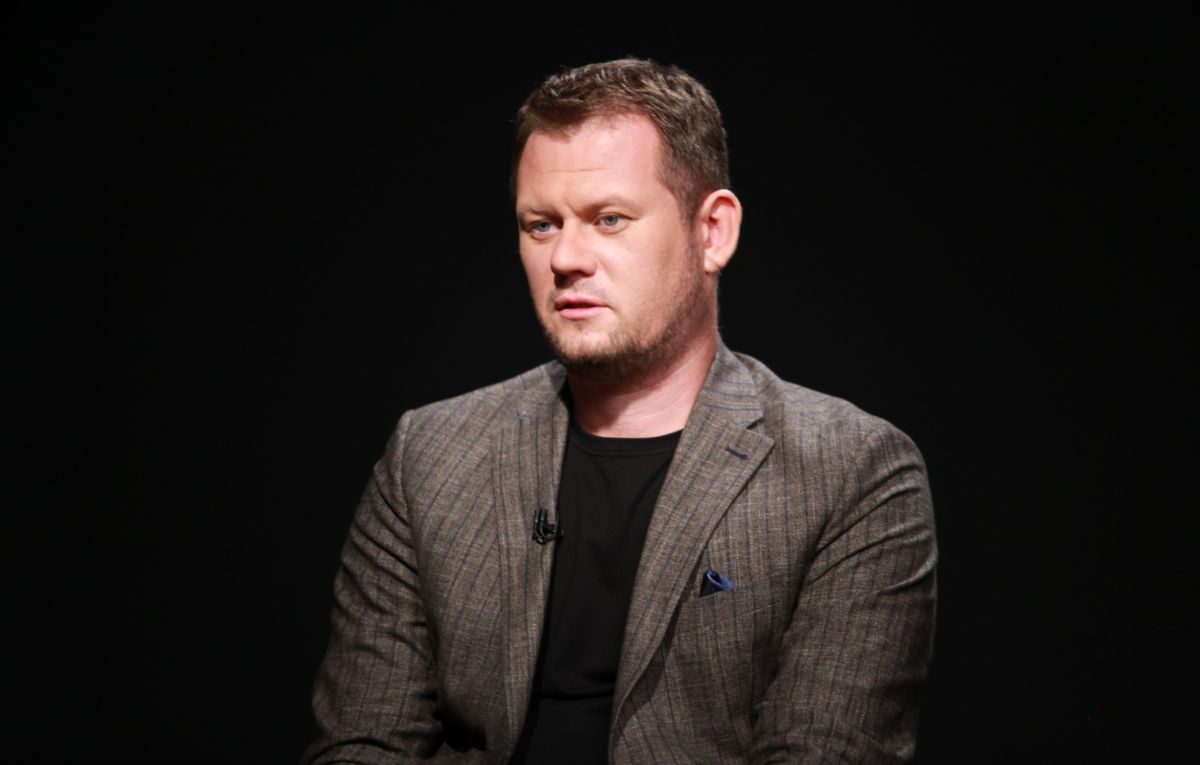
He believes that at the very beginning, in spring 2014, there was still a chance to stop Russia's invasion.
In a new episode of the programme «Antypody» on the Islandia TV channel, Ukrainian journalist and blogger Denys Kazansky spoke about how Ukraine lost Donbas, who is to blame for it, and what Russia wants.
From what point did this pro-Russian tilt in Donbas begin?
It depends on what you count from.
In 1991 we declared that we were an independent state, and that was it. Somehow it was all calm, I don't remember any unrest, nothing. Everything was okay, Ukraine, independent. It all happened peacefully, calmly. But then suddenly this vector appeared. What provoked it, and when roughly did all this take on threatening forms?
It began to emerge almost immediately. I think that at the beginning Donbas, and not only Donbas but the regions of the south-east, individual cities where pro-Russian sentiment was very strong, did not immediately grasp what had happened. When Ukraine became independent, for a long time they believed that it would be just Ukraine in name, but it would be the same as Soviet rule, that is, life in the same Soviet realities.
And when they saw and came face to face with the fact that the use of the Ukrainian language had begun to expand, what they called «the beginning of Ukrainization», the Ukrainization of Ukraine, well, they understood that the country they found themselves in was a new country, alien to many of them, so they did not associate themselves with the Ukrainian language or Ukrainian culture.
And certain people, the very ones who were at the vanguard of the pro-Russian movement, perceived this as an attack on their identity and their rights. Various pro-Russian organisations formed almost immediately when independent Ukraine was formed. This was the so-called «Interrukh Donbasu», then parties appeared: the «Civic Congress of Ukraine». These were the first pro-Russian movements, and they were very influential.
But they began to invent this ideological basis, which the same Regionals later made use of. At the start there was no serious pro-Russian movement as such, but we could observe a certain kind of Donetsk separatism. Why? Because these Donetsk elites on the ground demanded more powers from Kyiv.
Note that we are talking about the beginning of the nineties, when the realities were not like they are now. There was no large private property yet. All the factories and large plants were state-owned, and managers were appointed from Kyiv everywhere through the relevant ministries. And this local nomenclature wanted to appoint and manage these enterprises itself.
What did they do with state enterprises back then? They destroyed them, profited from them, and got involved in corruption schemes. That is, front companies were created that bought products from the state at cost price, then resold them, all the profit remained in these front companies, and the state enterprises declined. They wanted to control what was theirs, so that Donetsk people would control everything in Donetsk.
That is how the events of 1993 happened, when there were miners' strikes, and the miners were incited to put forward political demands: autonomy for Donbas. They were told that this would make them earn more. Regional self-government. Then there was a referendum in 1994. The Donetsk and Luhansk elites blackmailed Kyiv and tried there too: Russian as the second state language, a federal system in fact. That is, they were inflating this story.
And the first such surge of separatism ended after Kuchma was elected president. Kuchma immediately reached an agreement with everyone. Then a new Constitution was adopted, and Kuchma went on to reach an agreement in fact with these Donetsk clans, and the deal was very simple: loyalty in exchange for local enterprises.
He allowed them to privatise them, of course, for a song, because no one was then paying the real market price for those enterprises. For example, when Kryvorizhstal was later sold for almost $5 billion, it became clear how much all of it had really cost. None of the Donetsk oligarchs spent billions of dollars on the plants they got.
And Kuchma practically gifted these enterprises to them. That is, Kuchma appointed the oligarchs himself. Privatisation happened, so in fact he appointed them. And he appointed Donetsk people, and in return the Donetsk people showed him loyalty at the elections. When the whole south-east, for example, voted for the communists (Symonenko), Donetsk region voted for Kuchma, because they were told to and that was that. So this is essentially how the Donetsk clans were formed.
And then, when they began to struggle for power, when Yanukovych appeared and started to oppose Yushchenko, all these theses of those first Donbas separatists became very useful: about fascists who oppress, the Ukrainian language that is being imposed. And all of this began to be used against Yushchenko.
Because he turned out to be a very convenient candidate for this, and they needed to demonise their opponents in order to mobilise their electorate. And what did they start doing? They began to set people against each other, drawing those maps where there were first, second and third grade people. Later, in principle, they adopted this as their weapon, namely the Party of Regions, as its actual ideology.
When Kuchma reached an agreement with the oligarchs, or more precisely, when Kuchma appointed the oligarchs, as you say, what do you think, did Kuchma allow them to push out the Luhansk representatives, so to speak, of organised crime, who could likewise have become oligarchs, but in Luhansk region?
I think that perhaps he did not allow it, and it happened simply because of natural causes. Donetsk region was simply bigger, stronger and more powerful than Luhansk. There were no such assets in Luhansk. In Luhansk there was one most valuable asset, the Alchevsk Iron and Steel Works.
Whose directors were being killed every week.
Yes, there were murders. There was also Azot there, of course, but it was all not so profitable. But in Donetsk region there were all those giants of industry, the second and third largest plants, that is Mariupol. Various machine-building enterprises, the chemical industry. That is, basically everything was concentrated in Donetsk region. That is why all the powerful oligarchs emerged in Donetsk.
In Luhansk there was a different story. This is again why they went different ways. In Donetsk, bandits seized power, that is these organised criminal groups, the brothers, the little lads. But in Luhansk it was the Soviet nomenclature, because all these Tykhonov, Yefremov, Holenko, Prystiuk, they were all Komsomol members, Komsomol organisers, party organisers, who had become leaders since Soviet times.
So this was a repainted Communist Party of the USSR, which simply retained power. There were also their own gangsters in Luhansk, Dobroslav, but they were all shot. And to this day there is a version that it was precisely these repainted red directors and red leaders who did it, so that they would not encroach on their power. And as for us, these red directors, the party bureaucrats, were pushed aside precisely by businessmen.
And that is why there was such a big difference in development. And the Donetsk gangsters, for example, turned out to be more effective owners, because the enterprises they seized, they at least preserved, mostly. Not all of them survived, but they tried not to destroy them and made them yield profits. In Luhansk, Yefremov's group destroyed everything it could reach.
They had one business model: supply expensive gas, drive enterprises into debt, and then cut them up for scrap metal, as they did with the Stakhanov coke-chemical plant and many other enterprises there. So in principle, Luhansk was more ruined. And in this situation the Luhansk people could not win, because they were less effective than the Donetsk ones.
I know this story: at first the Luhansk people tried to create their own Party of Regions. That is, there was a group from Donetsk, the Regions of Ukraine, I can't remember the Luhansk one now, it had some such name, as neutral as possible. And deputies from Luhansk grouped themselves into their own mini deputy group, and Donetsk into theirs.
And Yefremov treated Yanukovych with contempt. He did not agree that Yanukovych was the successor, precisely because Yanukovych was a crook, a criminal, while Yefremov was still an elite of the USSR, of Soviet times, he built his career in the party. Probably Yefremov was a more intellectual person and, so to speak, worthier, perhaps even within the system of coordinates that existed in the Party of Regions, than Yanukovych.
Because Yanukovych is, so to speak, just a thug who served two terms, a thieving, dim-witted official. So I understand the resentment of the Luhansk people who were not elected.
Do you think Akhmetov had enough resources in 2014 to suppress all those pro-Russian movements?
I think that perhaps he did. You know, the situation is a little more complicated than that answer. That is, the situation that arose in spring 2014 can be divided into two periods. Before the Russian invasion, that is when Girkin came in and began combat operations, and after the invasion.
Before the invasion, I mean.
Before the invasion he did. That is if we look at that situation. After the invasion they began to lose control of the situation.
Is that when Girkin was allowed to leave Sloviansk?
No, even earlier. When the Russians had already come in, Girkin first entered Sloviansk. Boroday arrived in Donetsk, and then these militants began to arrive from Ossetia, from Chechnya, from Abkhazia, some Russian mercenaries. And they became a completely different factor, one that did not depend at all on local arrangements.
Then, I think, our people in Donetsk had already begun to lose control of the situation. We can even trace this from what we see in open sources. When in May Akhmetov, crimson, red-faced, came on air and made a video address, when rail traffic was blocked and he suffered losses because of it.
When it hit his wallet, he shouted live on air that these DNR people, who are they, they created nothing in Donbas, why are you following them, we did not authorise them to speak on our behalf, they are nobody. That was already in May, it was too late. This had to be done in March, at the beginning.
I am absolutely convinced that if Akhmetov had done this at the beginning, if he had given the order to the local authorities who depended on him to decisively put a stop to all these separatist, openly pro-Russian moves, it would have been roughly like in Kharkiv. Some marginal figures would have run around, but even with their own forces, they would have basically given the local police the order to detain them all firmly, and it could have been put out.
And if this had been done from the very beginning, it would have put an end to it. I think that perhaps Russia would not have invaded then. Because Russia was watching the situation, and it was hesitating. We hear this also from the wiretaps, from those negotiations of Glazyev, who said: «Выходите на улицы, потому что мы можем прийти на помощь только там, где помощь просят». That was on Glazyev's recordings.
And why did the Novorossiya project close? Because Russia understood that there was no point in getting in there, there were no locals there, just a handful of idiots, behind whom you could not even hide. They only went where there were a lot of local people who were ready to support them, and who were in fact a cover behind whose backs they stood.
And so in Donetsk and Luhansk, thanks precisely to the work of local Regionals, there were many of these local people who could, so to speak, call for help, and the Russians would send these Girkins to Donbas. Because they understood that it would blow up there. In Kharkiv it did not blow up. But in Donetsk region and Luhansk region there was enough combustible material, and it blew up there.
And so if the local elites had clearly determined at the very beginning that they were against this, that they did not want war in their region, that they would stop these processes, then I think Russia would not have moved in there either. If it had seen that no one was coming out, that no one needed it, and no one would have been sent there.
Do you think Akhmetov had any connection to the suppression of the pro-Ukrainian rallies that took place in February and March, when Dmytro Cherniavsky was stabbed to death?
I think he did not give an order to go and cut someone up.
Were they his militants?
Let's again separate things. There is what happened before the start of the so-called «Russian Spring», when there was the Donetsk Euromaidan, and they sent in exactly the titushky, who came and beat us. This was done by people from the Party of Regions. Whoever hired these titushky, whoever drove them to Kyiv, those were Regionals, the authorities.
So, of course, if Akhmetov was connected to that authority, if he financed it somehow, if he was part of, so to speak, the Party of Regions, Yanukovych's party, then yes, he is connected to this, because in fact he too must bear responsibility for it.
It is just that at first, when the titushky were beating people, it was without the extreme, because nobody was being killed. They were just beating, humiliating, throwing eggs, pouring green dye on people. This began somewhere around late January, in February. The extreme began in spring, from March.
After the occupation of Crimea.
In fact, yes. At the same time as the occupation of Crimea, this extreme began in Donbas, when there were already armed people there, as they were then still called, pro-Russian activists, but these were already militants, and their specific aim was to intimidate the pro-Ukrainian rallies so that no one would come out to them, to create the impression that Donbas was entirely pro-Russian, that there was no one for Ukraine, only for Russia.
They came out specifically to beat, to kill, to maim. And it is hard to say exactly whether Akhmetov gave such an order. But that the city authorities were connected to this is certain. Regionals took part in these rallies, in their organisation, that is certain.
And in principle, why did people, those who walked around with rebar, with knives, who came to kill their opponents, why did they do this, even if they did it out of a sincere call of the heart? They did it because they were incited, because for three months they had been worked over, told that there was a coup in Ukraine, the State Department, the junta, Soros, Nazis, nationalists. That is, people were stirred up, this hatred was cultivated, hatred towards the Maidan was provoked.
Who did this? The Regionals did, the resources under their control did, the Russians did. That is, all of them bear responsibility for this, in general. For the fact that someone's roof then came off and he went to rallies to kill supporters of Ukraine.
Which representatives of the Donbas elites contributed most to the occupation? From the Luhansk and Donetsk blocs.
Well, in Luhansk it is all simple. There, officially, practically openly, all the local Regionals facilitated the occupation. There was a vertical that was basically formed by Yefremov. Yefremov, his entourage, all the deputies, who were also basically coordinated by Yefremov.
Yefremov's group, Holenko, Prystiuk, the governor, that is the head of the regional council, they all, in principle, supported this quite openly. Do you remember that the Luhansk regional council voted and appealed to Russia?
Yes, I remember, there was that appeal to the «fraternal» Russian people.
The Luhansk council supported the referendum, unlike the Donetsk one, which distanced itself and then stopped meeting. The Donetsk people took a position of neither here nor there. Neither ours nor yours. Someone helped the militants, but very secretly, without advertising it. Almost everyone simply lay low and waited to see what would happen.
Who was the engine of this among you?
There were various people. For example, the secretary of the Donetsk city council, Bogachov. These were mostly people from Yanukovych's orbit. Yanukovych fled. At that time, at the very beginning, rumours even appeared that Yanukovych wanted to stoke this war now, in order to return to Donetsk. And mostly these were people from Yanukovych's orbit.
You know, they were in Yanukovych's orbit, but I don't know for sure whether they acted on his instructions. These were perhaps simply such «generals» who were left without a commander-in-chief and acted at their own discretion. There is, for example, Bobkov. He is a representative of the Donetsk criminal circles, a deputy simply from a constituency. Very similar in type to Yanukovych, such a fellow, with a moustache, very inarticulate.
He did business in Donetsk on garbage, a second or third echelon one of the Donetsk people. He was envious, he had ambitions to head Donetsk, and he envied, for example, that Akhmetov headed Donetsk and he could not. And so in spring 2014 he very actively supported these militants. For example, Zakharchenko was his man, and he in principle did not even hide it.
So in fact it was he who created this Oplot. He stood at its origins, this Bobkov. He wanted, again, as he thought, to gather these people in this way, to create some grouping, and with its help he would drive up his price and control the city, becoming some new master of the city.
And when Zakharchenko seized the Donetsk city council with his Oplot militants, the first demand they put forward when they came out to journalists was that the Council adopt Bobkov's bill. That is, he started to blackmail in this way. It was a bill on local referendums. One way or another, these were Regionals. The Party of Regions began to collapse in spring 2014.
And everyone acted at their own discretion there. I think that basically there were many very local little princelings who thought that now Russia would come in, so we need to help these militants. They did not really count on anything, they did not think, as the Party of Regions did, that people would meet Hitler the liberator with bread and salt.
And where is this Bobkov now?
He is in Russia, it seems, because he may also be in Donetsk from time to time. As far as I know, his assets were not taken away from him, unlike others, whose assets were taken and handed to Kurchenko. Bobkov kept his plants. When there was news about him occasionally, he was not really a public figure, he stayed sometimes in Crimea, sometimes in Russia. And in Donetsk, I don't know. Probably he goes there sometimes, but at least he doesn't show himself.
Why did no one go to prison for separatism? Suppose it would have been better, perhaps, to jail Akhmetov, Vilkul, some other people in 2014. It was hard for Poroshenko to do this, he had to reach agreements with someone, all these versions we hear.
Again, I say, I don't believe it, but these versions exist. If it was impossible to jail the big shots, because behind the big shots there was human resources and money, why were all these mayors not jailed? Why was Lukyanenko not jailed, why was Kravchenko not jailed? Why was Shtepa jailed, while many others were not paid any attention at all? The mayor of Stakhanov, Struk, in the end.
I don't know what to answer you, because I have asked this question myself.
You talk with representatives of the authorities, as you did before. Did you never ask the question?
They talk nonsense, as always. You understand what the matter is. If Poroshenko, he exploited this image that he would fight the separatists, that he was against Putin. It infuriated me so much that Poroshenko, well, he was like that, he said he was strongly against them, so why did he do nothing to them.
Well, now that we have watched the film, the Medvedchuk recording, I now recall that we were naive. But you know, Poroshenko at least declared it. And Zelensky, he did not even promise to jail them, you understand? No, of course, we demand it. And many were surprised that Medvedchuk began to be jailed, but, so to speak, no one promised that they would fight these separatists, so in fact I see that there is a decision at the state level not to punish anyone for this.
I consider this a huge mistake, a terrible mistake, which will still cost a great deal. I am absolutely convinced that all these people, as soon as they get the next chance to repeat what they did in 2014, will do it all again. They are simply waiting for a favourable opportunity.
And as we see, once every ten years some political crisis happens in Ukraine, some Maidan, some instability. Well, this happens everywhere. But in Ukraine, we understand, there are also many external factors. And they are only waiting for this.
So why do they want this? Are they Russian agents, or are they so unrestrained in their ambitions, are they so revanchist?
Some of them are openly Russian agents. Some sincerely and openly hate Ukraine, there are such people too.
Well, say, Shtepa, the Shtepa phenomenon. Does Shtepa hate Ukraine?
Shtepa is precisely an example of an utterly corrupt bureaucrat who doesn't care about anything. Shtepa's behaviour shows very well who she is. Because when the Party of Regions existed, Shtepa spoke in favour of Yanukovych, shouted, incited people against the Euromaidan, stoked hostility, saying that the Euromaidan were enemies, that they would come and oppress and humiliate everyone in Donbas.
When the Girkin people arrived, and I personally was in Sloviansk that day and saw with my own eyes, Shtepa ran around in her pink jacket and said that these were «our guys», our lads, that these were not some militants from the Maidan, but our defenders, and she was very happy that they had come. No one forced her to say this. On the very day of the seizure, no one was yet forcing anyone to do anything.
They had only just come in and barricaded themselves in the buildings. Then Shtepa, when she saw that some kind of mess was going on there, when Shtepa understood that this was not, so to speak, not the Russian army, as she had first thought, but just some unclear people without status, so to speak, just militants, she understood that something was going wrong. Looting, shootings, and kidnappings began immediately there.
And she ran and began to say that these men did not wish us well, that something was wrong, that these were bad people, and right after that she was immediately put in a basement. There she again began to talk, she was periodically brought out and presented on some stage, she shouted «I am for the DNR, I am for a referendum». When they were driven out of the city, she immediately began shouting «I am for Ukraine».
This is a typical politician, absolutely without any convictions, without any ideals, who simply bows down to this Golden Calf, and that is all, she needs nothing more. But there were also other people, ideologically convinced, who sincerely hated Ukraine, who sincerely wished for the arrival of Russian troops, for Donbas to pass into the Russian Federation. There were also those who sincerely supported the DNR.

Russian Attacks in Dnipropetrovsk Region: Two Killed, Seven Injured

Defense Forces Strike Four Russian Drone Control Points in Past Day, Including in Berdiansk

Britain Threatens Sanctions on Kremlin-Linked People; Poland Ready to Hand Ukraine Ammunition

Russia says it has completed "planned exercises" in the Black Sea

MVD: Fake Riots With Prop Blood Were Being Prepared Near Presidential Office

Law Enforcers Name Another Klitschko Deputy as Suspect

Berlin Holds Protest Against War in Ukraine; EU Prepares for Possible Russian Halt of Gas Supplies
North Korea Fires Ballistic Missile Over Record Distance in Five Years
Irish Fishermen Force Russia to Postpone Naval Drills

US sanctions in case of invasion of Ukraine could completely destroy Russia's economy, NYT reports
