
Lawmakers Approve Land Market Law: Good or Bad?
Breaking down the land reform.
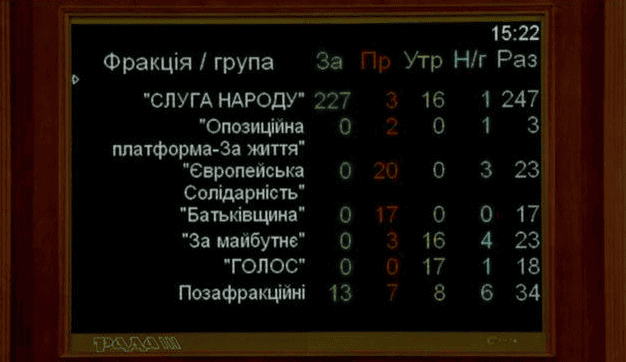
On November 11, the Verkhovna Rada held its traditional conciliation council, attended by Prime Minister Oleksiy Honcharuk, who called on lawmakers to put the consideration of bills concerning the land market on the agenda. As a result, the draft laws were nevertheless placed on the agenda for Wednesday, November 13. Deputies supported alternative bill 2178-10, with 240 votes in favor.
The ban on selling land in Ukraine has been in effect for the last 18 years. Every year this issue is raised in the Rada, and every time deputies extended the moratorium for another year for various reasons. But it seems that this time everything may change.
Tension is rising in the parliament chamber and outside its walls, Batkivshchyna is already preparing to appeal to the Constitutional Court of Ukraine, and protesters even buried a pig in protest. We look at what those for and against are saying.
Position of factions
Representatives of Batkivshchyna traditionally categorically oppose opening the land market in Ukraine. Their allies this year are deputies from the Opposition Bloc “For Life” and the deputy group “For the Future”.
The main arguments of the opposition are as follows:
- A referendum should be held and farmers should be consulted;
- Ordinary people do not have the money to buy land and cannot compete with large agricultural holdings and foreign companies. Oligarchs and foreigners will buy land from villagers for a pittance before it starts to rise in price;
- A land bank needs to be created to rule out land corruption;
- A land cadastre needs to be created and digitized, and an inventory carried out;
- There are no mechanisms for lending to small Ukrainian farmers.
The European Solidarity and Holos parties take a softer rhetoric: they are not against opening the market, but are not ready to support the reform in its current form. The parties insist that thorough preparation, guarantees of farmers’ rights protection and a referendum are needed.
For example, European Solidarity calculated that if the draft law speaks of allowing the concentration of land in the hands of a single owner in the amount of 15% of a region’s agricultural land or 0.5% of Ukraine’s territory, then in real numbers this is about 200 thousand hectares (in Poland the maximum is 500). True, they are talking about the document the Cabinet presented in October (2178).
Today, November 13, representatives of the majority in parliament presented an alternative revised document (2178-10), in which these indicators will be reduced from 15% to 8%. In addition, it proposes extending the transition period until January 1, 2024.
Servants of the People supported precisely the alternative bill 2178-10, the author of which was their colleague Mykola Solsky (co-founder of the Ukrainian Agrarian Holding). By the way, it was under his chairmanship that the Verkhovna Rada committee on agrarian and land policy quietly considered a bill allowing land to be sold to foreigners, but due to the noise raised in the media, the law was revised.
The ruling party emphasizes that opening the land market was stated both in the party’s program and in the program of President Volodymyr Zelensky. Iryna Vereshchuk, the Cabinet of Ministers’ representative in the Rada, said that there are also disagreements within the faction, mainly from majoritarian deputies. The voting results confirm this: three faction members spoke against.
The main arguments of the president and deputies from Servant of the People:
- The owner of land has the right to dispose of their property;
- The land market moratorium is lobbied by large agricultural holdings, which rent land from people for pennies. The low price of a land share is a consequence of the absence of a land turnover market;
- Under the law, buying or selling land shares is impossible, but a shadow market exists. Online ads confirm this;
- After the land market opens, the price of a hectare of a land share will rise to 1,500 or 2,000 dollars (depending on the model: the fewer restrictions, the higher the price). The price will continue to rise. Currently, the average annual rent for a hectare of agricultural land is about 4 thousand hryvnias;
- The right to sell and buy land will belong only to Ukrainian citizens and companies founded by Ukrainians;
- Whether to sell land to foreigners will be decided by the people in a referendum (though currently there are no legislative mechanisms for holding one);
- Every year the question of opening the land market was put off indefinitely, while no one tried to start developing legislation that would clearly regulate the relations between the landowner and the investor.
How the opening of the land market will happen
The initiators of the reform propose lifting the ban on alienation of land from October 1, 2020. At the same time, the alternative bill 2178-10 proposes banning foreigners from buying land until January 1, 2024.
Land owned by the state will most likely be sold at auctions through the ProZorro system.
Citizens of Ukraine, Ukrainian legal entities, territorial communities and the state will be able to sell and buy agricultural land.
Priority for purchasing an agricultural land plot will be given to its lessee, provided they pay the price at which it is sold. They will be able to receive an installment plan of up to 5 years.
The government also proposes financial support for small farmers and individuals who buy small plots of up to 500 hectares (interest compensation, other financial support).
What are the risks
The main risks are voiced by opponents of the reform. The main ones among them, which we wrote about above:
- Land in Ukraine will be sold off for pennies. At the same time, sociological surveys show that only 16% of surveyed land share owners are ready to sell land after the market opens. The rest will most likely wait for its price to rise.
- Foreigners will buy up the land, since they have more money. Here one can look at the experience of Poland and Hungary, which have still not opened the market to foreigners, due to which the European Commission is already preparing to sue Hungary;
- Unproductive land buying: land will sit idle while waiting for price increases, and villages will begin to die out. To avoid this, experts propose introducing a tax on uncultivated land.
What people think
The Razumkov Centre polled more than 2,000 respondents between November 1 and 7:
- 67.7% of respondents believe the question of introducing a land market should be put to a nationwide referendum;
- More than 77% of respondents would take part in this referendum;
- 68.3% of those who would take part in the referendum would vote for extending the moratorium;
- Only more than 20% of respondents would support lifting the moratorium.
What benefits opening the land market will bring to Ukraine’s economy
Finance Minister Oksana Markarova stated that opening the land market will help Ukraine achieve 40% GDP growth, which is 7% over each of the next five years. In second place among the factors of the country’s GDP growth is the privatization of state enterprises.
Iryna Vereshchuk, a representative of the Servant of the People party, claims that laws on the land market will be adopted by the end of this year.
The president’s team continues to stand firm.
They state that the support of their political force in the elections of more than 70% makes holding an all-Ukrainian referendum unnecessary. Moreover, there is no relevant legislation for holding one in our country. But for the sake of the question about foreigners, the servants are ready to begin developing it and promise to do so between the first and second readings of bill 2178-10.
There is information that opening the land market in Ukraine is a tough requirement of the International Monetary Fund. Judging by the active support of the World Bank for lifting the land moratorium in Ukraine, such a claim looks logical. But Servants of the People assure that they came to this decision without anyone’s demands; it is their moral duty to the people.
Zelensky’s firm decision, of course, affects his ratings. But so far it is not catastrophic. Perhaps “Ze Team” is precisely trying to push the reform through faster in the hope of demonstrating its effectiveness. And given that according to the latest polls Ukrainians chose Alexander Lukashenko as the best world leader, such radical decisions as the Ukrainian president is pushing through with the help of the majority in the Rada can only add to his credit.
Another question is whether this will add to the credit of our country. The final vote on the bill is not far off.
Yekaterina Tkacheva,
Specially for TK Media

Russian Attacks in Dnipropetrovsk Region: Two Killed, Seven Injured

Defense Forces Strike Four Russian Drone Control Points in Past Day, Including in Berdiansk

Britain Threatens Sanctions on Kremlin-Linked People; Poland Ready to Hand Ukraine Ammunition

Russia says it has completed "planned exercises" in the Black Sea

MVD: Fake Riots With Prop Blood Were Being Prepared Near Presidential Office

Law Enforcers Name Another Klitschko Deputy as Suspect

Berlin Holds Protest Against War in Ukraine; EU Prepares for Possible Russian Halt of Gas Supplies
North Korea Fires Ballistic Missile Over Record Distance in Five Years
Irish Fishermen Force Russia to Postpone Naval Drills

US sanctions in case of invasion of Ukraine could completely destroy Russia's economy, NYT reports
