
The End of Originality: Why More Creators Turn to Old Stories
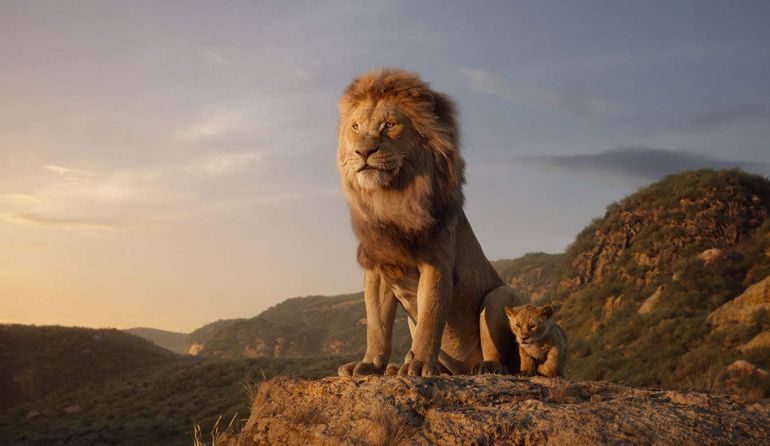
Playing on nostalgia and the thirst for money.
Regularly, cinemas show premieres of long-forgotten films that have been remade several times. In music and literature, familiar motifs and plots are also repeating more and more often. We look into why this is happening and whether originality is coming to an end.
More remakes — more money
One of the most active companies in recreating old films is Disney. In the last five years alone, it has made new versions of a whole series of cult films and cartoons. Among them are “Maleficent”, “Cinderella”, “The Jungle Book”, “Beauty and the Beast”, “Dumbo”, “Aladdin”, “The Lion King”.
Also, new films about Peter Pan, Snow White, The Little Mermaid and Pinocchio will soon hit the screens.
Of course, the main reason for this trend is money. Remakes bring in excellent box office takings. For example, “Aladdin” took in more than $900 million and became the highest-grossing film in the careers of director Guy Ritchie and actor Will Smith. And “The Lion King” earned $1.1 billion.
Still, creating new films based on beloved originals is not limited to cartoons and fairy tales. For example, this year Netflix will release a new adaptation of “The Witcher”, in 2020 filming will begin on a new “Matrix”, and in 2021 a new “Mortal Kombat” will appear on screens. It is also worth recalling that other remakes premiered quite recently. Among them are “It”, “Tomb Raider”, “Predator”, “A Star Is Born”, “Suspiria”.
Despite the fact that remakes keep appearing in greater numbers and are commercially successful, they do not always receive positive reviews. For example, the review aggregator Rotten Tomatoes calculated that of the 400 remakes and reboots released since 1978, only 40 (about 10%) received a higher rating than the original.
Original stories really are becoming fewer
However, it is not only about money. The modern fashion for reworking and reissuing old films, TV shows and songs seems to be based not so much on appreciation and nostalgia as on a worrying premise: original songs and stories have practically run out.
We all know there are countless ways in which, for example, notes can be combined to create music, and a writer has an endless number of words, sentences and paragraphs to write stories. However, these possibilities are sharply limited when we consider what people prefer to listen to and read. As for Western audiences, it seems there are only a limited number of fictional and musical patterns that are appealing. And it also seems that most of them, in their most basic form, have already been written.
Take music, for example. Whether listening to contemporary pop, classical, jazz, folk, reggae or any other genre, every song now seems familiar and has a clear antecedent or reference point.
How many lyrics are left to write about love, loss or city life? Yes, each person's experience and interpretation are different and unique, but they are rarely so radically different and unique. Moreover, the riffs, melodies and harmonies of modern compositions invariably resemble or are simply identical to other works.
In literature, film and television, every modern story is also easily recognizable and often obvious in older works. The same characters, storylines and narratives are rephrased and reformulated simply in different contexts and with different characters. The extent to which the theories of William Foster-Harris and Christopher Booker about the limited number of basic stories (3 and 7 respectively) are correct is important, but not as important as the inability of modern authors to overcome these limits and create narratives with more nuance, surprise and originality.
Writers, directors and creators are desperately trying to conceal the lack of original plots by heightening drama, increasing the impact of shock and adding more style to disguise the lack of substance. And yet, ultimately, no one seems to have escaped the basic cliché, the worn-out storyline and the character stereotype, which expose the lack of originality and the shrinking options available in fiction.
It can be argued that all art, and indeed the whole history of creativity, is about using precedent and drawing inspiration from older works to create new ones. But what we see today is not so much inspiration and respect for others as familiarity, repetition, imitation and the gradual exhaustion of ideas.
Of course, far more music and stories will be written, certainly including classics. Nevertheless, soon there will be nowhere left to go creatively. Perhaps we should see human creativity and originality as a pyramid built over time. We start with a broad base of enormous creative possibilities, but those possibilities slowly but steadily shrink as we approach the peak. Original ideas are beginning to dwindle, and soon there may be none left at all.
This problem of diminishing originality is compounded by the internet and the overwhelming access to virtually every song and story ever written. Having the entire musical and fictional repertoire at our fingertips makes any contemporary work even more vulnerable to criticism and suspicion of, at best, lack of originality and, at worst, — plagiarism.
Suddenly, the potential for innovation and invention has turned out to be limited by the enormous weight of precedent and history.
What actors and directors say about remakes
Remakes often leave not only audiences but also the creators of the original stories dissatisfied. For example, Dario Argento, director of the original film “Suspiria”, did not like last year's remake by Luca Guadagnino.
According to him, Guadagnino “betrayed the spirit of the original, there is no fear in it, there is no music”. “The picture did not satisfy me,” Argento said. At the same time, the director noted that the new “Suspiria” turned out to be refined, like the original: “Guadagnino creates beautiful tables, beautiful curtains, beautiful plates, everything beautiful.”
And Elton John criticized the soundtrack of the new “The Lion King”. He wrote the music for the original cartoon. “The new version of ‘The Lion King’ was a huge disappointment for me. I think the filmmakers ruined the music. In the original film it played a much bigger role than in the new version. The magic and joy have disappeared,” he said.
Actor Macaulay Culkin, meanwhile, responded ironically to Disney's plans to remake “Home Alone”. He posted a photo on his Instagram showing the character “in our time”.
Alexey Simonchuk

Russian Attacks in Dnipropetrovsk Region: Two Killed, Seven Injured

Defense Forces Strike Four Russian Drone Control Points in Past Day, Including in Berdiansk

Britain Threatens Sanctions on Kremlin-Linked People; Poland Ready to Hand Ukraine Ammunition

Russia says it has completed "planned exercises" in the Black Sea

MVD: Fake Riots With Prop Blood Were Being Prepared Near Presidential Office

Law Enforcers Name Another Klitschko Deputy as Suspect

Berlin Holds Protest Against War in Ukraine; EU Prepares for Possible Russian Halt of Gas Supplies
North Korea Fires Ballistic Missile Over Record Distance in Five Years
Irish Fishermen Force Russia to Postpone Naval Drills

US sanctions in case of invasion of Ukraine could completely destroy Russia's economy, NYT reports
