
European War, Donbas Plan and Criticism of the Modern World: What Zelensky Said in Munich
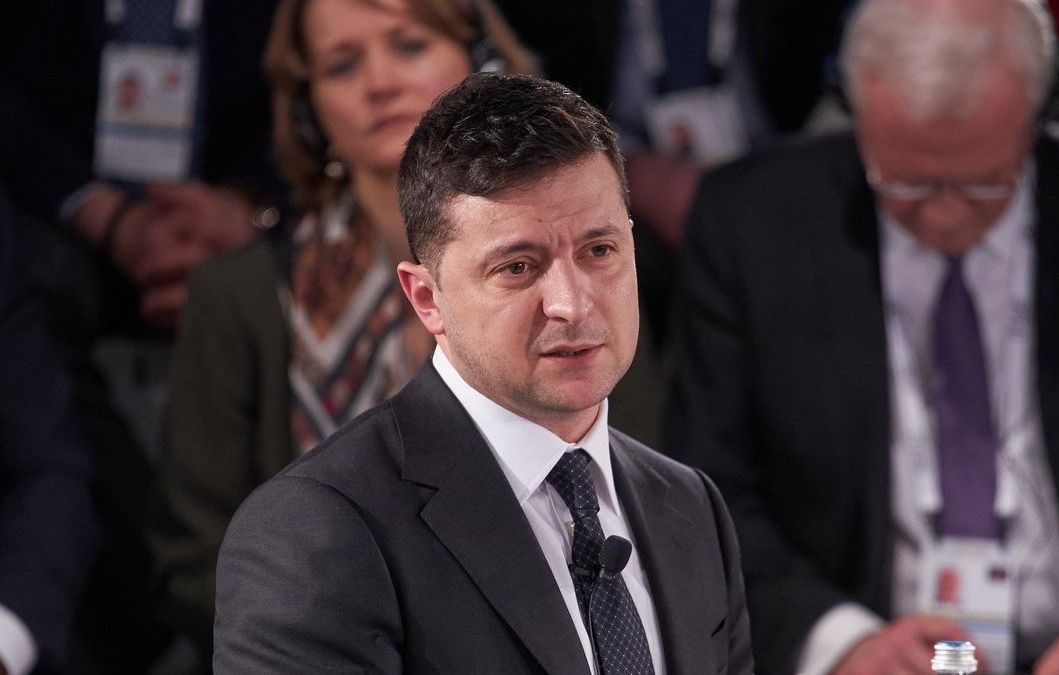
Political analyst Nikita Trachuk on the speech of the Ukrainian president at the Munich Security Conference.
In 1963, the Munich Security Conference was established within the framework of Euro-Atlantic structures. It served as a platform for discussing pressing problems and challenges facing NATO countries. Over time, the event transformed into an annual forum where discussions take place on a wide range of issues related to global security: from revolutions and military conflicts to famine and epidemics.
Ukrainian President Volodymyr Zelensky took part in the conference. He delivered a speech in which he voiced a number of interesting things. By the way, his predecessor Petro Poroshenko was also in Munich at the same time as Zelensky. He made a point of repeating his standard theses about aggression and the fight against the 'Russian world' in interviews with Ukrainian and European journalists.
New Ideas for Resolving the Donbas Conflict
Even before the official part of the event began, a scandal involving Ukraine erupted. A new so-called 'Munich Plan' for ending the war in Donbas was published on the conference website. This document — is the result of joint work by several expert groups composed of representatives of the EU, the US, Ukraine, Russia and the OSCE monitoring mission. It proposes a program of 12 points that could help settle the conflict – a sort of '12 steps' for Ukraine.
Although the wording of the 'Munich Plan' is generally more moderate and softer than in the similar 'Rasmussen Plan' or 'Morel Plan', it caused discontent among part of Ukrainian society. Poroshenko also harshly criticized it.
The document provides for a phased lifting of anti-Russian sanctions tied to the end of the conflict, as well as a 'new national dialogue' for Ukraine, on the basis of which issues of language, historical memory, etc. will be resolved. The scandal led to the plan being removed from the conference website (though it later reappeared). Commenting on it during his speech, Zelensky said he knew about 'the emergence of some plan', but called on the international community to 'first consult with Ukraine'.
The Ukrainian president began his speech in the traditional way: reminding Europe and the whole world that a war is going on in our country, but that everyone forgets about it. He also repeated the thesis he had stated back on May 20, 2019, during his inaugural speech: that we did not start the war in the east, but we will end it. His speech was traditional for Ukraine and in places resembled similar speeches by his predecessor.
Nevertheless, the head of state said several important things.
Perhaps the main thing — Zelensky's new proposal on Donbas. He put forward the idea of sector-by-sector troop disengagement. As the president understands it, the entire line of contact is divided into separate sectors, in the first of which troop disengagement begins. When it is completed, the OSCE monitoring mission records this in its report and the area is considered demilitarized. Then comes the second sector, then the third, and so on until disengagement takes place along the entire front.
All of this should be completed before October 2020, because by then Ukraine wants to hold elections in Donbas. Overall, over his 5-year term he will end the war, the head of state said.
Zelensky also promised to elaborate on this plan during the 'Normandy Four' summit, which is due to take place in April. Notably, a day before voicing this idea, Zelensky spoke with Putin, and a few days earlier he appointed Andriy Yermak, who is responsible for communication with the Russian Federation, as head of the Presidential Office.
It is not entirely clear yet how the idea can be implemented in practice. Several months have passed since the last meeting in the 'Normandy format', and the sides still cannot agree on even one area where forces will be disengaged. Also, over these months the OSCE has recorded around 400 shelling incidents.
The situation with the further work of the 'Normandy Four' is also intriguing: recently there have been rumors that it may not exist at all due to the stalling of the peace process. For example, Ukrainian Foreign Minister Pristaiko stated that the meeting may not take place, since not all draft proposals and agreements are ready yet. Zelensky subsequently publicly disputed him, saying he has no information that the meeting is under threat of being disrupted.
This may indicate:
- a traditional 'screw-up' in Zelensky's power vertical — communication
- Ukraine's plans to adjust the 'Minsk agreements' and to put new ideas, such as sector-by-sector troop disengagement, on the agenda
- problems for Pristaiko. The president's public refutation of the minister's words is not a good sign for the minister himself, especially in the context of Andriy Yermak's appointment as head of the Presidential Office
Besides troop disengagement by sectors, Zelensky expressed two other important things concerning Donbas.
First, he expressed Ukraine's readiness for joint patrolling of the border with Russia together with OSCE representatives and the self-proclaimed republics.
Second, he declared readiness to talk with the 'population of the LPR and DPR', but specifically with representatives of the people, not with the 'authorities' of the unrecognized republics. To this end, he announced the creation of a certain public platform, 'Peace for Donbas', which will include internally displaced persons. According to available data, the process is overseen by Sergei Sivokho.
In essence, all the theses voiced by Zelensky regarding Donbas and its future amount to a tacit dialogue with Russia and, in a certain sense, a message to it. The president agrees to troop disengagement, the president is ready for a joint border patrol, the president hinted at direct dialogue with Donbas on condition that the current leaders of the 'republics' are replaced with some neutral figures. Through his entire conduct, the head of Ukraine is trying to show that he is ready for a compromise with Russia, but not at the cost of a complete surrender of national interests (as evidenced by the purely Poroshenko-style theses about 'the strongest army', 'elections in Crimea' and 'peace on Ukraine's terms').
It is entirely obvious that Ukraine does not want to and will not implement 'Minsk-2' in the literal sense, as Russia insists. For a long time there have been rumors about the so-called 'Zelensky formula', which is supposed to gradually replace the 'Minsk agreements', which are unfavorable from Ukraine's point of view.
It is still too early to speak of a full-fledged and ready 'Ze-formula' for ending the war, but in speeches like the Munich one, its outlines are clearly visible. At present it resembles an improved and expanded 'Minsk-2'. The EU will almost certainly support Ukraine in this, while the US insists on preserving the status quo. The question is whether it is possible to convince Russia, which insists on the literal implementation by Ukraine of the agreements signed in Minsk in February 2015.
Criticism of the Modern World
Another interesting and in some ways unexpected moment in the speech of the Ukrainian president was his sudden criticism of the entire world system of international relations. After his words about sector-by-sector troop disengagement, Zelensky suddenly 'got carried away'. For instance, he unexpectedly declared that he would speak 'on behalf of all ordinary people from all corners of the planet'. At times his words sounded somewhat naive for the head of a major state.
According to the president, the modern world is cruel and unjust. In international relations and geopolitics, only the right of the strong reigns. All countries think only about themselves and their own interests, and no agreements or rules, in essence, work. Zelensky was 'surprised and upset' that during the resolution of problems and conflicts in the world 'democratic principles are not used', and that 'strong powers' dispose of and decide for others.
It is remarkable that with these words the president of Ukraine virtually repeated, word for word, the theses of representatives of the American 'school of political realism'. This is a branch of geopolitics and international relations theory whose roots go back to the writings of Machiavelli. Representatives of political realism and neorealism argue that anarchy and chaos reign in the global community, where only the right of the strong rules. Democratic institutions and instruments are merely a fiction and a cover, while the strong and powerful world states decide everything, pursuing only their own interests to the detriment of all others. Perhaps this is just a coincidence – or Zelensky has become interested in political theories.
It can be concluded that Zelensky continues to act within the framework of his role as a peacemaker. Back at the very start of his term, he said he would never order shooting or an attack. In principle, his statements at the Munich Security Conference confirm this. He said he does not regret the decision to run for president, since thanks to it he has the opportunity to 'save people from war every day', and spoke about how life will improve right after the end of hostilities.
All of this is correct, but statements are not actions. Ukraine constantly tries to 'waffle', not adhering to agreements, because within the country there is no national consensus on what kind of peace should come and on what terms.
At the same time, Russia, which at times makes 'cool' gestures toward Ukraine, has enough forces and resources to keep standing its ground for a long time yet. Part of the American elites is not interested in ending the conflict in Ukraine, while another part of the elites, including President Trump, almost directly says 'sort it out yourselves'. Europe is interested in ending the war, but European efforts so far are insufficient to settle the Donbas case.
In any case, the window of opportunity to end the conflict in Donbas will close very quickly. Most likely, this will happen within 1-2 years. The years 2020-21 will be decisive in matters of achieving war or peace. Zelensky today is standing on a stretched rope, both internal and external, and unity is absent even within his own team.

Russian Attacks in Dnipropetrovsk Region: Two Killed, Seven Injured

Defense Forces Strike Four Russian Drone Control Points in Past Day, Including in Berdiansk

Britain Threatens Sanctions on Kremlin-Linked People; Poland Ready to Hand Ukraine Ammunition

Russia says it has completed "planned exercises" in the Black Sea

MVD: Fake Riots With Prop Blood Were Being Prepared Near Presidential Office

Law Enforcers Name Another Klitschko Deputy as Suspect

Berlin Holds Protest Against War in Ukraine; EU Prepares for Possible Russian Halt of Gas Supplies
North Korea Fires Ballistic Missile Over Record Distance in Five Years
Irish Fishermen Force Russia to Postpone Naval Drills

US sanctions in case of invasion of Ukraine could completely destroy Russia's economy, NYT reports
